

Financial advisors spend thousands of dollars every month on Google Ads, Facebook campaigns, email newsletters, and referral programs. Yet many still cannot answer a simple question.
Which marketing campaigns actually bring in clients?
Without proper marketing attribution, you are guessing. You might be putting more money into channels that generate clicks but very few qualified leads.
Redtail CRM is excellent for managing client relationships, but it does not natively track UTM parameters. This creates a gap between your marketing efforts and your CRM data.
In this guide, you will learn how to track and capture UTM parameters in Redtail CRM so you can clearly see which campaigns drive real leads and real revenue.
How to Track UTM Parameters in Redtail CRM
- Redtail CRM does not natively capture UTM parameters
- SourceLoop captures UTM parameters automatically when visitors land on your website
- UTM data is stored across multiple visits until a lead converts
- SourceLoop attaches attribution data when a form is submitted or a meeting is booked
- Captured UTM data can be synced into Redtail CRM via integrations or imports
5 Steps to Capture UTM Parameters in Redtail CRM
Here’s how to set up complete UTM tracking for your financial advisory practice:
1. Install a UTM Tracking Tool on Your Website
Since Redtail CRM does not capture UTM data on its own, the first step is to install a UTM tracking tool on your website.
This tool sits between your marketing campaigns and Redtail CRM. It captures UTM parameters as soon as a visitor lands on your site.
Tools like SourceLoop are designed for this purpose.
Once installed, the tracking script automatically records UTM data and stores it in the visitor’s browser.

This is important because many visitors do not convert right away. They might browse your site, leave, and come back days later before filling out a contact form.
Without persistent tracking, that original campaign data is lost.
2. Create UTM-Tagged URLs for All Marketing Campaigns
Next, you need to add UTM parameters to every marketing link you share.
This includes Google Ads, Facebook ads, LinkedIn posts, email newsletters, and even referral links.
Here is a simple example:
https://youradvisoryfirm.com/contact
?utm_source=google
&utm_medium=cpc
&utm_campaign=retirement_planning
Google provides a free Campaign URL Builder that makes this easy and consistent.
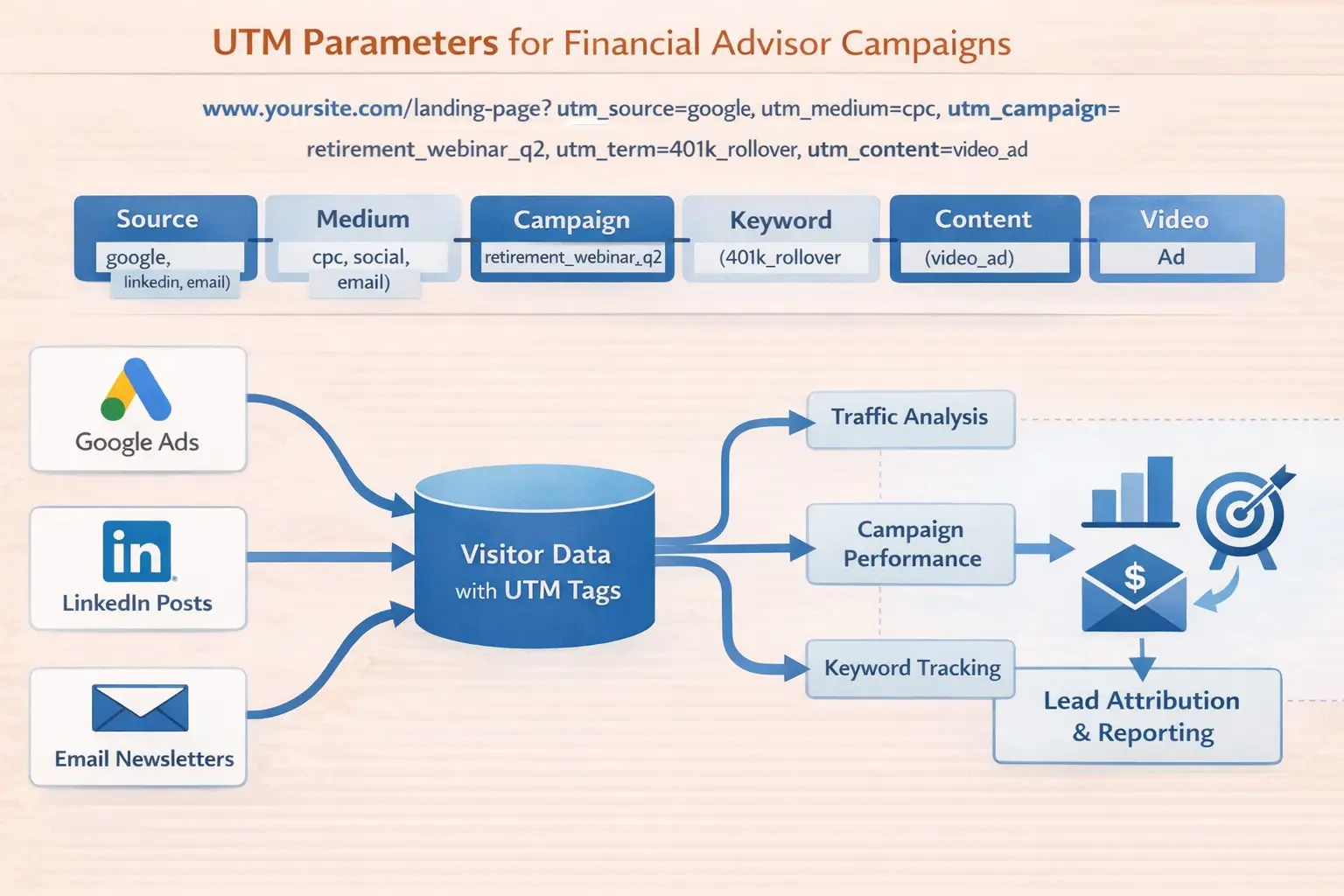
Focus on these core parameters:
- utm_source tells you where the traffic came from
- utm_medium tells you the channel type such as email or paid ads
- utm_campaign tells you the campaign name
These three alone cover most attribution needs for financial advisors
3. Automatically Capture Leads and Attribution Data
Once tracking is live and UTM links are in place, lead capture happens automatically.
When a visitor submits a contact form, books a consultation, or requests more information, the tracking tool connects that lead to their original marketing source.
Modern tracking platforms support most common website tools such as contact forms, chat widgets, and meeting schedulers.
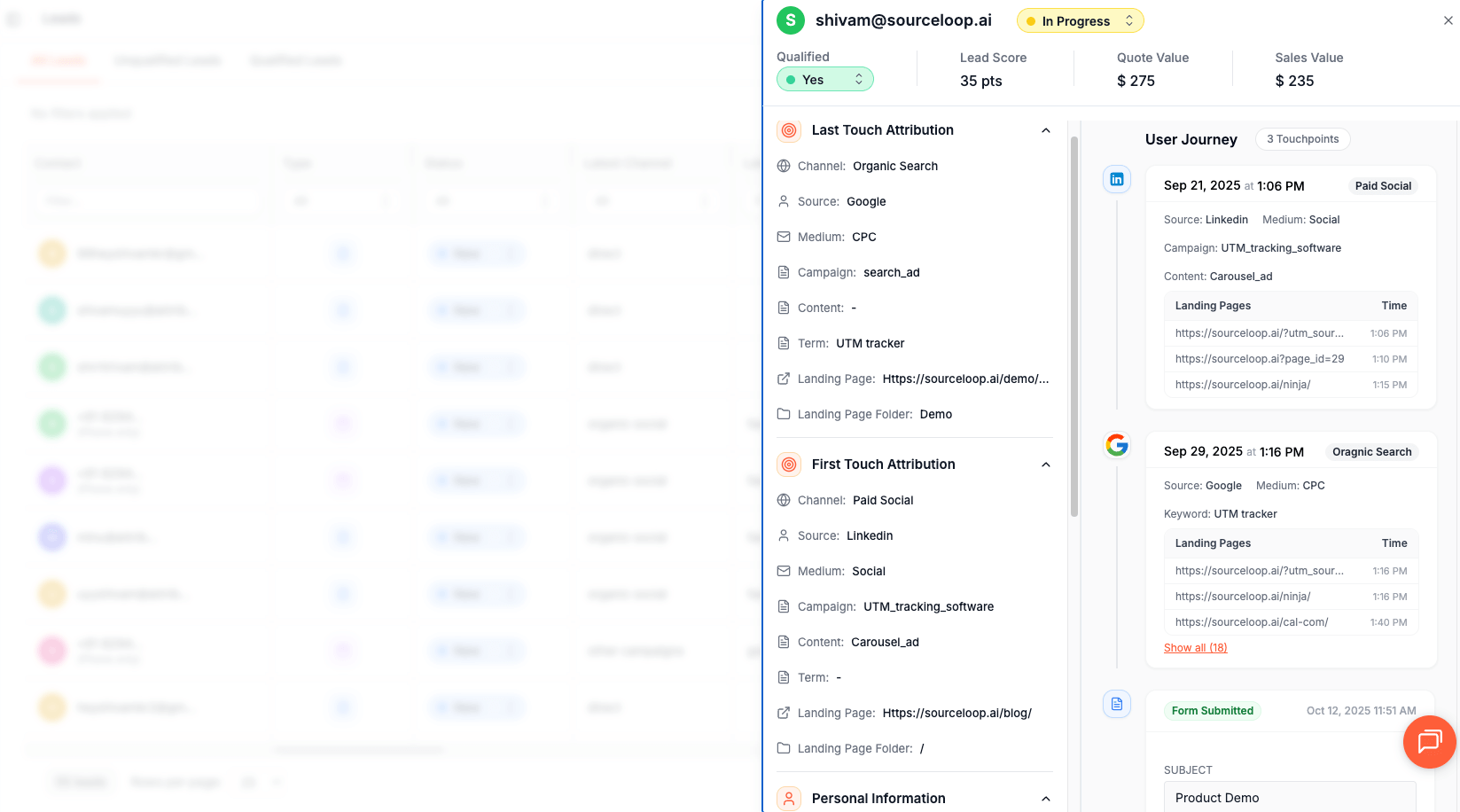
This means you do not need to manually add hidden fields or write custom code in most cases.
At this stage, you can already see which campaigns generate leads, even before syncing data into Redtail CRM.
4. Sync UTM Data into Redtail CRM
Getting data into Redtail requires connecting your form submissions to the CRM.
Several integration options work well:
Option 1: Zapier Integration Zapier can connect most form builders directly to Redtail CRM:
- Create a new Zap with your form tool as the trigger
- Map form fields (including hidden UTM fields) to Redtail contact fields
- Configure the Zap to create new contacts or update existing ones
- Test the integration with sample form submissions
Option 2: Direct API Connection For larger firms with technical resources, sending data into Redtail using Redtail-specific API endpoints offers more control:
- Use Redtail’s REST API to send data into Redtail
- Create custom field mappings for UTM parameters
- Set up real-time data synchronization
- Implement error handling and data validation
Option 3: CSV Import Process A simple manual process for smaller firms:
- Export form submissions with UTM data weekly
- Use Redtail’s CSV import feature to upload new contacts
- Map UTM fields to custom contact fields in Redtail
- Reduce manual data entry while maintaining attribution
This allows you to answer questions like:
- Which campaigns generate the most qualified prospects
- Which channels lead to booked meetings
- Which marketing spend actually turns into clients
According to Salesforce research on lead management, faster and better qualified lead follow up significantly improves conversion rates. Attribution data helps make that possible.
Why This Matters for Financial Advisors
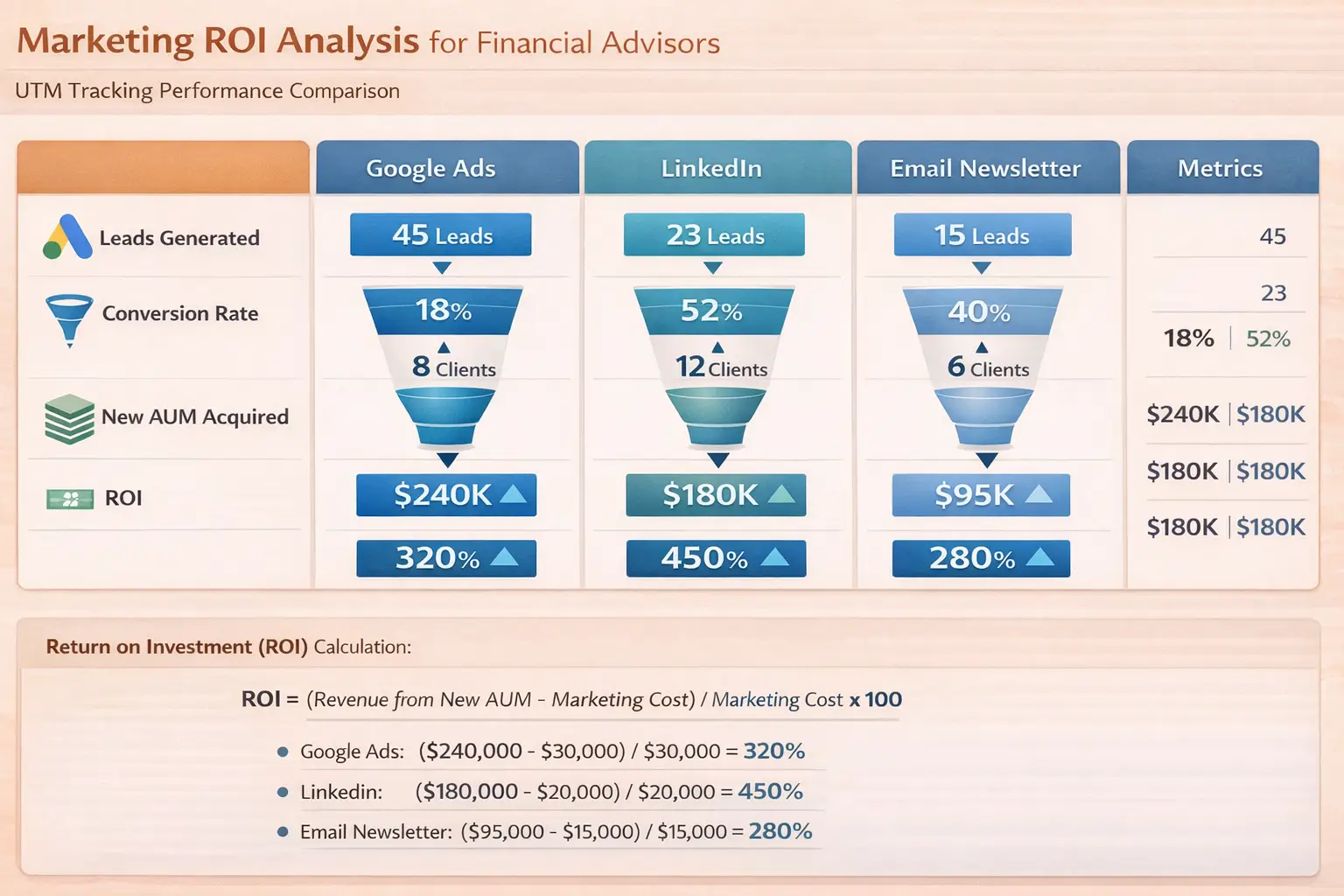
Not all marketing leads are equal.
A referral email campaign might generate fewer leads than paid ads, but those leads may convert at a much higher rate. Without UTM tracking, this difference is invisible.
By capturing UTM parameters and syncing them into Redtail CRM, you can:
- Reduce wasted ad spend
- Focus on high quality channels
- Make confident marketing decisions based on data
This is especially important in financial services, where trust and lead quality matter more than raw traffic numbers.
Final Thoughts
Redtail CRM does not natively support UTM tracking, but that does not mean you have to operate without attribution.
With the right tracking setup, you can capture UTM parameters, connect them to leads, and finally understand which campaigns bring real value to your firm.
If you want to stop guessing and start measuring, proper UTM tracking is one of the simplest and highest impact improvements you can make to your marketing stack.
Read more:
Frequently Asked Questions About Tracking UTM Parameters in Redtail CRM
Can Redtail CRM track UTM parameters natively?
No. Redtail CRM does not natively capture or store UTM parameters. It focuses on client management, not marketing attribution, so UTM data must be captured before a lead enters Redtail.
How can I capture UTM parameters for Redtail CRM?
You can capture UTM parameters by using a website tracking tool that records campaign data when visitors land on your site. That data can then be sent into Redtail CRM when a lead submits a form or books a meeting.
Which UTM parameters should financial advisors track?
Financial advisors should track utm_source, utm_medium, and utm_campaign at a minimum. These parameters show where leads come from and which marketing campaigns influence them.
Do UTM parameters work if a visitor returns later?
Yes. When a tracking tool stores UTM data in the visitor’s browser, the original campaign information is retained even if the visitor returns days or weeks later before converting.
This is important because most prospects do not contact an advisor on their first visit.

