
9 Best Factors.ai Alternatives I Tested in 2026
Factors.ai alternatives compared honestly. Nine B2B attribution tools across account ID, ABM, and multi-touch revenue, with the option I'd start with for most teams.
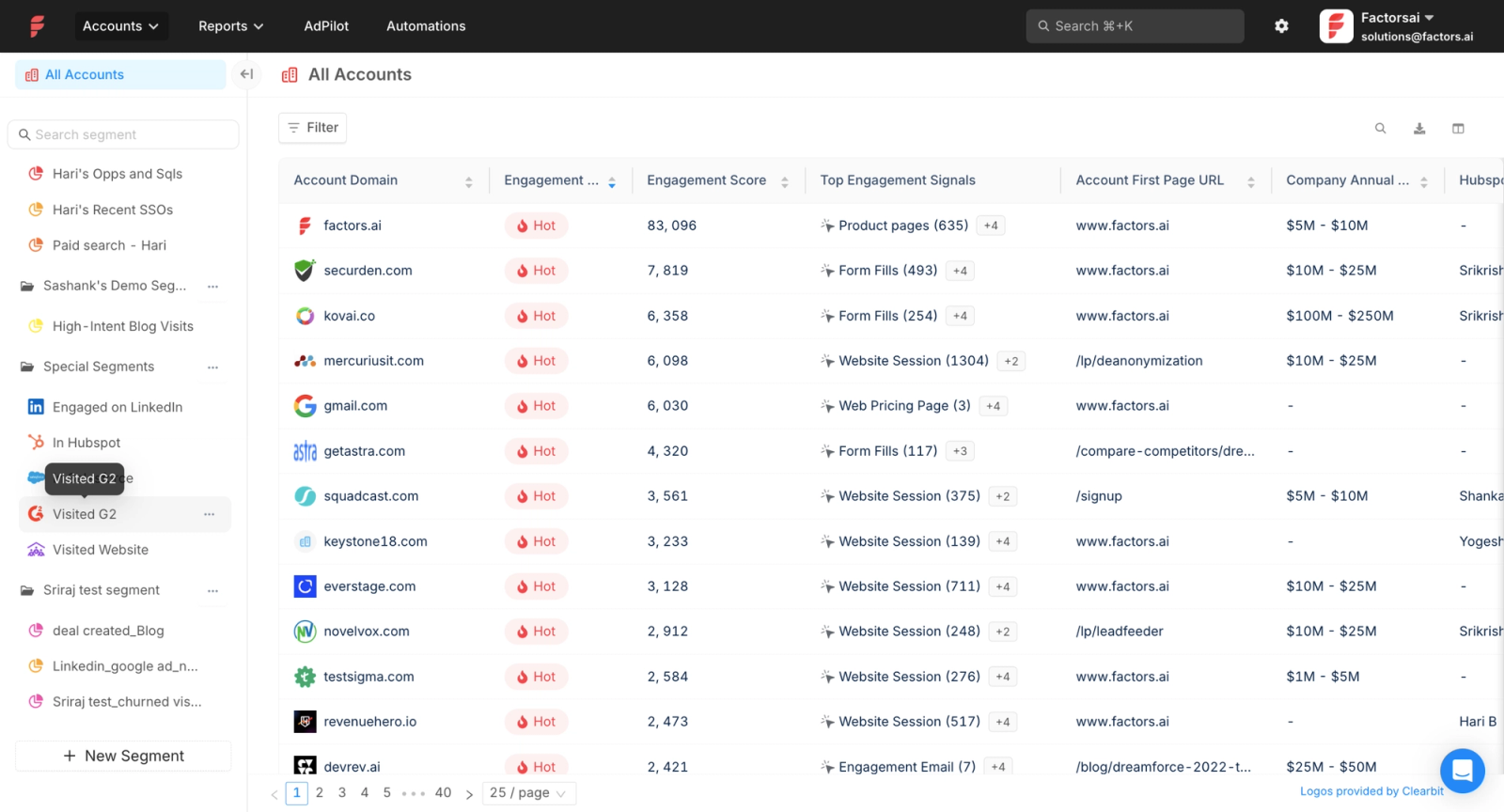
Table of contents
- Quick comparison
- 1. SourceLoop
- Two things to check before buying account identification
- What the tracking script captures
- The journey behind every lead and account
- Attribution models and reports
- CRM sync and pipeline reporting
- Sending conversions to ad platforms
- The honest gaps for a Factors evaluator
- Pricing
- 2. Dreamdata
- Key capabilities
- Watch-outs
- Pricing
- 3. HockeyStack
- Key capabilities
- Watch-outs
- Pricing
- 4. 6sense
- Key capabilities
- Watch-outs
- Pricing
- 5. Demandbase
- Key capabilities
- Watch-outs
- Pricing
- 6. Adobe Marketo Measure
- Key capabilities
- Watch-outs
- Pricing
- 7. HubSpot Marketing Analytics
- Key capabilities
- Watch-outs
- Pricing
- 8. Fibbler.io
- Key capabilities
- Watch-outs
- Pricing
- 9. Attribution (attribution.app)
- Key capabilities
- Watch-outs
- Pricing
- How to pick the right one
There are roughly two kinds of B2B attribution tools.
One kind starts with a person, a form fill, a meeting booking, a checkout, and works backward to source. The other starts with an account, anonymous traffic stitched to a company, and works forward to revenue.
Factors.ai is firmly in the second camp. The whole product is built around identifying which company a visitor is from, layering LinkedIn intent signals on top, then attributing pipeline back to those accounts.
The question Factors users eventually arrive at is whether they're in the second camp at all, or whether they ended up there because that's where the well-marketed tools were.
Nine alternatives below. Five do account-level identification. Four don't. Both groups are useful, for different reasons.
Quick comparison
| Tool | Best for | Starts at | Setup | Account-level | LinkedIn intent | Multi-touch | Free tier |
|---|---|---|---|---|---|---|---|
 SourceLoop SourceLoop |
Most teams, full funnel | $49 / mo | ~1 hour | No | No | Yes | 7-day trial |
 Dreamdata Dreamdata |
Long-cycle B2B + Salesforce | Free / $999 / mo | ~1 week | Yes | Limited | Yes | Yes |
 HockeyStack HockeyStack |
B2B SaaS + AI dashboards | ~$1,000 / mo | 1-2 weeks | Yes | Limited | Yes | No |
 6sense 6sense |
Enterprise ABM + intent | ~$50k+ / year | 4-8 weeks | Predictive | Limited | Yes | No |
 Demandbase Demandbase |
Enterprise ABM + ads | ~$50k+ / year | 4-8 weeks | Yes | Limited | Yes | No |
 Adobe Marketo Measure Adobe Marketo Measure |
Enterprise revenue ops | ~$2,000+ / mo | 60-90 days | Limited | No | Yes | No |
 HubSpot Marketing HubSpot Marketing |
HubSpot-native B2B | From $800 / mo | Bundled | Limited | No | Yes | No |
 Heap Heap |
Product-led B2B | Free / $3,600+ / yr | ~1 week | Limited | No | Yes | Yes |
 Attribution Attribution |
Cheap source-only | Free / $99 / mo | ~1 hour | No | No | Yes | Yes |
1. SourceLoop
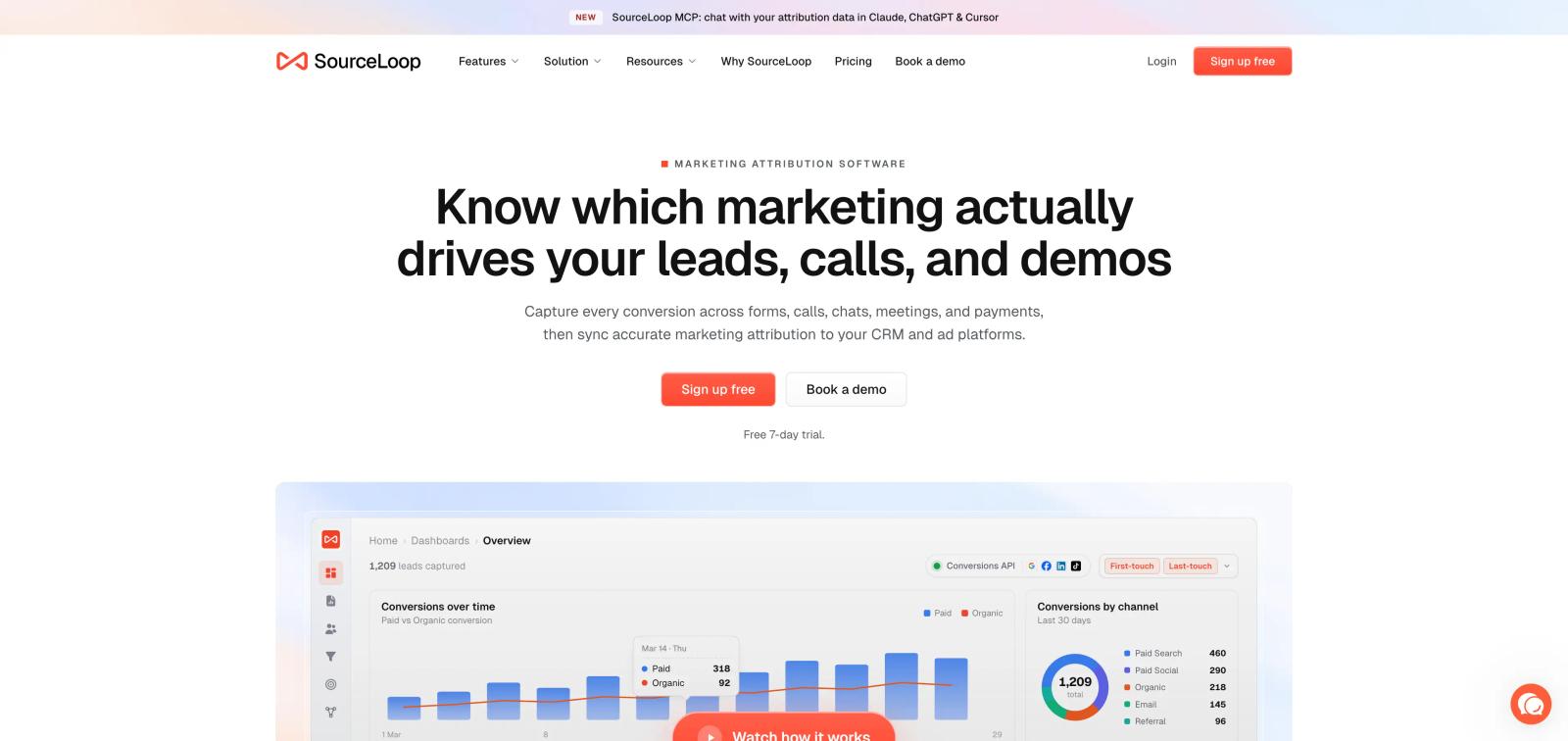
SourceLoop is in the first camp. Person-first, not account-first.
The data model starts with a visitor. They browse, return, and eventually convert on a form, a meeting booking, a chat, a call or a payment. At that moment the full path gets stitched to the lead and pushed into your CRM.
There is no anonymous-to-account inference and no LinkedIn intent layer.
What there is: a clean answer to where your conversions come from, without an enterprise contract or a four-week setup.
Two things to check before buying account identification
Factors meters on companies identified per month. Basic is $399/mo for 3,000, Growth is $799/mo for 8,000.
The add-ons are where the bill moves. LinkedIn AdPilot and Interest Groups are each priced close to the base plan, which is how a $399 evaluation becomes a four-figure invoice.
The second thing is match rate by geography. North American traffic identifies well. EU, APAC and remote-heavy audiences identify noticeably worse.
If your buyers sit outside North America, run a pilot on your own traffic first. The headline match rate may not be your match rate.
What the tracking script captures
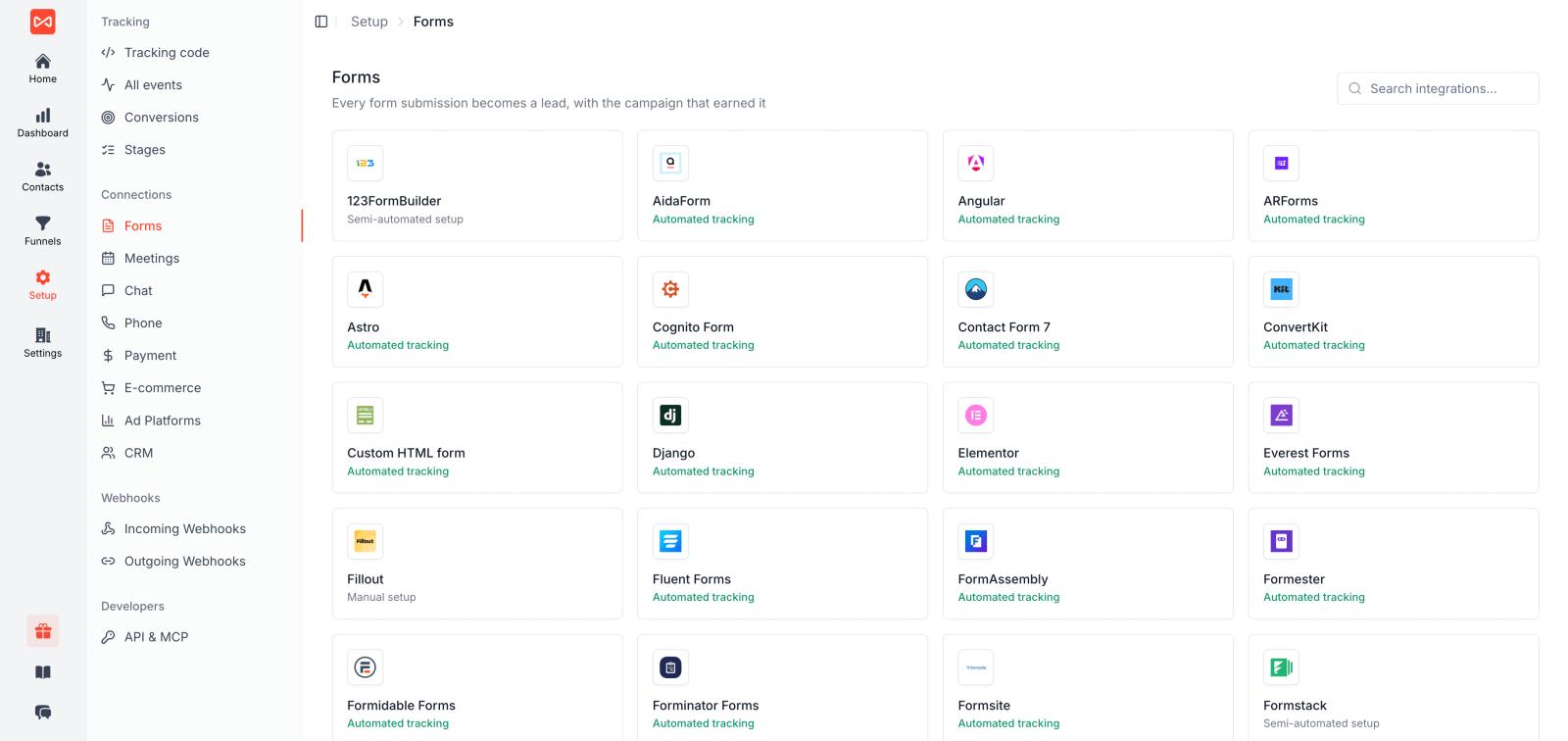
One script, and every visitor gets a first-party session with referrer, landing page, UTMs and the click ID. Nine click IDs, read ahead of the referrer, which keeps a paid click on iOS Safari out of the Direct bucket.
Around 70 lead tools are captured with no event code, including Calendly, Cal.com, HubSpot Meetings, Chili Piper, Gravity Forms, WPForms, Typeform, Jotform, Webflow, Intercom, Crisp, CallRail and Stripe.
The journey behind every lead and account
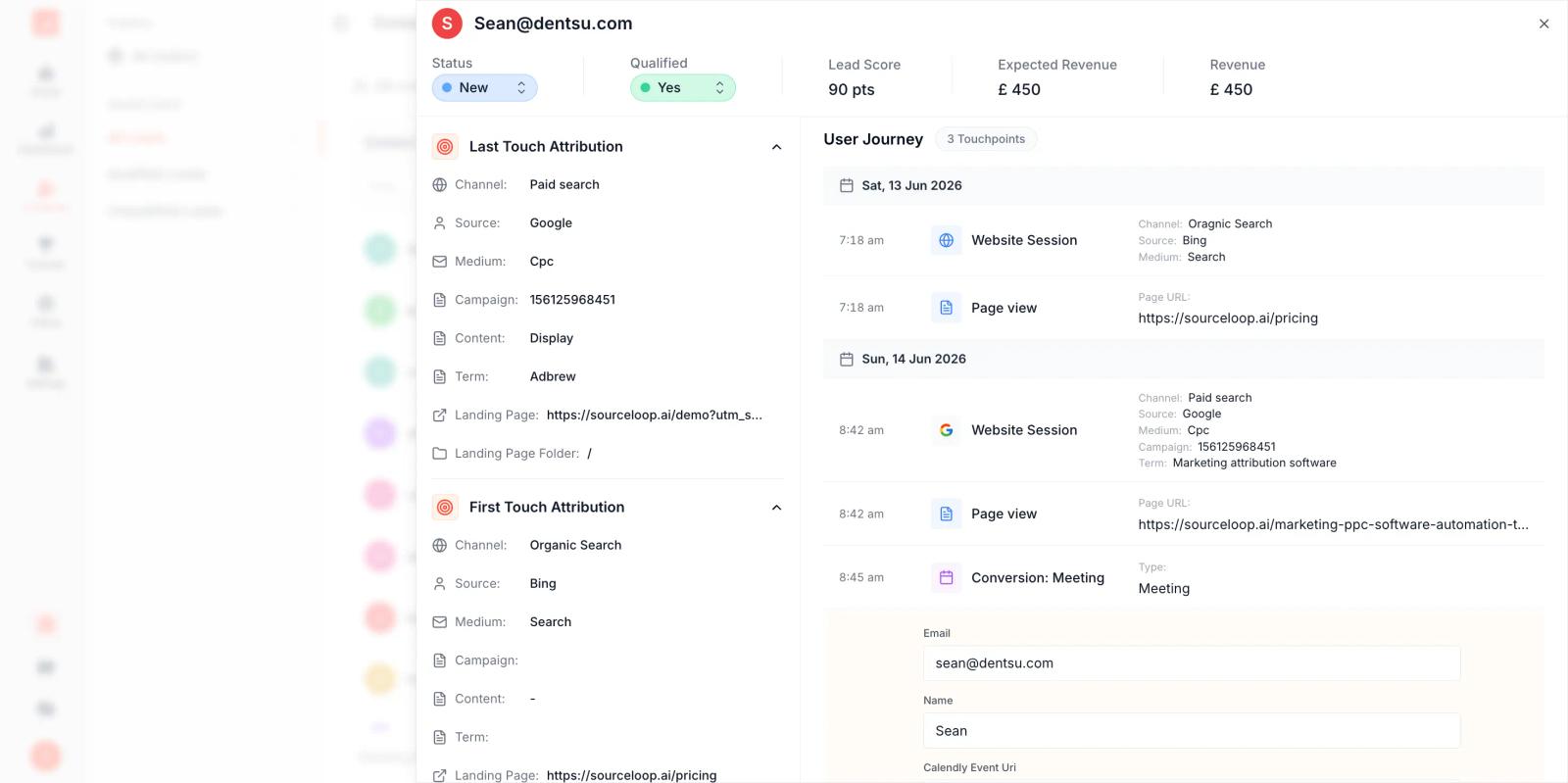
Every contact has a timeline. Each session in order, how they arrived, what they read, and the visit that converted.
Identity stitching merges devices and browsers when an email, phone or user ID connects them. Subdomains share identity automatically; separate root domains need one config line.
Contacts roll up by company once someone identifies themselves, resolved from their email domain, merging every known person at that account into one journey.
Attribution models and reports
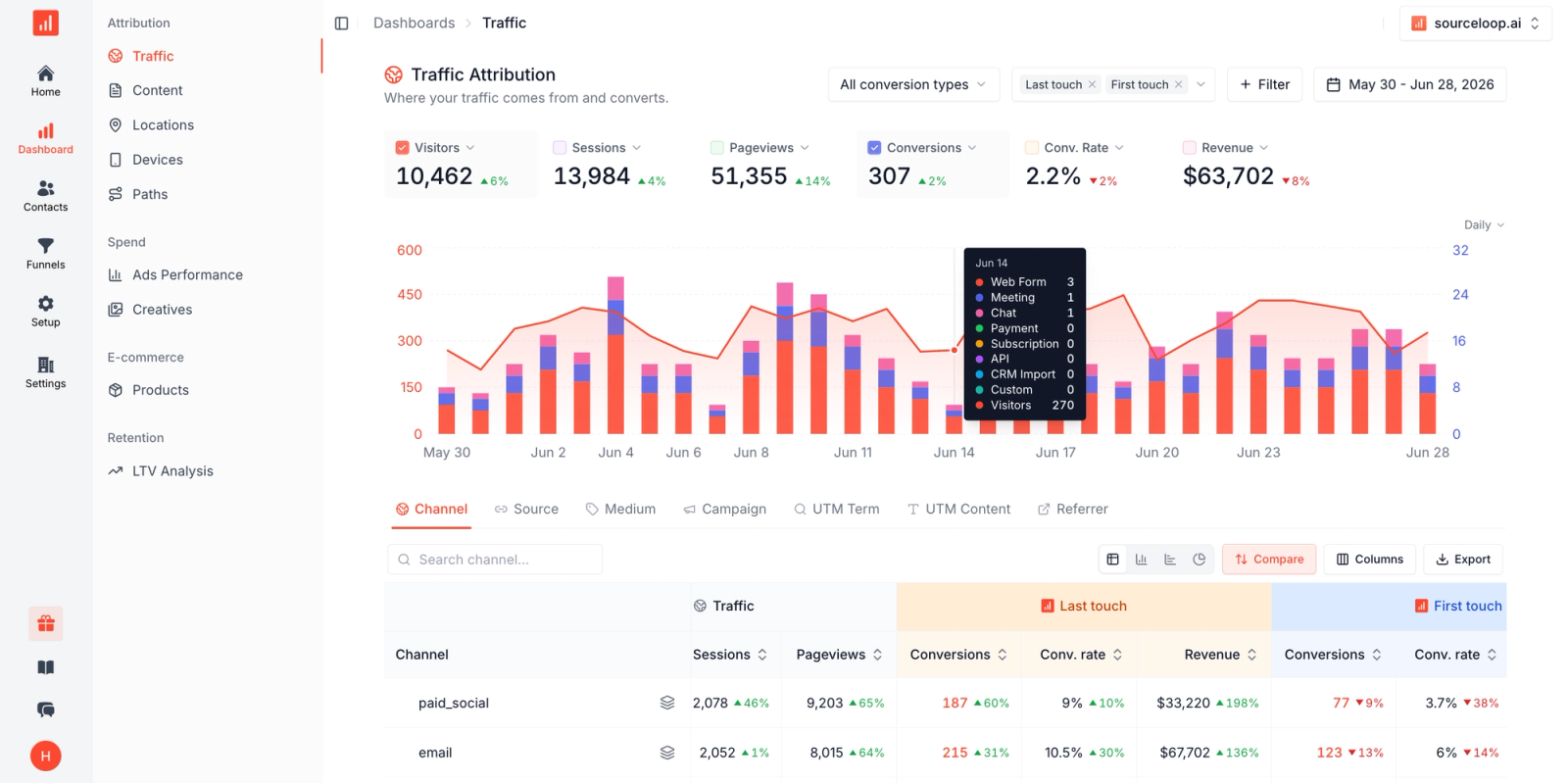
Seven models on one stored journey. Switching does not require re-tagging: the data is captured once and the model is applied at read time.
Channel rollups answer the budget questions. Pipeline by source, revenue by source, CAC by source.
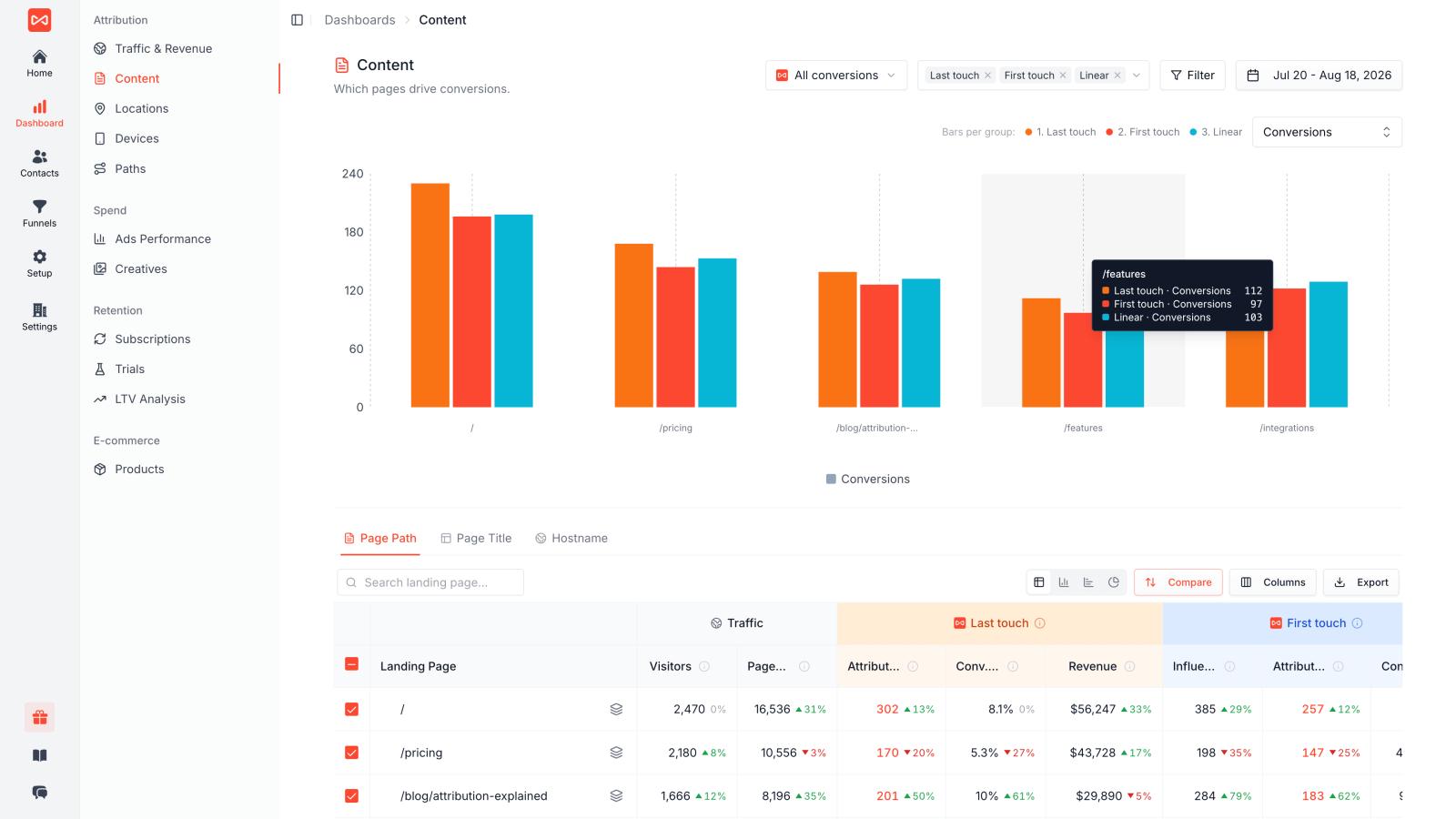
Content attribution is the report that gets undervalued. Conversions, conversion rate and attributed revenue per landing page under any model, so a blog post gets first-touch credit for a deal that closed on the pricing page.
The Paths view shows the actual touch sequences that end in conversions, with a toggle to collapse repeat touches.
CRM sync and pipeline reporting
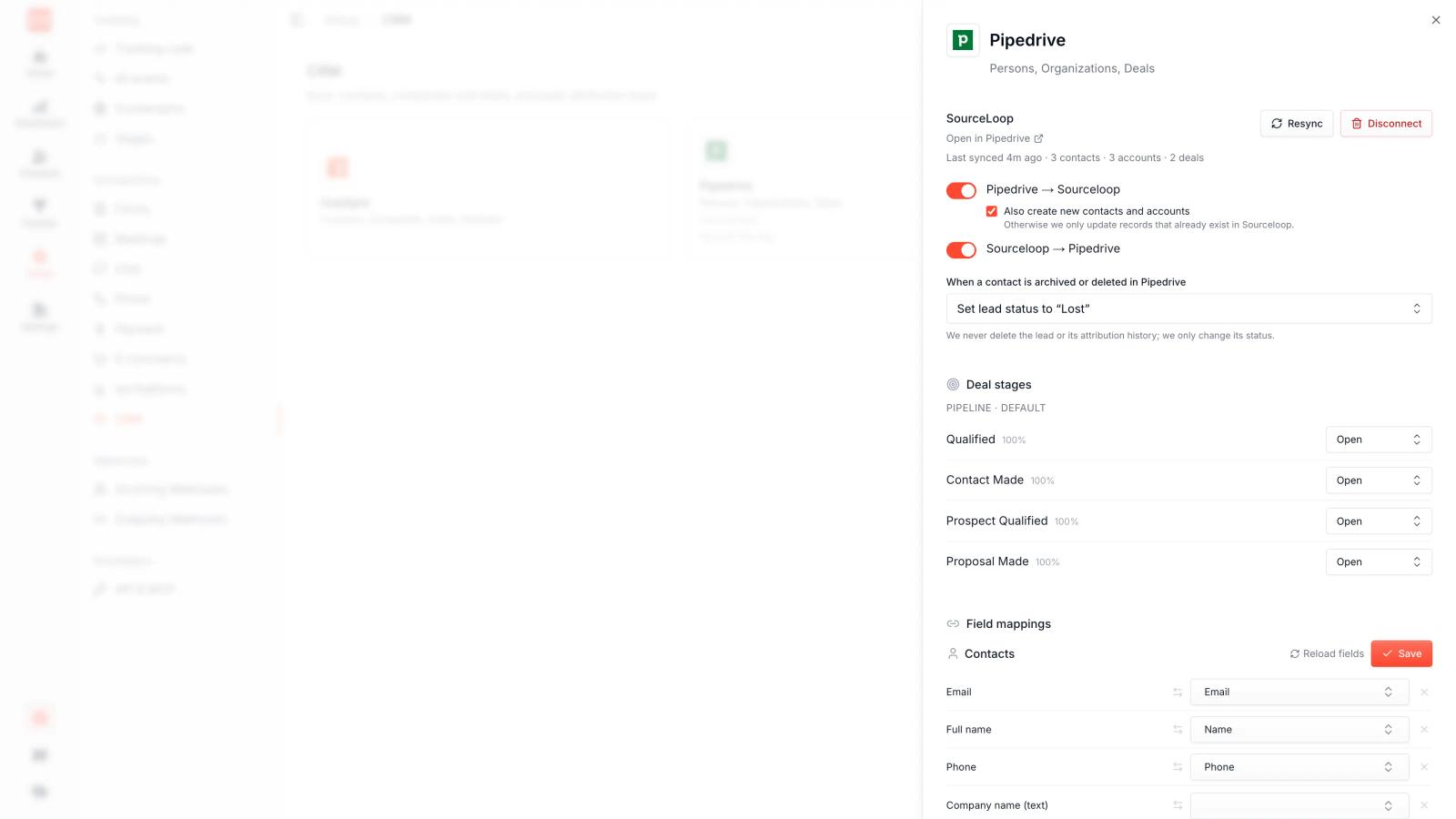
Native two-way sync with HubSpot, Salesforce, Pipedrive and Zoho.
Attribution fields are written onto contacts, companies and deals, created automatically on first write and fully remappable if you already have your own UTM properties.
Deal stages and closed-won values come back, with explicit mapping for Salesforce lead status, HubSpot lifecycle stages and Pipedrive labels.
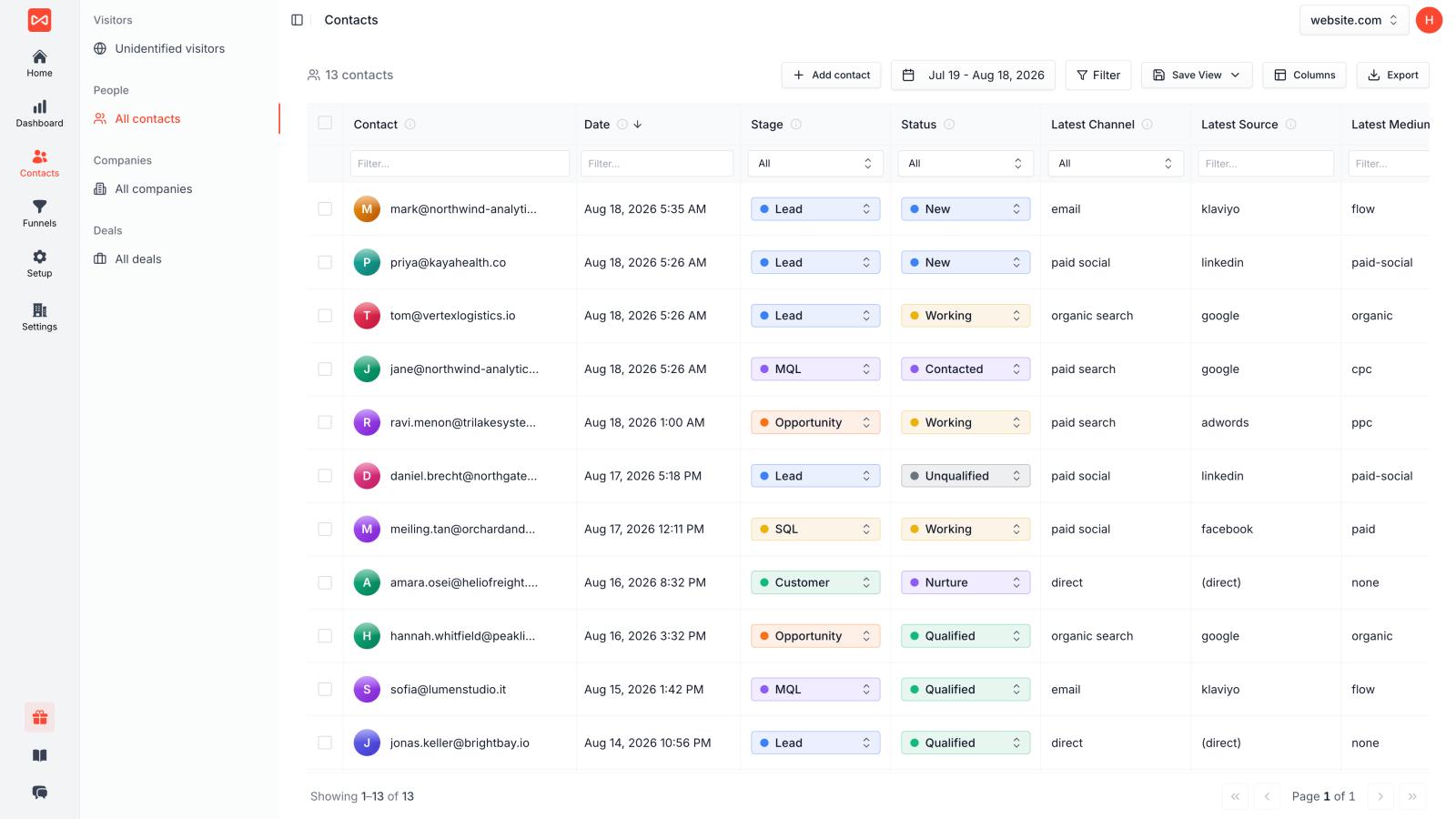
For teams without a paid CRM seat for everyone, the Contacts Hub is where attribution lives. Revenue also arrives directly from Stripe, Paddle, Polar, Lemon Squeezy and Dodo Payments.
Sending conversions to ad platforms
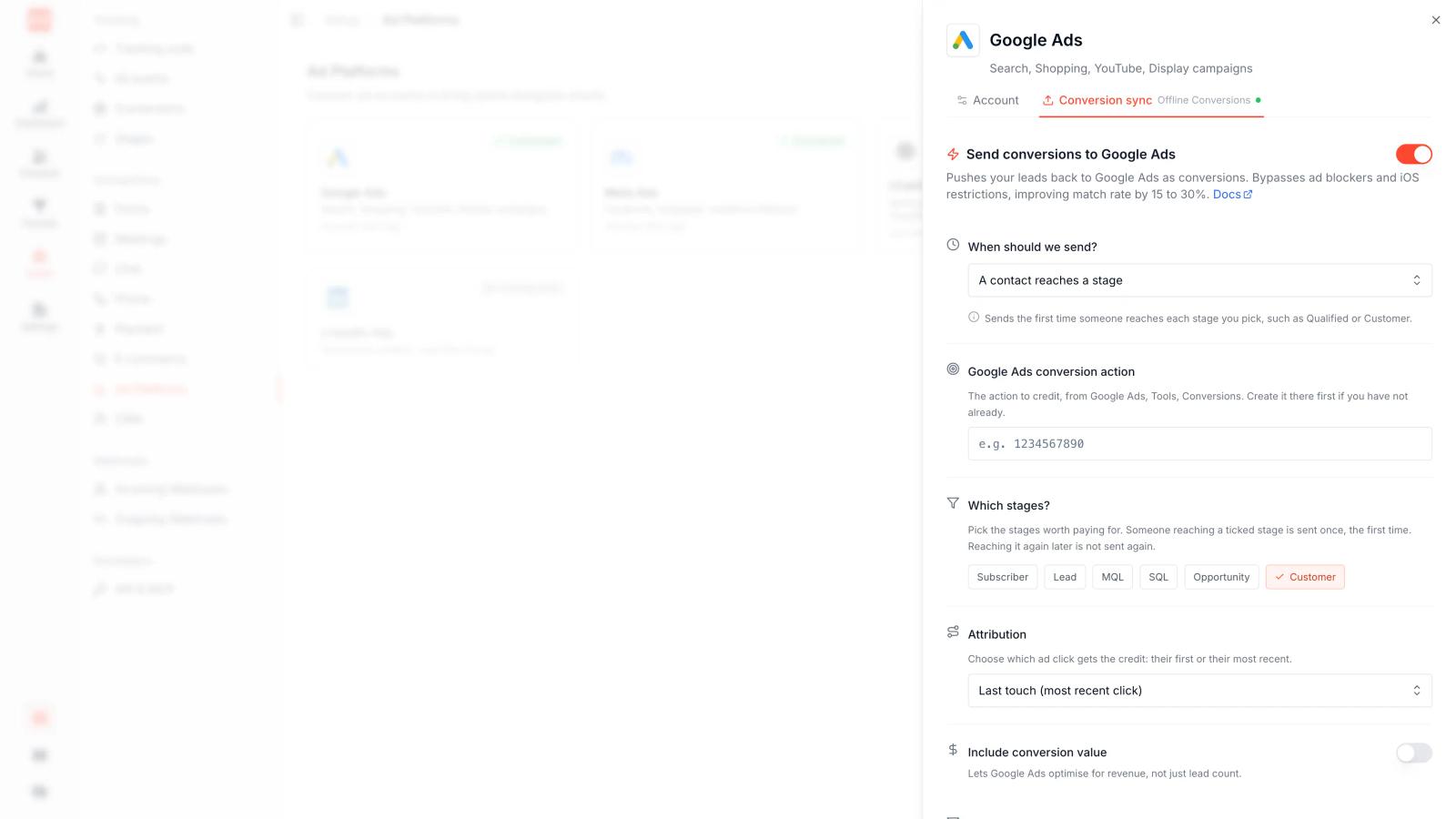
Offline conversions push back to Google Ads, Meta CAPI, LinkedIn CAPI, Microsoft, TikTok, Pinterest and Reddit.
Each mapping picks its trigger, can filter to one source, chooses first or last touch, and sends your CRM's quote or realised value, so the algorithms learn from qualified pipeline rather than lead count.
The honest gaps for a Factors evaluator
Two real ones.
No anonymous account identification. If your sales team needs a list of companies that visited the pricing page this week but have not converted, SourceLoop does not produce it. Factors does, and so do 6sense, Demandbase, Dreamdata and HockeyStack.
Company rollup here covers account-level reporting on known buyers. It does not cover discovery of unknown ones.
No LinkedIn intent. Factors stitches LinkedIn engagement onto web behaviour to surface in-market accounts. SourceLoop sees LinkedIn as a channel: ad clicks attributed to revenue, content credited, organic counted, conversions synced back through LinkedIn CAPI.
For non-ABM B2B teams those gaps are theoretical. For ABM teams they are the reason Factors exists.
Pricing
- Essential: $49 / month, 30k page views
- Professional: $99 / month, 100k page views
- Agency: $249 / month
7-day trial, no card, no add-on line items.
Best for: Person-first B2B teams. Lead gen, modern SaaS, hybrid funnels with paid, content, organic and email. Create a free SourceLoop account.
2. Dreamdata
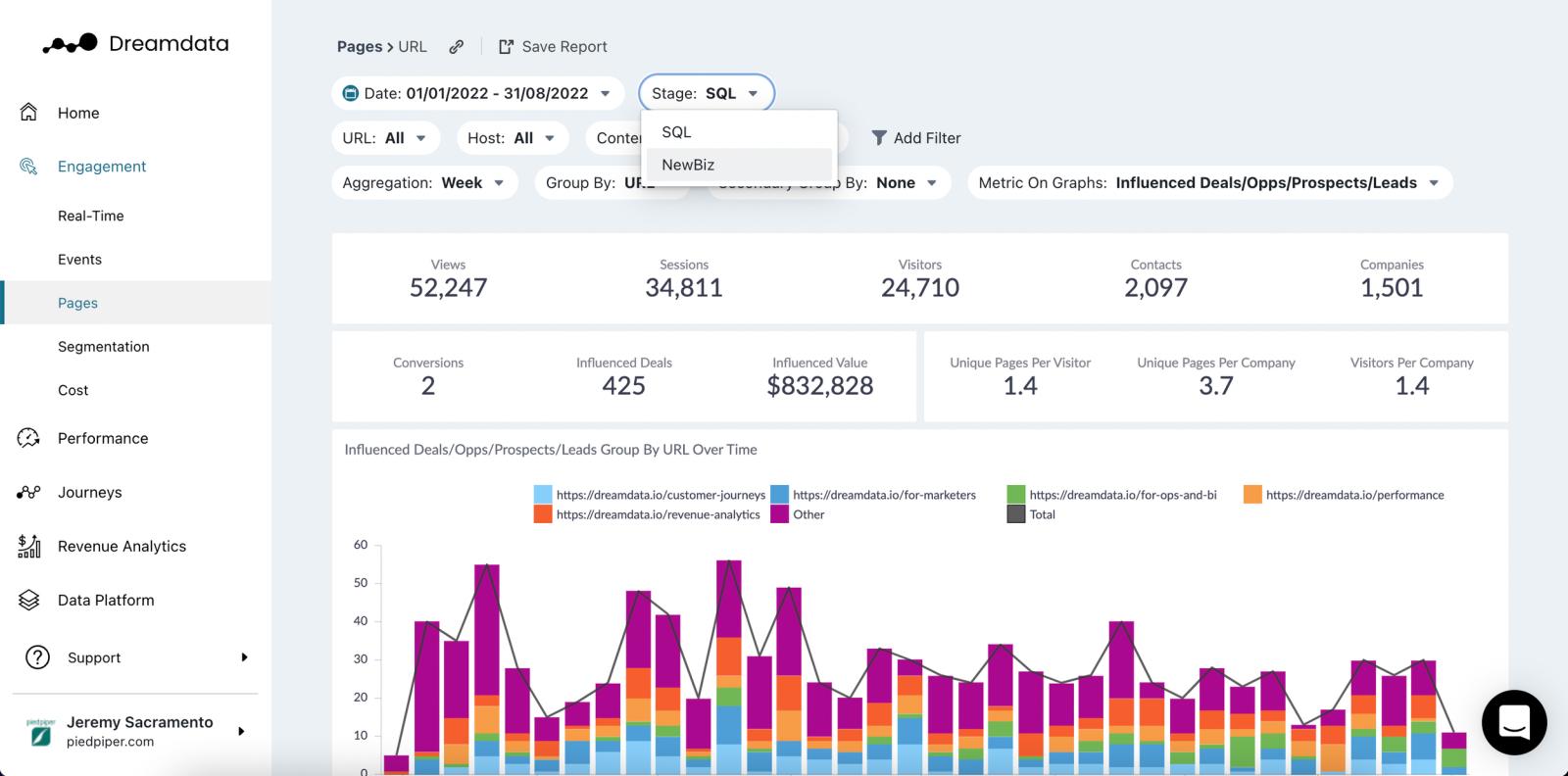
Dreamdata is the closest direct peer to Factors in B2B revenue attribution. The architecture is different. Factors leads with account ID and layers LinkedIn intent on top. Dreamdata leads with Salesforce as the source of truth and writes attribution back into the deal record.
For teams who live inside Salesforce all day, that direction matters more than it sounds.
Key capabilities
- Deepest Salesforce integration in this list, with bi-directional pipeline reads and attribution writes back as custom fields
- Free tier that's actually usable for early-stage teams (low monthly limit, no card required)
- Revenue-weighted multi-touch models that respect deal size, stage progression, and account age, not just touch count
- Reverse-ETL friendly for teams running modern data stacks (BigQuery, Snowflake, dbt)
- Account-level journey reports with full timeline of touches per account, including post-conversion expansion
Watch-outs
Setup needs a Salesforce admin. The data model is rich, which means a week tuning what counts as an "influence" before the dashboards reflect reality. Short sales cycles or messy CRMs slow the value compounding.
The UI is dense. That's an analyst's compliment, not a marketer's.
Pricing
Free tier with low limits. Team plan starts ~$999 per month. Business runs $2k+ per month. Enterprise custom.
Best for: B2B SaaS and services with Salesforce as the system of record and sales cycles long enough that pipeline-weighted attribution actually matters.
3. HockeyStack
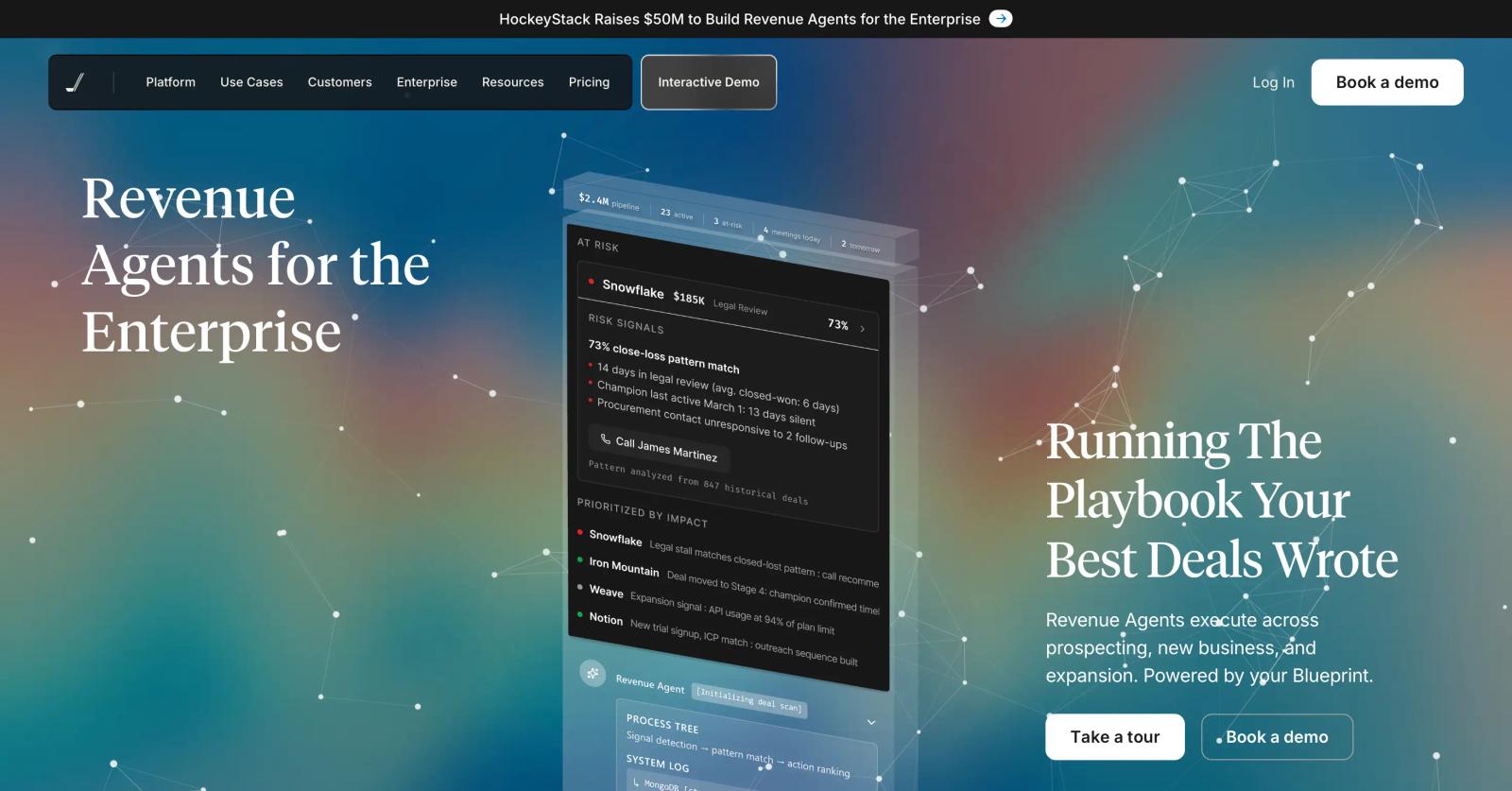
HockeyStack started as account-based analytics for B2B SaaS and grew into one of the deeper multi-touch platforms in that segment.
The differentiation against Factors comes down to the dashboards and the AI layer. Factors has stronger LinkedIn ties. HockeyStack has faster queries and better natural-language analysis.
Key capabilities
- Native HubSpot, Marketo, Salesforce integrations with bi-directional sync, including custom objects on the enterprise tier
- AI assistant ("Odin") that returns charts and prose summaries when asked natural-language questions like "which campaigns drove enterprise pipeline last quarter"
- Sub-second query performance on warehouse-grade data, achieved by pre-aggregating at ingest rather than computing at read time
- Account-level journey reports stitched from anonymous traffic via reverse-DNS and ZoomInfo / Clearbit signals
- Pre-built ABM dashboards for source-of-pipeline, content performance by stage, and account engagement scoring
Watch-outs
Pro starts around $1,000 per month at low contact volumes. Enterprise contracts routinely reach $50,000-$60,000 per year for mid-market accounts.
Built for B2B SaaS specifically. If your funnel includes self-serve trials, agency-style multi-client reporting, or non-SaaS revenue events, you'll pay for capabilities you don't need.
Pricing
Pro from ~$1,000 / month. Enterprise custom (typically $25k-$60k annually).
Best for: B2B SaaS teams running multi-touch and ABM with serious data volume, where dashboard speed and AI-driven analysis pay for themselves.
4. 6sense
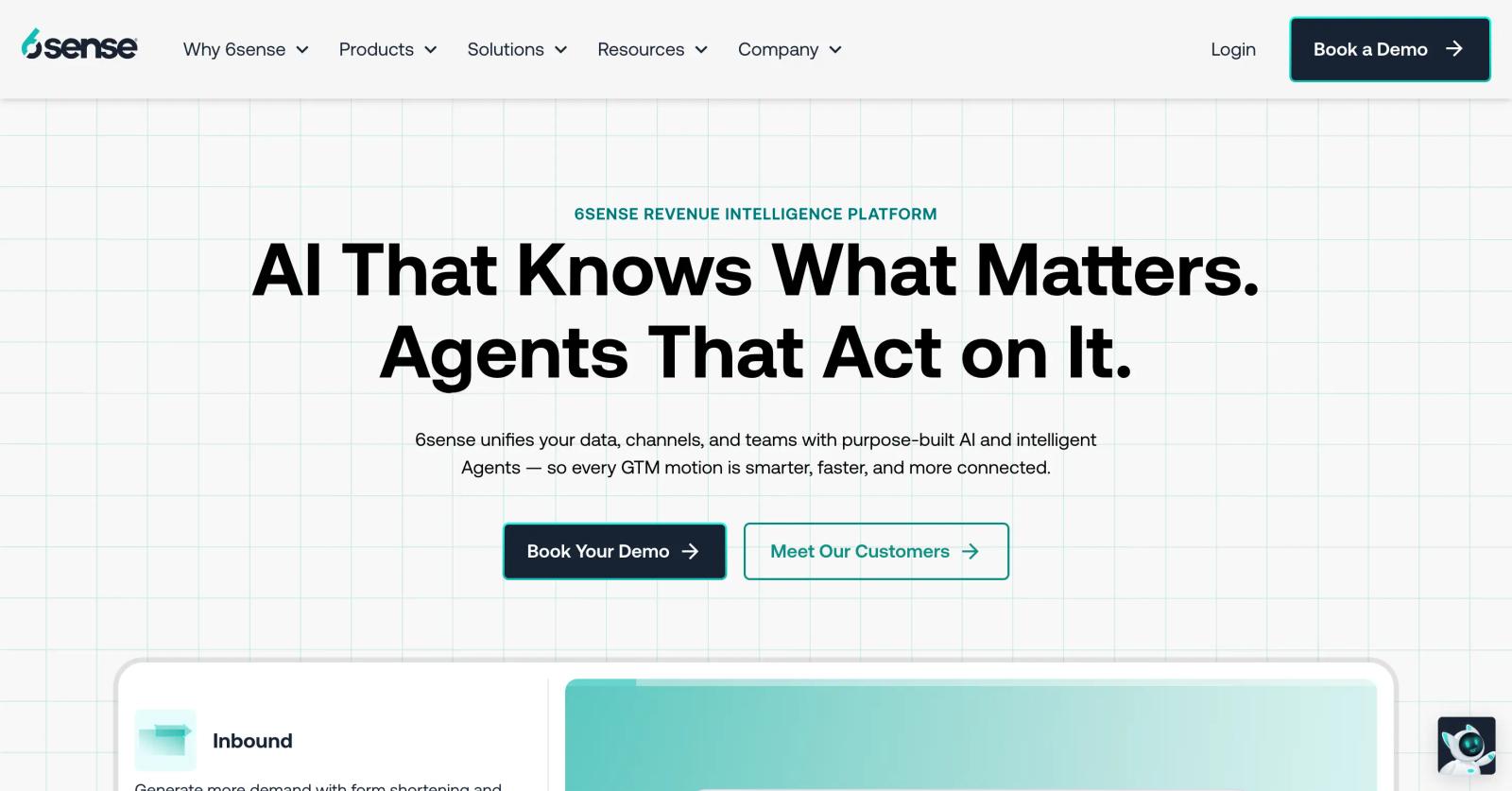
6sense is the most-quoted name in enterprise ABM. The pitch is predictive: instead of waiting for accounts to identify themselves, 6sense uses third-party intent signals across the public web to predict which companies are entering a buying cycle, then orchestrates ads, sales outreach, and content personalization.
Key capabilities
- Predictive intent scoring based on third-party signal data captured across 6sense's research and intent network
- Buying-stage classification (Awareness, Consideration, Decision, Purchase) with predictive transition timing
- ABM orchestration across web personalization, paid ad targeting, sales prospecting workflows, and email
- Anonymous account identification at higher fidelity than competitors, including accounts not yet in your CRM
- Salesforce, Marketo, HubSpot, Outreach native with deep CRM operations and custom workflow automation
Watch-outs
Pricing is enterprise-only. Plans typically run $50,000-$120,000 per year.
The platform is large, and most companies under-use what they buy. Plan for a 4-8 week implementation and a dedicated owner on the team. Without that, you're paying for an intent-data subscription you don't act on.
Pricing
Custom. Typically $50,000+ per year.
Best for: Mid-market and enterprise B2B running outbound-led growth with named accounts and the ops headcount to act on intent signals.
5. Demandbase
Demandbase is 6sense's longest-running competitor. The pitch overlaps (account intent, ABM orchestration, anonymous account ID). The differentiator is the built-in advertising platform, which serves display ads directly to identified accounts without going through Meta or LinkedIn.
For teams running serious paid ABM, that DSP changes the economics.
Key capabilities
- Account intent and engagement scoring that combines first-party engagement data with third-party signal sources
- ABM orchestration across web personalization, ads, sales prospecting, and email nurture
- Built-in DSP for serving display ads directly to identified accounts (no public ad-platform fees)
- Anonymous traffic-to-account stitching with industry-leading match rates for North American B2B
- Salesforce + Marketo native with deep integration into pipeline reporting and revenue cycles
Watch-outs
Pricing matches 6sense. $50,000+ per year is normal. Implementations are similarly long.
The strength is in advertising orchestration. If your shopping list is "revenue attribution" without the ABM advertising layer, Dreamdata or HockeyStack are typically a better fit.
Pricing
Custom. Typically $50,000+ per year.
Best for: Enterprise B2B running paid ABM where having the ad-serving platform inside the attribution platform changes the cost math.
6. Adobe Marketo Measure
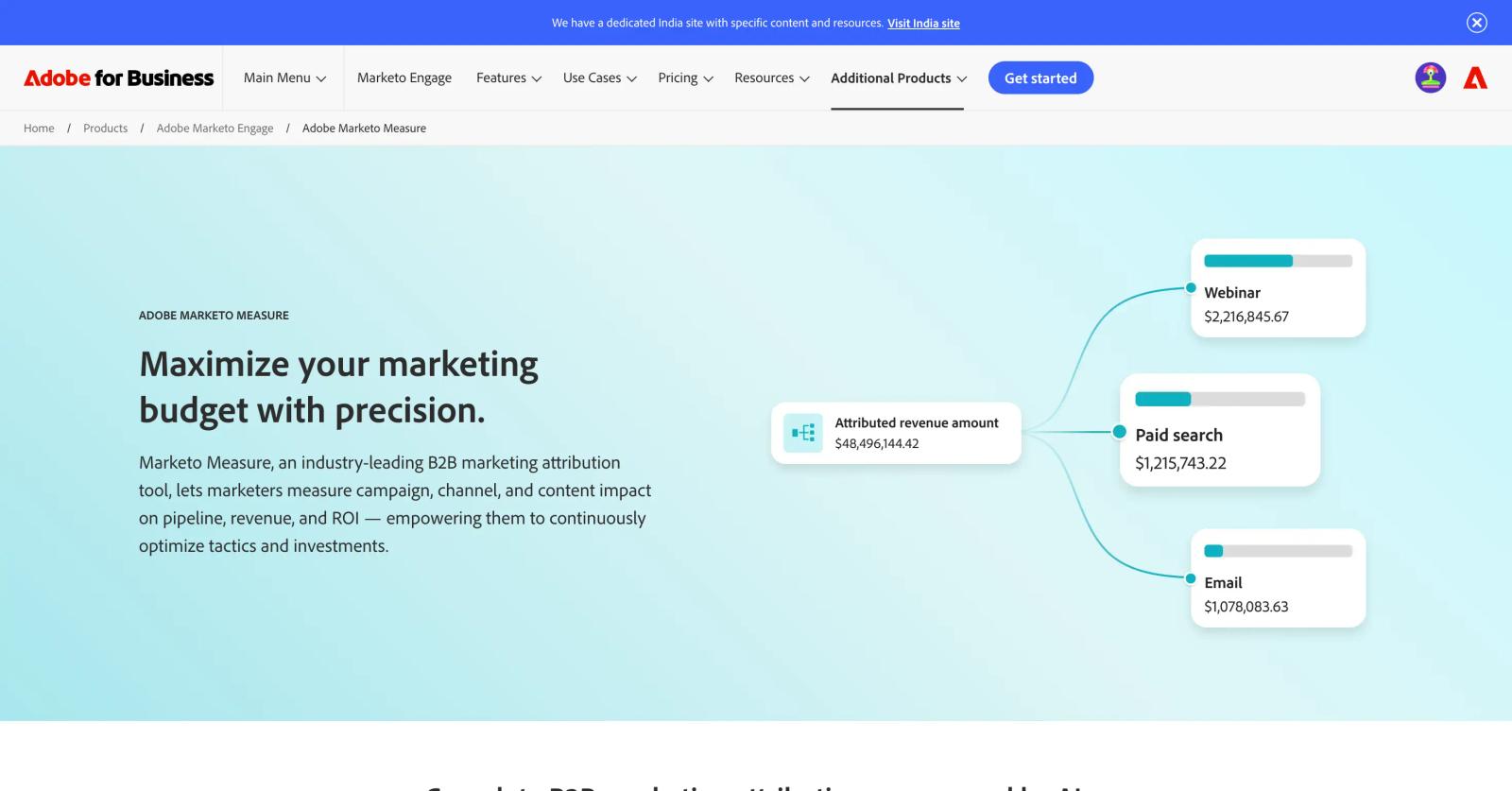
Marketo Measure is the enterprise B2B option, deeply tied to Adobe's stack and Salesforce.
When the CFO needs auditable attribution and the answer needs to survive board-level scrutiny, this is what gets bought. Time-to-value is not the metric.
Key capabilities
- Multi-touch revenue attribution at enterprise scale, with custom models that finance teams can audit
- Native Salesforce and Marketo integration including custom-object reads and writes
- Adobe Experience Cloud connectivity, useful when Adobe Analytics or Adobe Target are already in the stack
- Pipeline-stage progression tracking with attribution applied across stages, not just first-touch
- Custom reporting dashboards integrated with Salesforce reports and Adobe-native business intelligence
Watch-outs
Implementation is real. Most teams budget 60-90 days, a Salesforce admin, and a Marketo admin. Pricing is custom and rarely below $2,000 per month.
You're tied to the broader Adobe stack to extract full value. If you're not already on Marketo and Salesforce, the lift rarely justifies itself.
Pricing
Custom. Typically $2,000+ per month, often $40,000+ annually for mid-market.
Best for: Enterprise B2B already running Marketo and Salesforce, with mature ops teams and a board that asks hard attribution questions.
7. HubSpot Marketing Analytics
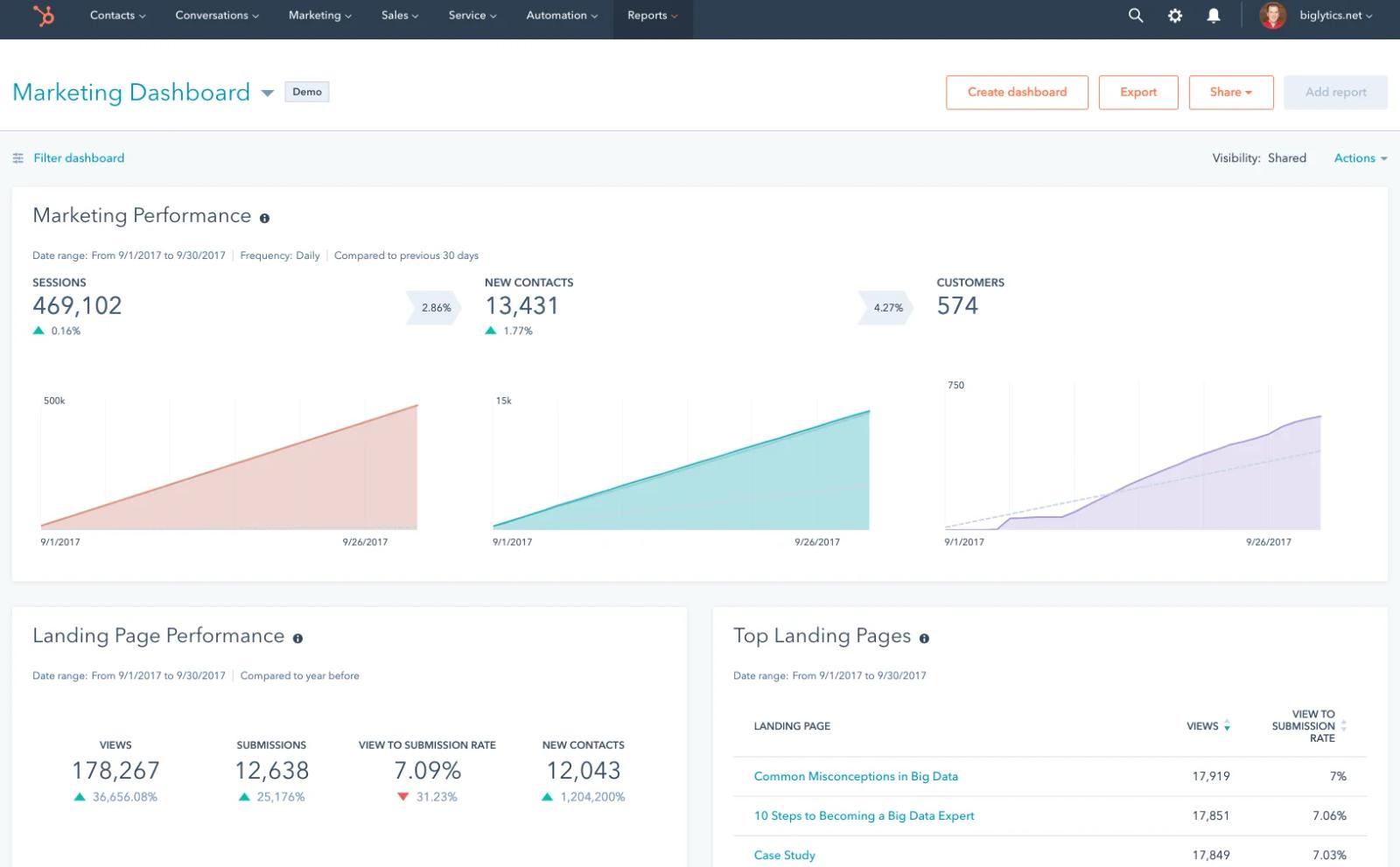
If your stack is HubSpot Marketing Hub Pro or Enterprise, the built-in attribution module is worth turning on before you evaluate anything else.
It's not as deep as Factors, Dreamdata, or HockeyStack. It is, however, already paid for and already inside the CRM your team uses every day. Attribution that's actually used beats attribution that's technically better.
Key capabilities
- Native integration with everything HubSpot already tracks: forms, contacts, deals, lifecycle stages, custom properties
- Multi-touch attribution models: linear, U-shaped, W-shaped, time-decay, full-path, with revenue at the deal level
- Custom property-based reporting that fits the way your team already thinks about data
- Closed-loop ad management integration with HubSpot's built-in Google and Facebook ad tools
- Source attribution on every contact and deal without any setup beyond turning the feature on
Watch-outs
Marketing Hub Professional is $800/month, Enterprise is $3,600/month. Starter doesn't include attribution.
The reporting works inside HubSpot's reporting paradigm. That's competent. Not loved. If you've been using BI tools or Looker for marketing analytics, HubSpot's reports will feel restrictive.
Pricing
Marketing Hub Professional from $800 per month (annual). Enterprise from $3,600 per month.
Best for: Teams already paying for Marketing Hub Pro or Enterprise who want one less platform to maintain.
8. Fibbler.io
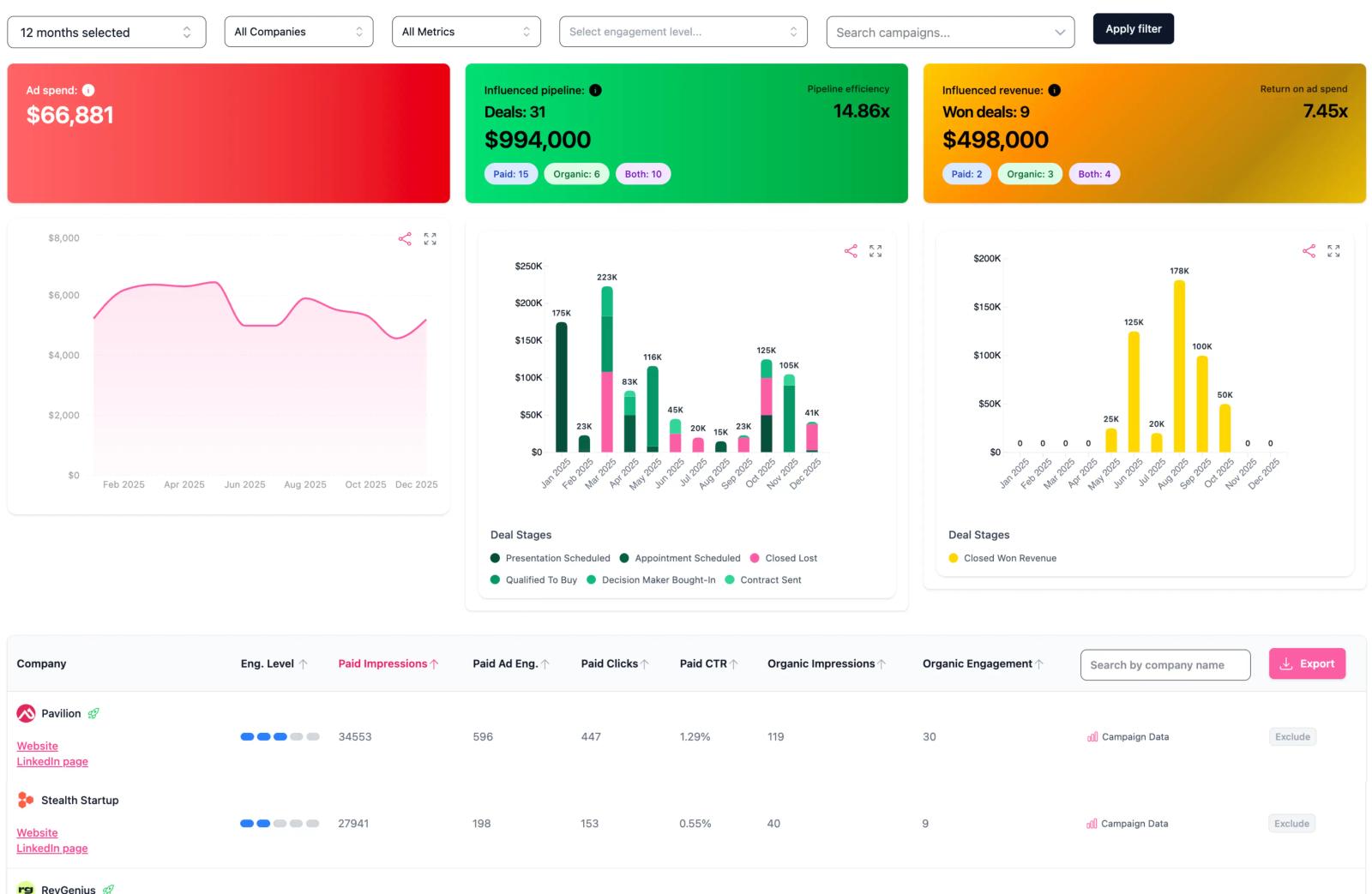
If you’re exploring alternatives to Factor.ai, Fibbler.io is a solid contender, especially if you care about simplifying attribution and getting faster, more actionable insights without heavy setup.
Fibbler focuses on making multi touch attribution and customer journey analysis more accessible for growing teams. Instead of overwhelming dashboards, it leans toward clarity and speed, something many marketers actually need but rarely get.
Key capabilities
- Multi touch attribution with clear channel contribution breakdown
- Customer journey visualization across touchpoints
- Lightweight setup compared to enterprise attribution tools
- Campaign level insights without needing deep data engineering support
- Integration with common marketing and analytics platforms
Watch-outs
- May lack the depth and customization of enterprise tools like Factor.ai
- Limited advanced modeling flexibility for highly complex use cases
- Not ideal if you need deep AMC level or warehouse native analysis
Pricing
From $89/month
Best for: Product-led B2B SaaS teams running LinkedIn ads
9. Attribution (attribution.app)
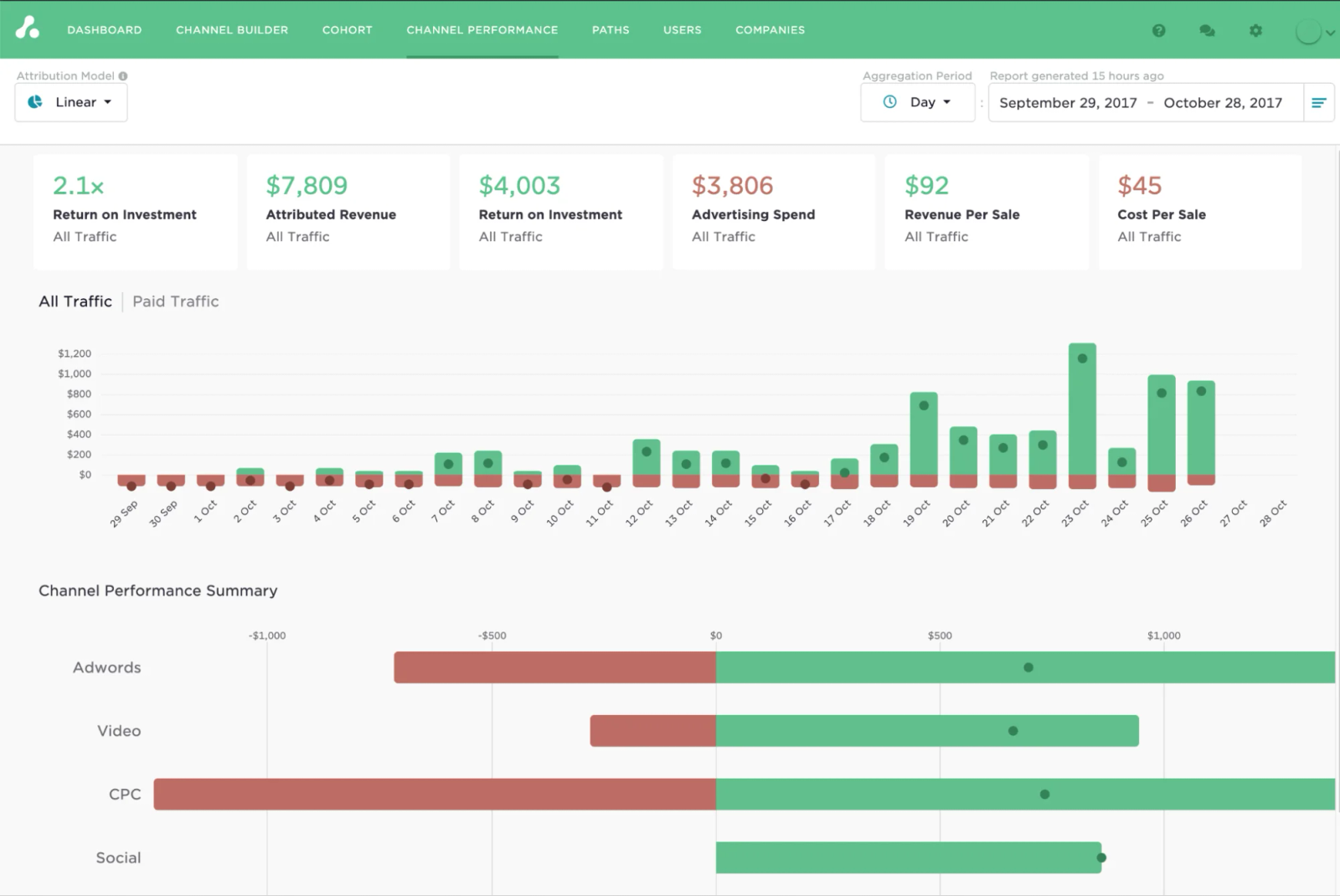
Attribution is the cheap, light option. Free tier. Multi-touch out of the box. Snippet-based capture. Sync to HubSpot, Salesforce, or webhooks.
For Factors users who looked at the bill and looked at what they actually use and decided the math doesn't work, this is where the cost-per-feature-actually-used calculation lands.
Key capabilities
- Free tier with limits generous enough to actually pilot the product
- Multi-touch attribution out of the box, including custom models on paid tiers
- Form and event capture through a single snippet, no implementation team required
- CRM sync to HubSpot, Salesforce, and arbitrary webhooks
- Lightweight by design, with no enterprise-onboarding pretense
Watch-outs
No account-level identification. No native ABM. No built-in CRM. No dark-social attribution. Ad-platform sync is light.
Roadmap activity has been quieter than I'd want for a tool I'm trusting with attribution data. Worth checking current state before committing.
Pricing
Free tier. Paid plans from around $99 per month.
Best for: Lean B2B teams that want light multi-touch attribution at near-zero cost, without account-level features.
How to pick the right one
Two questions sort this list cleanly.
Question one: do you actually need anonymous account identification?
If your sales team will use a list of "companies that visited the site but didn't convert," yes. If that list goes into the bottom drawer along with the last seven account-list dumps, probably no. Be honest. Most teams that buy account-ID-first tools don't act on the data.
If the answer is no, SourceLoop is the cleaner fit.
Create a free SourceLoop account.
If the answer is yes, question two: how mature is your ABM motion?
Early-stage (small target list, single SDR team, learning what works): Dreamdata or HockeyStack. Mid-market price, real depth, time-to-value measured in weeks not quarters.
Mid-market (defined ICP, multiple plays, some intent-data spend already): Factors itself stays competitive here, especially if LinkedIn is core. HockeyStack if AI-driven analysis matters. Dreamdata if Salesforce is the system of record.
Enterprise (large account list, outbound-heavy, multi-team coordination): 6sense or Demandbase. The price tag matches the operational scale required to use them.
Edge cases:
- Already on Marketo + Salesforce, finance asks audit questions → Marketo Measure
- Already paying for HubSpot Marketing Pro → HubSpot's built-in attribution
- Product-led B2B with self-serve trials → Heap
- Tiny budget, simple problem → Attribution
Frequently asked questions
-
What is the cheapest Factors.ai alternative?
Attribution at $0 (free tier) and SourceLoop at $49 per month are the lowest entry points. Attribution is light on dashboards and ad sync. SourceLoop ships full multi-touch dashboards, dark-social attribution, and offline ad sync at the entry tier. For most B2B teams the SourceLoop $49 plan covers more than Factors' free trial does.
-
Does any alternative include LinkedIn intent the way Factors does?
Not in the same way. 6sense and Demandbase have LinkedIn signal coverage as part of their broader intent data, but it's not the same as Factors' direct LinkedIn engagement layer. Dreamdata, HockeyStack, and HubSpot all integrate with LinkedIn Ads for offline conversion sync but don't surface LinkedIn engagement signals on accounts the way Factors does. If LinkedIn intent is the specific reason you're on Factors, no alternative is a clean swap.
-
Is Factors.ai's free trial useful?
It's 15 days, which isn't long enough for B2B teams with longer cycles to see meaningful attribution data accumulate. Most teams need to run a paid pilot to evaluate Factors honestly. Plan for at least 30-60 days of paid use before deciding.
-
Can I migrate from Factors easily?
Technical migration is straightforward. Snippet swap, CRM connector reconfiguration, ad-platform reconnection. The harder part is rebuilding any custom playbooks, account scoring rules, or LinkedIn-engagement workflows you set up over time. Most attribution tools don't import historical visitor sessions, so the new tool's lookback fills up over 30-90 days.
-
What's better for ABM: Factors, 6sense, or Demandbase?
Different tiers. Factors is mid-market priced ($899-ish per month) with strong LinkedIn ties. 6sense and Demandbase are enterprise ($50k+ per year) with broader intent data and orchestration platforms. If your account list is small and LinkedIn is your primary channel, Factors. If your motion is large-scale outbound with predictive intent, 6sense. If you run paid ABM advertising at scale, Demandbase.


 Paid Social


