
7 Best Full Circle Insights Alternatives - Compared for 2026
A practical look at the attribution tools modern marketing teams are actually choosing in 2026, and how to pick the right one for your stack.
Table of contents
Full Circle Insights has been around for a while. A lot of B2B teams swear by it, mostly because it lives inside Salesforce and doesn't move data around.
But it's not for everyone.
Spend ten minutes reading G2 reviews and you'll see the same complaints over and over. Setup takes forever. Small dashboard tweaks need a developer. Support is hit or miss. And the price tag isn't friendly to smaller teams.
If you're here, you've probably already felt some version of that pain. So here are eight alternatives actually worth your time this year.
Full Circle Insights alternatives compared
| Tool | Starts at | Setup time | Needs Salesforce | Multi-touch | Ad conversion sync | Best fit |
|---|---|---|---|---|---|---|
 SourceLoop SourceLoop |
$49 / mo | Same day | No | Yes | 7 platforms | Most B2B and SaaS teams |
 Full Circle Insights Full Circle Insights |
Quote only | 1 to 8 weeks | Yes | Yes | No | Salesforce-native reporting |
| Adobe Marketo Measure |
Quote only | Weeks | Salesforce or Marketo | Yes | No | Adobe and Marketo stacks |
 HockeyStack HockeyStack |
$1,399 / mo | Weeks | No | Yes | Limited | Mid-market B2B with ABM |
 Dreamdata Dreamdata |
Free tier, then ~$750 / mo | 1 to 2 months | No | Yes | Limited | Long B2B cycles, account-level |
| CaliberMind |
Quote only | Weeks | No | Yes | No | B2B data warehousing |
 Ruler Analytics Ruler Analytics |
~$179 / mo, annual | 2 to 3 weeks | No | Yes | Google and Meta | Call-heavy lead gen |
 Attribution Attribution |
$399 / mo | Days | No | Yes | 4 platforms | Mid-market B2B SaaS |
1. SourceLoop
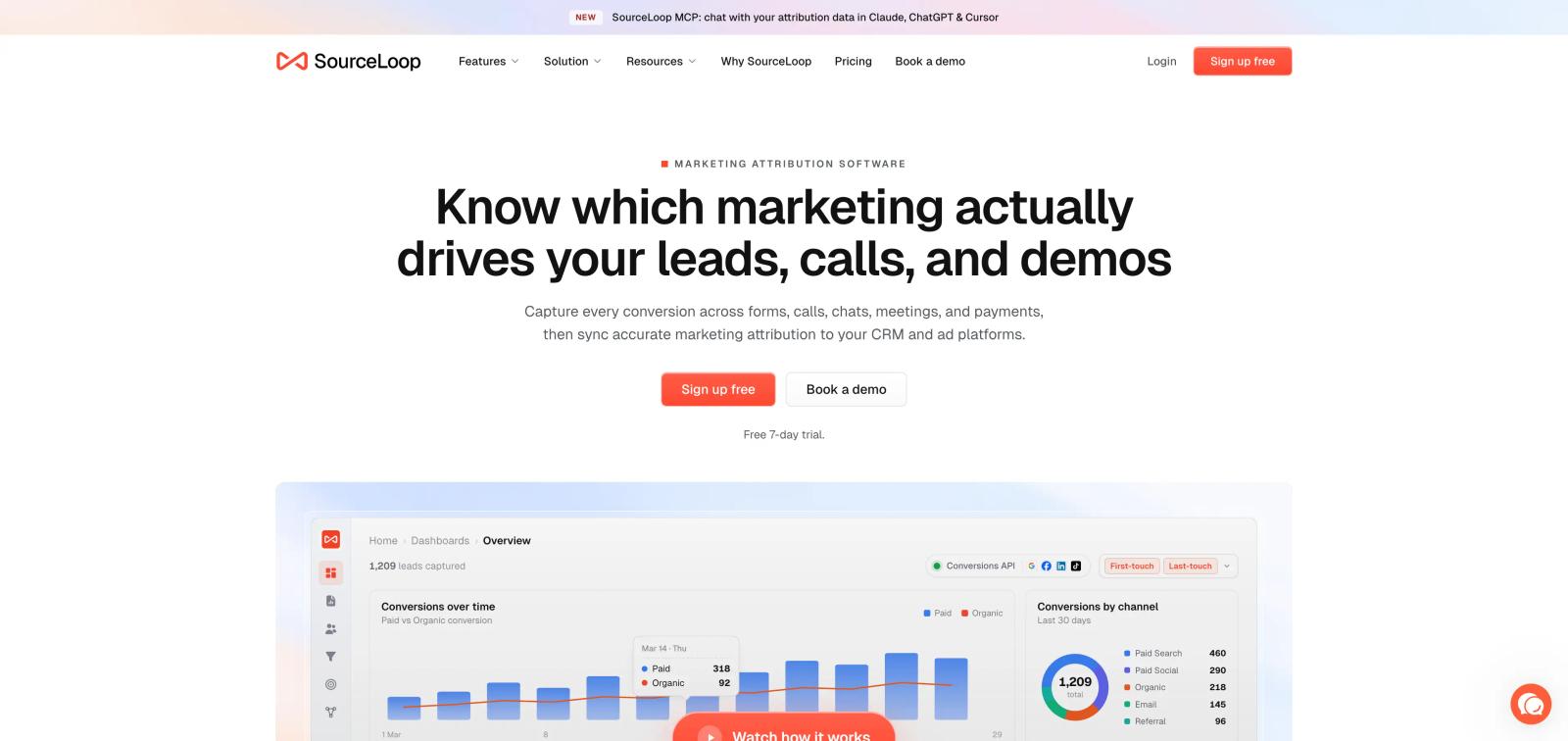
Here is the thing about Full Circle Insights that rarely gets said plainly: it measures what is already in Salesforce.
That is the whole design, and it is elegant. Attribution and funnel math run natively inside your org, sales and marketing read the same records, and nothing has to sync anywhere. With a clean org and an admin who owns it, it works.
The catch is upstream. If a lead lands in Salesforce with a Lead Source of Direct, Full Circle will faithfully attribute it to Direct.
When teams say their attribution is not accurate, the problem is almost never the model. It is that the UTM never survived the Calendly booking, or auto-tagging overwrote the campaign parameters, or the buyer researched on mobile and converted on desktop three weeks later.
SourceLoop works at that layer, and it does not require Salesforce.
One script, and you are collecting. No funnel stages to configure, no attribution models to build in Salesforce, no admin to brief. From the first pageview it records a first-party session per visitor: referrer, landing page, all five UTMs and the click ID. Setup is a same-day job rather than the one-to-eight-week implementation and dedicated owner that a Salesforce-native package needs.
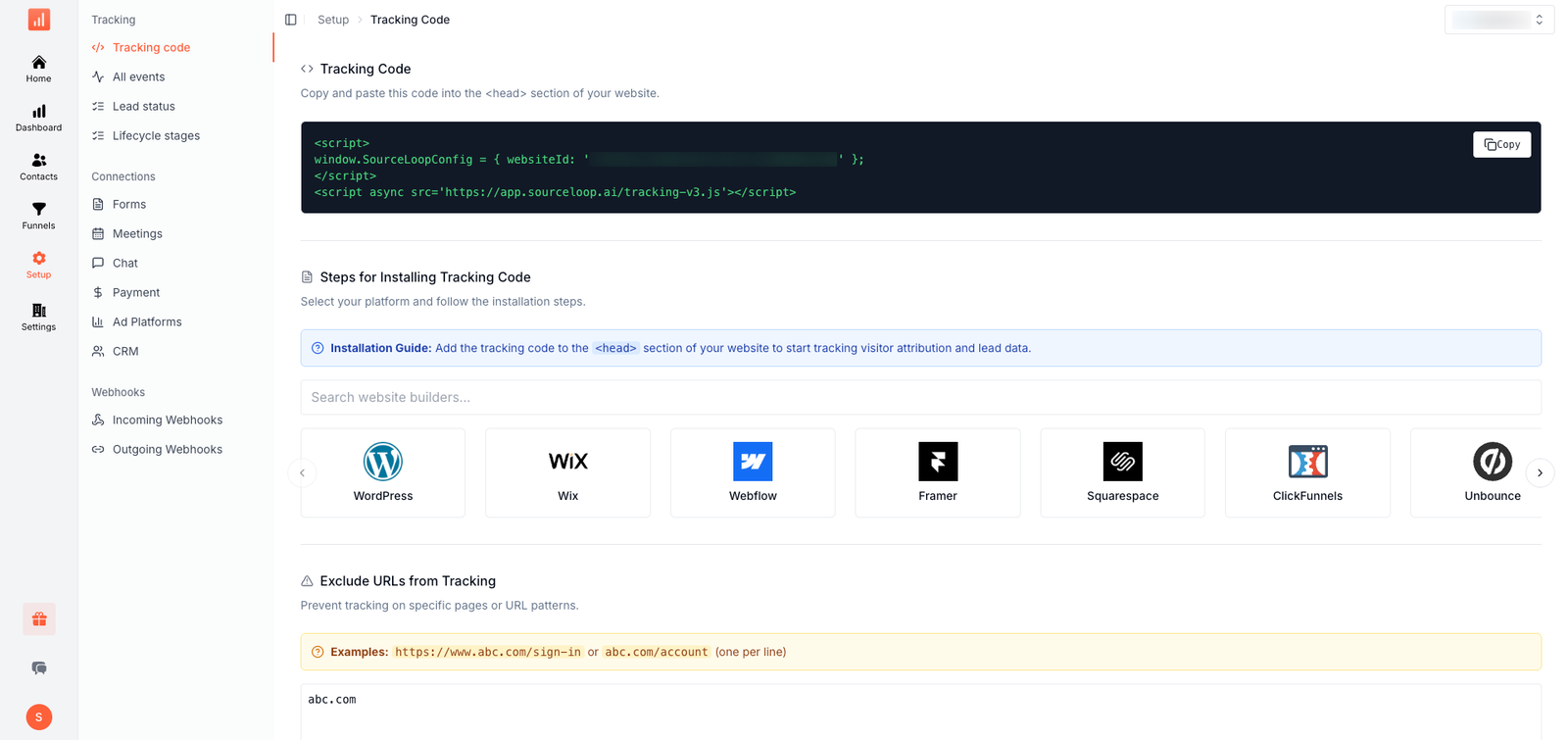
Nine click IDs, read ahead of the referrer. gclid, gbraid, wbraid, msclkid, fbclid, li_fat_id, ttclid, epik and rdt_cid. Reading them first is what stops a Google Ads click on iOS Safari from filing as Direct once the referrer is stripped, which is the single most common way a paid lead reaches Salesforce mislabelled.
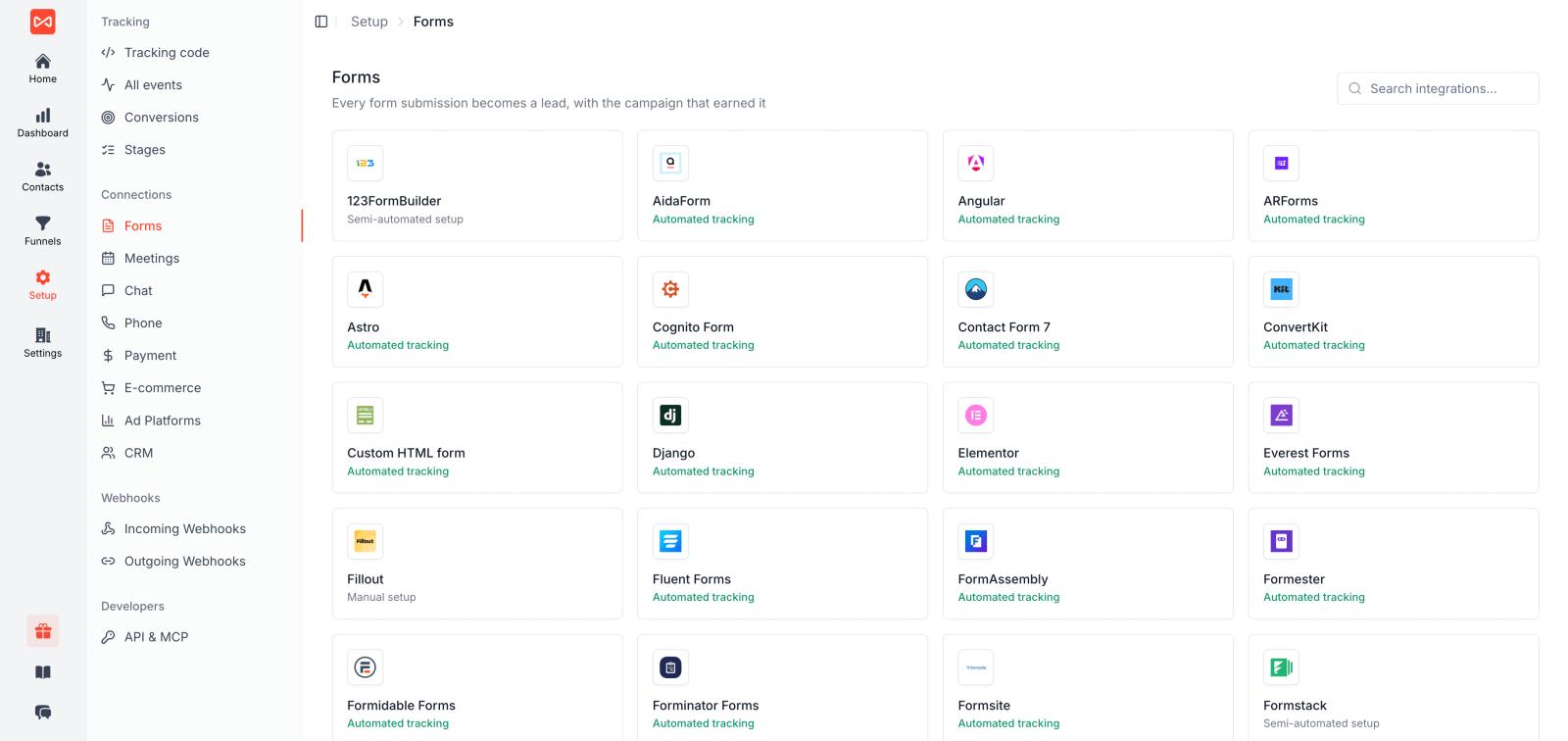
Around 70 lead tools captured automatically. This is the part Full Circle leaves to you and your Salesforce admin:
- Forms: Gravity Forms, WPForms, Contact Form 7, Fluent Forms, Elementor, Typeform, Tally, Jotform, Formstack, Webflow, Framer, HubSpot Forms
- Meetings: Calendly, Cal.com, HubSpot Meetings, Chili Piper, TidyCal, YouCanBookMe, Zoho Bookings
- Chat: Intercom, Drift, Crisp, Tidio, LiveChat, HubSpot Chat, Zendesk Chat
- Calls: CallRail, CallTrackingMetrics, Invoca
- Payments: Stripe, Paddle, Polar, Lemon Squeezy, Dodo Payments
Anything without a native integration POSTs to an incoming webhook and still arrives with the journey attached.
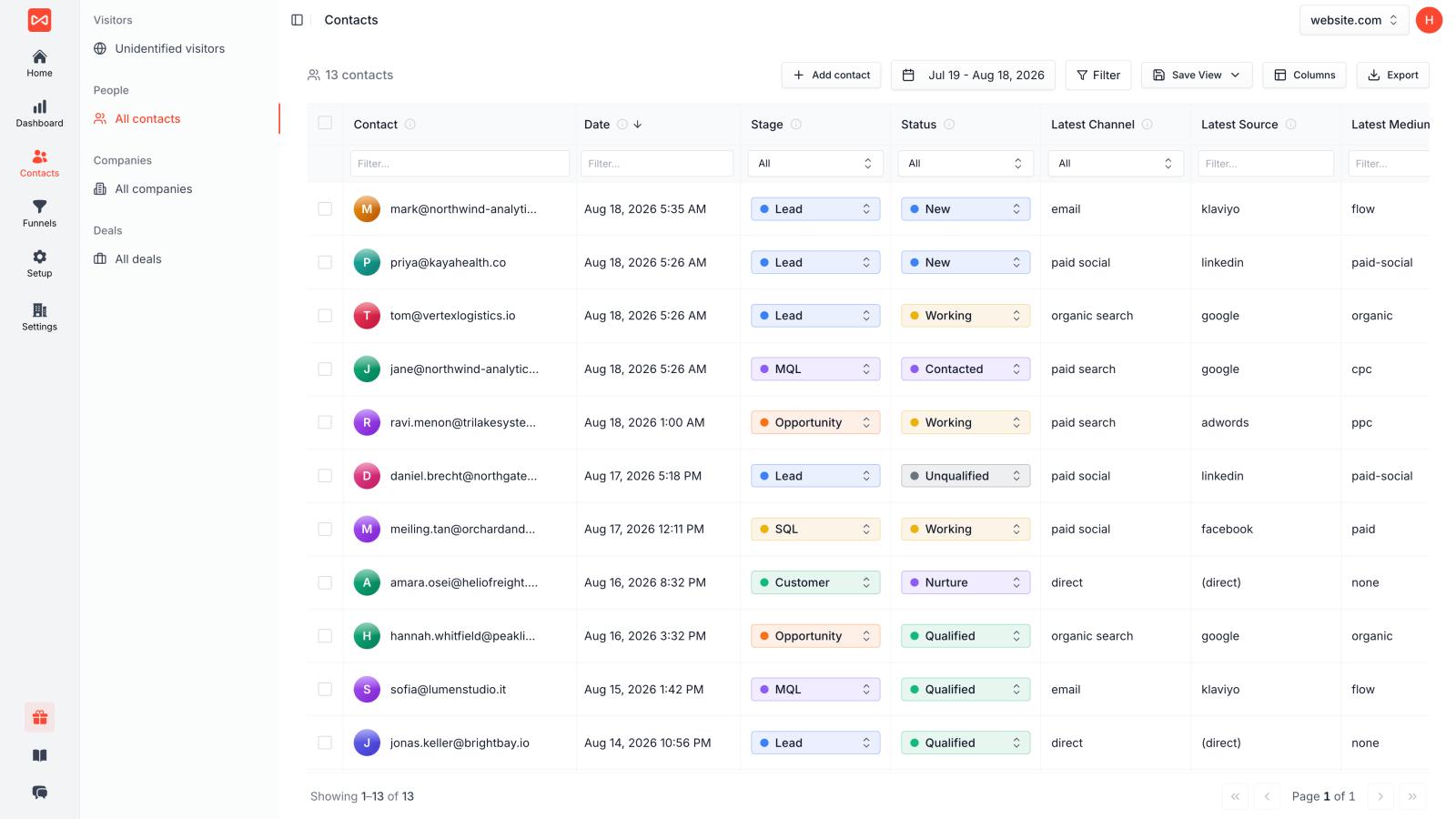
A journey per contact, and per account. Every contact gets a timeline: each session in order, how they arrived, what they read, where they converted. Identity stitching merges devices, so mobile research in week one and a desktop demo request in week six are one person. Companies roll up too, resolved from the domain on a captured lead email, so a six-person buying committee reads as one account journey.
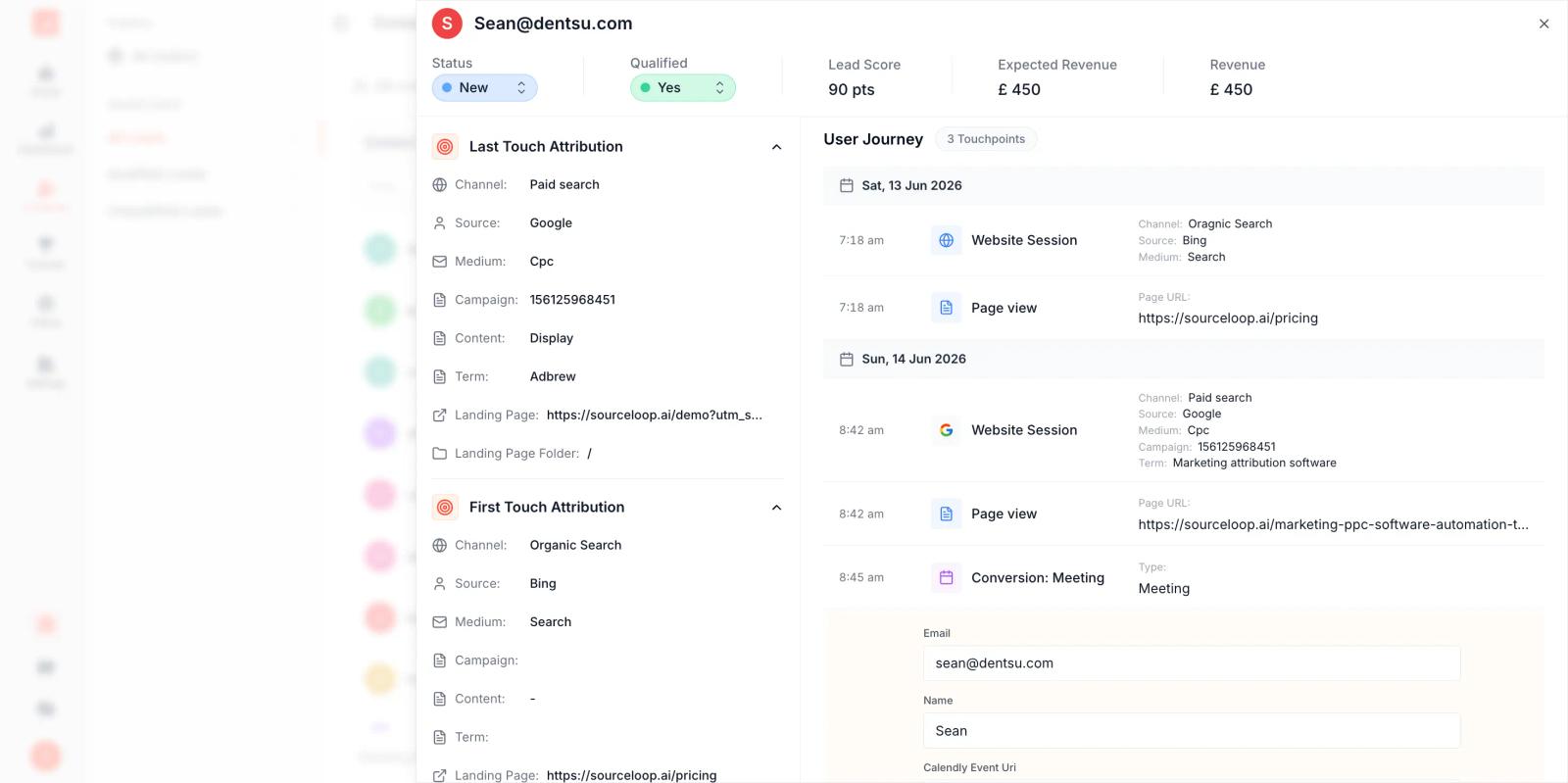
Seven attribution models, switched from a dropdown. First touch, last touch, linear, position-based, time decay, first non-direct and last non-direct, all on the same stored journey. In Full Circle, changing how you slice attribution means changing configuration in Salesforce.
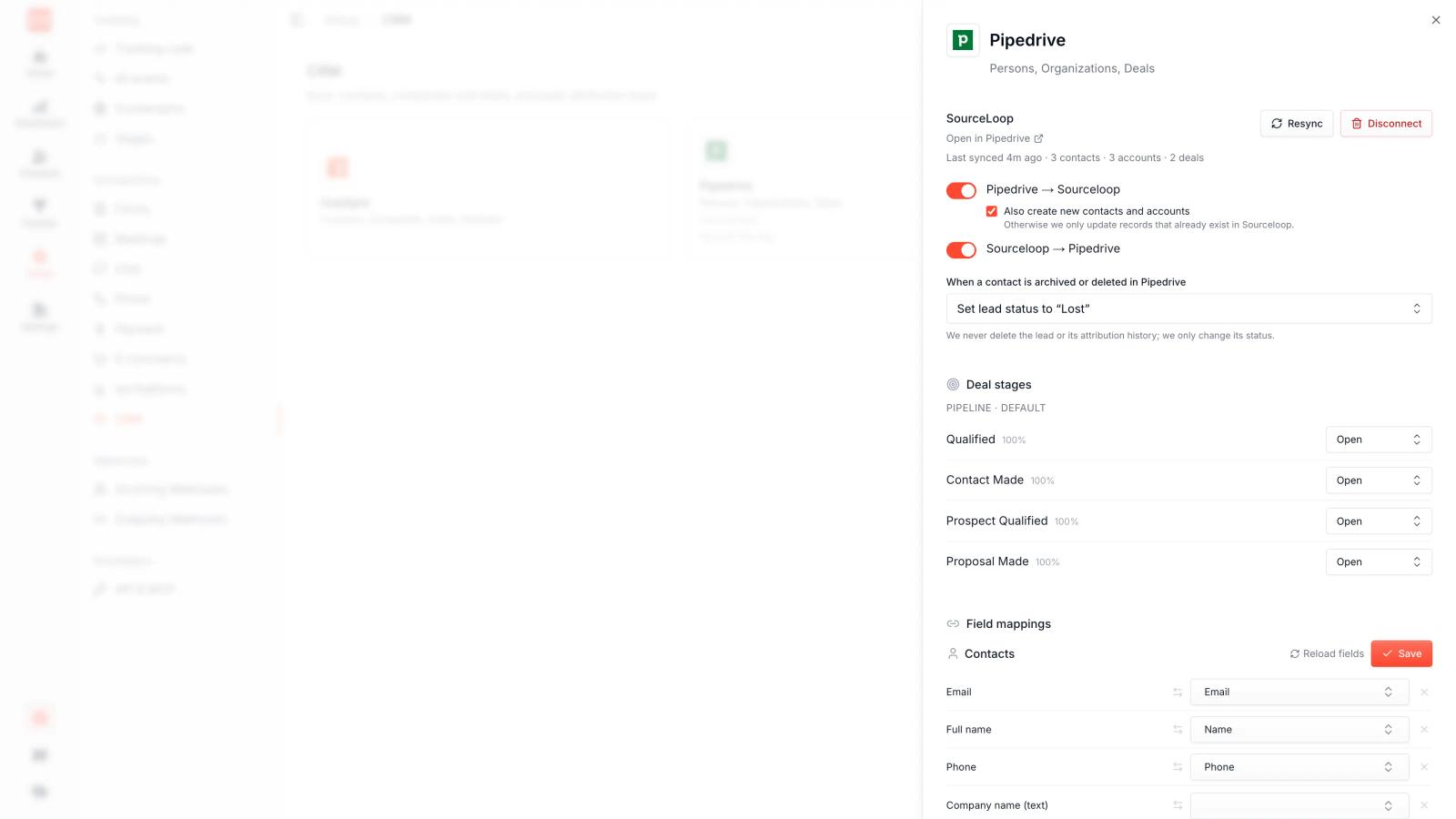
Two-way sync with four CRMs, not one. Salesforce, HubSpot, Pipedrive and Zoho. Attribution fields go onto the lead or contact; stages and closed-won values come back, with explicit mapping for Salesforce lead status, HubSpot lifecycle stages and Pipedrive labels.
That is not a footnote. Full Circle is Salesforce or nothing. If your company runs HubSpot, is moving off Salesforce, or has no CRM yet, it is not on your shortlist at all.
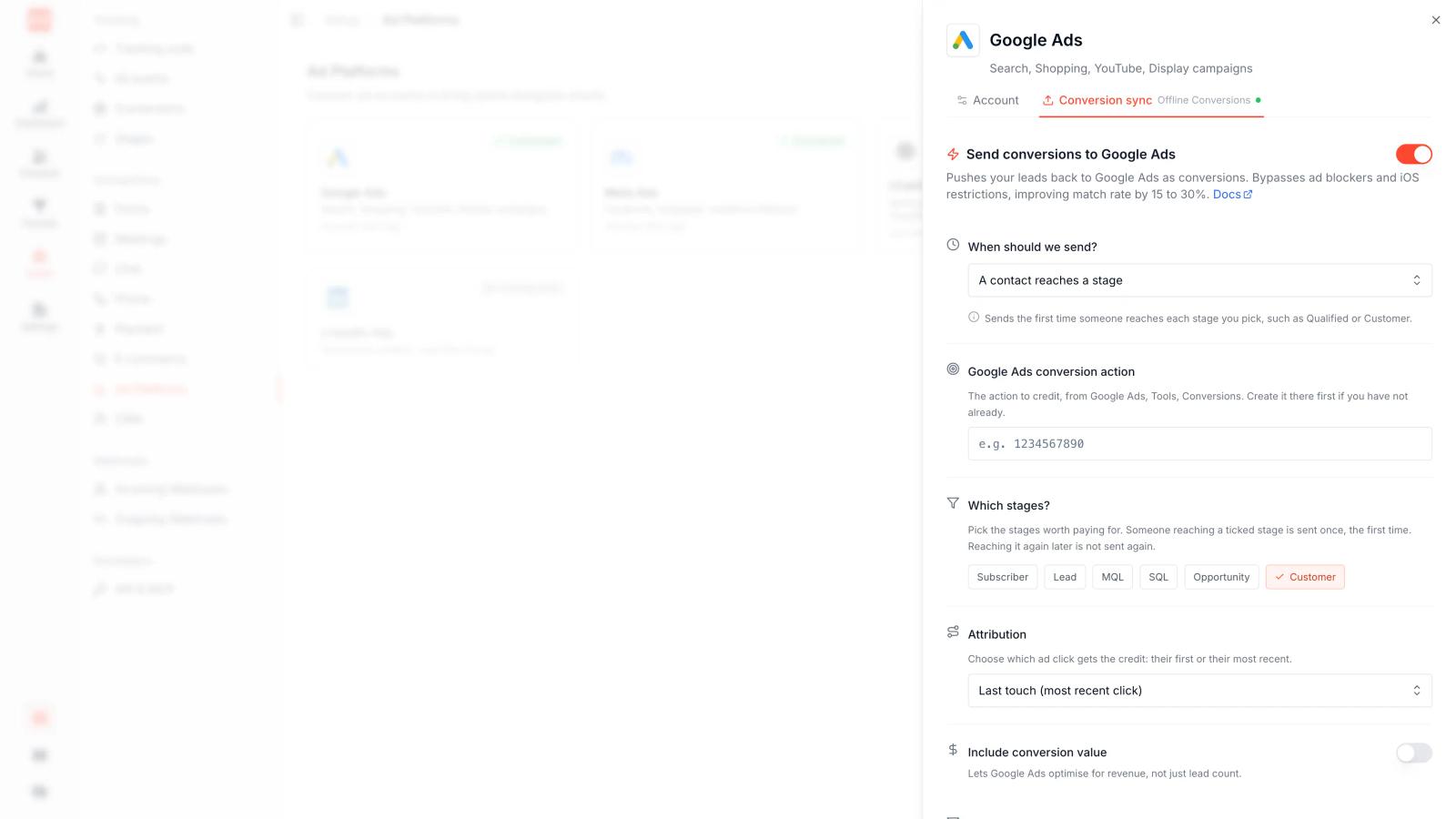
Conversions pushed back to the ad platforms. Full Circle is a measurement layer, not something built to feed the ad algorithms. SourceLoop pushes server-side to Google Ads Enhanced Conversions, Meta CAPI, LinkedIn CAPI, Microsoft Ads, TikTok, Pinterest and Reddit. Each mapping picks a trigger, can filter to one source, chooses first or last touch, and sets the value source and dedup window, so Meta optimises toward the leads sales qualified at their real deal value rather than raw form fills.
And the rest: revenue stitched from Stripe, Paddle, Polar, Lemon Squeezy and Dodo Payments; page-level content attribution; white-label dashboards for agencies; webhooks, Zapier and Make; an MCP server and REST API for querying attribution from an AI agent.
Pricing: Essential $49/mo covers 1 site, 1 user and 30k page views a month. Professional $99/mo adds 3 users and 100k page views. Agency $249/mo covers 3 sites, unlimited users and 2.5M page views. Tracked conversions are unlimited on every plan, annual billing takes 25% off, and there is a 7-day trial with no card.
Where it is not the answer: if reporting genuinely has to live inside Salesforce because that is where your executives already read everything, Full Circle's native model is a real advantage and SourceLoop will not replicate it. Same if you need heavy ABM buyer-group analytics against a named target account list.
If you want a clear answer about where pipeline came from without an implementation project, SourceLoop is the practical starting point.
2. Adobe Marketo Measure (formerly Bizible)
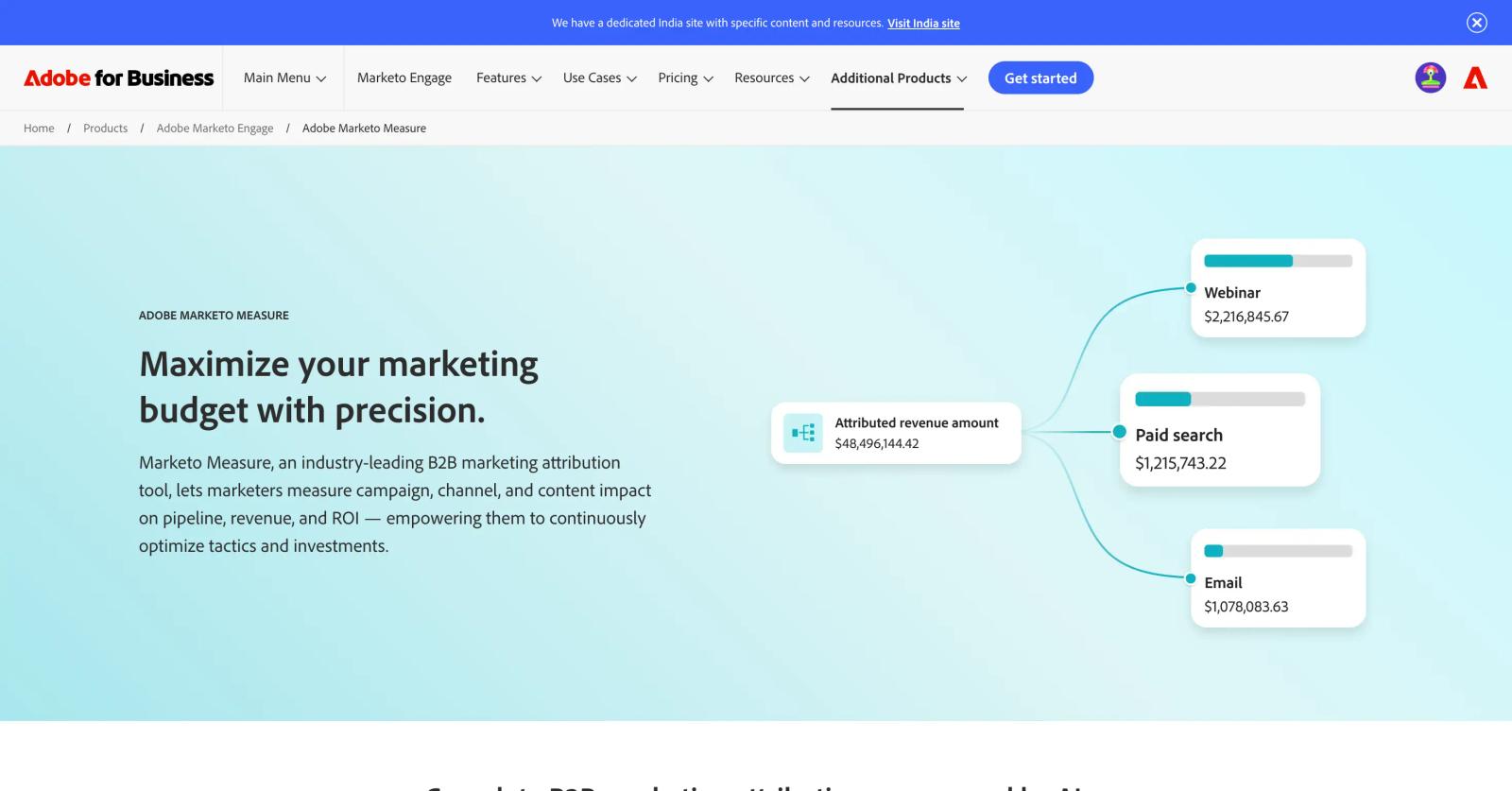
Marketo Measure is Full Circle's louder, more enterprise-y cousin. It used to be called Bizible. Adobe bought it, renamed it, and now it sits inside their broader marketing cloud.
It does multi-touch attribution well. It connects digital with offline. Paid with organic. Marketing with sales. Once it's actually set up, the reporting is solid and the data is hard to argue with in a board meeting.
The catch is the setup itself. This isn't something you knock out on a Friday afternoon. You'll likely need a marketing ops person who knows their way around Salesforce and Marketo, and the implementation can stretch weeks or months depending on how clean your existing data is.
What it's good at:
- Multi-touch attribution across long B2B sales cycles
- Connecting digital and offline touchpoints
- Tying paid spend back to closed revenue
- Deep integration with the Adobe and Marketo ecosystem
Where it falls short:
- Pricing scales with your database, so costs climb fast
- Implementation is heavy and resource-intensive
- Overkill for smaller teams or simpler funnels
If you're already deep in Adobe's stack and have the team to support it, this is a serious option. If not, it's probably more tool than you need. You can dig into the details on Adobe's product page.
3. HockeyStack
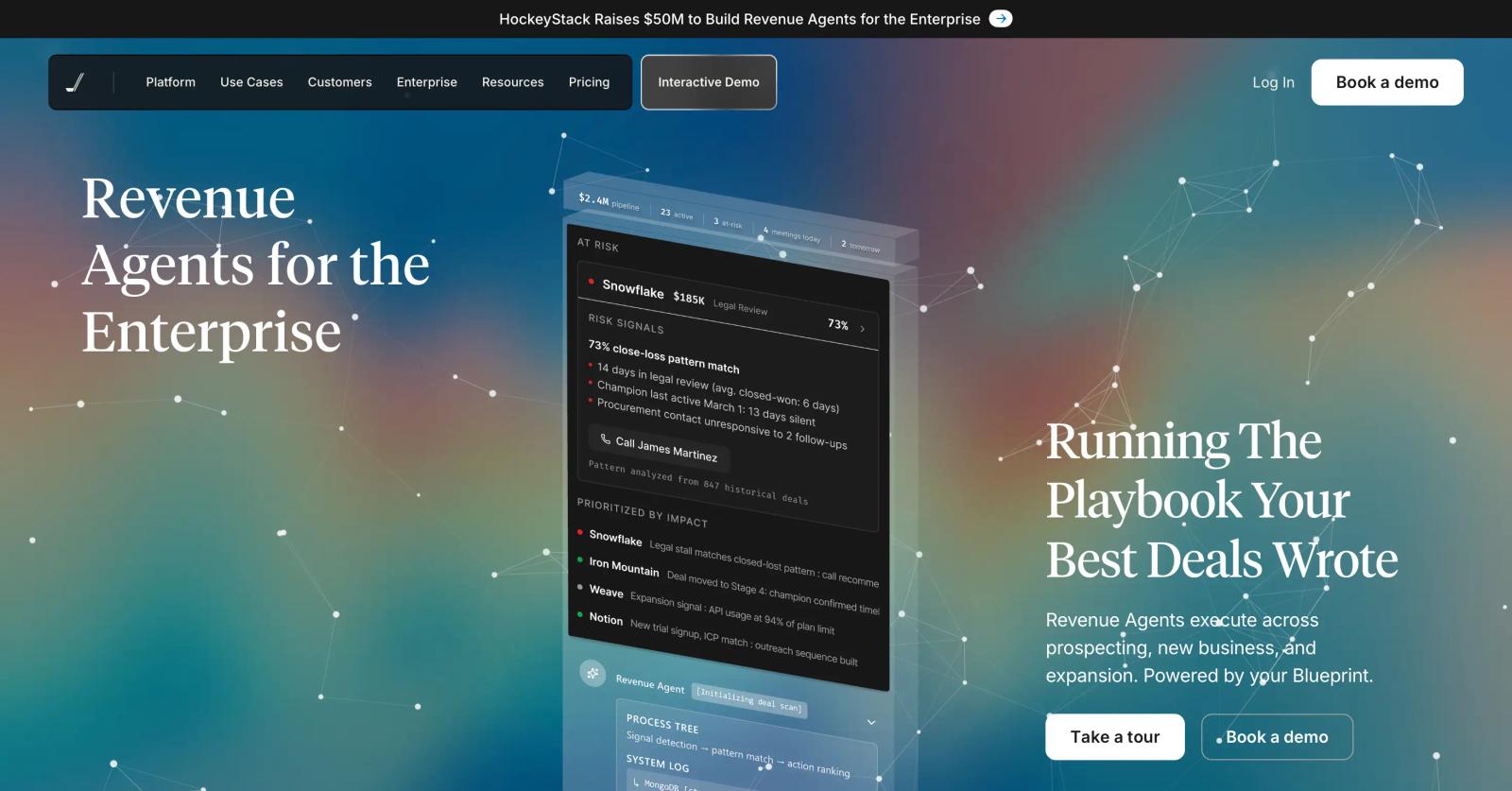
HockeyStack has been getting a lot of buzz lately, especially with B2B SaaS teams. And the buzz is mostly earned.
It's no-code, which already separates it from half the tools in this category. The dashboards are clean. And you can build attribution models the way you actually think about your funnel, not the way some product manager decided you should think about it years ago.
A few things it does well:
- Tracks every touchpoint across the buyer journey
- Lets you pick first-touch, last-touch, or build your own custom model
- Plays nicely with most marketing and sales tools
- Setup takes hours, not weeks
- Strong account-level reporting for B2B teams
The pricing is on the higher side though, so it's not really a "let me try this on a small budget" tool. It's built for teams who are serious about attribution and ready to commit.
If you're a SaaS marketer who wants real B2B attribution but doesn't want to run a six-month implementation project, give HockeyStack a look.
4. Dreamdata
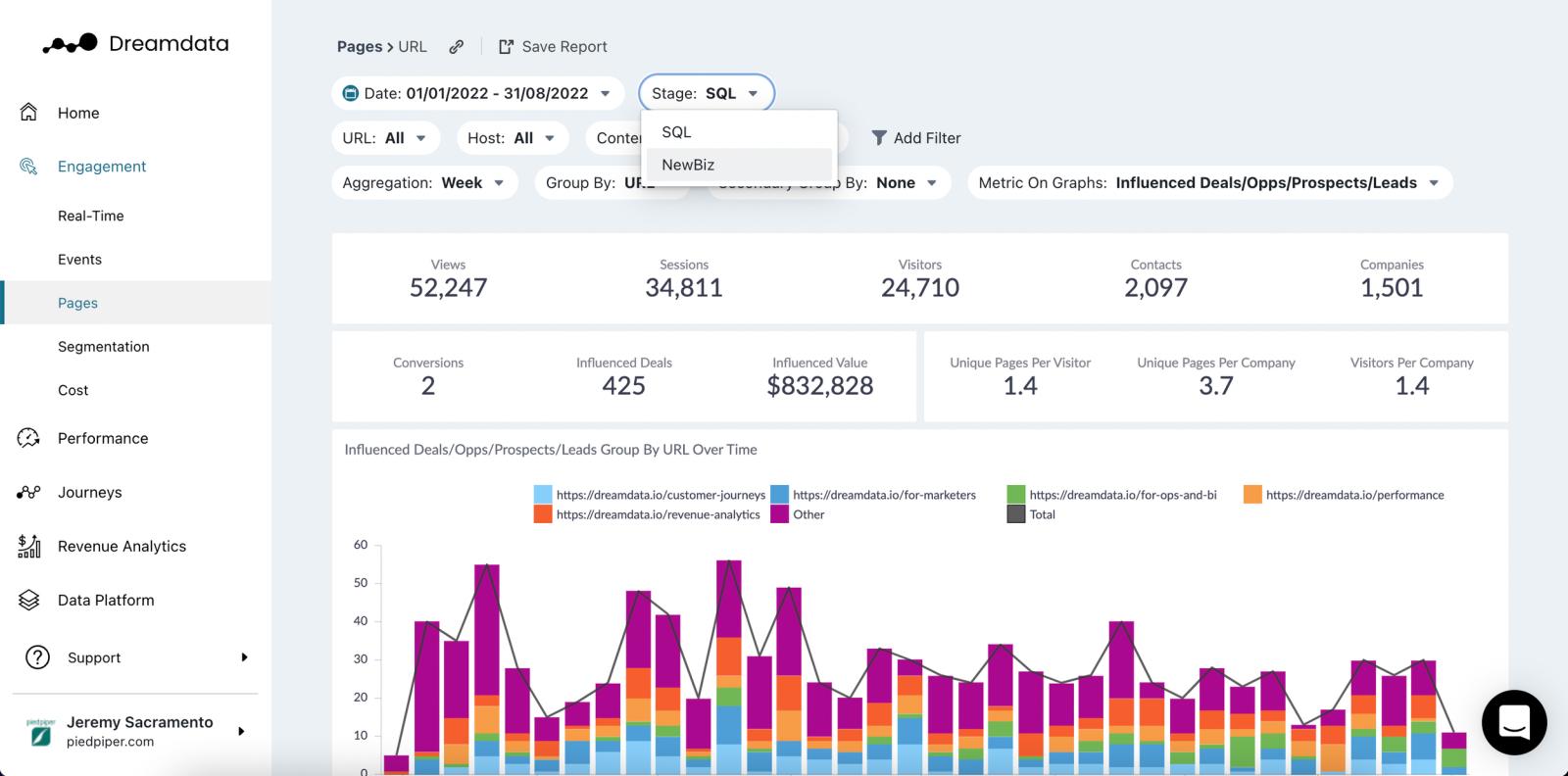
Dreamdata is built only for B2B. It doesn't try to be a Swiss Army knife, and that focus shows up in the product.
What it does is stitch together everything in your B2B sales motion. Anonymous visits, marketing automation activity, CRM data, product usage, all of it. Then it gives you the buyer journey at the account level, which matters a lot when you're selling to a committee of five people instead of one decision-maker.
There's also a free tier, which is rare in this space. You can poke around with real data before paying for anything. That alone makes Dreamdata more accessible than most enterprise attribution tools.
Best fit for:
- B2B teams with long, multi-stakeholder sales cycles
- Companies that want account-level attribution, not just lead-level
- Teams that don't want to be locked into Salesforce
- Anyone who wants to test the waters before committing budget
The free tier has limits, obviously, but it's enough to figure out whether the tool actually works for your data before you pay. Worth checking out at Dreamdata.io.
5. CaliberMind
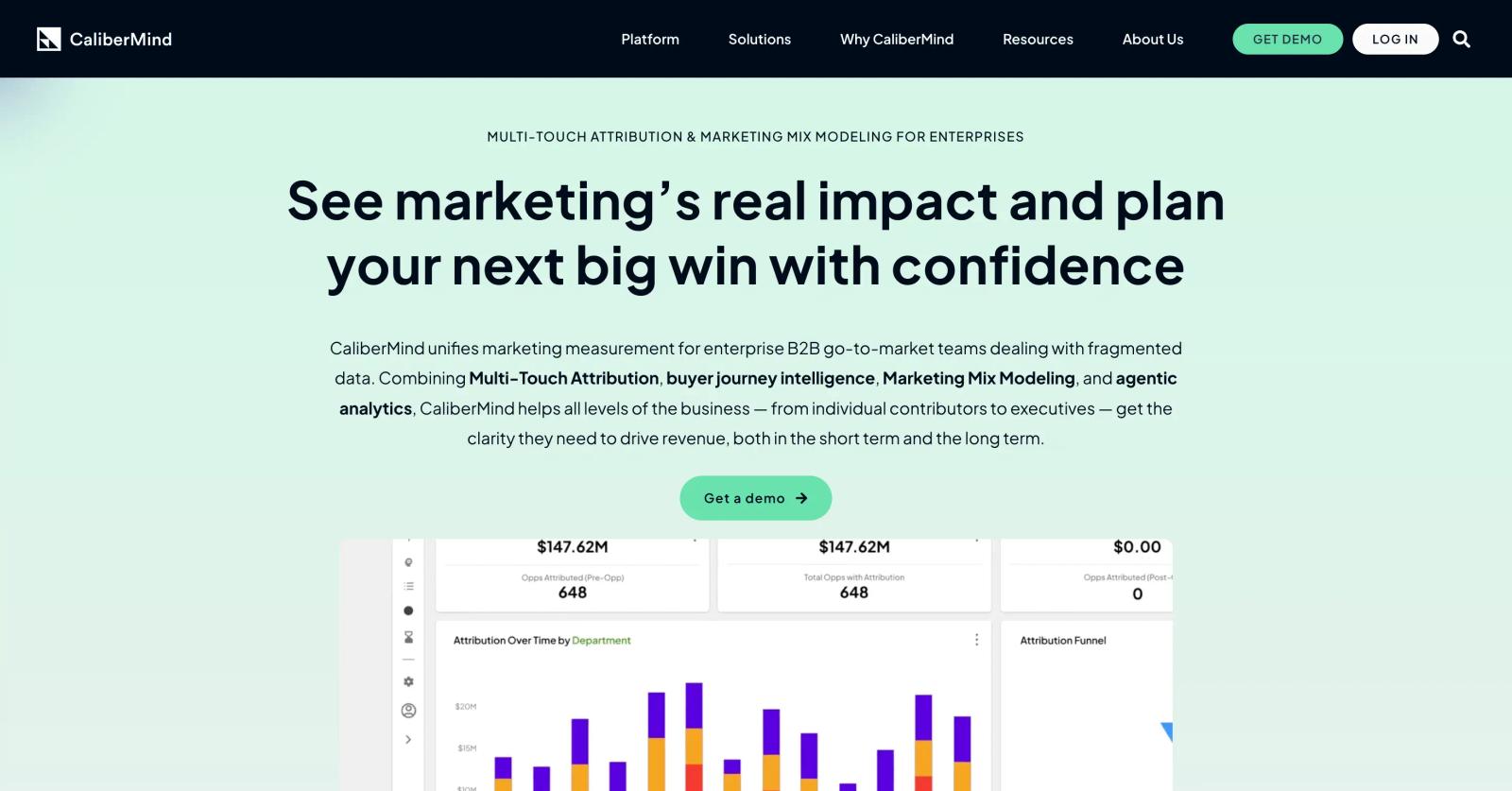
CaliberMind sits somewhere between a customer data platform and an attribution tool. It pulls data from everywhere your customers leave a footprint, cleans it up, deduplicates it, and runs analytics on top.
If your data is scattered across five different systems and nothing matches up, this is the kind of tool that earns its keep. The data orchestration piece is genuinely useful, and the multi-touch attribution sits cleanly on top of that unified data layer.
That said, it's not a weekend project. You need a marketing ops team that can actually own it day-to-day. Without that, even good tools like CaliberMind end up half-configured and underused.
Where it shines:
- Unifying messy data from CRM, marketing automation, and third-party tools
- Multi-touch attribution across complex customer journeys
- Built specifically for long B2B sales cycles
- Data orchestration that goes beyond what most attribution tools offer
Where to be cautious:
- Steeper learning curve than simpler attribution tools
- Needs ongoing ownership from a marketing ops person
- Probably too much tool for small teams
For mid-market and enterprise B2B teams with messy data, this is a strong contender.
6. Ruler Analytics
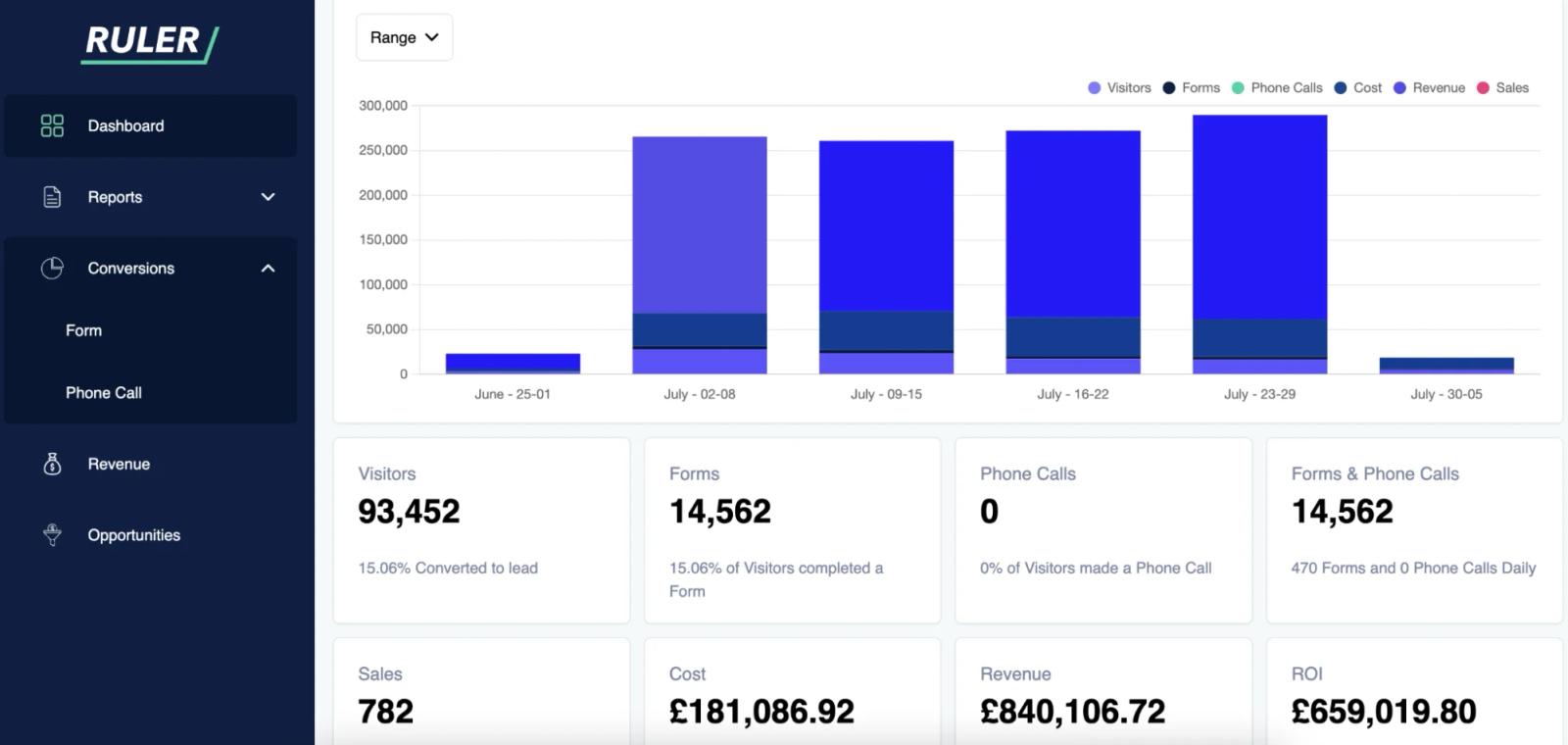
Ruler is one of the few attribution platforms that takes offline seriously. Phone calls, in-person meetings, the stuff most digital tools pretend doesn't exist.
If a meaningful chunk of your sales happen over the phone or face-to-face, this matters more than people realize. Most attribution tools will quietly credit those conversions to "direct" traffic and call it a day. Ruler actually traces them back to the marketing touchpoint that started the journey.
What stands out:
- Closed-loop attribution that follows leads from first click to closed deal
- Strong offline tracking, especially for call-driven businesses
- Automatic multi-touch attribution
- Plans start around $199/month, which is reasonable for what you get
- Solid customer support, based on most reviews
One thing to know upfront: Ruler only really kicks in after a lead converts. So if you're hoping for insights on anonymous traffic that never filled a form, you'll need a different tool. But for closed-loop reporting on actual leads, it's hard to beat. More info at Ruler Analytics.
7. Attribution
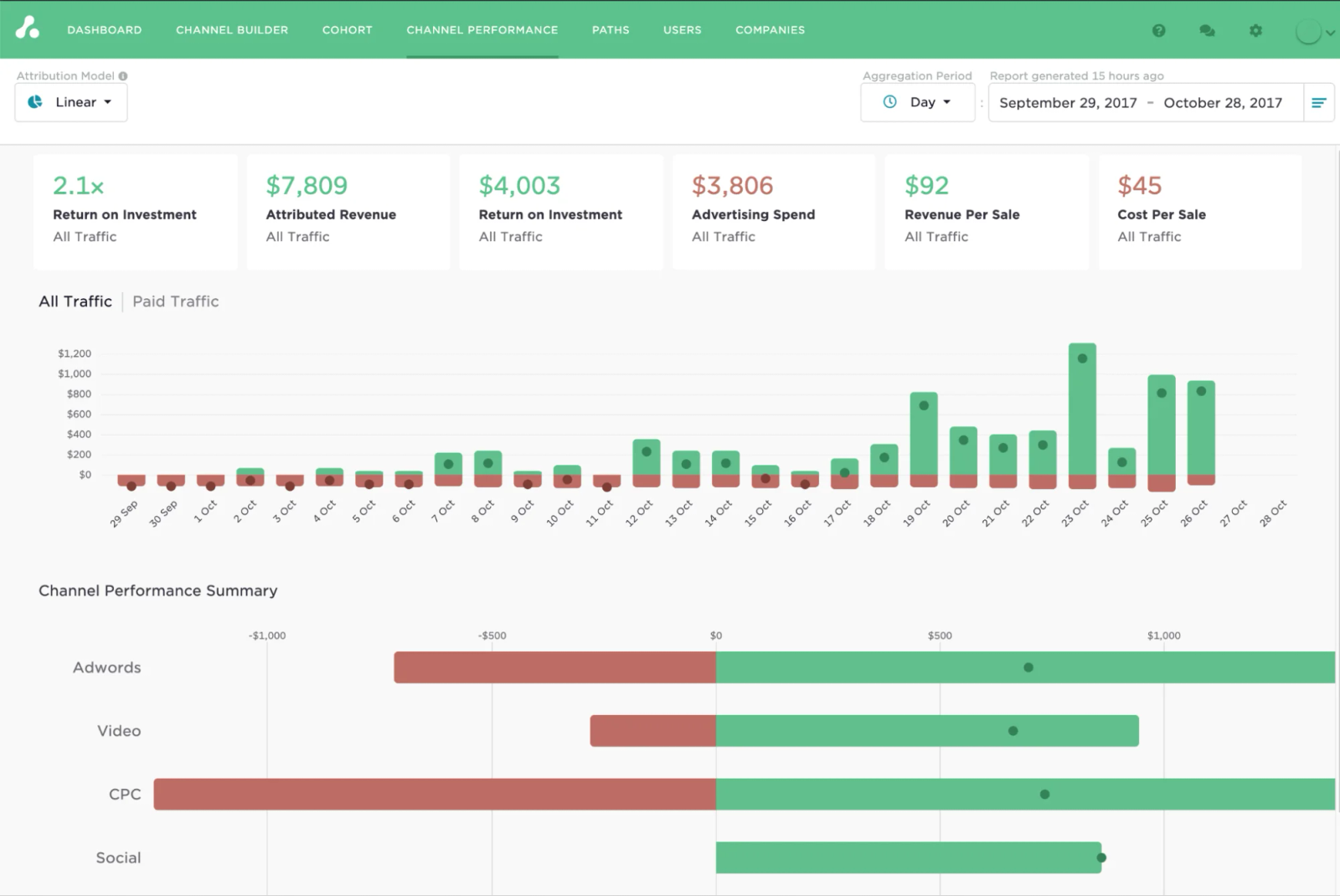
The tool is literally called Attribution. Confusing for SEO, fine for everything else.
It scores higher than Full Circle on G2 across pretty much every category that matters: ease of use (8.6 vs 6.6), ease of setup (8.8 vs 5.4), and support quality (9.4 vs 7.9). Those are not small gaps. They're the difference between a tool your team actually uses and one that sits in the corner gathering dust.
The dashboard pulls revenue, visits, conversions, and ROI into a single view. You can attribute at both the user level and the account level. There's also affiliate tracking baked in, which is handy if you run partner programs or have any kind of referral motion.
Key strengths:
- Genuinely easy to use, by attribution tool standards
- Quick setup, especially compared to Full Circle or Marketo Measure
- Strong multi-touch attribution at user and account level
- Affiliate and partner tracking included
- Solid support team that actually responds
The biggest selling point, based on most reviews, is just that it doesn't fight you. It works the way you'd expect a tool like this to work, which somehow remains rare in this category.
So How Do You Actually Pick One?
Here's the honest answer. There's no "best" attribution tool. There's only the one that fits your stack, your budget, and how much complexity your team can absorb.
A few questions worth sitting with before you commit:
How fast do you need answers? Some tools take an afternoon to set up. Others take months. If you need clarity by next quarter, don't pick something that needs a six-month rollout.
Are you locked into a CRM? Full Circle only works in Salesforce. Some tools are CRM-agnostic. Make sure your shortlist actually fits where your data lives.
Who's going to run it? If a tool needs a dedicated admin and you don't have one, it's going to sit unused. Pick something your team can actually maintain.
Where do your conversions happen? If it's all digital and inbound, most tools on this list work. If you've got offline sales, broadcast media, or partner channels, your options narrow fast.
My honest take? Most teams overshoot when they're picking attribution tools. They buy the enterprise platform thinking they'll grow into it, then it sits half-configured for two years while everyone keeps exporting CSVs and arguing about lead sources in Slack.



 Paid Social


