
10 Best Hyros Alternatives: Compared for 2026
10 attribution tools compared on price, features, and where each one fits.
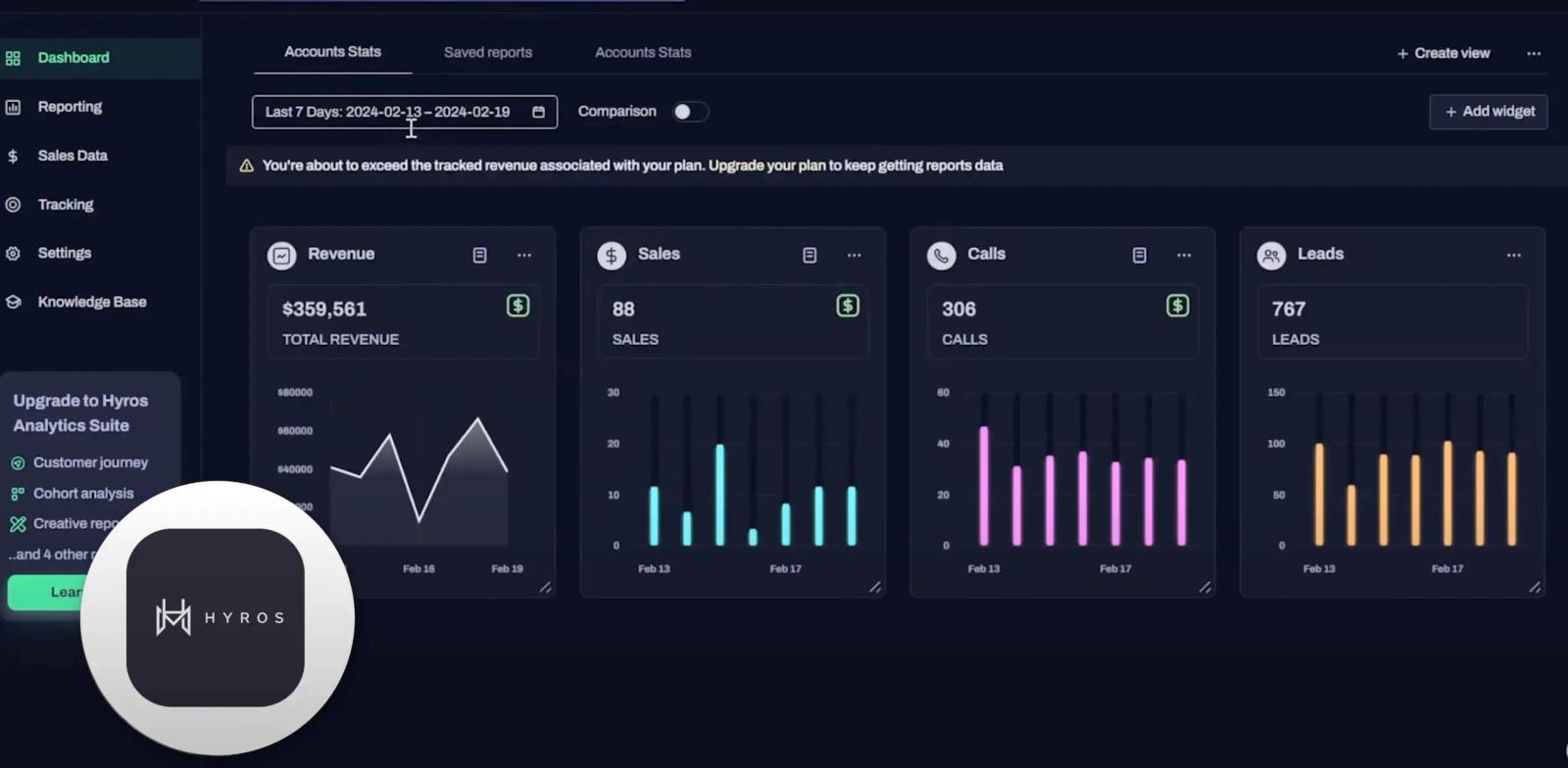
Table of contents
- Hyros Alternative Comparision
- 1. SourceLoop
- Key capabilities
- Limitations
- 2. SegMetrics
- Key capabilities
- Limitations
- 3. Triple Whale
- Key capabilities
- Limitations
- 4. Cometly
- Key capabilities
- Limitations
- 5. Northbeam
- Key capabilities
- Limitations
- 6. Wicked Reports
- Key capabilities
- Limitations
- 7. ThoughtMetric
- Key capabilities
- Limitations
- 8. RedTrack
- Key capabilities
- Limitations
- 9. Dreamdata
- Key capabilities
- Limitations
- 10. Attribution.app
- Key capabilities
- Limitations
- How to think about the choice
Hyros is a server-side ad attribution tool. It's popular with info-product sellers, course creators, coaches, and agencies. Tony Robbins uses it. So does Grant Cardone.
The reasons people leave usually aren't about the product. They're about the experience around it.
You can't see pricing without a demo. The cheapest tier starts around $230 a month and climbs from there. The platform is built for high-ticket and long-cycle businesses, so if your average order is $50 and your sales cycle is two days, you're paying for capabilities you don't use.
Here are ten Hyros alternatives, depending on what you actually want.
Hyros Alternative Comparision
| Tool | Starting price | Strength | Best fit |
|---|---|---|---|
 SourceLoop SourceLoop |
$49/mo | Journey + conversion sync | Most teams |
 SegMetrics SegMetrics |
$175/mo | Email + funnel tracking | Info products, courses |
 Triple Whale Triple Whale |
~$129/mo | Native Shopify + profit | DTC ecom on Shopify |
 Cometly Cometly |
Custom | Server-side + AI suggestions | Performance marketers |
 Northbeam Northbeam |
~$1,000/mo | MTA + MMM | Mid-to-large ecom |
 Wicked Reports Wicked Reports |
~$250/mo | LTV + cohort reporting | Subscription DTC |
 ThoughtMetric ThoughtMetric |
$99/mo | Multi-platform ecom | Mid-size brands |
 RedTrack RedTrack |
$149/mo | Server-side tracking | Affiliates + ad networks |
 Dreamdata Dreamdata |
Free / $999+ | Salesforce attribution | B2B SaaS |
 Attribution.app Attribution.app |
Free / $99+ | Cheap MTA | Smaller teams |
1. SourceLoop
If you bought Hyros because you needed long-cycle attribution that ties ad clicks to revenue weeks or months later, SourceLoop does a similar job for B2B and SaaS funnels.
The setup is fast.
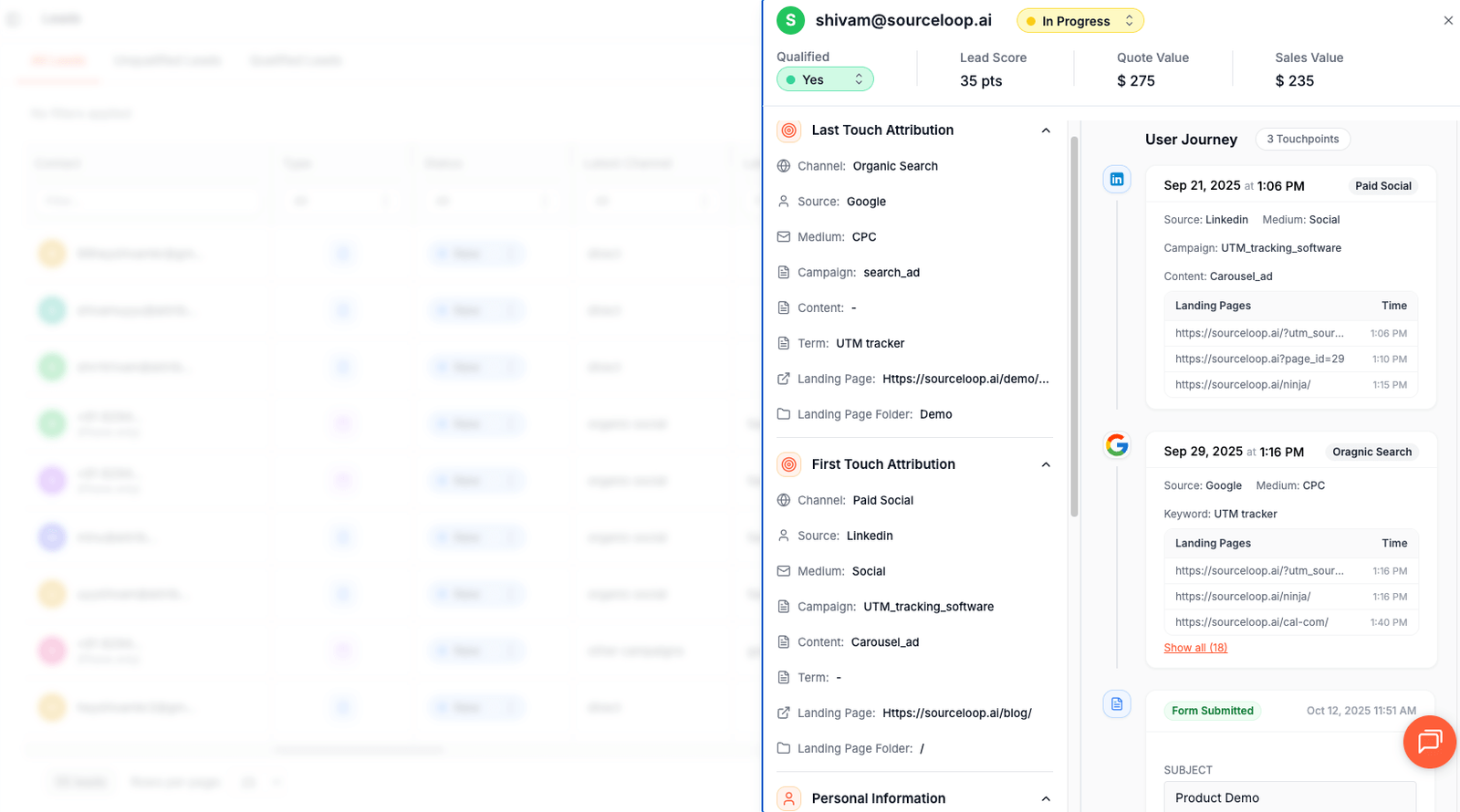
You drop a tracking script on your site. Every visitor is captured from that point on. Form fills, signups, demo bookings, paid trials, closed deals. All stitched into a journey automatically.
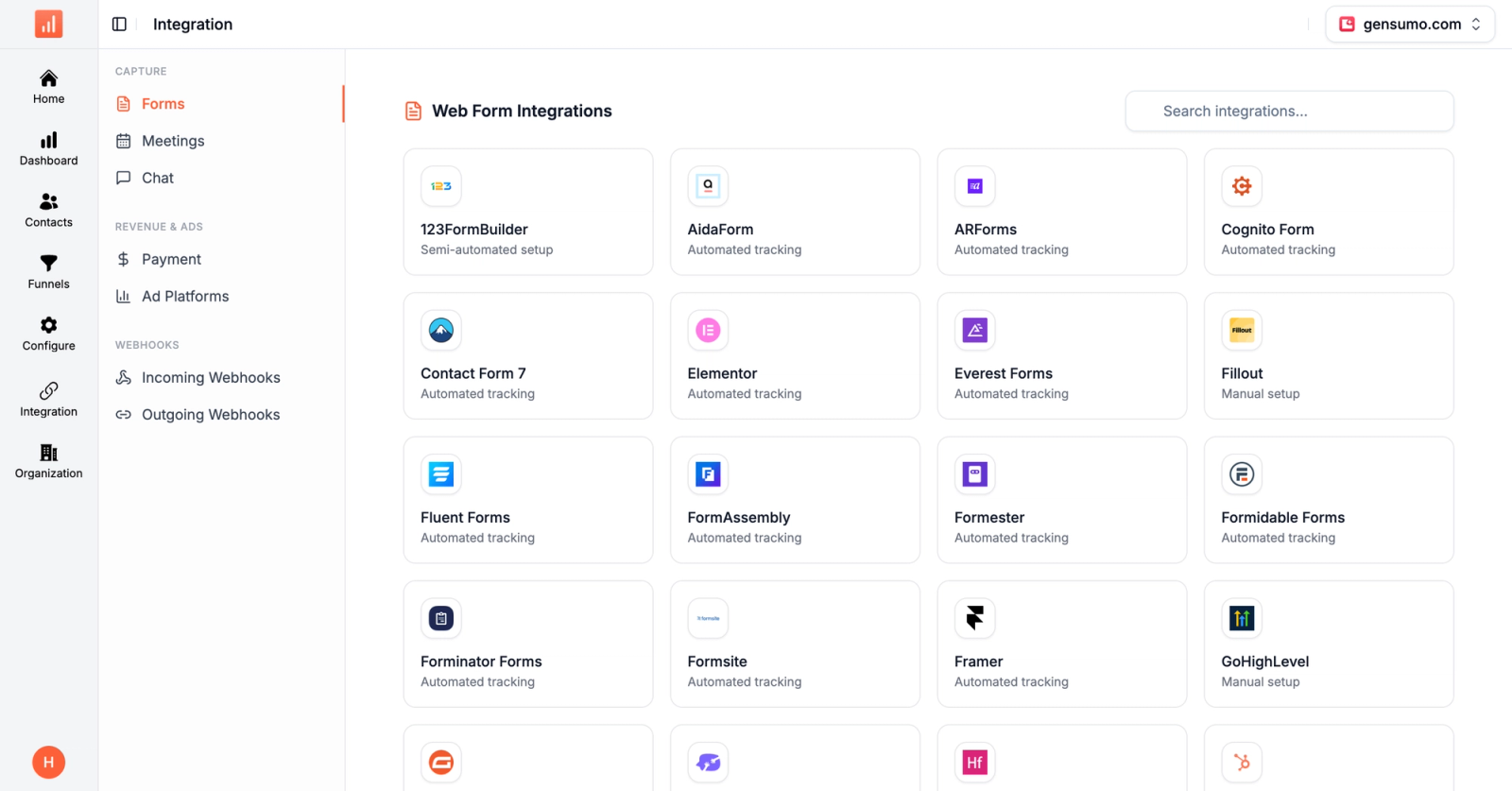
Form builders, schedulers, and chat tools are tracked out of the box. HubSpot Forms, Calendly, Typeform, Intercom, Stripe. They just work without you wiring anything up.
Hyros's invite-only sales process can take days before you even know what you'll pay. SourceLoop has public pricing and a 7-day free trial. You sign up, you're tracking the same hour.
Connect your ad accounts (Google, Meta, LinkedIn, TikTok) and SourceLoop pulls in spend data, ties it to journeys, and shows attribution at the campaign level. You can switch between multi-touch attribution models on the fly.
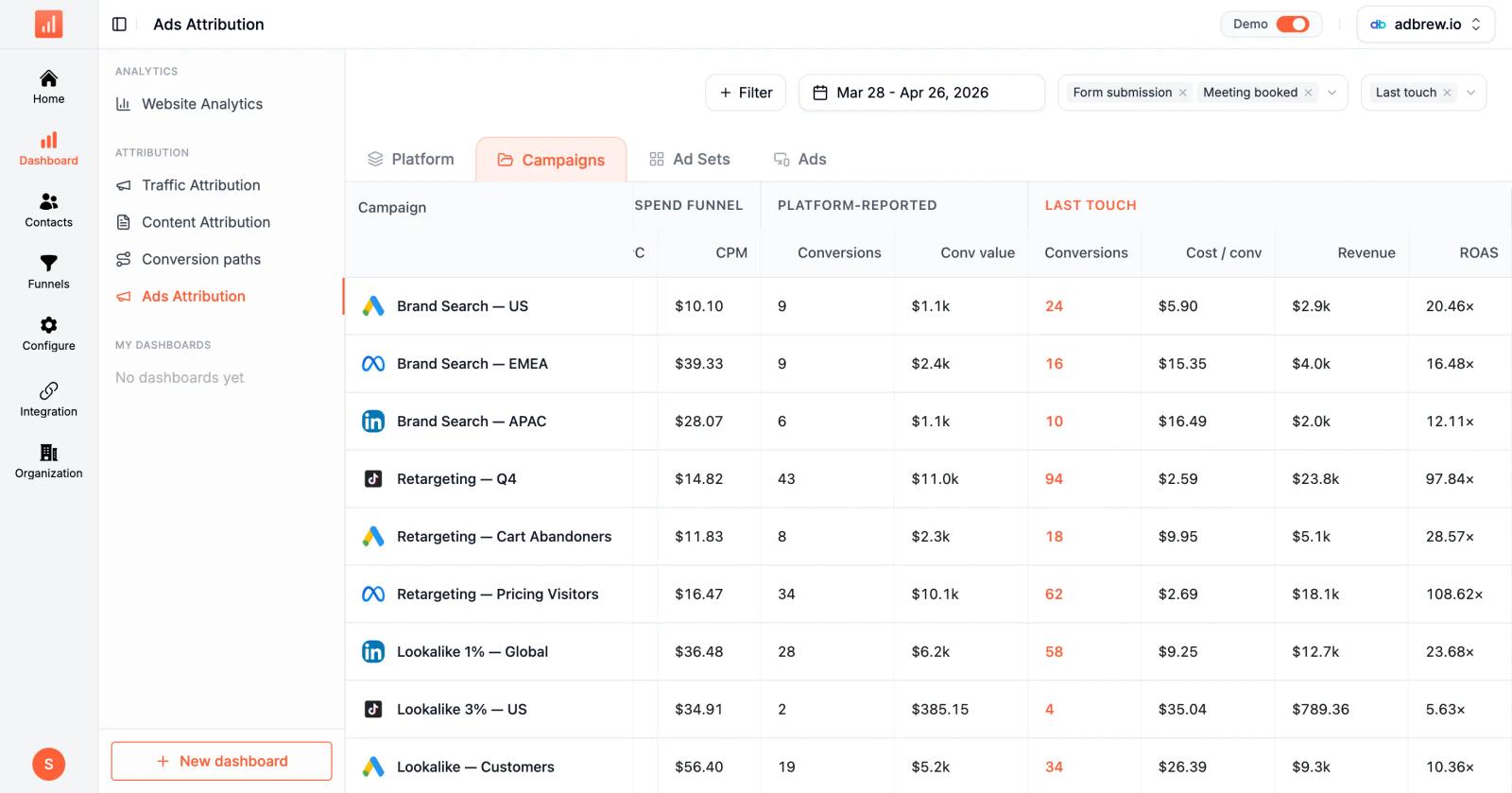
The conversion sync is the part most people care about.
SourceLoop pushes closed-won deals back to Meta CAPI, Google Ads, and LinkedIn so the ad algorithms learn from real revenue. That's the same thing Hyros does, just without the $1,500/month price tag.
For sales teams, the Contacts Hub puts attribution data right next to contact records. Reps see why a lead is in the pipeline without an extra CRM seat.
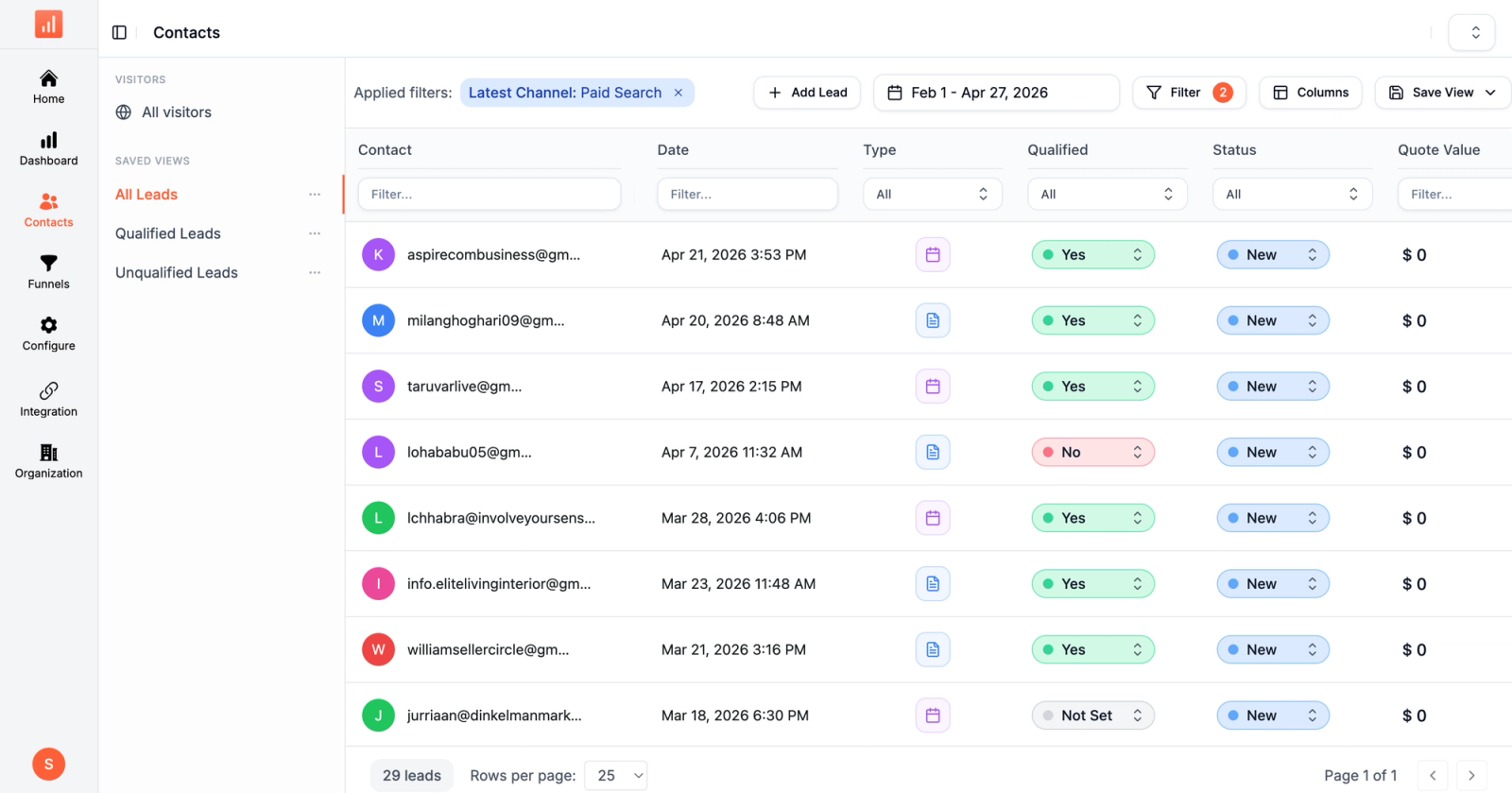
The honest trade-off is that SourceLoop isn't built for info-product funnels with sales calls and webinars. Hyros has spent years tuning for exactly that. If your funnel runs on phone closes and email sequences, SegMetrics or Hyros itself fits better.
Key capabilities
- A single tracking script that captures 100% of site traffic without third-party cookies, so iOS privacy changes and ad blockers don't break attribution the way they break pixel-based tools.
- Auto-tracking for the tools your team actually uses. Calendly bookings, HubSpot Forms, Typeform submissions, Intercom chats, and Stripe payments are detected automatically. No custom event setup.
- Multiple attribution models (multi-touch, first-touch, last-touch, position-based) you can switch between without re-tagging anything. Useful for comparing how different views of the funnel tell different stories.
- Built-in Contacts Hub that puts attribution data alongside contact records. Sales reps can see why a lead is in the pipeline without paying for an extra CRM seat.
- Native HubSpot integration with deeper sync, plus webhook-based sync for Salesforce, Pipedrive, Close, and most other CRMs.
- Conversion API sync to Meta, Google, LinkedIn, and TikTok. Closed-won deals get pushed back so the ad algorithms learn from real revenue, not surface-level form fills.
- Public pricing and a 7-day free trial with no demo required. You sign up, you're tracking the same hour.
Limitations
- Not built for info products with sales call funnels.
- No native call tracking.
- Less suited for ecom-heavy, high-velocity transaction tracking.
Pricing: Essential $49/mo covers 1 site, 1 user and 30k page views a month. Professional $99/mo adds 3 users and 100k page views. Agency $249/mo covers 3 sites, unlimited users and 2.5M page views. Tracked conversions are unlimited on every plan, annual billing takes 25% off, and there is a 7-day trial with no card.
Best for: B2B and SaaS teams with long sales cycles. Anyone tired of demo-only sales gates.
Try SourceLoop free for 7 days. No credit card. Setup takes about an hour.
2. SegMetrics
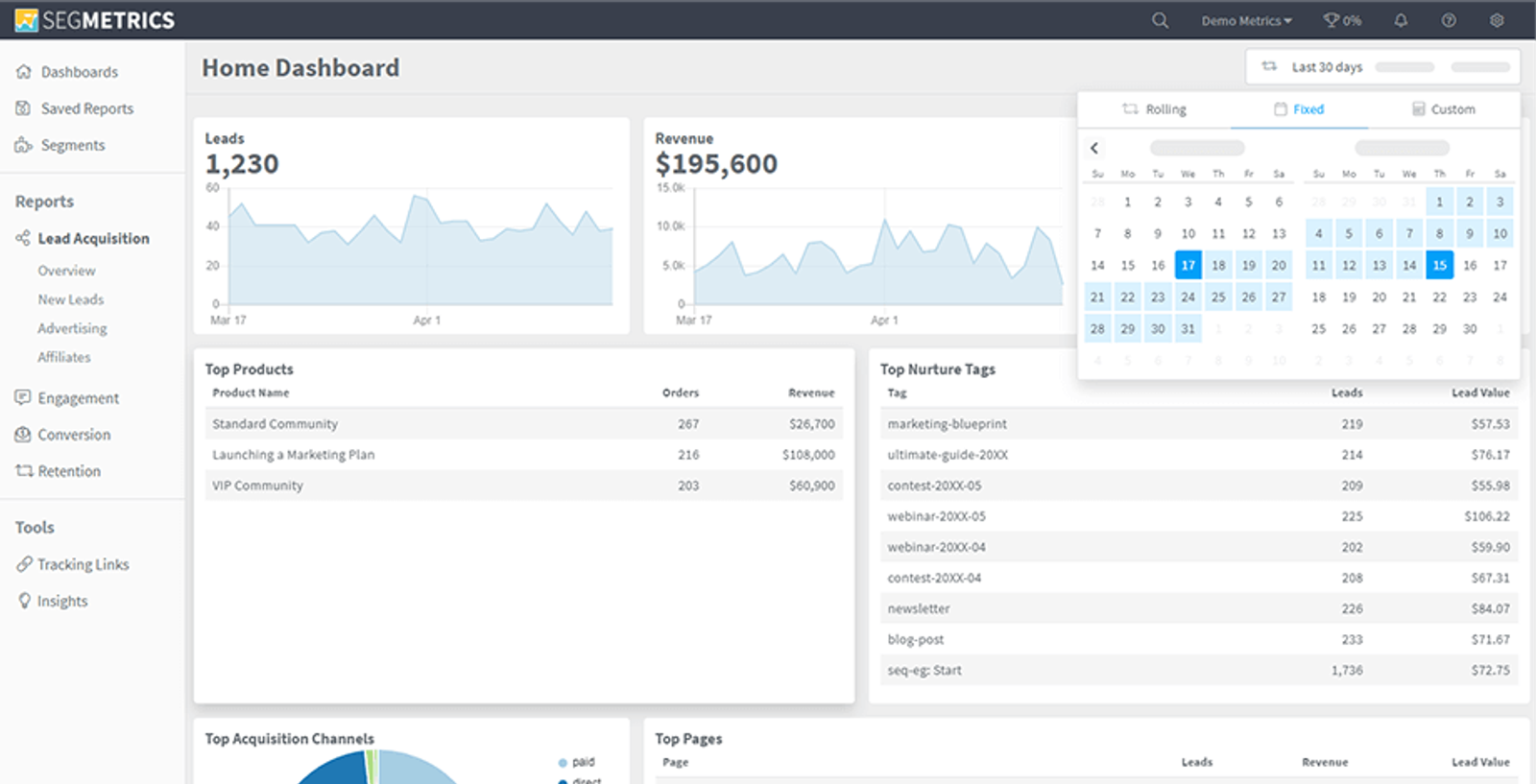
SegMetrics is the closest direct competitor to Hyros, especially for info products and email-driven funnels.
The pitch is similar. Server-side tracking, multi-touch attribution, customer journey mapping. Where SegMetrics goes deeper is the email integration. It connects natively with ConvertKit, ActiveCampaign, Drip, Klaviyo, and Ontraport, and tracks how every email touch contributes to revenue.
Pricing is also more transparent. Plans start at $175/month and you can see them on the website.
Key capabilities
- 7D fingerprint tracking that follows users across devices and sessions, so a customer who clicks an ad on mobile and converts on desktop weeks later still gets attributed correctly.
- Native integrations with ConvertKit, ActiveCampaign, Drip, Klaviyo, and Ontraport. Most attribution tools see emails as a single touchpoint. SegMetrics shows you which specific email in the sequence drove the conversion.
- Lead source attribution down to the individual ad creative, not just the campaign. Useful when you're running 50 variations and need to know which one is actually doing the work.
- 14-day free trial with no demo required. You can install it, connect your data, and decide if it's worth paying for before talking to anyone.
Limitations
- Less popular for ecom than Triple Whale or ThoughtMetric.
- Newer brand than Hyros, smaller community.
Pricing: Plans from $175/month. 14-day free trial.
Best for: Info products, online courses, email-heavy funnels.
3. Triple Whale
If you've been using Hyros for a Shopify store, you're probably using the wrong tool.
Triple Whale is built for Shopify from day one. Setup takes minutes, the dashboards are clean, and profit reporting factors in COGS and shipping automatically. The Triple Pixel is server-side. Most importantly, the people building the product live in DTC ecom, not info products.
Where Hyros has long-cycle tracking and call attribution, Triple Whale has creative analytics and product-level profit data. Different tool for a different job.
Key capabilities
- Native Shopify integration. Connect your store and you're seeing data in minutes, not weeks. No tag manager configuration, no custom development.
- Profit reporting by channel, campaign, and product. The platform pulls in your COGS and shipping costs and shows real profit, not just revenue. This is what most ecom tools miss.
- Creative-level analytics that show which specific ad creative is driving sales. Useful when you're testing 20 variations a week and need to kill the losers fast.
- Moby AI assistant for asking questions in plain English instead of digging through dashboards. Things like "which campaign had the best ROAS last week" return answers in seconds.
Limitations
- Shopify-only.
- Last-click leaning attribution.
- Pricing climbs with revenue tier.
Pricing: From around $129/month, scales with revenue.
Best for: Shopify DTC brands.
4. Cometly
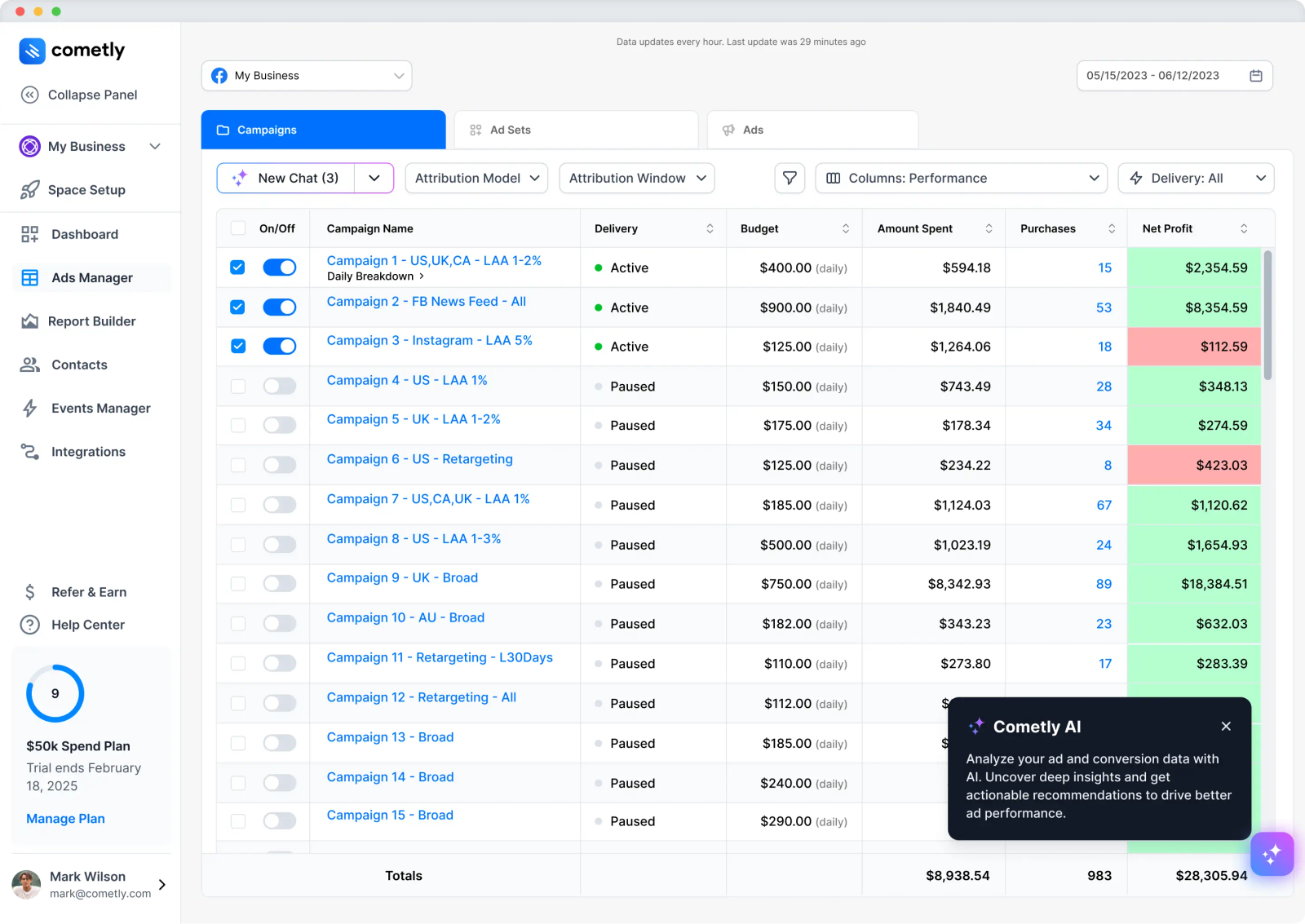
Cometly leans into AI and server-side tracking as the main pitch.
It's positioned at performance marketers spending serious money who want active recommendations, not just dashboards. The platform connects ad accounts, your CRM, and your website, then runs attribution in real-time. The AI suggests what to scale and what to pause.
It works for both ecom and B2B, which makes it more flexible than Hyros for teams that don't fit the info-product mold.
Key capabilities
- Server-side tracking that bypasses the browser and pixel limits, so iOS 14 privacy changes and ad blockers don't break your data.
- AI-powered recommendations that go beyond reporting. Cometly tells you which campaigns to scale, which to pause, and which need creative refreshes, based on actual performance trends.
- Real-time attribution updates instead of nightly batch processing. Useful when you need to make scaling decisions in the same trading day.
- Multi-platform CRM sync with HubSpot, Salesforce, and others, so attribution data flows back into your pipeline reporting automatically.
Limitations
- Custom pricing only.
- Newer player, smaller user base.
Pricing: Custom. Based on ad spend.
Best for: Performance marketers spending $500K+/month who want AI recommendations.
5. Northbeam
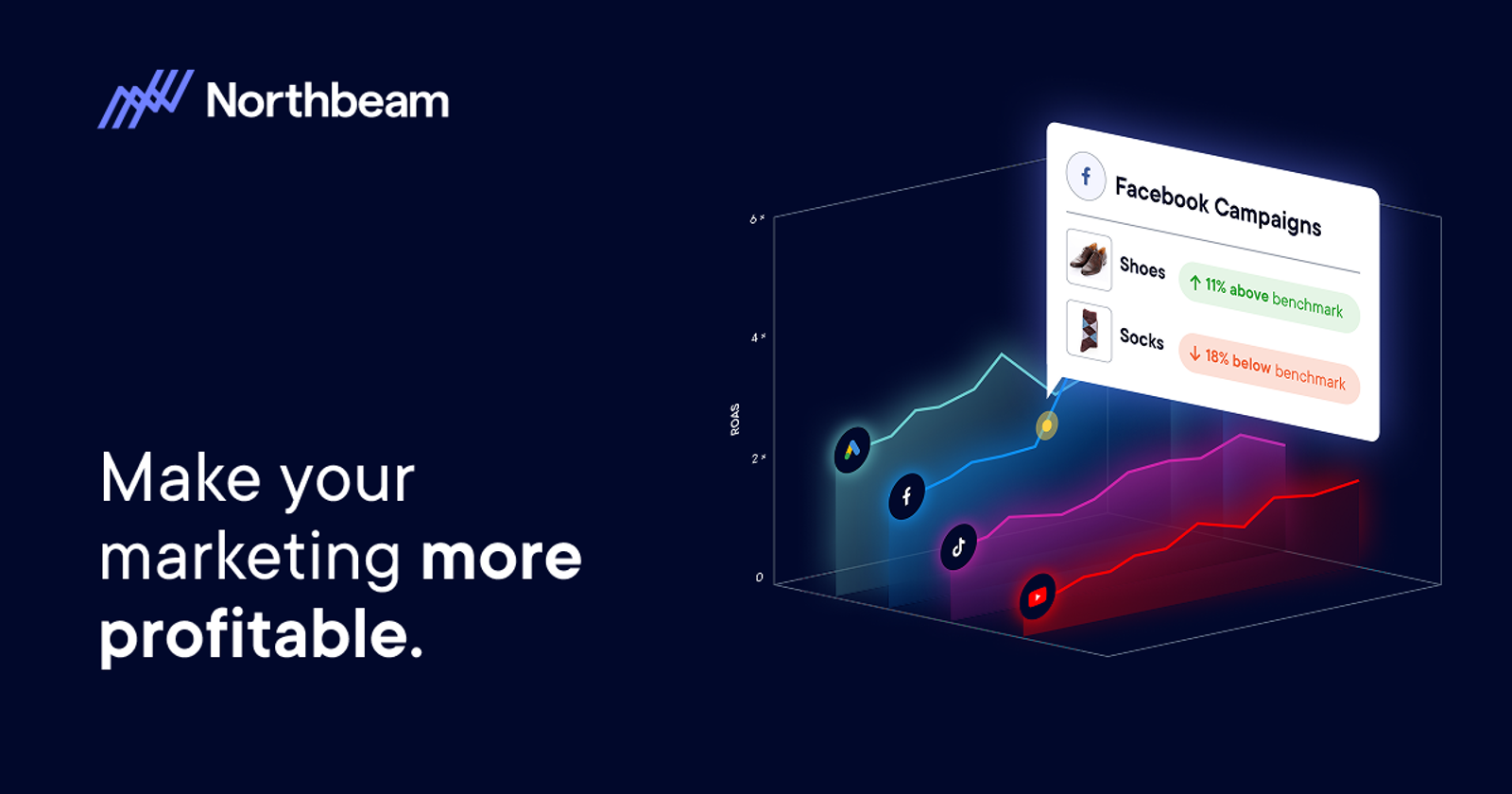
Northbeam is a step up in sophistication.
It's a multi-touch attribution platform with marketing mix modeling baked in, which means you can run "what if I cut brand search by 20%" scenarios on top of normal day-to-day reporting. Cross-platform ecom support across Shopify, WooCommerce, and Magento.
It's not for everyone. Pricing starts around $1,000/month and assumes a meaningful ad budget. But if Hyros felt narrow and you're spending serious money, this is the alternative people graduate to.
Key capabilities
- Multi-touch attribution combined with marketing mix modeling, so you get both daily campaign-level decisions and quarterly budget planning in the same tool.
- Cross-platform ecom support across Shopify, WooCommerce, and Magento. Most ecom-focused tools are Shopify-only. Northbeam isn't.
- Predictive forecasting that lets you run scenarios like "what happens if we cut brand search by 20%" before you actually make the change.
- Strong CTV and podcast attribution. These are the channels most tools struggle with, and Northbeam has spent years getting them right.
Limitations
- Pricing starts around $1,000/month.
- Onboarding takes weeks.
- Steep learning curve.
Pricing: From around $1,000/month.
Best for: Mid-to-large ecom brands with diverse channel mixes.
6. Wicked Reports
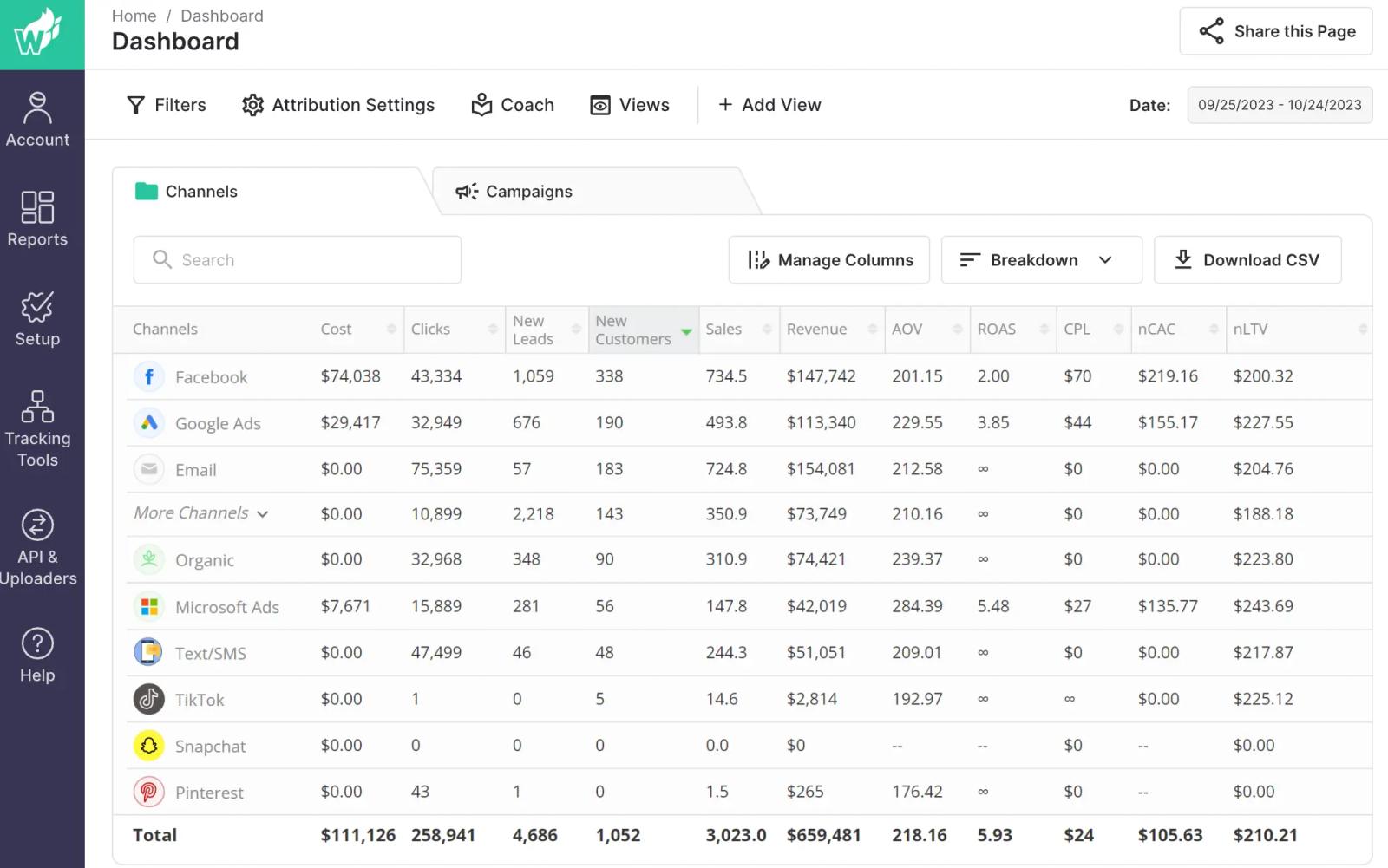
Wicked has been doing attribution since 2013. The angle they own is LTV and cohort reporting for subscription brands.
If your business model is subscription-driven (boxes, supplements, software), Wicked Reports tells you which acquisition channels bring in customers who actually stick around for 6+ months versus the ones who churn after the first purchase. That's harder to do in Hyros, which leans more toward first-conversion attribution.
Key capabilities
- Cohort analysis and LTV reporting that's genuinely deep. You can see which acquisition channels bring in customers worth $500 versus $50, not just which ones bring in the most signups.
- Native Klaviyo, Shopify, and ReCharge integrations. If you're running a subscription DTC brand, these are the three tools you live in, and Wicked plugs into all three.
- Conversion sync to Meta with new-customer events specifically. Trains the algorithm to chase first-time buyers, not retargets of your existing list.
- Multi-touch attribution with several model options. Switch between first-touch, last-touch, and weighted models without re-tagging anything.
Limitations
- Older interface.
- Pricing scales with contacts.
- Less polish than newer tools.
Pricing: From around $250/month.
Best for: Subscription DTC brands focused on LTV.
7. ThoughtMetric
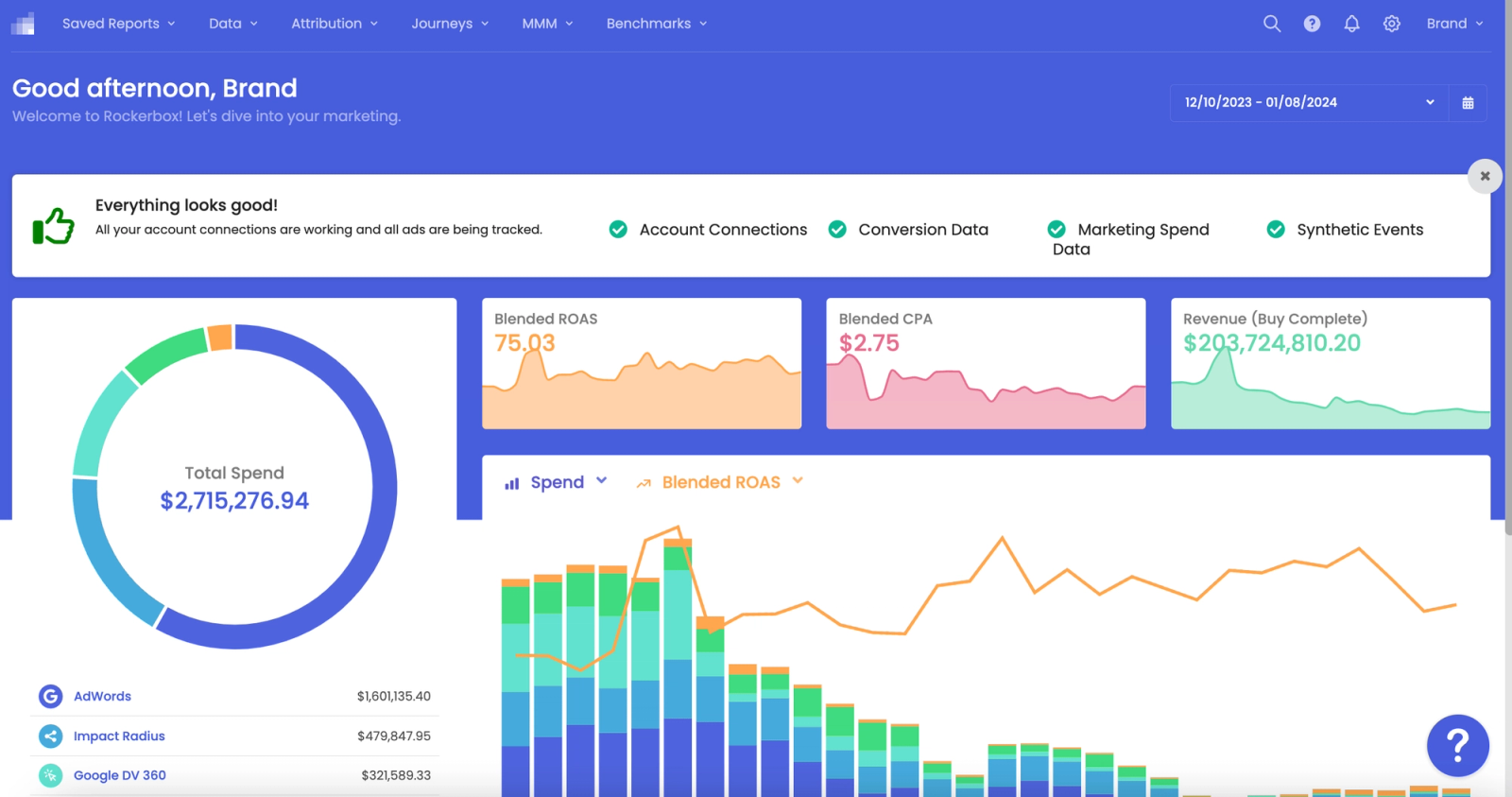
The mid-market ecom option for brands that don't fit Triple Whale or Hyros.
ThoughtMetric supports Shopify, WooCommerce, BigCommerce, and Magento. Multi-touch attribution is built in, server-side tagging works, and the pricing is predictable because it's based on pageviews instead of revenue tier.
There's a 14-day free trial, which is rare. Self-serve, no demo gate.
Key capabilities
- Multi-platform ecom support including Shopify, WooCommerce, BigCommerce, and Magento. Most ecom attribution tools are Shopify-only. This isn't.
- Five attribution model options including first-touch, last-touch, linear, position-based, and multi-touch. You can compare how the same campaign performs under each.
- Server-side tagging and Conversion API integrations for Meta and Google. Standard now, but ThoughtMetric does it without the enterprise price tag.
- Configurable lookback windows from 7 to 90 days, so the attribution matches how customers actually buy. Useful for considered purchases like furniture or premium beauty.
Limitations
- Smaller user base.
- Lighter feature set than enterprise tools.
Pricing: From $99/month for 50K pageviews.
Best for: Mid-size ecom brands, especially off Shopify.
8. RedTrack
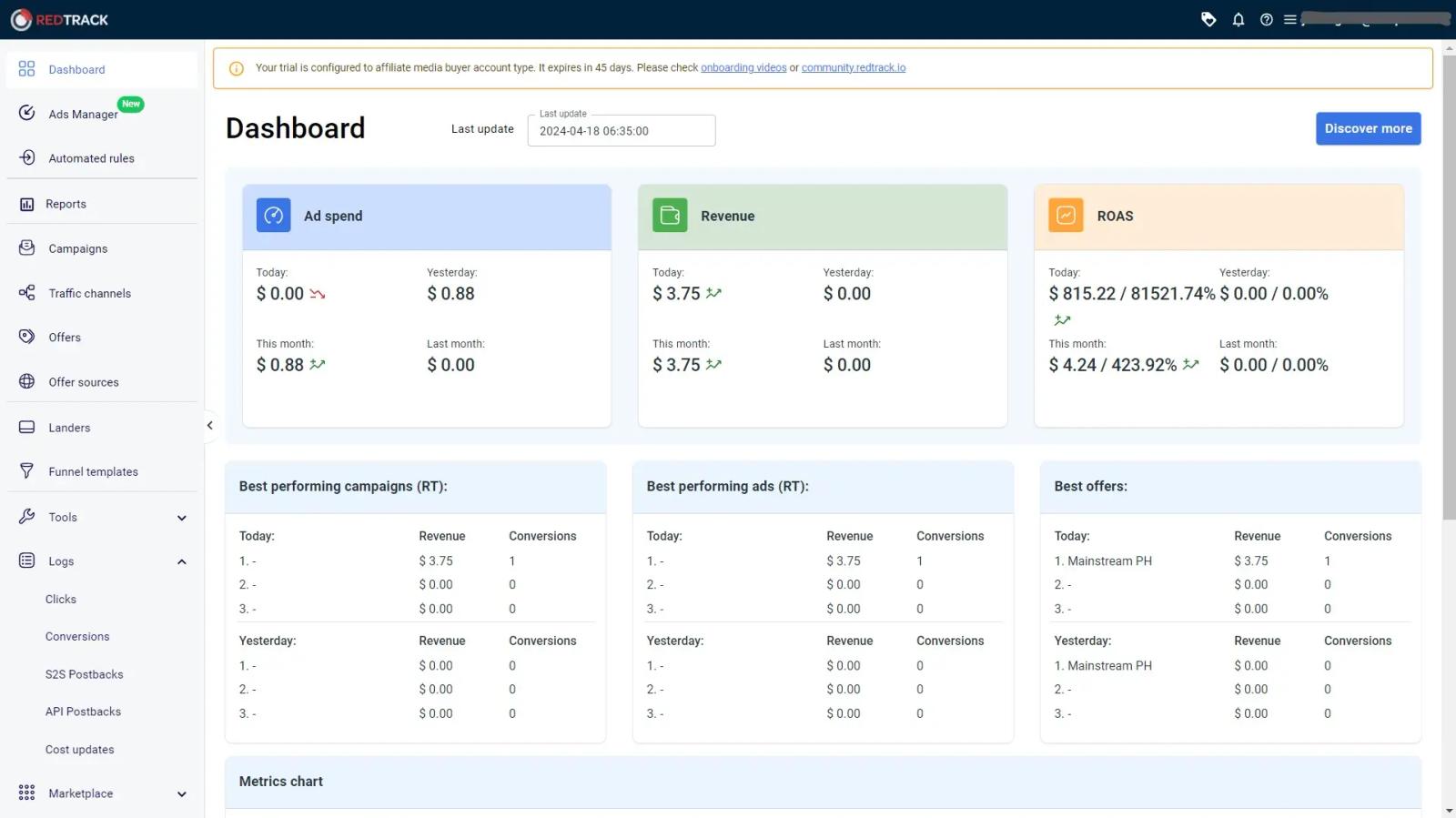
RedTrack is a different category from most tools on this list.
It's a tracking platform built for affiliates, ad networks, and performance media buyers. Server-side tracking, custom domain support, fraud detection, and the kind of granular link tracking that affiliate marketers actually need. Hyros is more polished. RedTrack is more configurable.
If you run paid traffic to offers and need cloaking, deep link tracking, or campaign rotation, this fits. If you run a SaaS or DTC ecom brand, it's overkill in some places and underbuilt in others.
Key capabilities
- Server-side tracking with custom domain support. You control the data, not the ad networks. Important for media buyers who run cloaked campaigns or sensitive verticals.
- Built-in fraud detection and bot filtering. Catches click fraud and traffic quality issues that Hyros doesn't really focus on.
- Affiliate and partner tracking. If you run an affiliate program or work with traffic partners, RedTrack handles attribution at that layer too.
- Deep API and Webhook integrations for custom workflows. RedTrack assumes you're a technical operator who wants to wire things up your own way.
Limitations
- Built for affiliates, not direct brands.
- UI is more technical than Hyros.
Pricing: From $149/month.
Best for: Affiliate marketers, performance buyers, ad networks.
9. Dreamdata
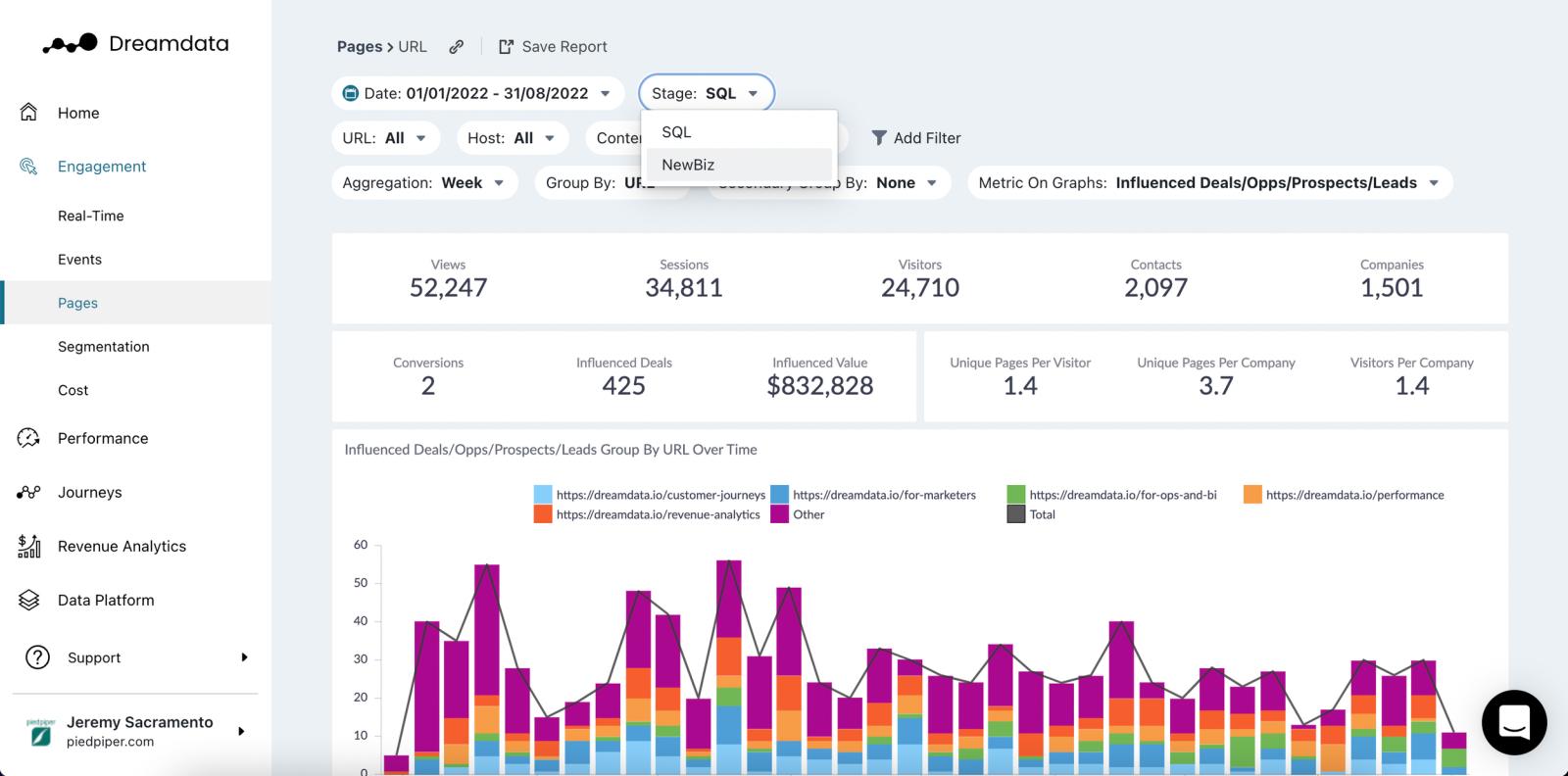
If you ended up looking at Hyros for a B2B SaaS use case, Dreamdata is a saner fit.
The Salesforce integration is genuinely deep. It reads pipeline movement in near-real-time and writes attribution data back to deals. Multi-touch attribution is weighted by deal size and stage, not just touch count.
It's not for ecom or info products. But for B2B teams running long cycles where pipeline lives in Salesforce, it's a much better fit.
Key capabilities
- Bi-directional Salesforce sync that reads pipeline movement in near-real-time and writes attribution data back as custom fields on deals. Most attribution tools are read-only. Dreamdata isn't.
- Revenue-weighted multi-touch attribution that respects deal size, stage progression, and account age. So a $100K deal doesn't get the same credit as a $1K deal in your reporting.
- Account-level journey reports. Useful for B2B teams where the buying committee includes 5+ people and you need to see all of them in one view.
- Reverse-ETL friendly for warehouse stacks. Plays well with BigQuery, Snowflake, and dbt if your data team owns the analytics layer.
Limitations
- B2B only.
- Setup needs a Salesforce admin.
Pricing: Free tier. Paid plans from around $999/month.
Best for: B2B SaaS teams using Salesforce as the source of truth.
10. Attribution.app
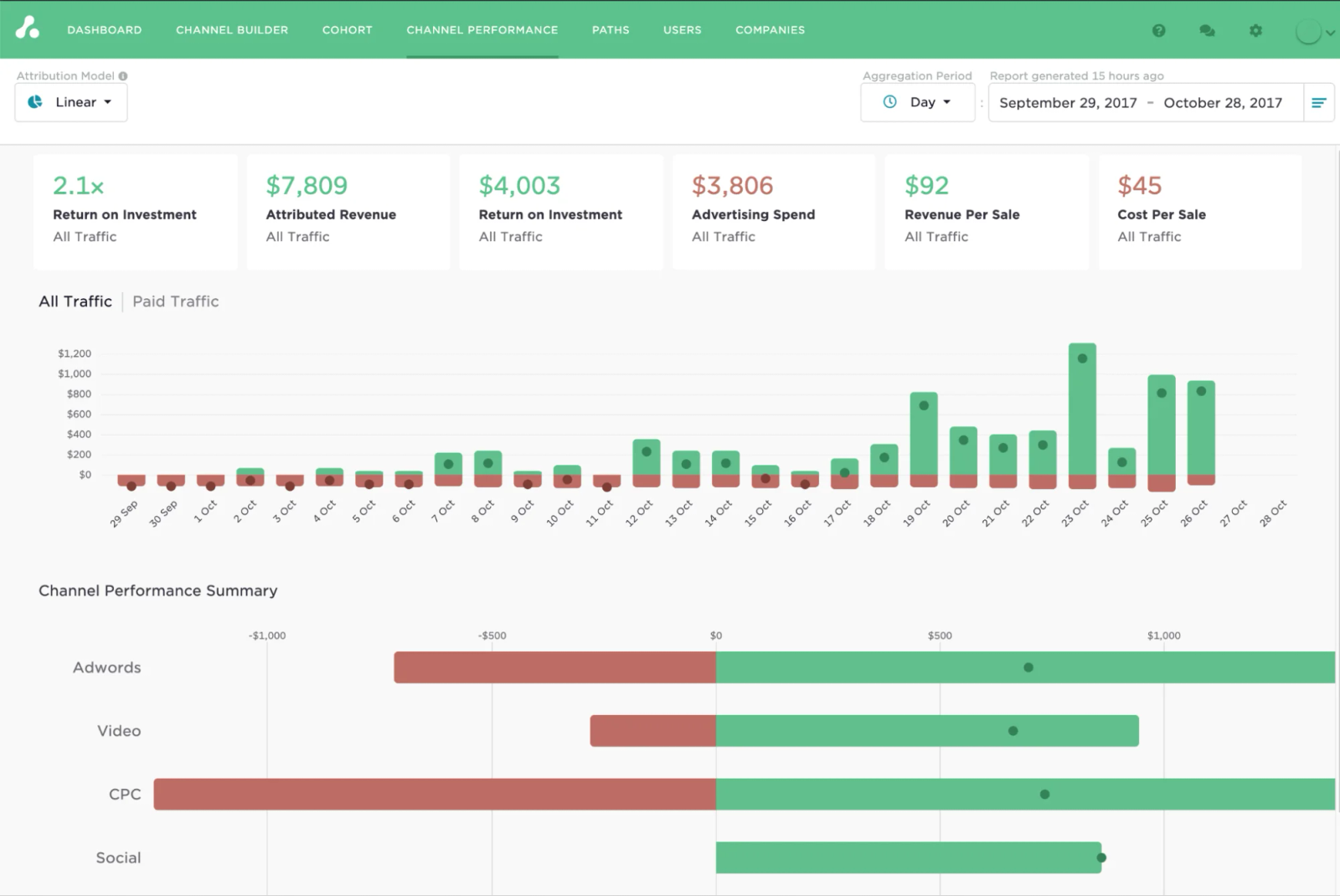
The cheapest entry on this list.
It does multi-touch attribution, snippet-based capture, and basic CRM sync via webhooks. The integrations are lighter than Hyros and there's no LTV or call tracking layer. But the free tier is genuinely usable, and paid plans start at $99/month.
Good for testing whether attribution data is even useful for your team before paying serious money.
Key capabilities
- Free tier with limits that are actually usable for testing. You can connect your data, see if attribution insights are useful for your business, and decide whether to upgrade later.
- Multi-touch attribution out of the box without configuration. The defaults are sensible and you can switch models on the fly.
- Single-snippet form and event capture. One install, basic tracking. Nothing fancy, but it works.
- HubSpot, Salesforce, and webhook sync to push attribution data into your CRM.
Limitations
- No call tracking, no LTV reports.
- Lighter integrations.
- Not a serious replacement for Hyros, more of a starter tool.
Pricing: Free tier. Paid plans from $99/month.
Best for: Smaller teams testing attribution for the first time.
How to think about the choice
Hyros is built for one specific kind of business. High-ticket, long-cycle, info-product-flavored, with sales call funnels and email sequences doing real work in the middle. If that's you, Hyros earns its price tag.
If it's not, you're paying for capabilities that don't apply.
- B2B and SaaS funnels: SourceLoop
- Info products and email-led funnels: SegMetrics.
- Shopify ecom: Triple Whale or ThoughtMetric.
- Affiliate or performance media: RedTrack.
One more thing. The biggest hidden cost of any attribution tool is implementation. A perfectly priced tool with a botched setup will be worse than a more expensive tool that's installed correctly. Whichever one you pick, budget a week to get the tracking right before you judge it.



 Paid Social


