
10 Best Ad Tracking Platforms for Accurate Attribution in 2026
A practical comparison of 10 ad tracking platforms, who they're built for, and what you'll actually pay.
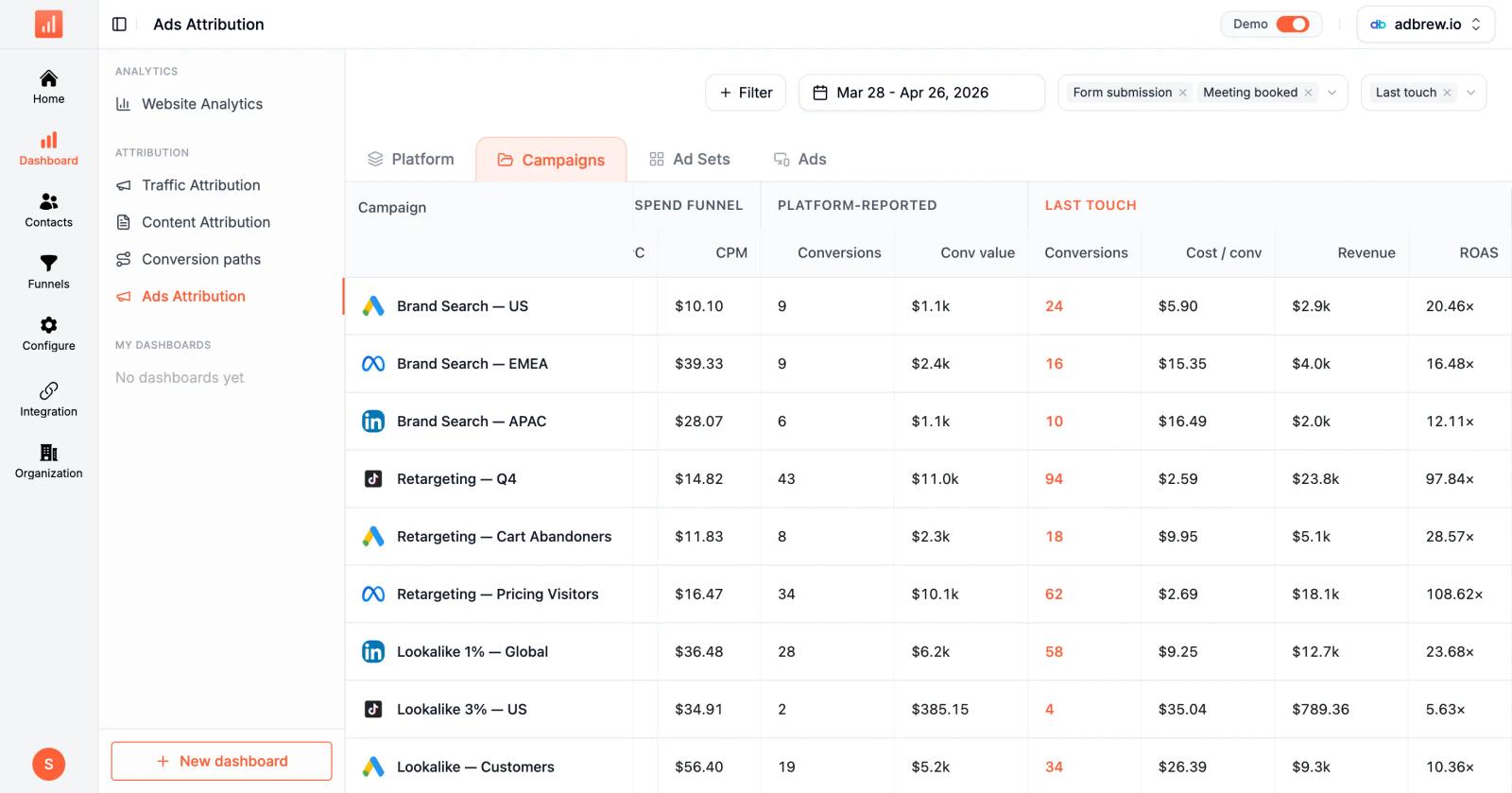
Table of contents
Ad platforms have always graded their own homework. Google says it drove 40 conversions, Meta claims 32, TikTok takes credit for 18, and the actual sales are nowhere close to the sum.
After iOS 14, ad blockers, and third-party cookie deprecation, the gap got wider. Accurate attribution now depends on server-side tracking, click ID stitching, and a way to tie every paid click to the revenue it actually produced.
Below are 10 ad tracking software that solve different parts of the accuracy problem.
Quick Comparison of Best Ad Tracking Tools
| Tool | Best for | Starts at | Server-side |
|---|---|---|---|
 Sourceloop Sourceloop |
All-in-one tracking + attribution + analytics | $49/mo | Yes |
 Cometly Cometly |
Paid media teams wanting AI optimization | Custom | Yes |
 Triple Whale Triple Whale |
Shopify DTC brands | $179/mo | Yes |
 Northbeam Northbeam |
High-spend DTC ($1M+ ARR) | $1,500/mo | Yes |
 Hyros Hyros |
Info products, long sales cycles | $230/mo | Yes |
 HockeyStack HockeyStack |
Enterprise B2B revenue analytics | $1,399/mo | Yes |
 AppsFlyer AppsFlyer |
Mobile app marketers | Free / Custom | Yes |
 Stape Stape |
Server-side GTM hosting only | $20/mo | Yes |
 Segment Segment |
CDP for engineering-led teams | Free / Custom | Yes |
 Ruler Analytics Ruler Analytics |
B2B with phone calls | £199/mo | Partial |
1. Sourceloop
Best for: Teams that want server-side tracking, Conversions API, and revenue attribution in one tool
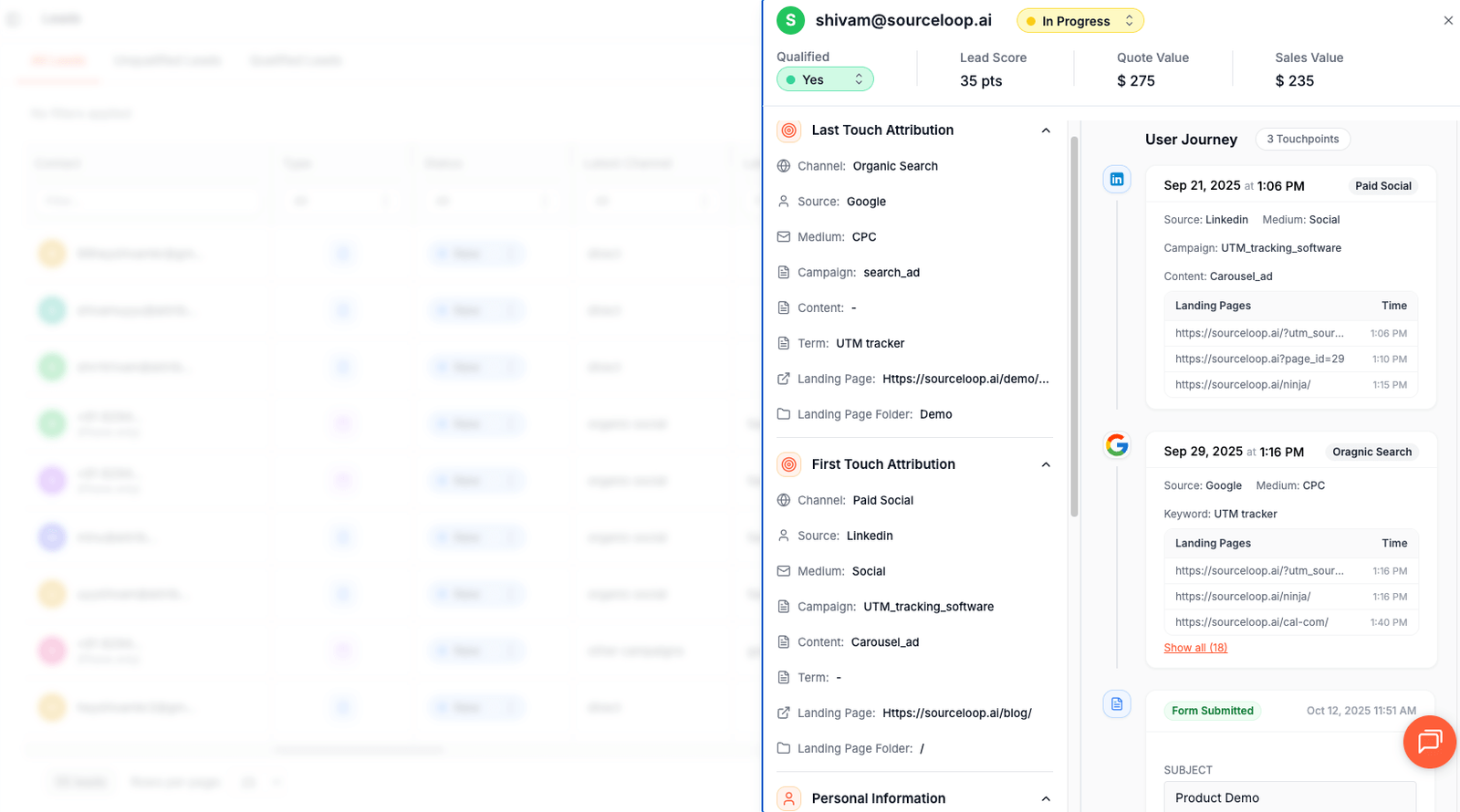
Sourceloop fixes the single most expensive problem in paid media: the conversion numbers in your ad platforms don't match the revenue in your bank account.
Every ad platform optimizes against the conversions it sees. Meta's pixel sees what Meta sees. Google's tag sees what Google sees. After iOS 14, ad blockers, and ITP, what each one sees is a different fraction of reality, and none of those fractions add up to your Stripe dashboard. So Meta gets credit for 40 conversions, Google gets 35, TikTok claims 18, and you actually had 22 paying customers.
Sourceloop captures conversions once, server-side, deduplicated, and then sends the same clean event back to every ad platform via their Conversions APIs.
Each algorithm optimizes on the same source of truth instead of its own broken sample, which is the only way ad platform reports start matching what's actually in Stripe.
Why Sourceloop works well for ad tracking accuracy
1. One server-side capture, deduplicated across every ad platform
Most "server-side tracking" tools just add a server-side layer alongside the existing pixel and let both fire.
That double-counts conversions and confuses smart bidding. Sourceloop captures the conversion once with a stable event ID, then dedupes the corresponding Pixel/CAPI calls so Meta, Google, TikTok, and LinkedIn all see exactly one conversion per actual purchase, with the same revenue value attached.
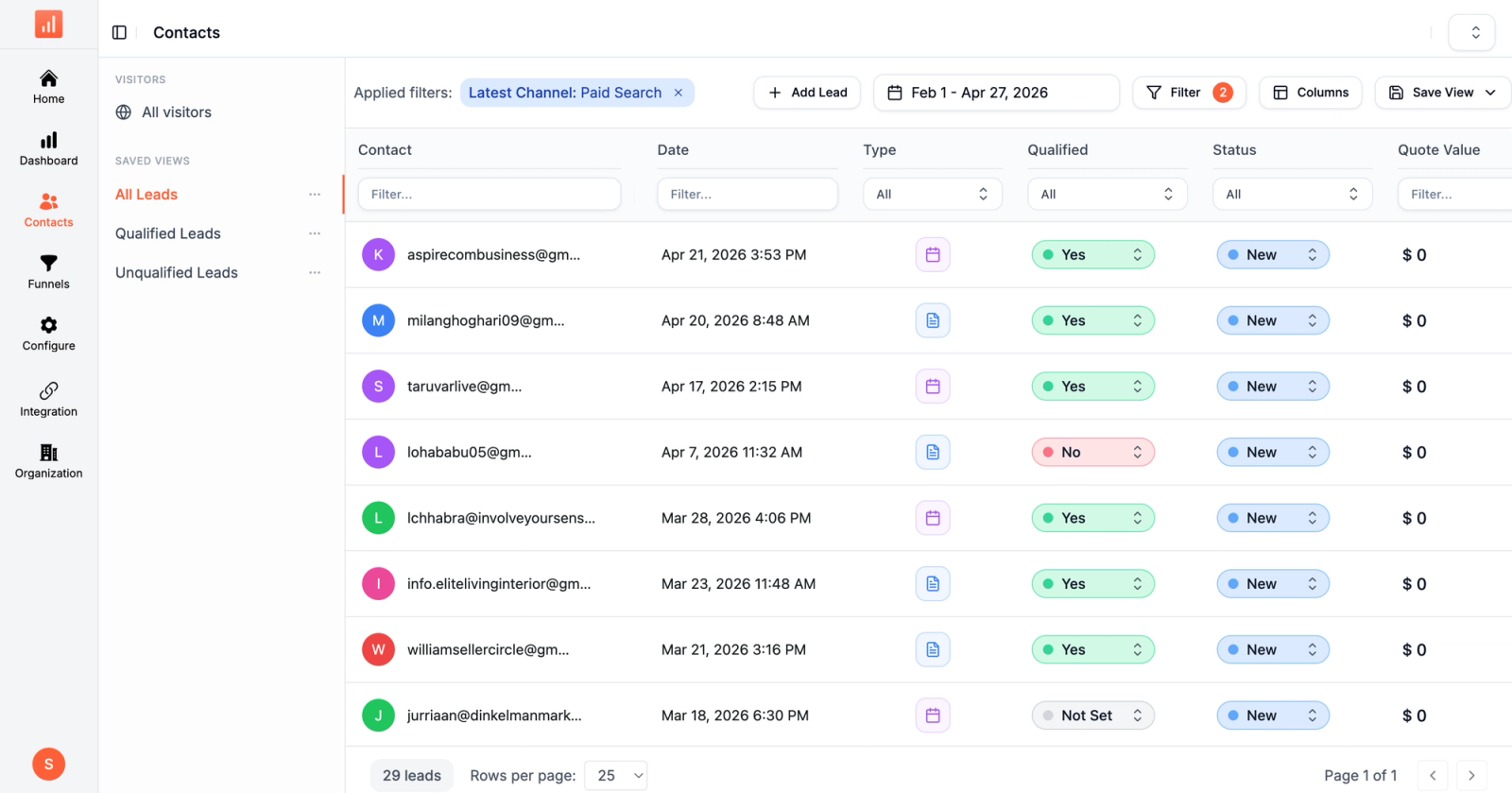
2. Captures all 9 click ID parameters automatically
gclid, fbclid, msclkid, ttclid, li_fat_id, gbraid, wbraid, dclid, twclid. This matters more for accuracy than UTMs do, because Google and Meta auto-tagging often replace UTMs with click IDs the moment a user clicks an ad.
Tools that only watch UTMs lose the match-back signal entirely on auto-tagged campaigns, which means Enhanced Conversions and Meta CAPI silently fail on a chunk of your spend.
3. Recovers iOS, ad blocker, and ITP traffic via server-side ingest
Browser pixels miss roughly 30-40% of users on ad blockers, plus most iOS opt-outs after ATT, plus Safari users hitting ITP cookie expiry. Sourceloop sends the conversion from your server with a hashed identifier (email, phone, IP, click ID), which bypasses all three failure modes. Stape's case studies show this kind of setup recovering up to 162% more tracked conversions in extreme cases, and 24-30% lift is typical.
4. Stripe, Polar, and LemonSqueezy webhook stitching
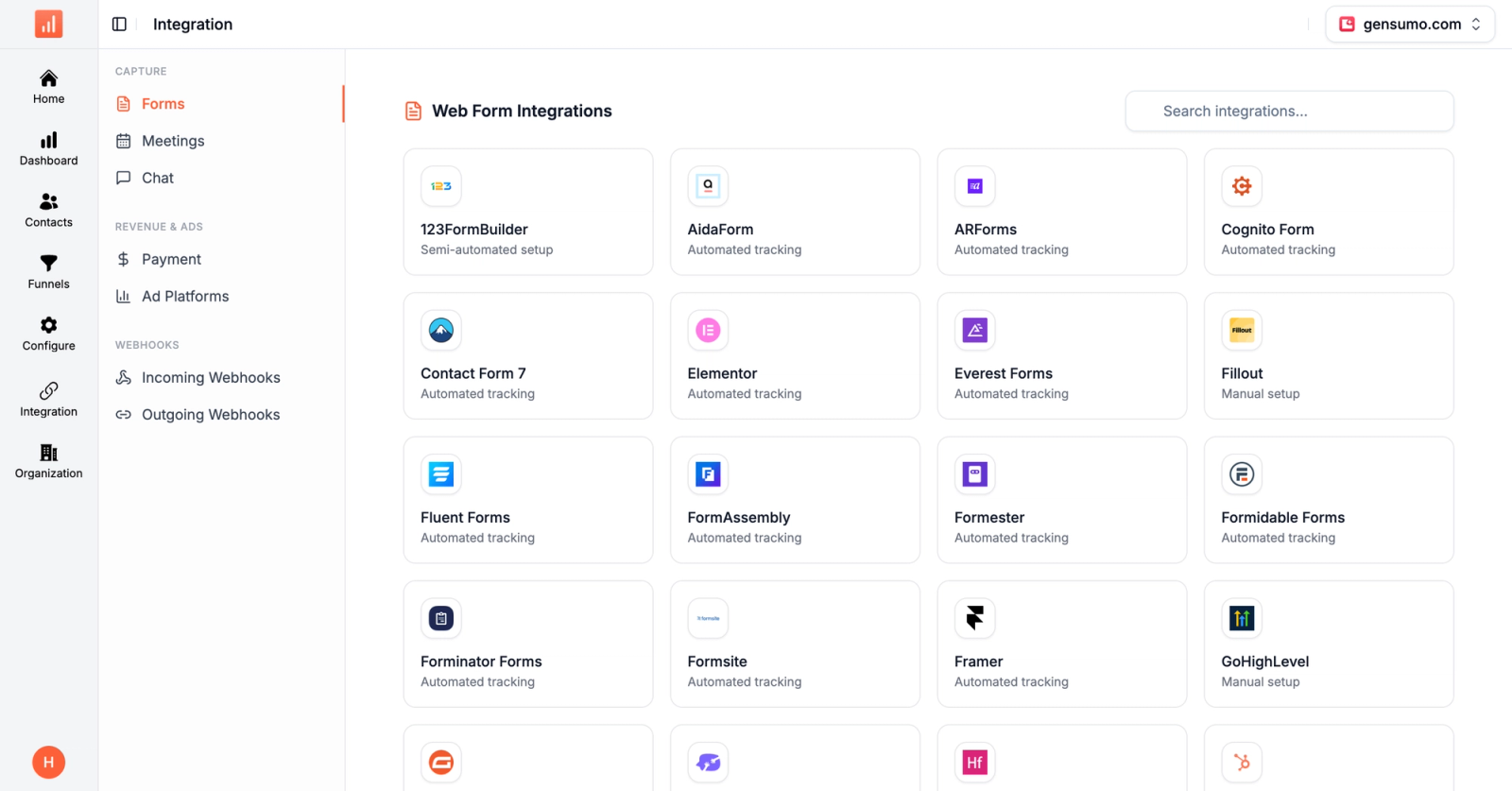
The conversion that matters for accuracy isn't the "Purchase" pixel firing on a thank-you page. It's the actual successful charge in Stripe.
Pixels fire on form submit, before payment authorization, before fraud screening, before refunds.
Sourceloop reads the Stripe webhook directly and only counts the conversion when the money actually moves, then matches that authoritative event back to the original click ID. Your ad reports stop counting failed payments.
5. Click ID survival across cross-domain redirects
A user clicks an ad, lands on yoursite.com, gets redirected to app.yoursite.com for signup, then routed to checkout.stripe.com for payment.
Most stacks lose the click ID at the first redirect. Sourceloop persists gclid/fbclid across every hop and writes it back into the final conversion event, so the Stripe charge still attributes to the original Meta ad.
6. Sends the actual revenue value, not a fixed conversion count
Smart bidding optimizes on whatever revenue value you pass it. Sourceloop sends the real per-order value from Stripe, including currency, on every conversion event back to Meta CAPI, Google Enhanced Conversions, and TikTok Events API.
Tools that just send a "Purchase = 1" event force Meta and Google to optimize on conversion volume instead of revenue, which is how teams end up scaling cheap, low-AOV traffic at the expense of profitable customers.
Pros:
- One capture, deduplicated across Google, Meta, TikTok, LinkedIn CAPIs
- Captures all 9 click ID parameters automatically
- Server-side ingest recovers iOS, ad blocker, ITP losses
- Stripe webhook matching counts only successful charges
- Click ID survives cross-domain and payment processor redirects
- Sends real revenue value, not flat "Purchase = 1" events
- AI Referrals split out from "direct" to stop biasing paid ROAS down
Cons:
- Doesn't replace ad platform native dashboards, it corrects what they show
- No incrementality testing module, pair with Measured or INCRMNTAL for that
Pricing: Starts at $49/mo with server-side CAPI to all major platforms, deduplication, all 9 click IDs, Stripe/Polar/LemonSqueezy webhook revenue matching, and 365-day retention included. Professional unlocks unlimited websites. Business adds white-label. Enterprise adds the DPA.
2. Cometly
Best for: Paid media teams that want server-side tracking plus AI optimization recommendations
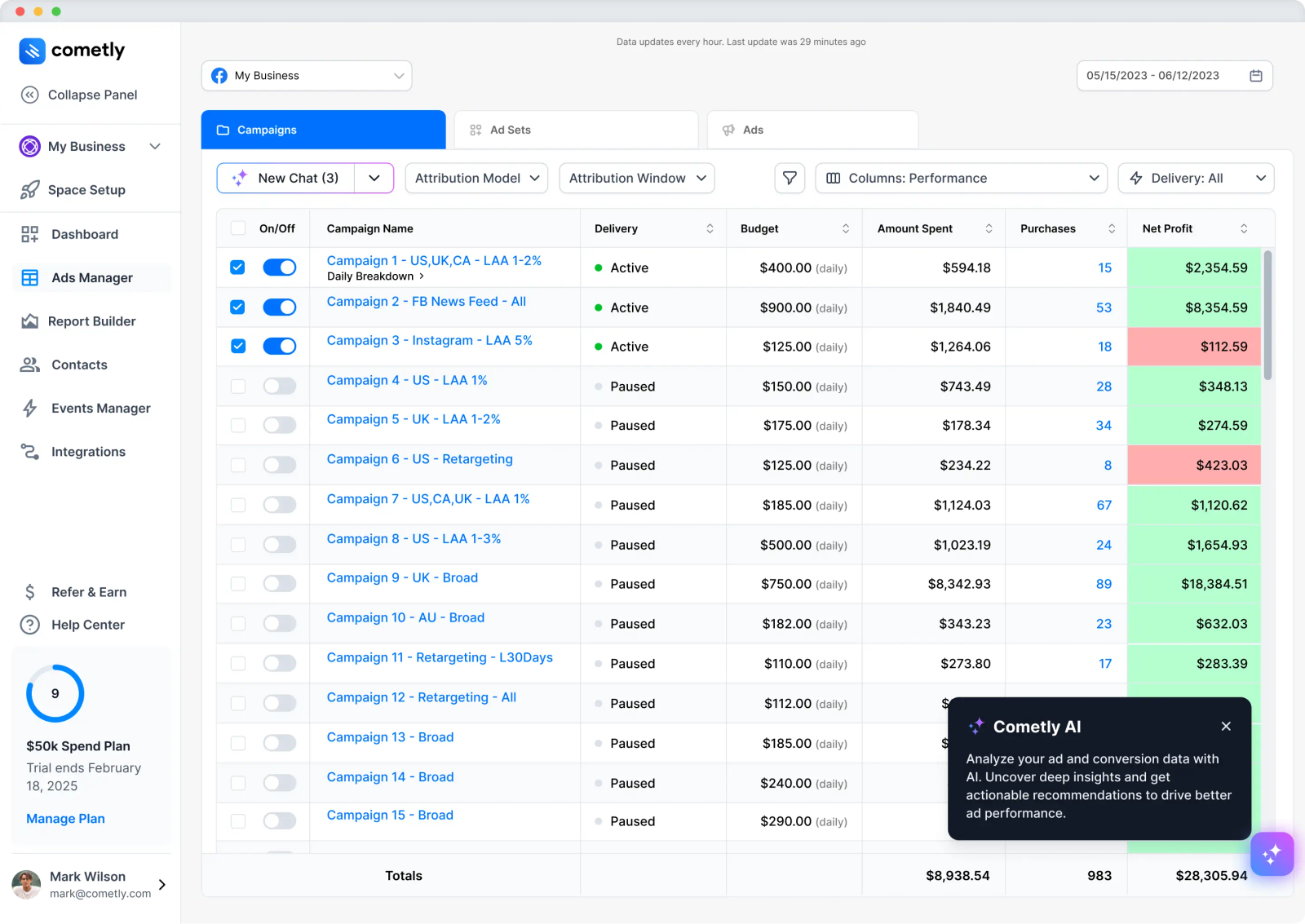
Cometly combines server-side tracking with AI-powered ad optimization. The platform tracks the full customer journey from ad click through CRM conversion and feeds enriched conversion data back to Meta, Google, TikTok, and other platforms via their server-side APIs.
The "AI Ad Manager" recommends which ads and campaigns to scale or pause based on actual conversion data, not just platform metrics.
Cometly is strongest for teams running paid media at scale across multiple platforms. Setup is straightforward for a typical Meta + Google + TikTok stack. Some users mention that documentation can be thin and that complex tech stacks take longer to set up (Cometly G2 reviews).
Pros:
- Server-side tracking that survives iOS and browser restrictions
- AI optimization recommendations on top of attribution
- Conversion sync feeds enriched events back to ad platforms
Cons:
- No public pricing
- Steeper setup for complex tech stacks
- Documentation has been called less complete than expected
Pricing: Quote-based, ad-spend-tiered. Professional and Enterprise tiers.
3. Triple Whale
Best for: Shopify DTC brands that want fast setup and profit-level reporting
Triple Whale is the analytics OS for Shopify. The Triple Pixel does first-party multi-touch attribution and server-side conversion tracking back to Meta, Google, and TikTok.
The dashboards show blended ROAS, contribution margin, and creative performance at the order level, not just at the click level.
Sonar Send, which enriches Klaviyo flows with Triple Whale attribution data, has driven average Klaviyo revenue lifts of 14.2% and is included on the Starter plan. Negative G2 reviews mention pricing being high for smaller stores and occasional support delays for non-enterprise customers.
Pros:
- One-click Shopify integration, fast time-to-value
- Triple Pixel captures conversions server-side
- Profit analytics at the order level
Cons:
- Shopify-first, non-Shopify support is newer
- Above $5M GMV, pricing becomes GMV-based and climbs quickly
- Some users report attribution discrepancies on imported orders
Pricing: Free Founders Dash. Starter at $179/month (annual). Advanced at $259/month. Above $5M GMV, pricing is GMV-based.
4. Northbeam
Best for: DTC brands at $1M+ ARR running serious paid media spend
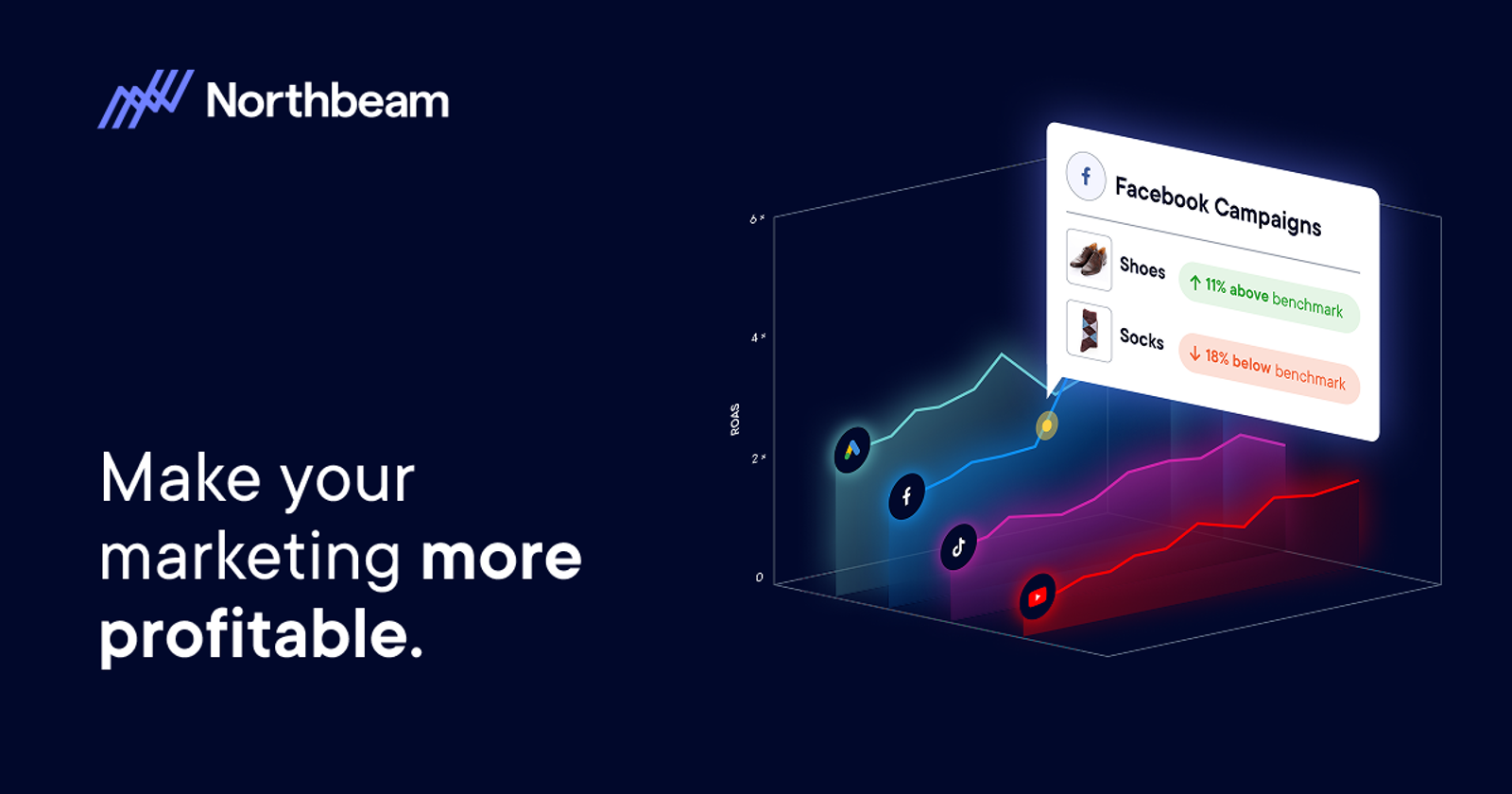
Northbeam ships first-party multi-touch attribution, deterministic view-through measurement, and machine-learning models that estimate channel impact even when direct tracking data is limited.
The Apex integration feeds Northbeam data back into Meta and other ad platforms. In Northbeam's own study, Apex users saw an average 34% improvement in conversion rates.
Northbeam is overkill for smaller brands but the right call for $1M+ ARR DTC operators with multiple channels. The calibration period of 2-4 weeks is the trade-off: you don't get reliable data on day one.
Pros:
- Best-in-class attribution depth for ecommerce
- Apex CAPI integration drives measurable lift
- Weekly-retraining MMM+ for offline channels
Cons:
- Steep price floor, not viable below $20-50K/month in spend
- Calibration period of 2-4 weeks before reliable data
- Onboarding has gotten thinner for sub-$1K/month accounts
Pricing: Starter from $1,500/month for brands spending under $250K/month. Professional at $2,500/month. Enterprise custom.
5. Hyros
Best for: Info products, high-ticket coaching, and long click-to-sale cycles
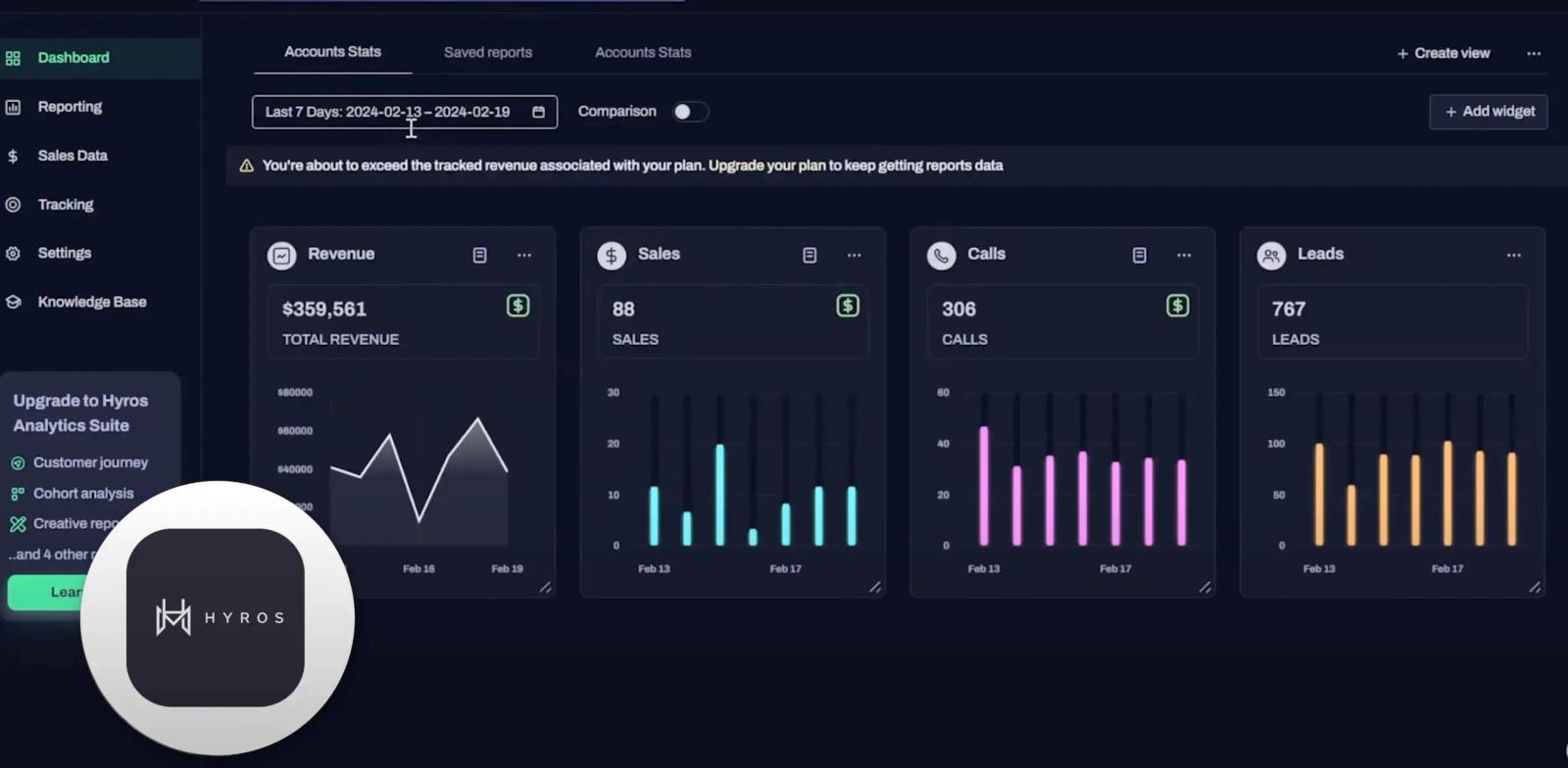
Hyros is a server-side ad tracking platform built for businesses where the click-to-sale window stretches across weeks or months.
The customer base includes Tony Robbins, Grant Cardone, and Russell Brunson. The "Scientific Mode" attribution model gives credit on first click for sales within a configurable timeframe and last click after that, which fits webinar and sales-call funnels better than rigid 7-day or 30-day windows.
Hyros customers report capturing 29-33% more sales and leads than native Facebook, Google, and TikTok reporting. Critics point to opaque pricing and the platform feeling like a black box.
Pros:
- Server-side tracking with extended attribution windows
- Strong fit for coaching, courses, agencies, high-ticket
- Call tracking and offline conversion attribution included
Cons:
- Sales-call-required pricing, no self-serve
- Heavy affiliate program inflates positive review volume
- Better-fit alternatives exist for standard ecommerce
Pricing: Shopify track at $69/month for $5K tracked revenue. Business track at $230/month for $20K tracked revenue.
6. HockeyStack
Best for: Mid-market and enterprise B2B running complex multi-channel motions
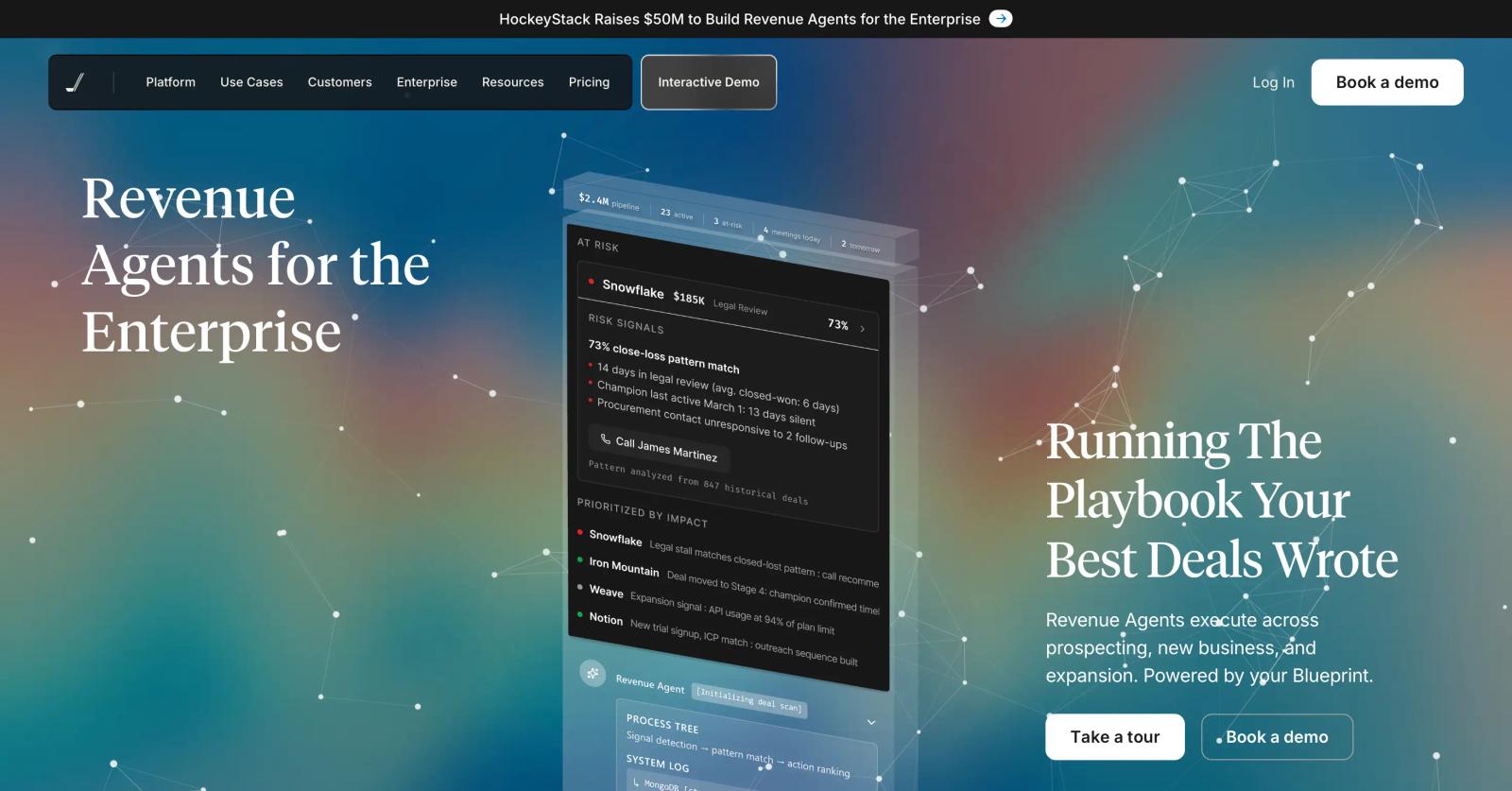
HockeyStack is a B2B revenue analytics and attribution platform built for go-to-market teams with long, multi-stakeholder sales cycles.
It connects CRMs, marketing automation, ad platforms, product analytics, and customer success tools into a unified data foundation, then layers AI agents (Odin for analysis, Nova for sales) on top.
HockeyStack tracks pipeline across customers including 8x8, DataRobot, RingCentral, and MasterCard. The most-cited negative on G2 is the learning curve, with 11 explicit mentions and 8 calling it "steep".
Pros:
- Best-in-class multi-touch attribution for complex B2B
- AI agents that surface insights without manual reporting
- Deep CRM and product analytics integration
Cons:
- Steep learning curve, 2-6 weeks to operationalize
- No public pricing, demo-gated
- Annual contracts only
Pricing: Growth plan starts around $1,399/month per Docket's research. Enterprise custom.
7. AppsFlyer
Best for: Mobile app marketers managing app install campaigns
AppsFlyer is the dominant Mobile Measurement Partner (MMP), trusted by over 15,000 businesses.
If your primary growth motion is app installs and in-app conversions across iOS and Android, AppsFlyer is the category standard, alongside Adjust as the closest competitor.
The Protect360 fraud prevention suite blocks fake installs in real time. SKAdNetwork and Privacy Sandbox support is sophisticated, which matters because iOS post-ATT recovers most of its measurement signal through these frameworks, not the legacy IDFA pipeline. Common complaints are pricing escalation and Protect360 being a paid add-on.
Pros:
- Industry-standard for mobile app attribution
- Strong SKAdNetwork and Privacy Sandbox support
- Massive integration ecosystem with ad networks
Cons:
- Pricing climbs quickly with MAU and conversion volume
- Several useful features are paid add-ons
- Limited value for non-mobile-first businesses
Pricing: Free "Zero" plan for owned-media and basic measurement. Paid plans typically run $0.05-$0.06 per conversion with custom pricing for enterprise.
8. Stape
Best for: Technical teams that want to host server-side GTM cheaply
Stape is the dominant managed hosting platform for server-side Google Tag Manager.
Instead of running your own sGTM container on Google Cloud, Stape hosts it for you starting at $20/month and ships power-ups like Custom Loader (which makes GTM invisible to ad blockers), Cookie Keeper (which extends Safari cookie lifespan), and prebuilt server-side tag templates for Meta CAPI, Google Enhanced Conversions, and TikTok Events API.
Real-world results from Stape's case studies are strong: seoplus+ found server-side GTM delivered 24% more Google Ads conversions, and Optimize With Data reported a 30.7% lift in tracked conversions for a Safari-heavy client. The trade-off is that Stape is infrastructure, not analytics. You still need GA4 or another tool to actually report on conversions.
Pros:
- Cheapest credible managed sGTM hosting at $20/month
- Strong power-ups: Custom Loader, Cookie Keeper, multi-domain
- Detailed documentation and active community
Cons:
- Requires server-side GTM expertise (5-20 hours of setup)
- No analytics or attribution layer included
- One container per site, costs scale with site count
Pricing: Plans start at $20/month, scaling by request volume.
9. Segment
Best for: Engineering-led teams that want a CDP routing first-party events to ad platform CAPIs
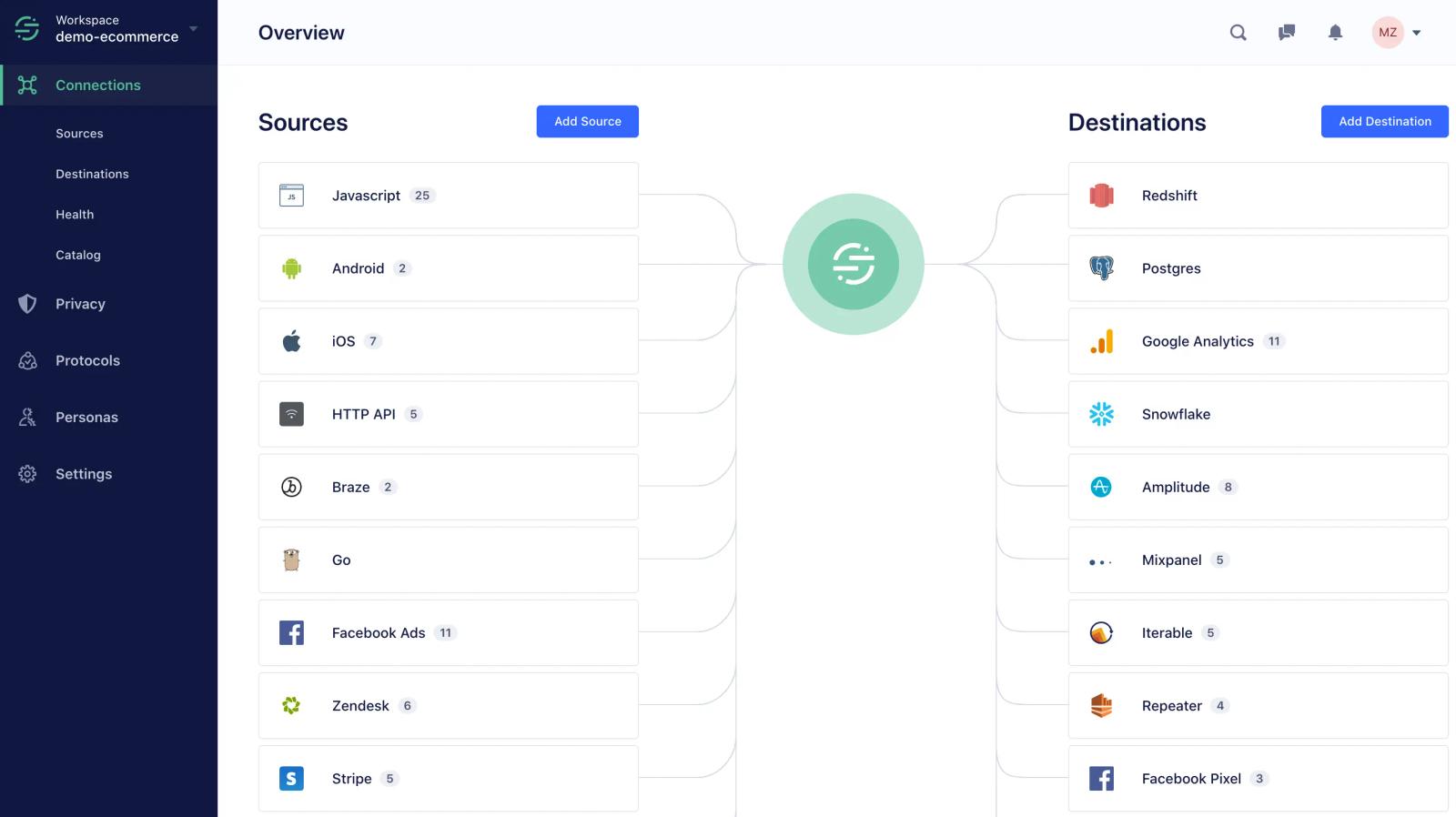
Segment, now owned by Twilio, is a customer data platform that collects first-party event data from your website, mobile app, or backend, then routes it to over 300 destinations including Meta CAPI, Google Enhanced Conversions, TikTok Events API, and analytics tools.
For teams with engineering resources, Segment is the most flexible way to get conversion data flowing server-side to every platform from one taxonomy.
The trade-off is complexity and cost. Segment requires real engineering investment to implement well, and pricing scales with monthly tracked users. For teams without dev resources, a managed all-in-one tool like Sourceloop or Cometly delivers the same outcome with far less work.
Pros:
- Most flexible CDP for routing events to ad platform CAPIs
- 300+ destinations, future-proof if you add new tools
- Strong fit for product analytics + ad tracking together
Cons:
- Requires engineering resources to implement
- Pricing scales sharply with MTUs
- Not an attribution or reporting tool by itself
Pricing: Free plan up to 1,000 MTUs. Team plan from $120/month. Business plan custom.
10. Ruler Analytics
Best for: B2B and lead-gen businesses where phone calls drive pipeline
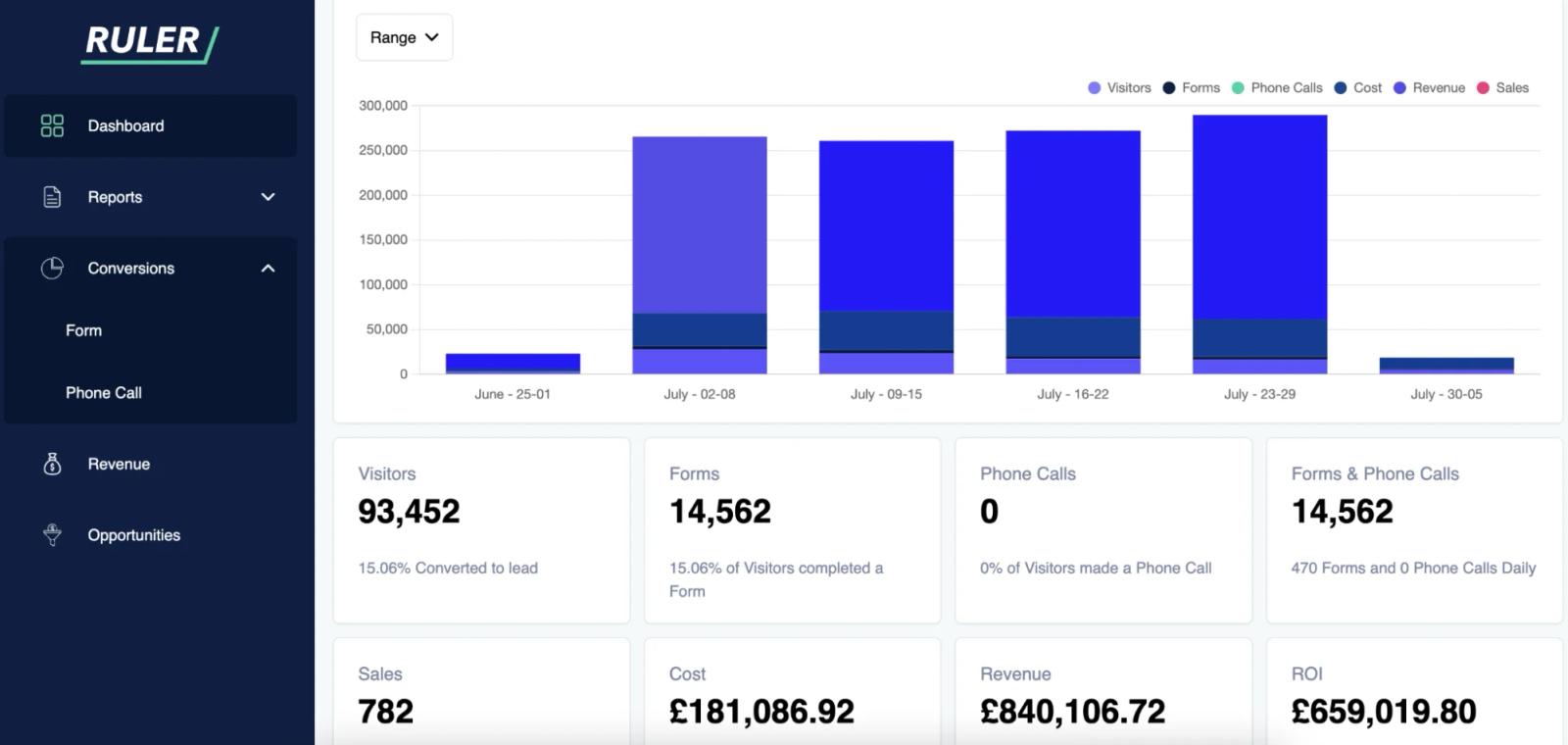
Ruler Analytics is a UK-built attribution platform with strong call tracking. It captures every visitor's source, attributes form, call, and live chat conversions back to the original marketing source, and pushes the data back into HubSpot, Salesforce, Microsoft Dynamics, and Google Ads for closed-loop reporting.
The most common complaint, repeated on Capterra, is the 12-month minimum contract being inflexible if you decide it's not the right fit (Ruler Capterra reviews).
Setup can run up to three weeks. For mid-market B2B with phone calls and forms as primary lead types, Ruler is a solid pick. For ecommerce or self-serve SaaS, it's overkill.
Pros:
- Strong call tracking and visitor-level attribution
- Closed-loop CRM revenue reporting
- Re-provided keywords matched to calls
Cons:
- 12-month minimum contract, hard to exit early
- Setup can take 2-3 weeks
- Pricing scales by traffic volume rather than leads captured
Pricing: Small Business at £199/month. Medium Business at £649/month. Large Business at £1,149/month.
How to choose
For most teams, the question isn't "which ad tracking platform" but "how many tools am I willing to pay for?"
The lean approach: one tool that does both tracking and attribution. If your problem is that ad platforms are reporting different conversion numbers and you can't tell which is real, Sourceloop covers server-side CAPI to Google, Meta, TikTok, and LinkedIn, click ID stitching, and revenue attribution from Stripe and Polar webhooks on one $49/month bill. For founders, SaaS teams, and agencies that don't want to manage a stack of three or four vendors, this is the simplest setup that actually works.
The traditional stack: if you need specific category strengths, pair tools accordingly. Triple Whale or Northbeam for Shopify DTC. Hyros for high-ticket info products. HockeyStack or Dreamdata for enterprise B2B. AppsFlyer for mobile apps. Stape for server-side GTM if you have engineering resources and only need infrastructure.
The hard truth: tracking accuracy isn't a feature, it's a system. Server-side CAPI helps. Click ID stitching helps. Webhook revenue matching helps. Most teams skip one of those layers and then wonder why ad platform reports don't match Stripe. The platforms on this list that consistently deliver accurate attribution share one thing: they treat tracking as a chain (capture → stitch → enrich → send back), not a pixel.
Frequently asked questions
-
What is ad tracking software?
Ad tracking software measures the actions people take after clicking an ad: page views, form submissions, purchases, or in-app events. The accurate kind goes further by feeding that conversion data back to ad platforms via their server-side APIs (Meta CAPI, Google Enhanced Conversions, TikTok Events API) so smart bidding can optimize on real revenue, not just clicks.
-
What's the difference between client-side and server-side ad tracking?
Client-side tracking fires from the browser using JavaScript pixels (Meta Pixel, Google Tag). It's easy to set up but blocked by ad blockers, Safari ITP, and iOS App Tracking Transparency. Server-side tracking sends conversion data directly from your server to each ad platform's API, bypassing browser restrictions and recovering 15-30% more conversions on average.
-
Why don't my ad platform reports match Stripe or Shopify revenue?
Several reasons. Browser pixels miss 30-40% of users on ad blockers. iOS opt-in rates around 15-25% mean most iPhone traffic is invisible to client-side tracking. Each platform also uses different attribution windows (Meta defaults to 7-day click + 1-day view, Google uses last-click, TikTok uses 7-day post-click), so they double-count conversions. The fix is server-side CAPI, click ID stitching, and a single source of truth that compares against actual Stripe or Shopify revenue.
-
Do I still need an ad tracking platform if I have GA4?
GA4 is fine for traffic volume reporting and basic last-click attribution to Google Ads, but it doesn't ship server-side Conversions API to Meta, TikTok, or LinkedIn natively. If you spend money on multiple ad platforms, you'll outgrow GA4-only setups within a few months. Most teams keep GA4 for volume and add a paid tool for the optimization work.
-
Can server-side tracking actually recover lost conversions?
Yes. Stape's published case studies include a skincare brand going from 1,724 to 4,512 tracked GA4 purchases (+162%) and a Safari-heavy client recovering 30.7% more conversions. Real-world recovery typically lands in the 15-40% range depending on traffic mix and how much of your audience is on iOS or using ad blockers.
-
How much should I budget for ad tracking?
Below $20K/month in ad spend, $49-$250/month tools (Sourceloop, Triple Whale, Stape) are the right fit. Between $20K-$250K/month, mid-tier tools at $500-$2,000/month make sense. Above $250K/month, enterprise platforms like Northbeam, HockeyStack, or Hyros are justified by the budget at stake.
-
Which ad tracking platform is best for B2B SaaS?
Dreamdata and HockeyStack are the strongest purpose-built options. Both connect CRM, marketing automation, ad platforms, and product analytics into a unified account-level view. For smaller B2B teams running ABM or demand gen, Sourceloop covers Calendly, Cal.com, and HubSpot Meetings auto-detection plus account-level identity tracking at a fraction of the cost.
-
How long does it take to set up accurate ad tracking?
Managed all-in-one tools (Sourceloop, Cometly, Triple Whale) are typically live within a day. Stape and Segment require a developer and 5-20 hours of setup. Enterprise tools (Hyros, Northbeam, HockeyStack) usually take 2-6 weeks of onboarding before reliable data flows. Plan for an extra 2-4 weeks of calibration before you trust the numbers for budget decisions.



 Paid Social


