
11 Best Triple Whale Alternatives: I Tested in 2026
Triple Whale alternatives compared honestly. Eleven DTC analytics and attribution tools across price tiers, with the right pick for each kind of Shopify store.
Table of contents
- Quick comparison of Triple Whale Alternatives
- 1. SourceLoop
- What SourceLoop covers for hybrid funnels
- CRM sync and the journey behind each customer
- Where Triple Whale is still the better tool
- Pricing
- 2. Polar Analytics
- Key capabilities
- Watch-outs
- Pricing
- 3. Northbeam
- Key capabilities
- Watch-outs
- Pricing
- 4. Hyros
- Key capabilities
- Watch-outs
- Pricing
- 5. Wicked Reports
- Key capabilities
- Watch-outs
- Pricing
- 6. Lifetimely
- Key capabilities
- Watch-outs
- Pricing
- 7. Peel Insights
- Key capabilities
- Watch-outs
- Pricing
- 8. Cometly
- Key capabilities
- Watch-outs
- Pricing
- 9. Daasity
- Key capabilities
- Watch-outs
- Pricing
- 10. Glew.io
- Key capabilities
- Watch-outs
- Pricing
- 11. Madgicx
- Key capabilities
- Watch-outs
- Pricing
- How to pick the right one
Triple Whale is built for Shopify. If that's your store, it's a solid tool.
But the pricing climbs as your revenue grows. The attribution leans on last-click. And if you sell off Shopify or run anything B2B, it stops fitting.
Here are the best Triple Whale alternatives worth a look.
Quick comparison of Triple Whale Alternatives
| Tool | Best for | Starts at | Shopify-native | LTV / Cohort | Multi-touch | Ad sync |
|---|---|---|---|---|---|---|
 SourceLoop SourceLoop |
Hybrid funnels | $49 / mo | Via webhook | Light | Yes | Yes |
 Polar Analytics Polar Analytics |
Mid-size Shopify DTC | ~$300 / mo | Native | Yes | Yes | Yes |
 Northbeam Northbeam |
Enterprise DTC over $5M | ~$999 / mo | Native | Yes | Yes | Yes |
 Hyros Hyros |
DTC + info-product paid ads | ~$499 / mo | Via integration | Yes | Yes | Yes |
 Wicked Reports Wicked Reports |
LTV-by-channel | ~$1,000 / mo | Yes | Yes | Yes | Yes |
 Lifetimely Lifetimely |
Cohort + LTV reporting | $39 / mo | Native | Yes | Limited | Limited |
 Peel Peel |
DTC analytics, lighter | Free / $150 / mo | Native | Yes | Limited | No |
 Cometly Cometly |
Paid ads agencies | ~$249 / mo | Via integration | Limited | Yes | Yes |
 Daasity Daasity |
Enterprise retail analytics | ~$2,500+ / mo | Native | Yes | Yes | Yes |
 Glew.io Glew.io |
Multi-channel ecom | From $99 / mo | Yes | Yes | Limited | Limited |
 Madgicx Madgicx |
Meta ads optimization | $54 / mo | Via integration | Limited | Limited | Meta |
1. SourceLoop
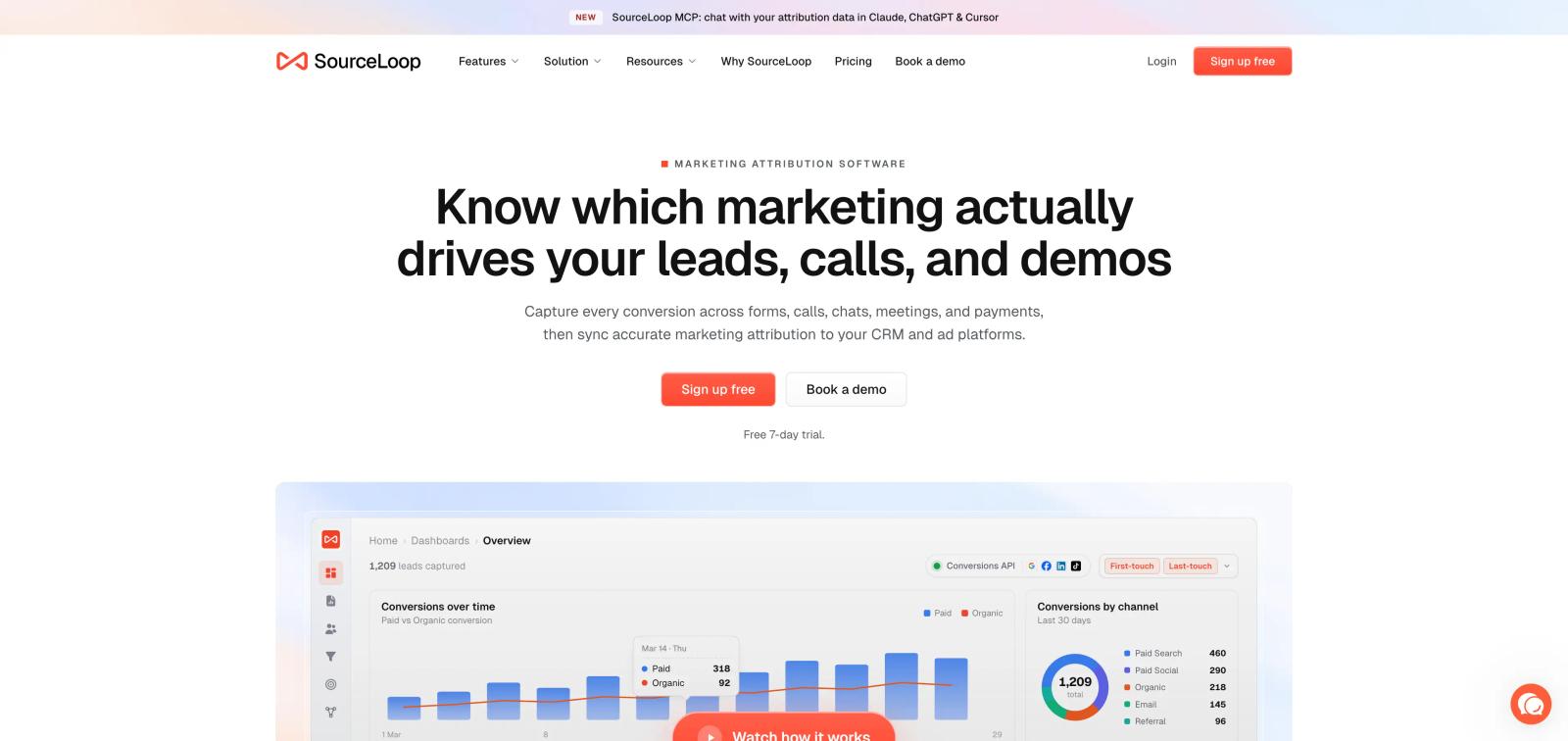
Be clear about the ranking here. If you run a pure Shopify store, SourceLoop is not your first pick. Polar Analytics, Northbeam and ThoughtMetric are built for that shape.
SourceLoop earns the top slot for hybrid funnels. Stores with a wholesale enquiry form, a high-consideration product that involves a call, a B2B arm, or a subscription business where the CRM matters as much as the cart.
What SourceLoop covers for hybrid funnels
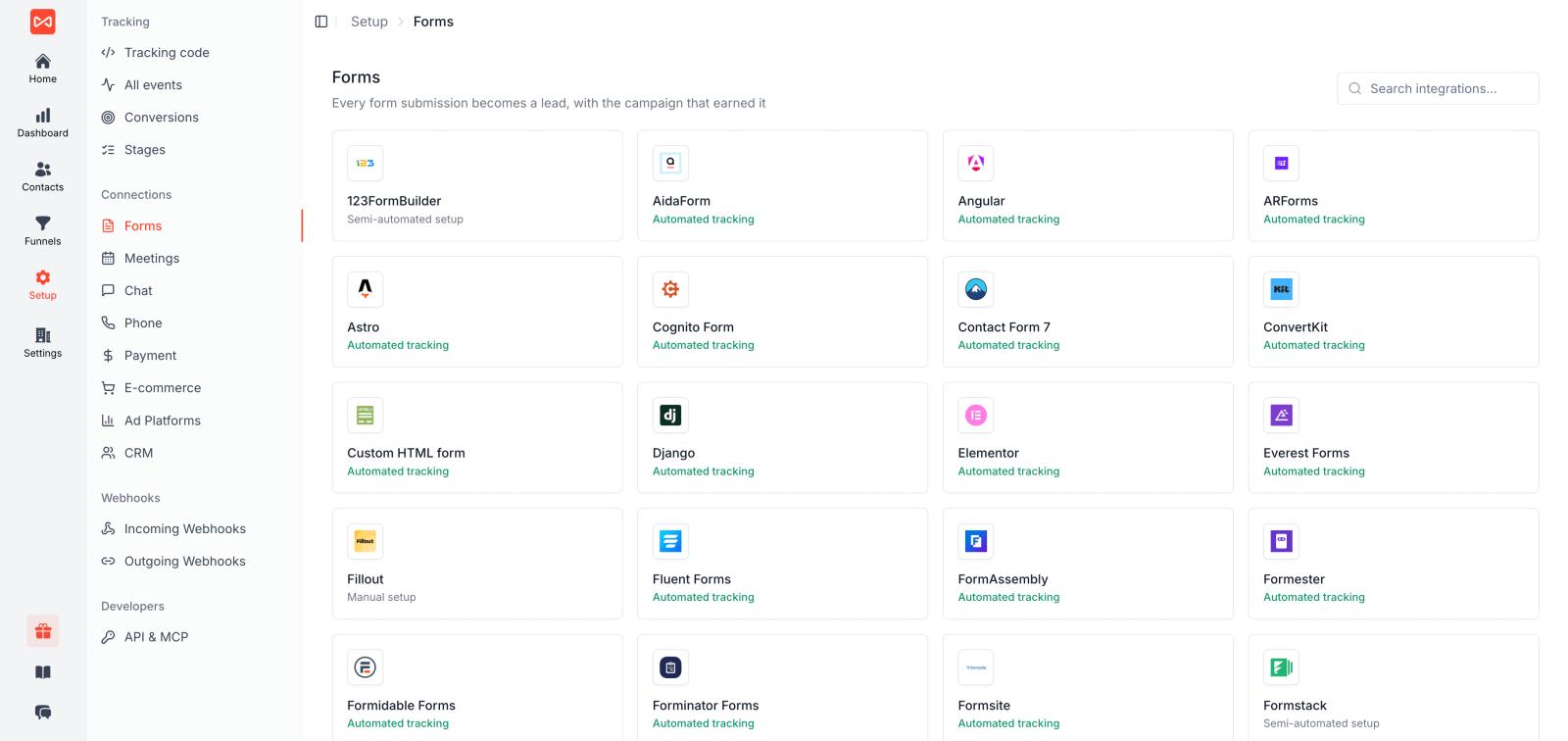
Conversions that are not orders. Forms, meeting bookings, chat conversations and phone calls, captured from around 70 tools with no event code.
That is the half Triple Whale was not built for. Sales-cycle attribution, CRM enrichment and lead tracking sit outside its thesis.
Channel coverage past the big three. Triple Whale is strongest on Meta, Google and TikTok. SourceLoop also carries LinkedIn, Microsoft, Pinterest and Reddit, both for spend reporting and for pushing conversions back.
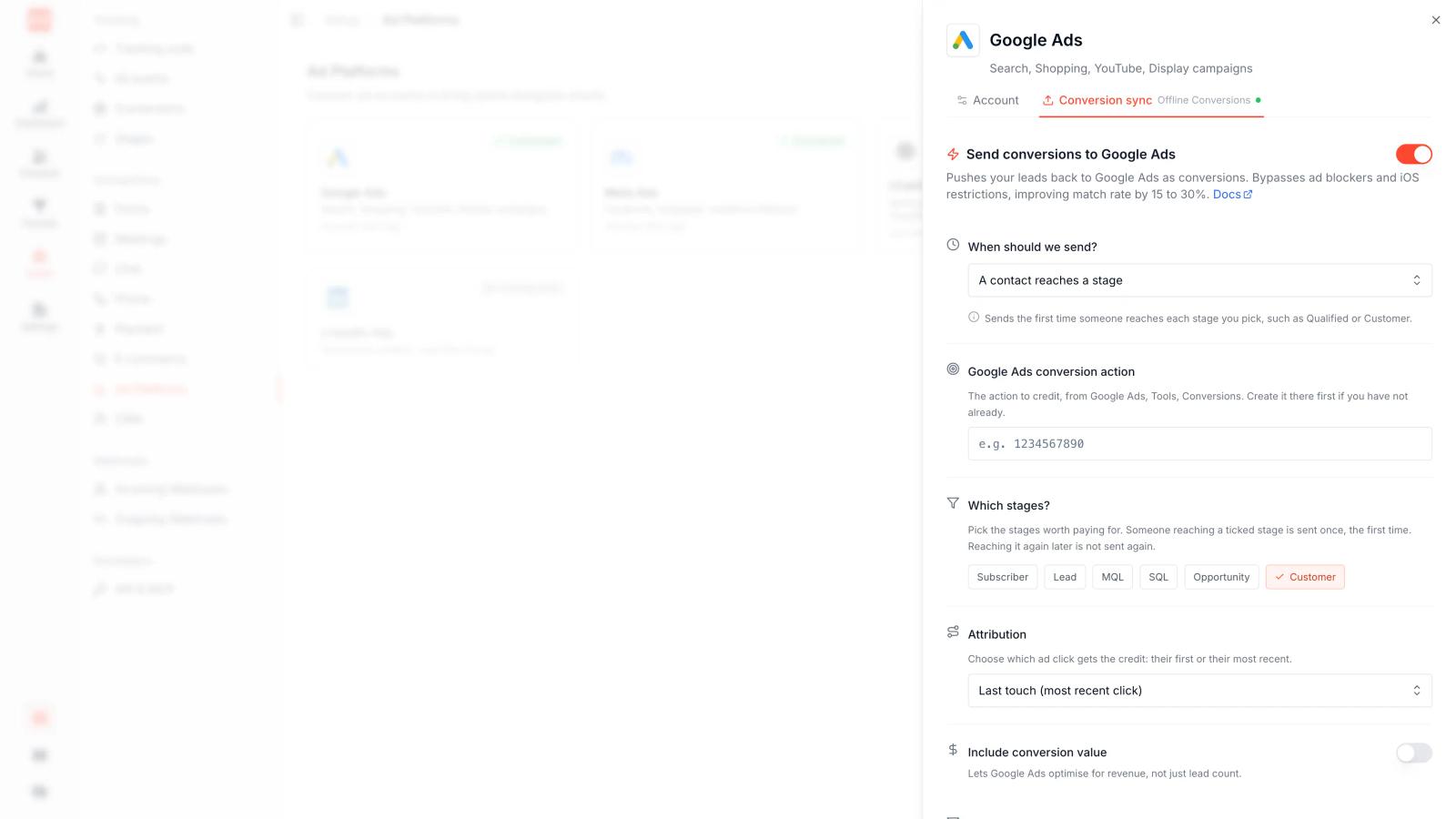
Conversion sync with real controls. Each mapping picks its trigger, can filter to one source, chooses first or last touch, and sends your CRM's quote value or the realised amount.
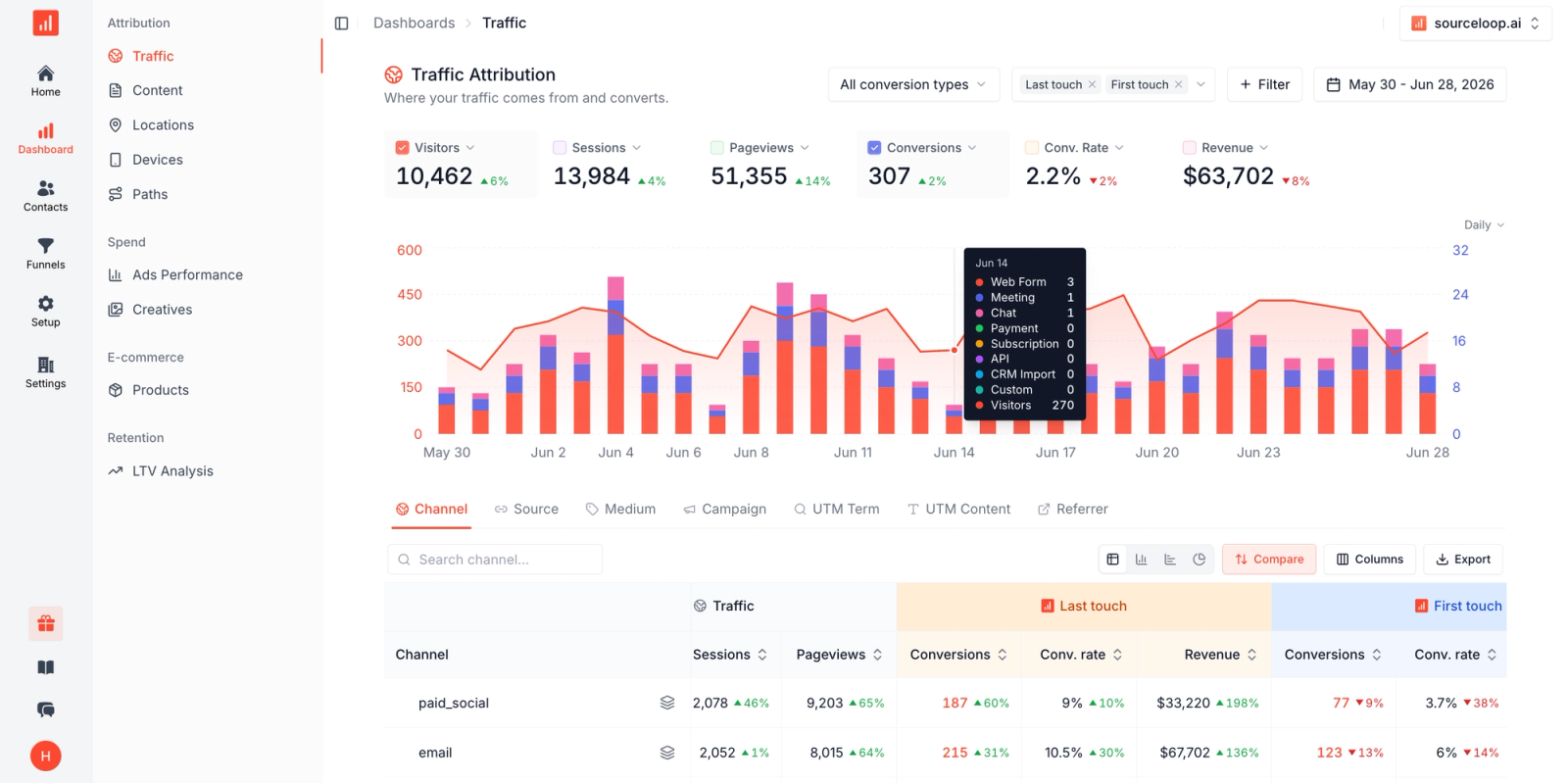
Seven attribution models with published weightings, on one stored journey. Useful context given the 15 to 25 percent gaps people report between pixel-based DTC dashboards and Shopify's own numbers. A model you can recompute by hand is easier to reconcile than one you cannot see.
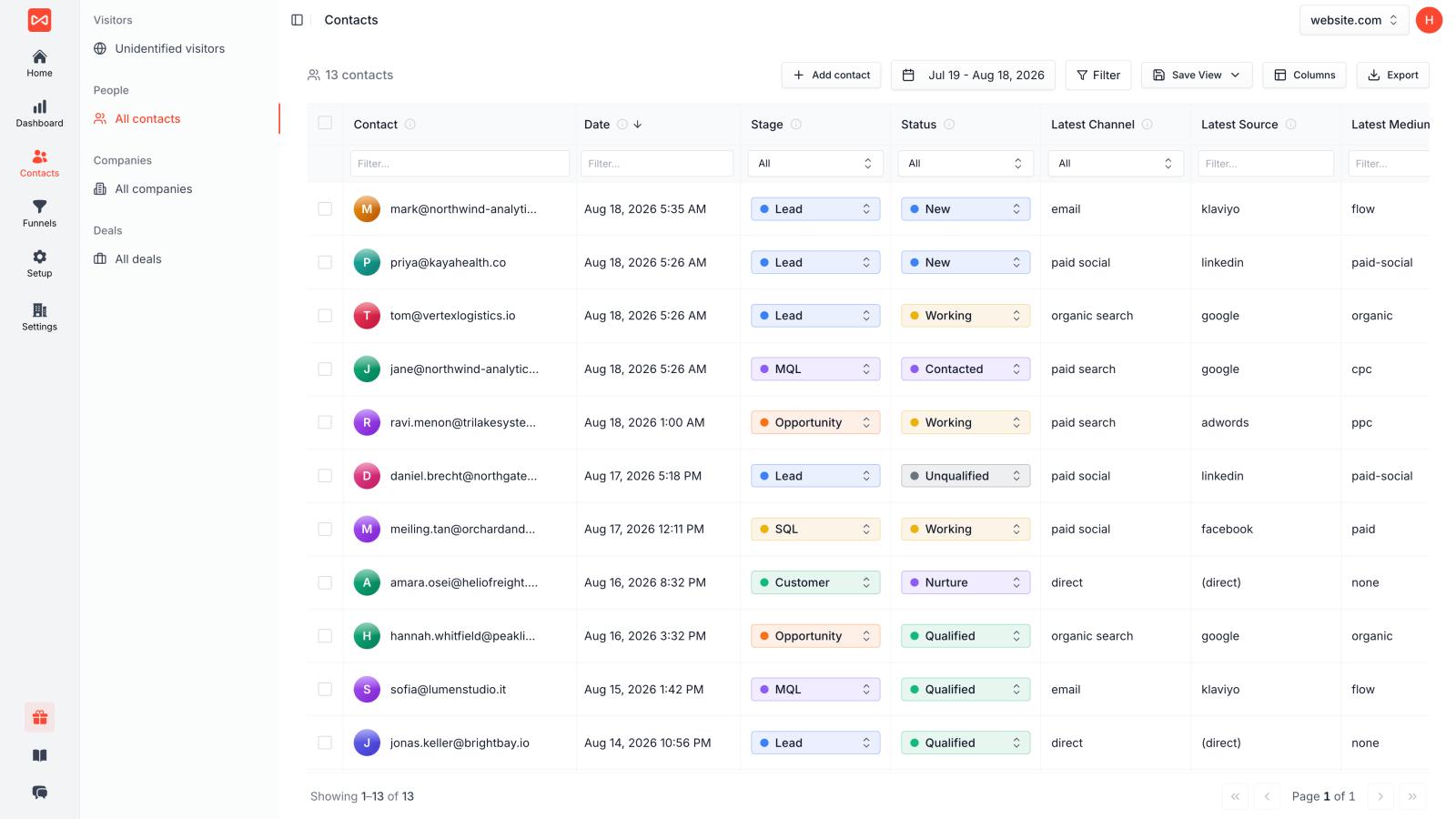
Person-level records. One row per real customer or lead after identity stitching, with the session-by-session journey behind it, syncing both ways with HubSpot, Salesforce, Pipedrive and Zoho.
Revenue arrives from Stripe, Paddle, Polar, Lemon Squeezy and Dodo Payments as well as Shopify.
CRM sync and the journey behind each customer
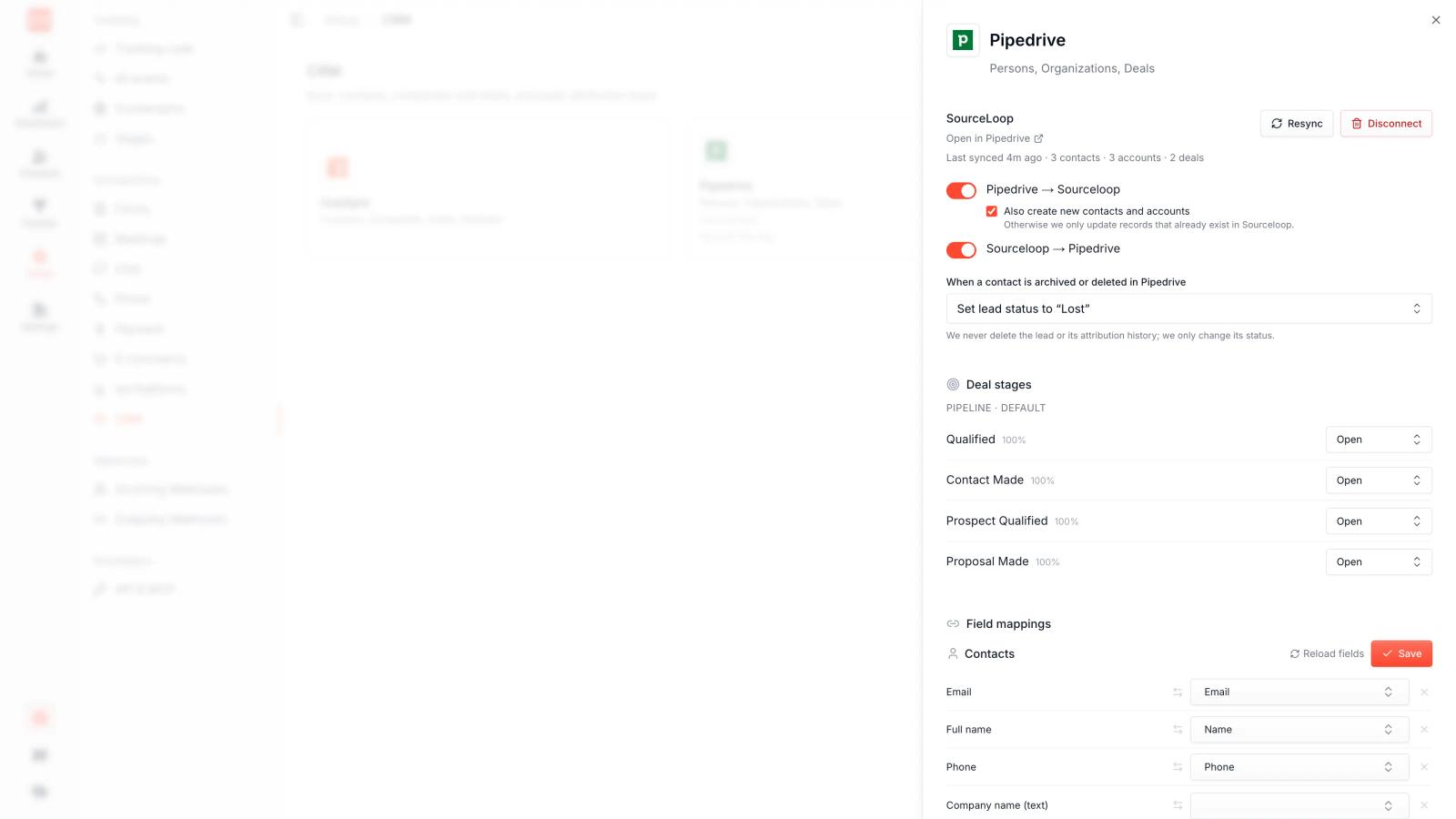
Native two-way sync with HubSpot, Salesforce, Pipedrive and Zoho. Attribution fields go onto the record, and deal stages and closed-won values come back.
That matters for the wholesale enquiry, the sales-assisted order and the subscription renewal, none of which end at the cart.
Every contact has a timeline behind it: each session in order, how they arrived, what they read, and the visit that converted. Identity stitching merges devices, so research on mobile and checkout on desktop are one customer.
Where Triple Whale is still the better tool
No blended profit dashboard. No COGS, shipping or merchant fees rolled into a net margin view.
No creative-level breakdown built for a media buyer refreshing it hourly.
No LTV cohort analysis at the depth DTC teams expect, and no post-purchase survey layer.
If your daily question is contribution margin by product after ad spend, Triple Whale and Polar answer it and SourceLoop does not.
Pricing
- Essential: $49 / month, 30k page views
- Professional: $99 / month, 100k page views
- Agency: $249 / month
Flat monthly pricing, 7-day trial, no card.
One structural note worth checking against your own numbers: Triple Whale meters on annual GMV, so the bill rises as the store grows. SourceLoop meters conversions, which moves with order count rather than order value.
Best for: Hybrid funnels. Stores with a lead-gen or B2B side, subscription businesses, and anyone whose conversions include forms and calls as well as carts. Create a free SourceLoop account.
2. Polar Analytics
Polar Analytics is the closest direct peer to Triple Whale at a lower price tier. Same Shopify-native focus. Same ad-platform integrations. Stronger custom-dashboard tooling for teams that want to build views Triple Whale doesn't ship.
For mid-size Shopify DTC brands (around $1M to $10M in revenue), Polar tends to be the cleaner-priced alternative.
Key capabilities
- Native Shopify connector with order, customer, and product-level data
- 50+ marketing data sources (Meta, Google, TikTok, Klaviyo, ReCharge, Postscript, plus dozens more)
- Custom-dashboard builder with drag-and-drop visualizations
- Multi-touch attribution for Shopify orders with custom model weights
- Pixel-and-server hybrid tracking for ad attribution
Watch-outs
The custom-dashboard layer is powerful but takes time to set up. It's not as plug-and-play as Triple Whale's pre-built views.
Attribution depth is good, not headline-grade. If pure attribution accuracy is the only question, Northbeam goes deeper.
Pricing
From around $300 a month. Higher tiers ($500-$1,500/month) for additional data sources and team seats.
Best for: Mid-size Shopify DTC brands that want a marketing dashboard tailored to their stack, with attribution as one piece rather than the whole product.
3. Northbeam
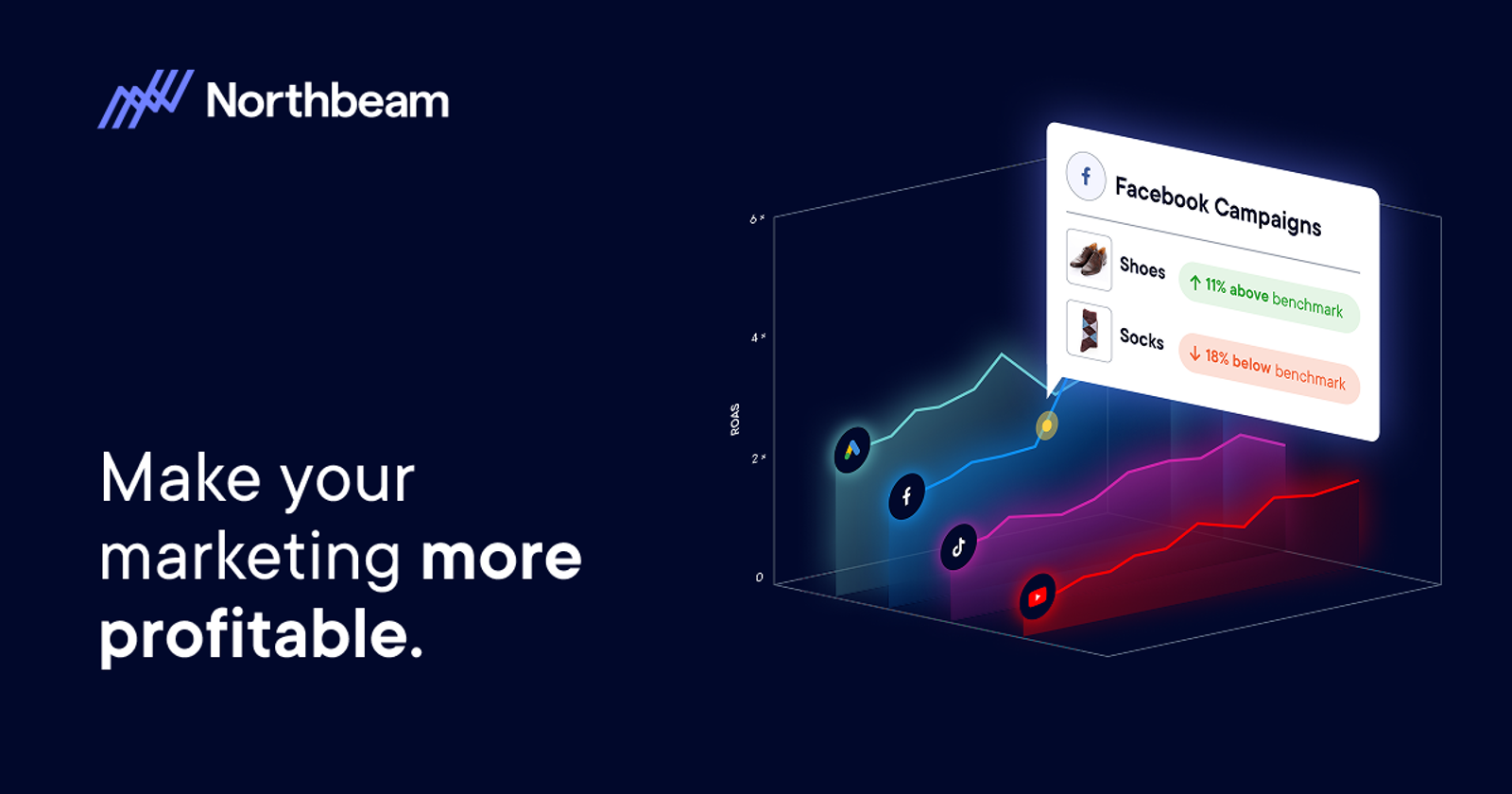
Northbeam is the higher-end DTC attribution platform. Built for stores doing $5M+ in annual revenue where the wrong ad-mix decision costs six figures a quarter.
The pitch is "real ROAS." Northbeam stitches first-party server-side data to a multi-touch model and reports which channels are actually driving incremental revenue, not just last-clicking attributed orders.
Key capabilities
- Multi-touch attribution at DTC scale with creative-level breakdowns
- Server-side tracking with native iOS 17 ATT workarounds
- Built-in incrementality testing for A/B holdout experiments
- Deep Shopify, Klaviyo, Meta, Google, TikTok integration
- Daily-refresh dashboards at sub-second query speed
Watch-outs
The platform is built for DTC. SaaS, lead-gen, and B2B teams won't get value from the dashboards.
Implementation is real. Most teams budget 1-2 weeks of setup with help from Northbeam's onboarding team.
Pricing
From around $999 a month, scaling with ad spend tracked.
Best for: DTC brands doing $5M+ in annual revenue where ad-mix decisions need real ROAS data rather than just attributed orders.
4. Hyros
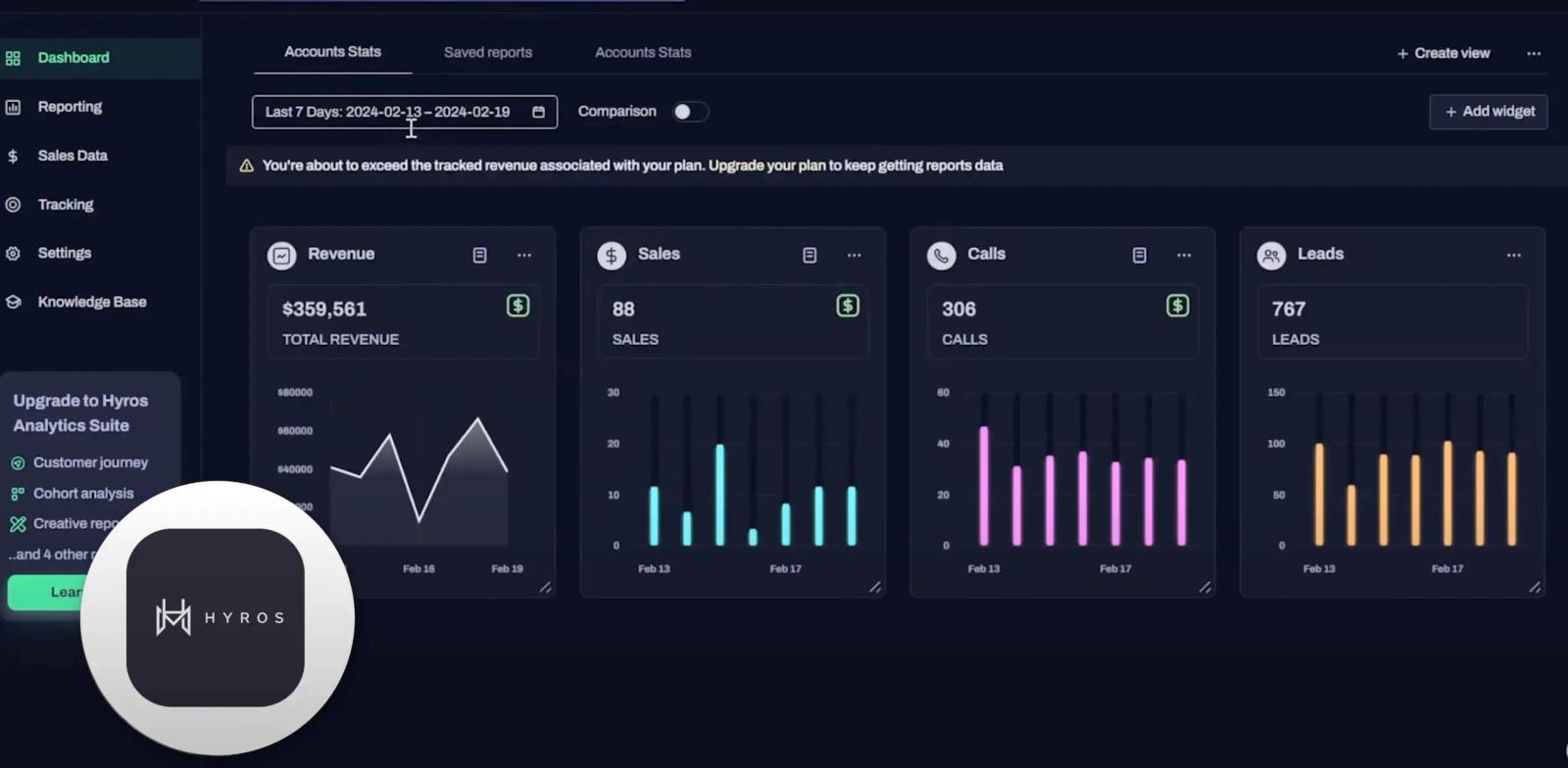
Hyros is the paid-ads attribution tool that DTC and info-product agencies talk about. Built around server-side tracking with cookieless persistence and long attribution windows that match how high-ticket funnels actually convert.
Where Triple Whale's strength is the unified DTC dashboard, Hyros's strength is the paid-ads layer specifically.
Key capabilities
- Server-side ad tracking that survives iOS 17 ATT, Safari ITP, and ad blockers
- 90+ day attribution windows for funnels with delay between click and purchase
- Native sync to Meta, Google, TikTok, YouTube, and Snapchat for offline conversion uploads
- Customer-LTV reporting by ad source, with cohort grouping
- Multi-touch with weighted credit across the full ad journey
Watch-outs
Onboarding involves a sales call and a real implementation. Pricing isn't transparent. The UI is more functional than designed.
If your store is small or your ad spend is under $20k a month, the platform fee is hard to justify against alternatives like Cometly or Triple Whale itself.
Pricing
From around $499 a month, scaling with ad spend tracked.
Best for: DTC brands and info-product creators running paid ad spend over $20k a month where ad-platform reporting is leaving real money on the table.
5. Wicked Reports
Wicked Reports is built for DTC and info-product brands where customer lifetime value matters more than first-purchase ROAS. Where Triple Whale and Polar focus on the unified dashboard, Wicked focuses on what happens after the first order.
Key capabilities
- Customer-LTV-by-channel attribution rather than just first-purchase ROAS
- Native Shopify, WooCommerce, Klaviyo, Meta, Google Ads integrations
- Multi-touch with revenue weighting across the full customer lifetime
- Repeat-purchase modeling with cohort retention curves
- Server-side tracking layer for iOS attribution accuracy
Watch-outs
The customer-LTV layer is what makes it worth the price, and the price reflects that. North of $1,000 a month for most stores.
The interface is dense. It takes a couple of weeks to feel comfortable, especially if you're coming from Triple Whale's cleaner UI.
Pricing
From around $1,000 a month, scaling with tracked revenue.
Best for: DTC and info-product brands doing $1M+ in revenue who optimize for customer lifetime value rather than first-purchase ROAS.
6. Lifetimely
Lifetimely (now part of AMP) is a Shopify-native DTC analytics tool focused on LTV and cohort reporting. Where Triple Whale tries to cover the full DTC stack, Lifetimely goes deep on a narrower question: what's the value of each customer cohort over time, and how does that vary by acquisition source.
Key capabilities
- Cohort retention curves with revenue per cohort tracked over time
- Customer LTV by acquisition channel, product purchased, and discount used
- Subscription analytics for ReCharge and Bold Subscriptions
- Repeat purchase modeling with predicted next-order dates
- Native Shopify integration with daily-refresh data
Watch-outs
Lifetimely is reporting and analytics, not full attribution. Multi-touch attribution is light. Ad-platform sync is limited compared to Triple Whale or Northbeam.
For brands who already have an attribution tool and just want better LTV reporting, Lifetimely fits. As a one-stop replacement for Triple Whale, it's narrower.
Pricing
From $39 a month at the entry tier. Higher tiers ($199-$999/month) for additional features and team seats.
Best for: Shopify brands that want strong cohort and LTV reporting at a low price point, paired with a separate attribution tool.
7. Peel Insights
Peel is a lighter-weight DTC analytics tool that earned a following with a generous free tier and a focus on retention reporting for subscription brands.
For early-stage Shopify brands or brands testing the DTC analytics waters, Peel often comes up as the first paid tool teams add to the stack.
Key capabilities
- Free tier with usable limits for early-stage stores
- Cohort retention dashboards with subscription-friendly logic
- Customer journey reports across paid, organic, and email
- Native Shopify, ReCharge, Klaviyo, and Postscript integrations
- Daily-refresh reports with custom date-range comparisons
Watch-outs
Multi-touch attribution is light. Ad-platform sync is mostly absent. The product is positioned more as "DTC analytics" than "DTC attribution."
If your needs are mostly retention and cohort reporting, Peel covers it. If you need ad attribution depth, you'll add a second tool.
Pricing
Free tier with limits. Paid plans from around $150 a month.
Best for: Early-stage and subscription-led DTC brands that want generous-tier analytics with retention reporting at the center.
8. Cometly
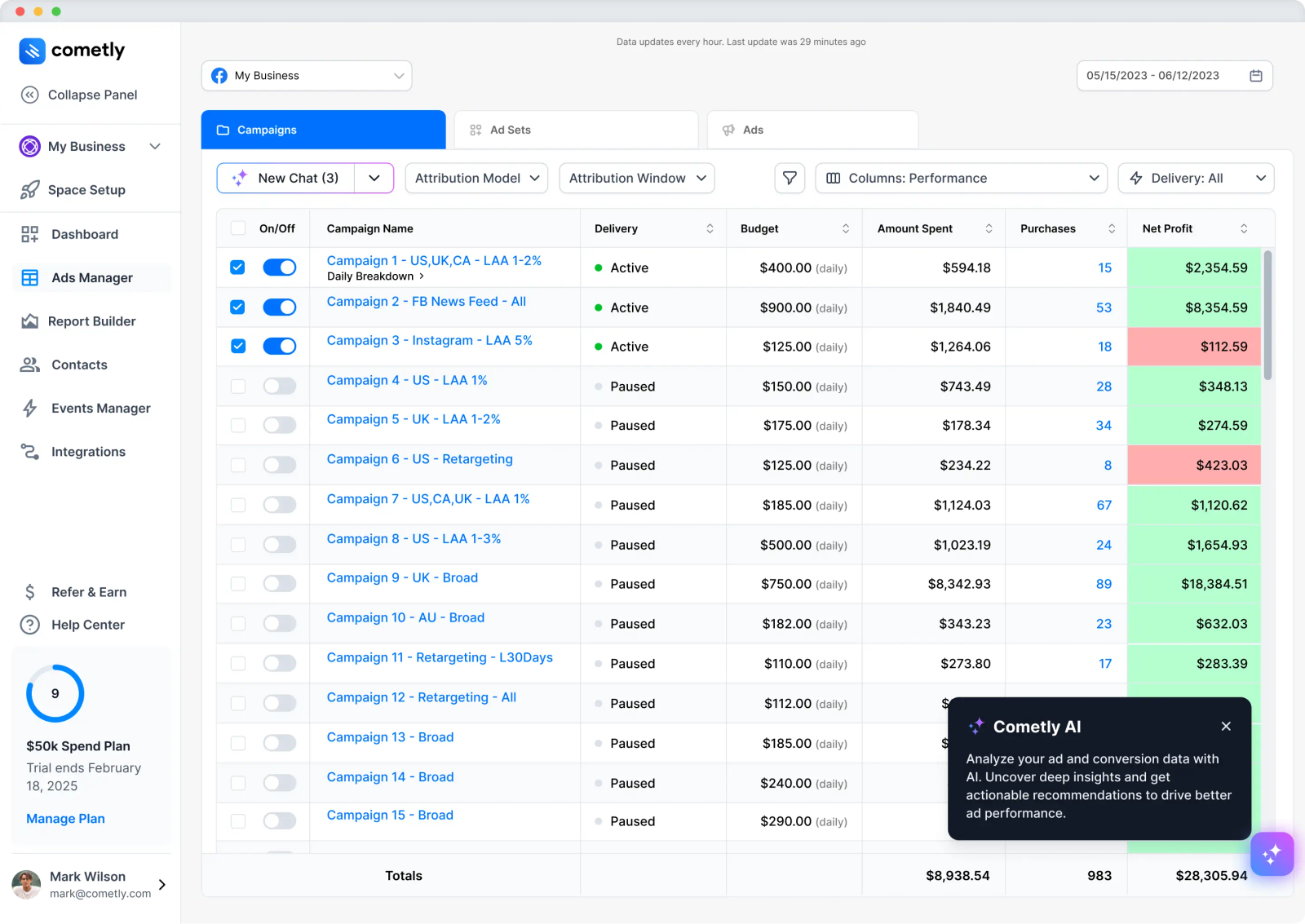
Cometly is a paid-ads attribution platform with strong agency multi-account support. The architecture is similar to Hyros (server-side tracking, multi-touch attribution, offline conversion sync) at a slightly lower price point.
For DTC brands or agencies running ad spend across multiple Shopify stores, Cometly's multi-account flow is friendlier than Hyros's.
Key capabilities
- Server-side conversion tracking with offline sync to Meta, Google, TikTok
- Multi-touch attribution with weighted models
- Multi-account architecture for agencies managing multiple Shopify stores
- Native Shopify integration alongside ad-platform connections
- Pre-built dashboards for ROAS, MER, and channel-level revenue
Watch-outs
The product is paid-ads-attribution focused. If you need full DTC analytics (cohort LTV, retention, subscription metrics), you'll add a second tool.
Pricing
From around $249 a month, scaling with ad spend tracked.
Best for: Performance agencies and DTC brands running paid ads across multiple stores where multi-account reporting matters.
9. Daasity
Daasity is the enterprise retail analytics platform. Where Triple Whale, Polar, and Northbeam are SaaS dashboards built on top of marketing data, Daasity's pitch is your-own-data-warehouse-but-managed-for-retail.
Key capabilities
- Built on a real cloud data warehouse (typically Snowflake) under managed control
- 100+ retail-specific data connectors including Shopify, Amazon Seller Central, NetSuite, retail POS systems
- Pre-built data models for retail metrics (LTV, retention, channel ROAS, AOV by cohort)
- Looker, Tableau, or Domo as the BI layer
- Custom transformations and calculated fields without writing SQL
Watch-outs
Pricing is enterprise-only. Plans typically start at $2,500/month and climb fast for larger data volumes.
The product expects a data team or analyst on your side. If your team isn't comfortable with BI tools and warehouse data, the value compounds slowly.
Pricing
Custom. Typically $2,500+ a month, often $40,000+ annually for full deployments.
Best for: Enterprise retail and DTC brands with a data analyst function who want a managed warehouse with retail-specific data models.
10. Glew.io
Glew.io is multi-channel ecommerce analytics. Native to Shopify, but also handles Amazon, eBay, BigCommerce, WooCommerce, Magento, and a long tail of other store platforms.
For brands selling across more than just Shopify, Glew unifies the order data and reports in one place.
Key capabilities
- Multi-channel ecommerce data connectors (Shopify, Amazon, BigCommerce, WooCommerce, Magento, plus more)
- Customer LTV and cohort retention reporting
- Inventory and product-performance dashboards
- Channel attribution with multi-touch models
- BI layer with custom dashboards built on top of unified data
Watch-outs
The Shopify-specific depth is lighter than Triple Whale's because the product spreads across channels. If your store is Shopify-only, the multi-channel breadth doesn't pay back.
Multi-touch attribution and ad-platform sync are present but not the headline.
Pricing
From around $99 a month at the entry tier. Higher tiers scale with channels and data volume.
Best for: DTC brands selling across Shopify and other ecommerce platforms (Amazon, BigCommerce, WooCommerce) that want unified reporting.
11. Madgicx
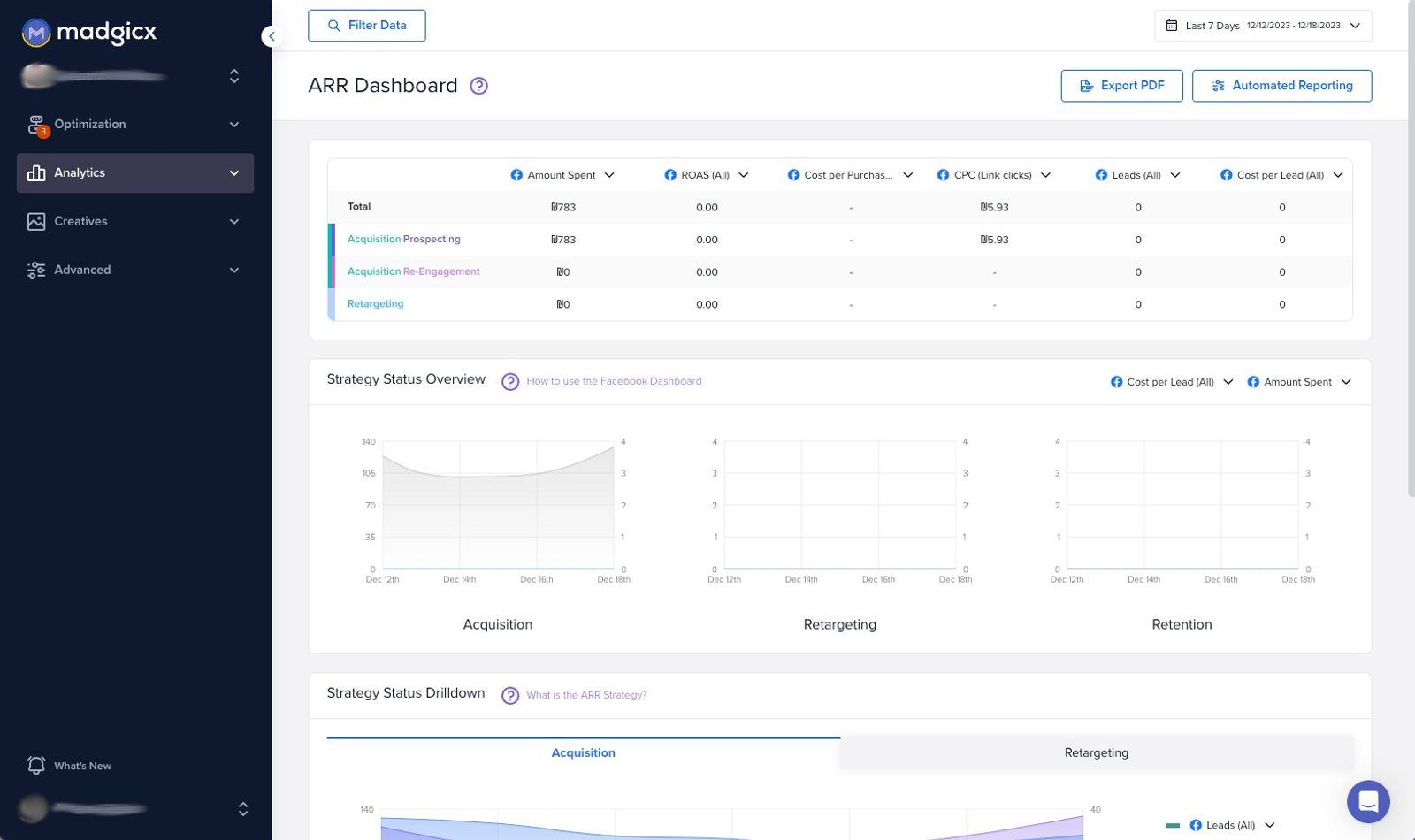
Madgicx is a Meta-ads optimization platform with a tracking and attribution layer attached. Where the rest of this list is "DTC analytics," Madgicx is "Meta optimization."
If your ad spend is heavily Meta-weighted and the optimization is the actual problem (more than the reporting), Madgicx is in a different category in a useful way.
Key capabilities
- Meta-focused attribution that compares Madgicx's tracking to Meta's reported numbers
- AI-powered audience and creative recommendations for Meta ads
- Automated rules for budget shifts and bid management
- Creative library with performance tagging across the ad account
- Cloud Tracking for cookieless server-side conversions to Meta
Watch-outs
Meta-focused. Google, TikTok, and other ad platforms are not the strength.
If you wanted a full multi-touch attribution platform, Madgicx isn't that. It's a Meta optimization tool with attribution support.
Pricing
From $54 a month for Cloud Tracking. Pro tier from $109 a month. All-in-One from $379+ a month.
Best for: Brands and agencies whose ad spend is heavily Meta-weighted and who want better Meta optimization, not just better Meta reporting.
How to pick the right one
Sort by store size and primary question.
Pure Shopify DTC, $5M+ revenue: Northbeam if attribution accuracy is the priority. Daasity if you want a managed warehouse with a data team behind it. Triple Whale stays competitive if you're already on it and your team uses the dashboards.
Pure Shopify DTC, $1M to $5M revenue: Polar Analytics is usually the closest direct alternative to Triple Whale at a lower price tier.
LTV is the focus: Wicked Reports for the multi-touch LTV layer. Lifetimely if you mostly want strong cohort reporting at a lower price.
Paid ads attribution is the focus: Hyros for high-ticket DTC with longer attribution windows. Cometly for agencies running paid ads across multiple accounts.
Heavy Meta concentration: Madgicx is a different category that pays back if Meta optimization is the actual problem.
Selling across Shopify and other platforms: Glew.io.
Hybrid funnel (DTC plus lead-gen, B2B with ecom on the side, or smaller stores under $1M ARR): SourceLoop. Modern multi-touch attribution and offline ad sync at $49 a month, without the Shopify-deep DTC depth you don't yet need. Create a free SourceLoop account.
Frequently asked questions
-
What's the cheapest Triple Whale alternative?
For pure Shopify DTC: Lifetimely starts at $39 a month, Peel has a free tier, Polar Analytics from $300 a month covers more breadth. For hybrid funnels: SourceLoop at $49 a month with multi-touch attribution and ad sync.
-
Which Triple Whale alternative is closest in feature parity?
Polar Analytics is closest in scope and architecture (Shopify-native, marketing connectors, custom dashboards, attribution). Northbeam goes deeper on the multi-touch layer for enterprise stores. Neither is a 1:1 replacement, since Triple Whale's UI and breadth are what most users actually pay for.
-
Can I migrate from Triple Whale easily?
The technical migration is straightforward across all of these. Snippet swap, ad-platform reconnections, Shopify connector reauthorization, Klaviyo/ReCharge re-mapping. Plan for 2-4 weeks of running both tools in parallel to validate the new tool's numbers match before cutting over. Historical data generally doesn't transfer; the new tool's lookback fills up over 30-90 days.
-
Is Triple Whale worth $399 a month?
For mid-size Shopify DTC brands whose teams use the dashboards daily and where the multi-channel reporting saves real planning time, yes. For smaller stores or stores where the team logs in occasionally, the math favors a cheaper alternative or a focused tool (Lifetimely for LTV, Cometly for paid ads, SourceLoop for hybrid).
-
Does Triple Whale's Sonar Pixel give it an attribution advantage?
Sonar is Triple Whale's first-party tracking layer that survives iOS 14 attribution loss. Northbeam, Hyros, Wicked, and Cometly all have equivalent server-side tracking. The pixel quality across modern DTC tools has converged. The differences in attribution accuracy at this point are mostly about modeling, not about pixel quality.
-
What about Klaviyo's built-in attribution?
Klaviyo CDP and Klaviyo's reporting layer cover email and SMS attribution within Klaviyo well. They don't replace a dedicated DTC attribution tool because they're scoped to channels Klaviyo touches. If you're already paying for Klaviyo's higher tiers, look at what's bundled before adding another tool.



 Paid Social


