
10 Best Rockerbox Alternatives: Compared for 2026
10 attribution tools compared on price, features, and where each one fits.
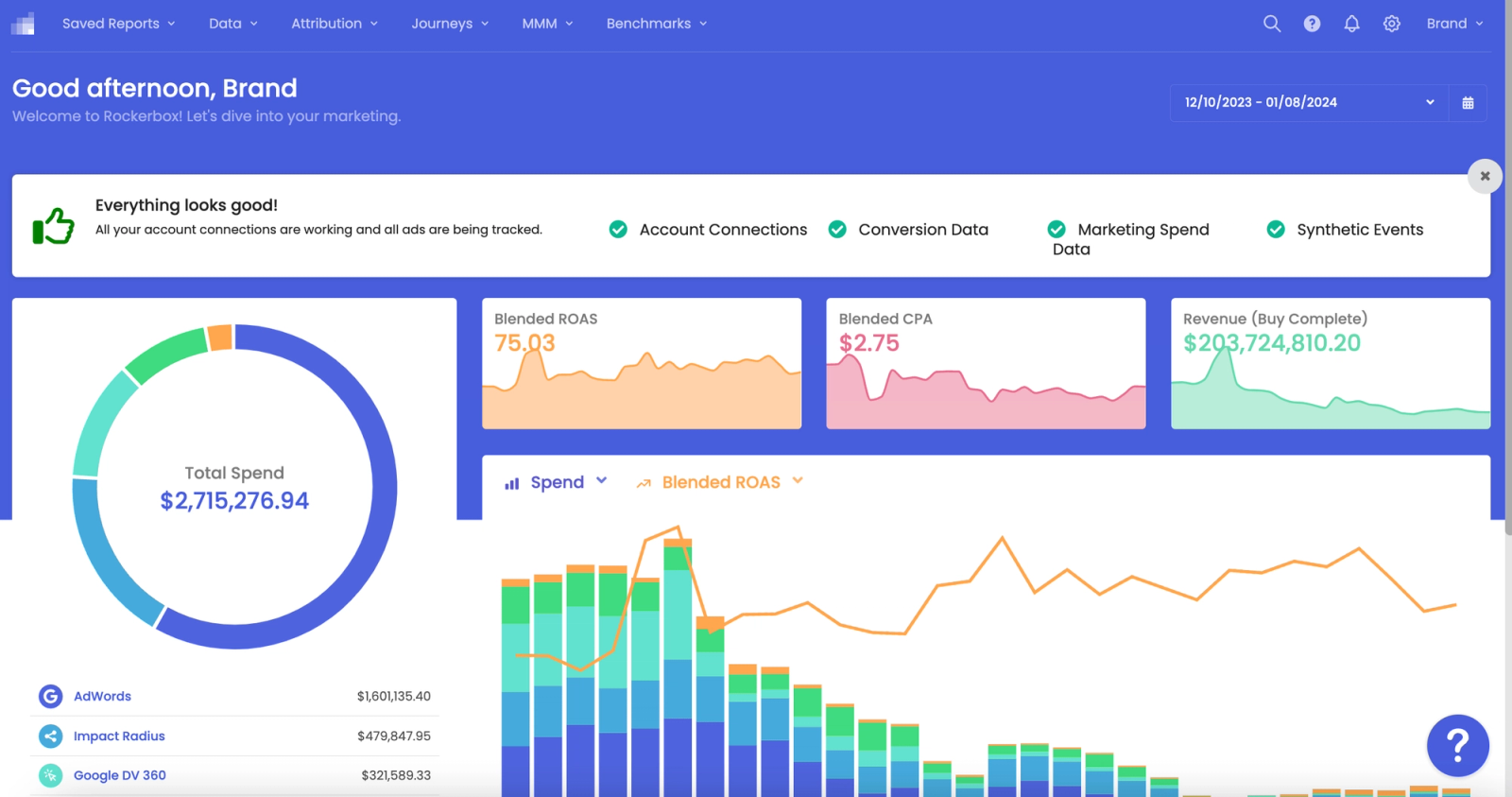
Table of contents
- Rockerbox Alternatives Comparison
- 1. SourceLoop
- Different philosophy, not just a cheaper version
- Where the funnel shape matters
- Seven models, switched from a dropdown
- Conversion sync with filters
- Key capabilities
- Limitations
- 2. Northbeam
- Key capabilities
- Limitations
- 3. Triple Whale
- Key capabilities
- Limitations
- 4. Measured
- Key capabilities
- Limitations
- 5. Haus
- Key capabilities
- Limitations
- 6. Recast
- Key capabilities
- Limitations
- 7. Wicked Reports
- Key capabilities
- Limitations
- 8. ThoughtMetric
- Key capabilities
- Limitations
- 9. Hyros
- Key capabilities
- Limitations
- 10. Dreamdata
- Key capabilities
- Limitations
- How to think about the choice
Rockerbox does multi-touch attribution, marketing mix modeling, and incrementality testing in one platform.
That is a lot, and it is priced accordingly. Onboarding runs six to eight weeks, pricing is quote-only, and the numbers we could find put it well into five figures a year before implementation. Most teams do not need all three methodologies and end up paying for two they never use.
Here are ten Rockerbox alternatives, sorted by what they actually do well.
Rockerbox Alternatives Comparison
| Tool | Starting price | Strength | Where it fits |
|---|---|---|---|
 SourceLoop SourceLoop |
$49/mo | Journey + conversion sync | B2B and SaaS |
 Northbeam Northbeam |
~$1,000/mo | MTA + MMM | Mid-to-large ecom |
 Triple Whale Triple Whale |
~$129/mo | Native Shopify + profit | DTC ecom |
 Measured Measured |
Custom | Incrementality testing | Big spenders, ecom |
 Haus Haus |
Custom | Geo-incrementality | Brands testing channels |
 Recast Recast |
Custom | Modern MMM | Mid-market ecom |
 Wicked Reports Wicked Reports |
~$250/mo | LTV + cohort reporting | Subscription DTC |
 ThoughtMetric ThoughtMetric |
$99/mo | Multi-platform ecom | Mid-size brands |
 Hyros Hyros |
Custom | Long-cycle tracking | Info products + agencies |
 Dreamdata Dreamdata |
Free / $999+ | Salesforce attribution | B2B SaaS |
1. SourceLoop
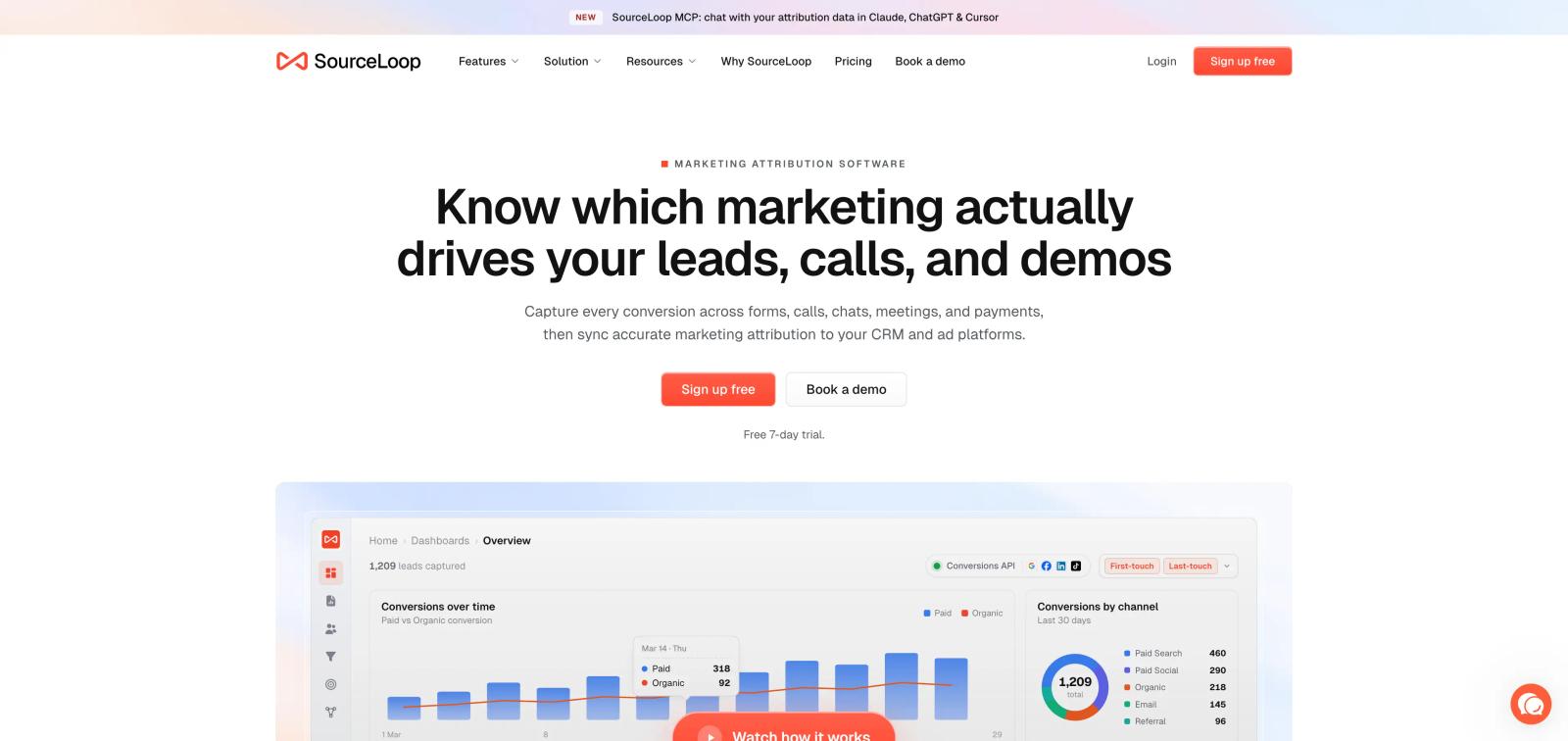
If you looked at Rockerbox for a B2B, SaaS or lead-gen funnel and thought it was more platform than you need, SourceLoop is the focused version of the job.
Rockerbox does not publish pricing, so this is hard to pin down from the outside. From our research, annual contracts tend to land somewhere in the tens of thousands, implementation is billed separately on top, and onboarding runs six to eight weeks with real developer time from your side.
Budget for a first year in five figures, and treat anything you read as a starting point for the quote you will actually get.
SourceLoop publishes its prices, bills monthly, and is live the afternoon you paste the script.
Different philosophy, not just a cheaper version
Rockerbox pulls your data into its warehouse and builds bespoke models across three methodologies: multi-touch attribution, media mix modelling and incrementality testing. Those are three different answers to three different questions, and genuinely valuable at scale.
SourceLoop does one of the three, deterministically, and does not pretend otherwise. It follows real people through real sessions, records what they did, and assigns credit by explicit rules you can recompute by hand. No modelled estimate, and nothing to calibrate before the numbers mean anything.
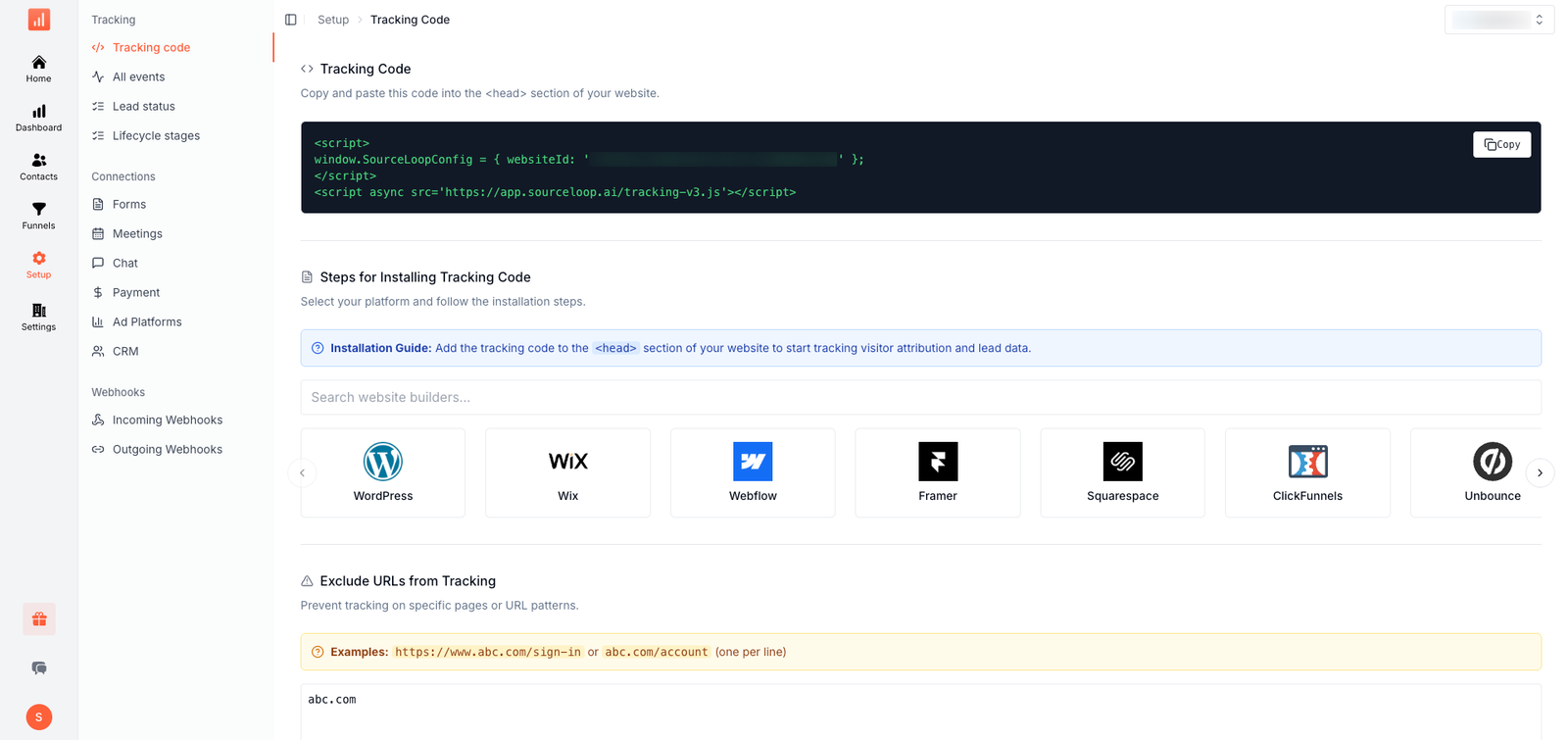
Install the script and every visitor is captured from the first pageview: referrer, landing page, all five UTMs and the click ID. Nine are read (gclid, gbraid, wbraid, msclkid, fbclid, li_fat_id, ttclid, epik, rdt_cid), ahead of the referrer, which keeps an iOS Safari ad click from filing itself as Direct.
Where the funnel shape matters
This is the real fit question, more than price.
Rockerbox is built for DTC and ecommerce brands with substantial multichannel budgets, where the conversion is a purchase and much of the influence is view-through. It is also weaker on view-based channels like TikTok and YouTube, which says something about where the hard problems sit in that world.
Considered-purchase funnels have a different shape. The conversion is a booked demo, a form, a chat or a phone call, and it happens weeks or months after the click. Deterministic person-level tracking works well there precisely because volume is low enough to follow individuals and the buyer identifies themselves early.
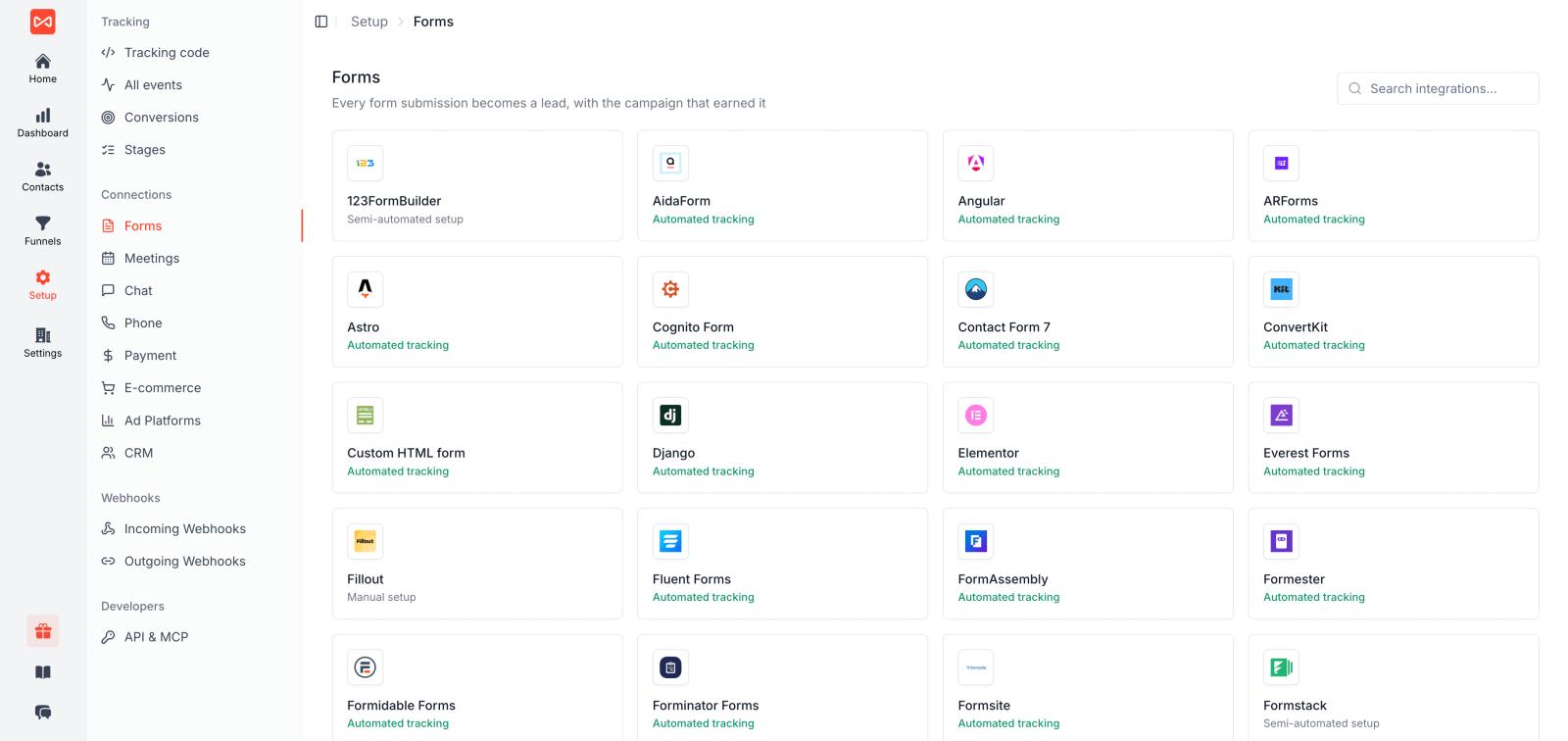
SourceLoop captures around 70 of those tools with no event code: Calendly, Cal.com, HubSpot Meetings, Chili Piper, TidyCal, YouCanBookMe, Zoho Bookings, Gravity Forms, WPForms, Contact Form 7, Fluent Forms, Elementor, Typeform, Tally, Jotform, Formstack, Webflow, Framer, Intercom, Drift, Crisp, Tidio, LiveChat, CallRail, CallTrackingMetrics, Invoca, Stripe, Paddle, Polar, Lemon Squeezy and Dodo Payments.
Seven models, switched from a dropdown
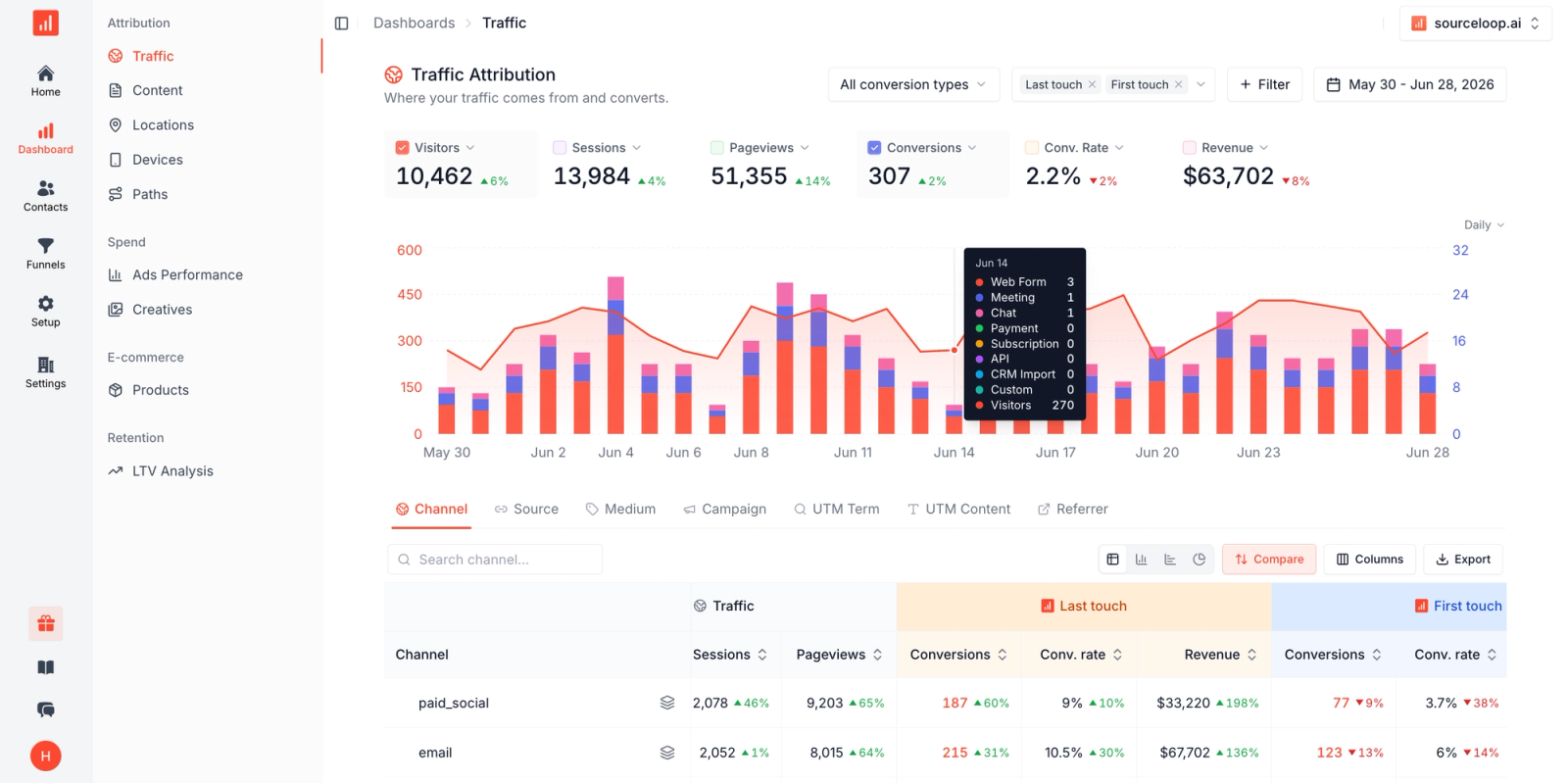
First touch, last touch, linear, position-based (40/40/20), time decay, first non-direct and last non-direct, all on the same stored journey and included on every plan.
Connect Google, Meta, LinkedIn, TikTok and Microsoft ad accounts and spend joins the journeys, so cost per qualified lead sits next to the campaigns that produced it.
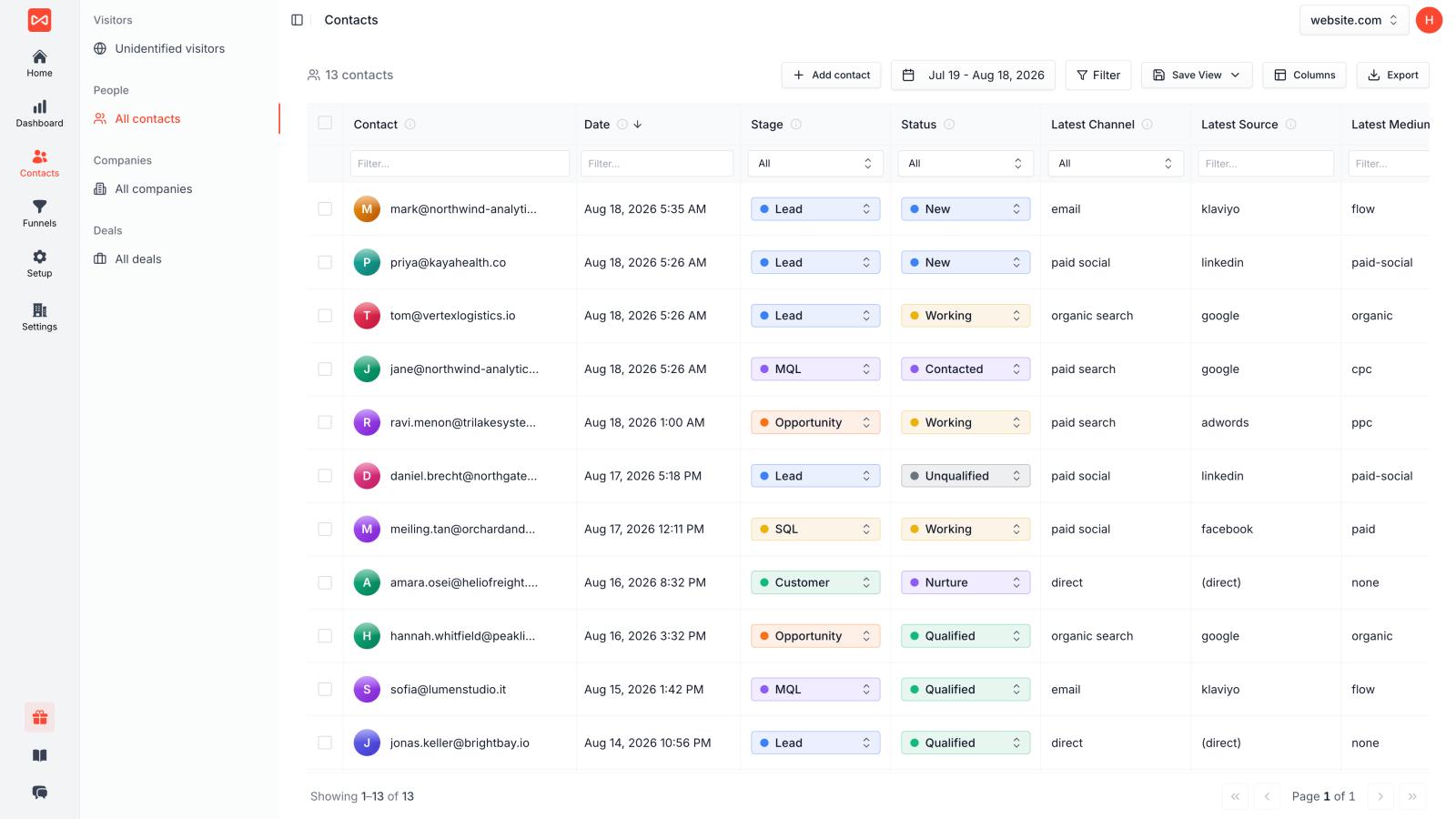
The Contacts Hub gives one row per real person after identity stitching, with first and last touch source, campaign, CRM status and revenue, plus the session-by-session journey behind each. Contacts roll up by company, resolved from the domain on a captured lead email, so sales sees why a lead is in the pipeline without a separate reporting seat.
Conversion sync with filters
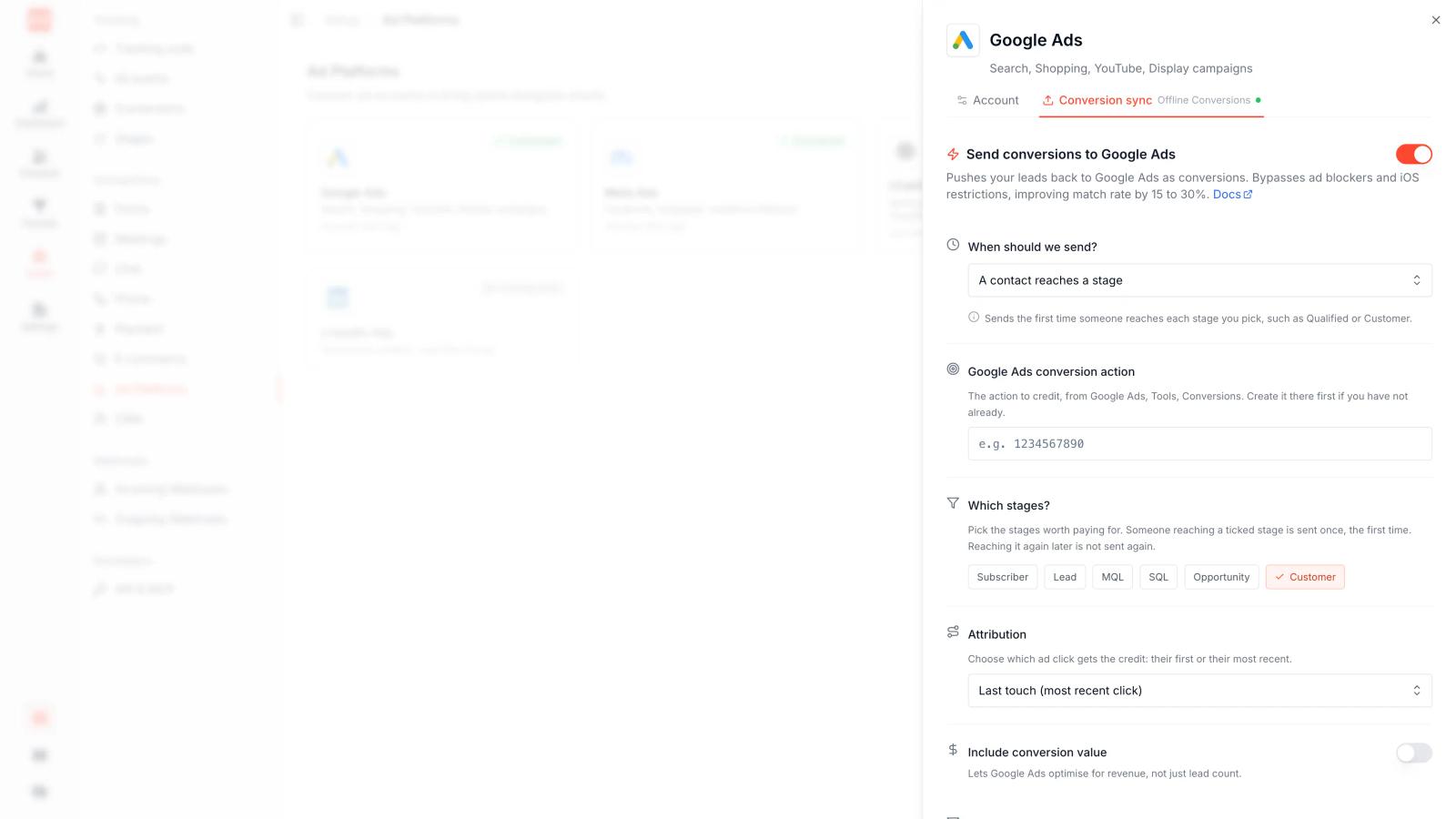
SourceLoop pushes conversions server-side to Google Ads Enhanced Conversions, Meta CAPI, LinkedIn CAPI, Microsoft Ads, TikTok, Pinterest and Reddit.
Each mapping picks a trigger (new conversion, expected revenue updated, or realised revenue confirmed by a payment), can filter to one source, chooses first or last touch, sets the value from your CRM's quote or sales value, and sets a dedup window.
For a lead-gen funnel this is usually the highest-return change available. Meta stops optimising toward form fills and starts optimising toward the leads sales marked qualified.
Key capabilities
- One-script install, attribution data flowing within the hour, no data scientist and no onboarding project
- Nine click IDs captured per session and per contact, read ahead of the referrer
- Around 70 form, meeting, chat, call and payment tools captured automatically
- Seven attribution models on every plan, with contact-level and company-level journeys behind them
- Two-way CRM sync with HubSpot, Salesforce, Pipedrive and Zoho, including stage and closed-won value
- Server-side conversion sync to seven ad platforms, filtered per event and valued from CRM data
- Revenue stitched from Stripe, Paddle, Polar, Lemon Squeezy and Dodo Payments
- Page-level content attribution and path sequence analysis
- MCP server and REST API for querying attribution from an AI agent or a script
- Published pricing, monthly billing, 7-day trial, no card and no demo call
Limitations
- No marketing mix modelling. If MMM is the reason Rockerbox was on your list, this does not replace it. Recast or open-source Robyn are the honest answers.
- No incrementality testing. Haus and Measured own that, and geo-holdout testing is a genuinely different discipline from attribution.
- No view-through measurement. SourceLoop credits clicks, not impressions. For a brand where YouTube and TikTok views drive real lift, deterministic click attribution will systematically undercount them.
- Weaker fit for high-volume DTC. At eight figures of ecommerce spend across many channels, modelled approaches exist for a reason.
- No reverse-IP company identification, so account rollup needs a captured email first.
Pricing: Essential $49/mo covers 1 site, 1 user and 30k page views a month. Professional $99/mo adds 3 users and 100k page views. Agency $249/mo covers 3 sites, unlimited users and 2.5M page views. Tracked conversions are unlimited on every plan, annual billing takes 25% off, and there is a 7-day trial with no card.
Best for: B2B, SaaS, agency and lead-gen teams whose conversions are bookings, forms and calls rather than checkouts, and anyone who looked at Rockerbox and wanted one methodology done well instead of three bundled.
2. Northbeam
Northbeam is the closest direct alternative if you actually need both attribution and MMM under one roof.
It works across Shopify, WooCommerce, and Magento. Multi-touch attribution is the daily-use feature, but the MMM layer lets you forecast budget shifts and run "what if I cut brand search 20%" scenarios. That's the part that makes it a real Rockerbox competitor instead of just a Triple Whale alternative.
Where Northbeam falls short of Rockerbox is the offline channel coverage. Rockerbox has been doing TV, radio, podcast, and direct mail attribution for years and has the integrations to back it up. Northbeam is digital-first.
Key capabilities
- Multi-touch attribution and marketing mix modeling.
- Cross-platform ecom support.
- Predictive forecasting and budget scenarios.
- Decent CTV and podcast coverage, lighter than Rockerbox.
Limitations
- Steep learning curve.
- Pricing scales with pageviews. Smaller brands feel the squeeze.
- Less robust offline measurement than Rockerbox.
Pricing: From around $1,000/month, scaling with traffic.
Best for: Mid-to-large ecom brands who need MTA + MMM but don't run heavy offline media.
3. Triple Whale
Different beast entirely. Triple Whale is built for Shopify DTC, full stop.
If your "Rockerbox alternative" search is really "I run a Shopify store, I just want to see what's working without spending $24K a year," Triple Whale is probably what you actually want. Native Shopify integration, profit reporting that factors in COGS and shipping, creative-level analytics, and a clean UI.
It loses to Rockerbox on offline measurement, on cross-platform support, and on the rigor of the attribution methodology. The Triple Pixel is good but it's still platform-leaning rather than de-duplicated user-level data the way Rockerbox does it.
Key capabilities
- Native Shopify integration, one-click setup.
- Profit reporting by channel, campaign, and product.
- Creative-level analytics.
- Moby AI assistant for natural-language queries.
Limitations
- Shopify-only.
- Last-click leaning attribution.
- No real MMM or incrementality testing.
Pricing: Starts around $129/month, scales with revenue tier.
Best for: Shopify DTC brands. Especially if Rockerbox feels like overkill.
4. Measured
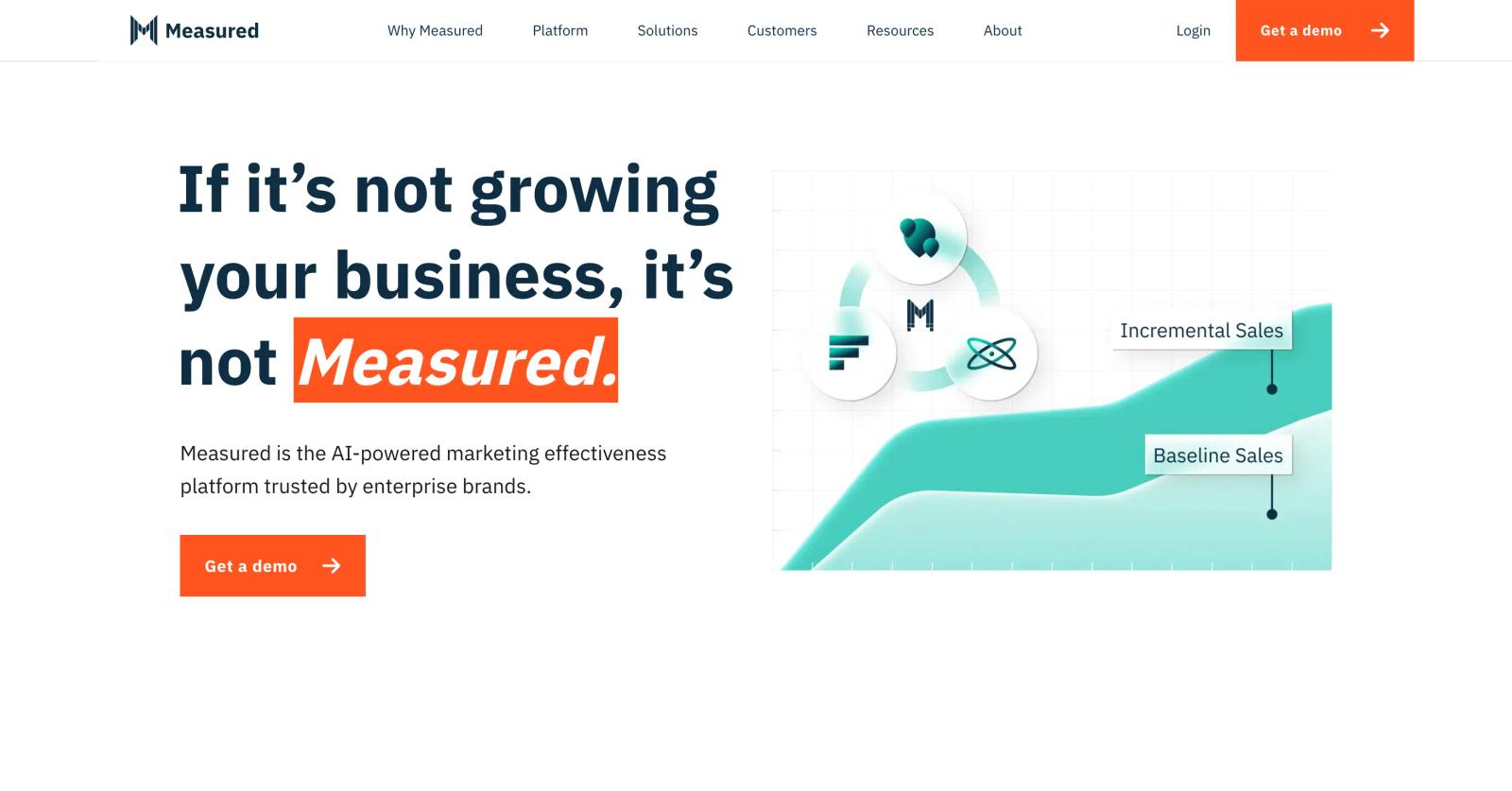
Here's where things get interesting. If the part of Rockerbox you cared about most was the incrementality testing, Measured is the specialist tool for that.
Rockerbox does incrementality, MMM, and MTA together. Measured is built specifically around incrementality experiments using geo-based holdouts. The methodology is more rigorous because that's the only thing the platform does.
For brands spending $1M+/year on ads who want defensible answers to "is this channel actually causing revenue, or just taking credit," Measured is the right tool. It's also enterprise-priced.
Key capabilities
- Geo-incrementality testing as the core methodology.
- Cross-channel measurement including offline.
- Strong consulting and analyst support.
- Used by enterprise CPG, retail, and DTC brands.
Limitations
- Enterprise pricing only. Custom quotes.
- Slower iteration than tactical attribution tools.
- Not a daily-use dashboard for marketers.
Pricing: Custom. Built for ad spend in the millions annually.
Best for: Enterprise brands who want to validate channel impact with experiments, not just modeled attribution.
5. Haus
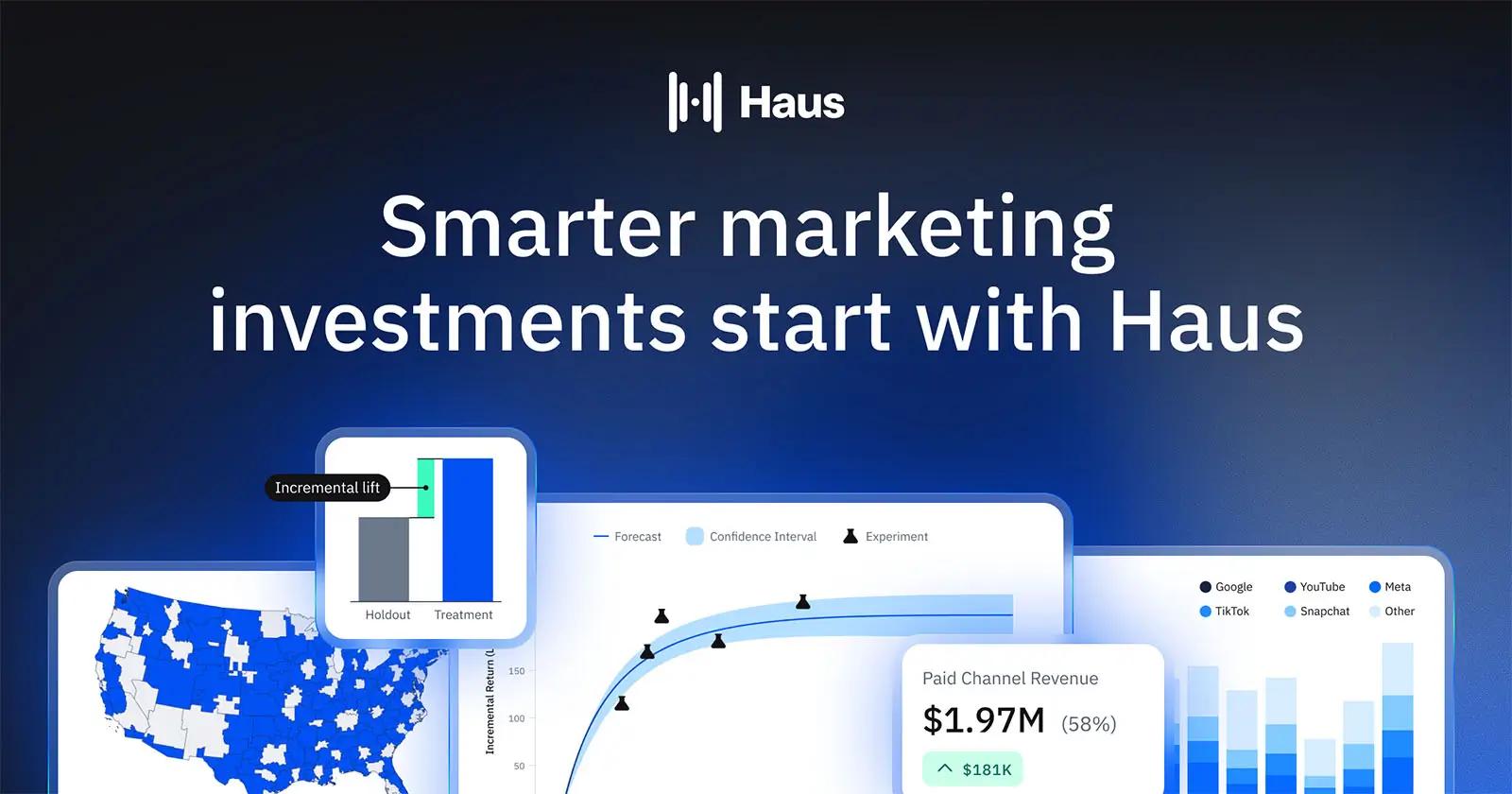
Haus is in the same neighborhood as Measured but pitched at a wider audience.
It runs geo-experiments to measure incrementality, similar to Measured, but the platform is built to be more self-serve. Brands can launch their own tests without needing an analyst on Haus's team to do it for them. The pricing is still enterprise-flavored, but the time to first test is faster.
Where Haus shines is testing the impact of channels that are notoriously hard to attribute. Connected TV, podcasts, OOH, influencer marketing. The same channels Rockerbox tries to model, Haus tests directly.
Key capabilities
- Self-serve geo-experiment platform.
- Hard-to-attribute channels (CTV, podcasts, OOH).
- Faster time to first test than legacy MMM platforms.
- Strong scientific methodology, used by Sweetgreen, Madhappy, and others.
Limitations
- Not an everyday attribution dashboard.
- Requires meaningful ad spend to design valid tests.
Pricing: Custom.
Best for: Brands that want incrementality testing with less hand-holding than Measured.
6. Recast
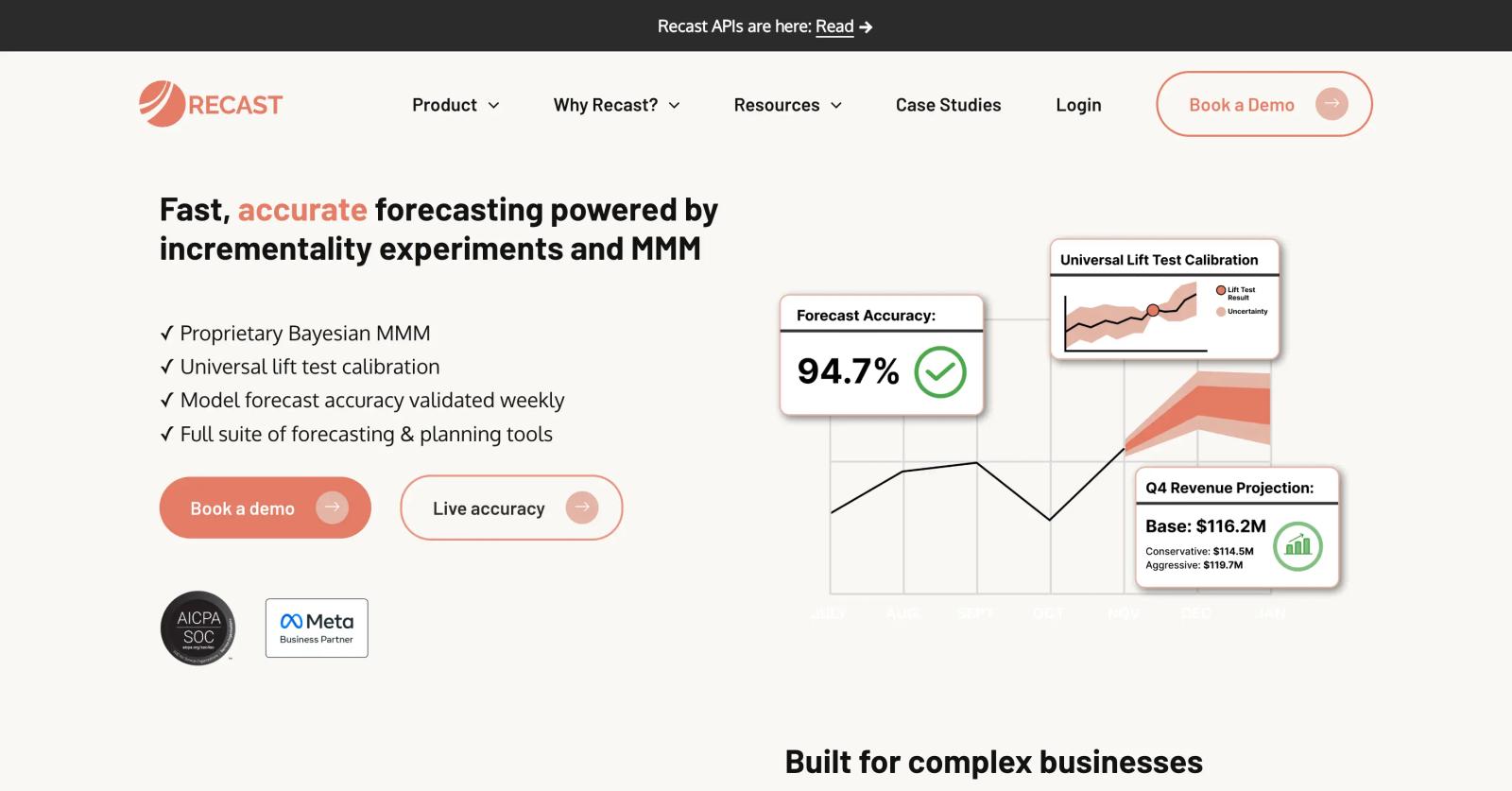
Recast is a modern marketing mix modeling platform built around Bayesian methods.
If the MMM piece of Rockerbox was the part you wanted most, and the rest of the platform felt like bloat, Recast is more focused. It updates models continuously rather than running them as quarterly projects, which is closer to how DTC brands actually operate.
It's not trying to be a full attribution suite. It does MMM and the supporting analytics around it, and that's it. For some teams that's a feature, not a limitation.
Key capabilities
- Continuously updated MMM, not quarterly snapshots.
- Bayesian methodology with credible intervals on results.
- Strong support for ecom and DTC brands.
- No pixel needed, works from spend and revenue data.
Limitations
- MMM only. No MTA or testing layer.
- Works best with several quarters of historical data.
- Custom pricing.
Pricing: Custom. Aimed at mid-market and up.
Best for: Brands that wanted the MMM part of Rockerbox specifically.
7. Wicked Reports
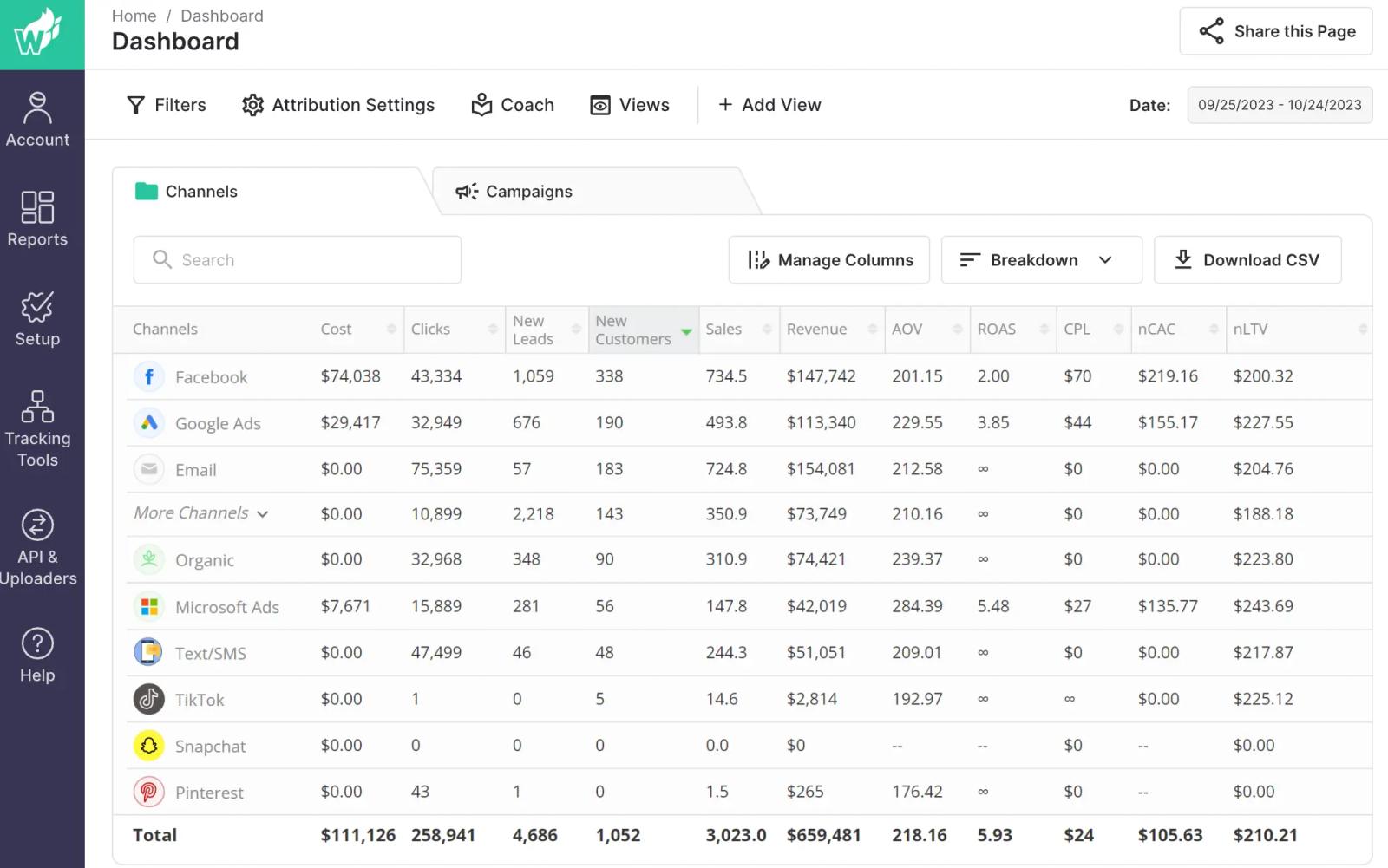
Wicked Reports has been doing attribution since 2013 and has carved out a niche with subscription DTC brands.
Where it beats Rockerbox is on cohort and LTV reporting. If your business depends on knowing which acquisition channels bring in customers who actually stick around for 6+ months, Wicked is built for that. The Klaviyo and ReCharge integrations are first-class.
Where it loses is breadth. Wicked doesn't really do MMM or incrementality, the offline channel support is lighter, and the UI gets called clunky in reviews fairly often.
Key capabilities
- Strong cohort and LTV reporting.
- Klaviyo, Shopify, ReCharge integrations are deep.
- Conversion sync to Meta with new-customer events.
- Multiple attribution models out of the box.
Limitations
- UI feels older.
- No MMM or incrementality testing.
- Pricing climbs based on contacts.
Pricing: Plans from around $250/month.
Best for: Subscription DTC brands focused on LTV.
8. ThoughtMetric
ThoughtMetric is the budget-friendly multi-platform ecom attribution tool.
It's not as deep as Rockerbox or Northbeam, but it covers Shopify, WooCommerce, BigCommerce, and Magento, and the pricing is based on pageviews instead of contacts or revenue. That makes it predictable. There's a 14-day free trial, which is rare in this category.
It's the kind of tool you pick when you want attribution that works, you don't want to call a salesperson, and you don't have $1K+/month to spend.
Key capabilities
- Multi-platform ecom support.
- Five attribution model options.
- Server-side tagging and Conversion API support.
- Configurable lookback windows.
Limitations
- Smaller community than Triple Whale or Wicked.
- Lighter feature set than enterprise tools.
Pricing: From $99/month for 50K pageviews.
Best for: Mid-size ecom brands, especially off Shopify.
9. Hyros
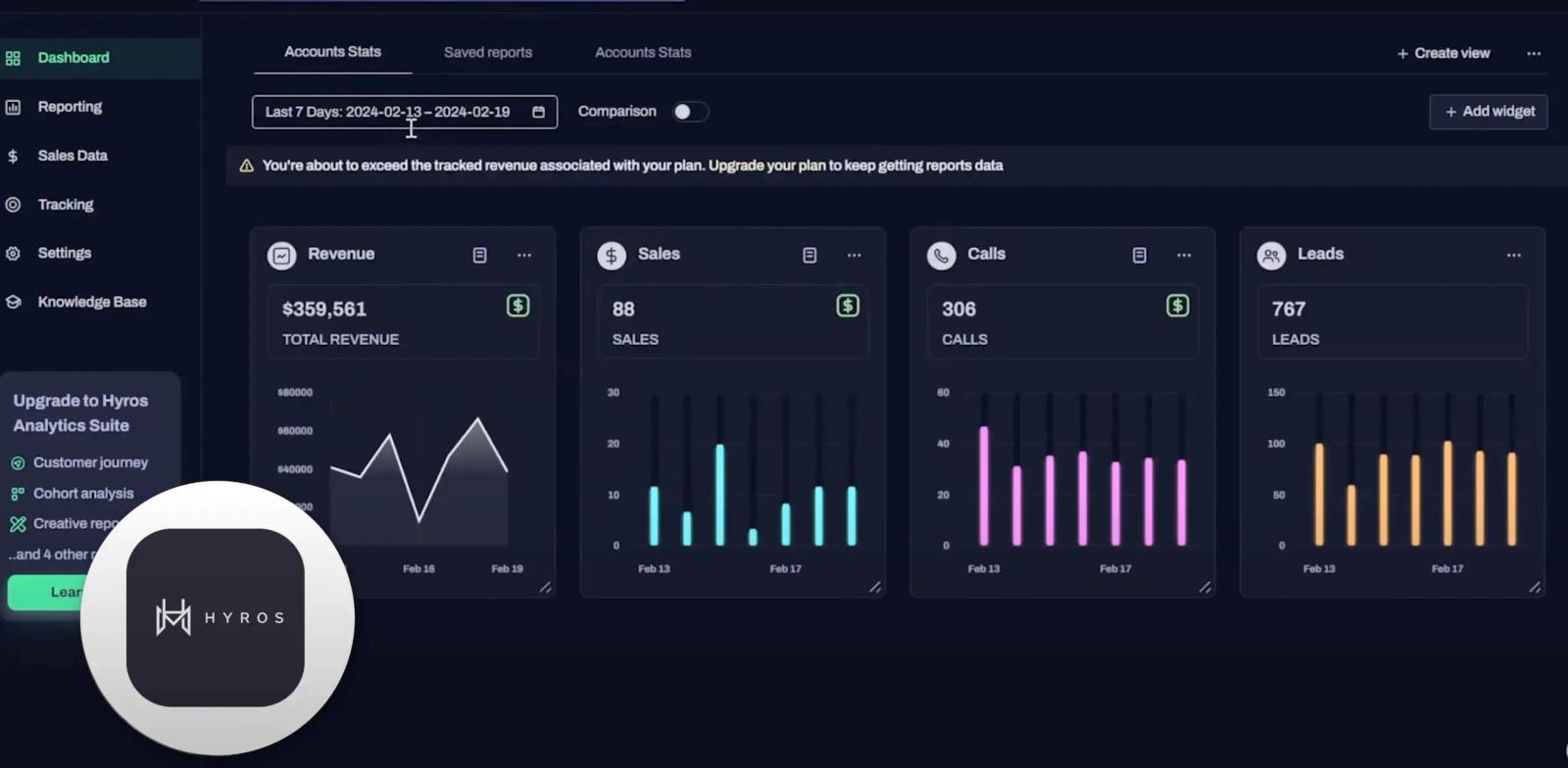
Hyros is the tool of choice for info-product sellers, course creators, high-ticket coaches, and agencies running long-cycle paid campaigns.
The strength is journey tracking over weeks or months. If your customer might see a Meta ad in February and finally buy in May, Hyros stitches that together better than most tools. It also pushes conversion data back to ad platforms aggressively, which users credit for noticeable efficiency improvements.
The downside is price (custom, expensive) and a UI that feels older than newer competitors.
Key capabilities
- Long-cycle journey tracking.
- AI-powered attribution.
- Strong conversion sync to Meta and Google.
- Call tracking integration.
Limitations
- Expensive, custom pricing only.
- Older interface.
- Overkill for short-cycle ecom.
Pricing: Custom. Typically thousands per month.
Best for: Info products, agencies, and high-ticket sellers.
10. Dreamdata
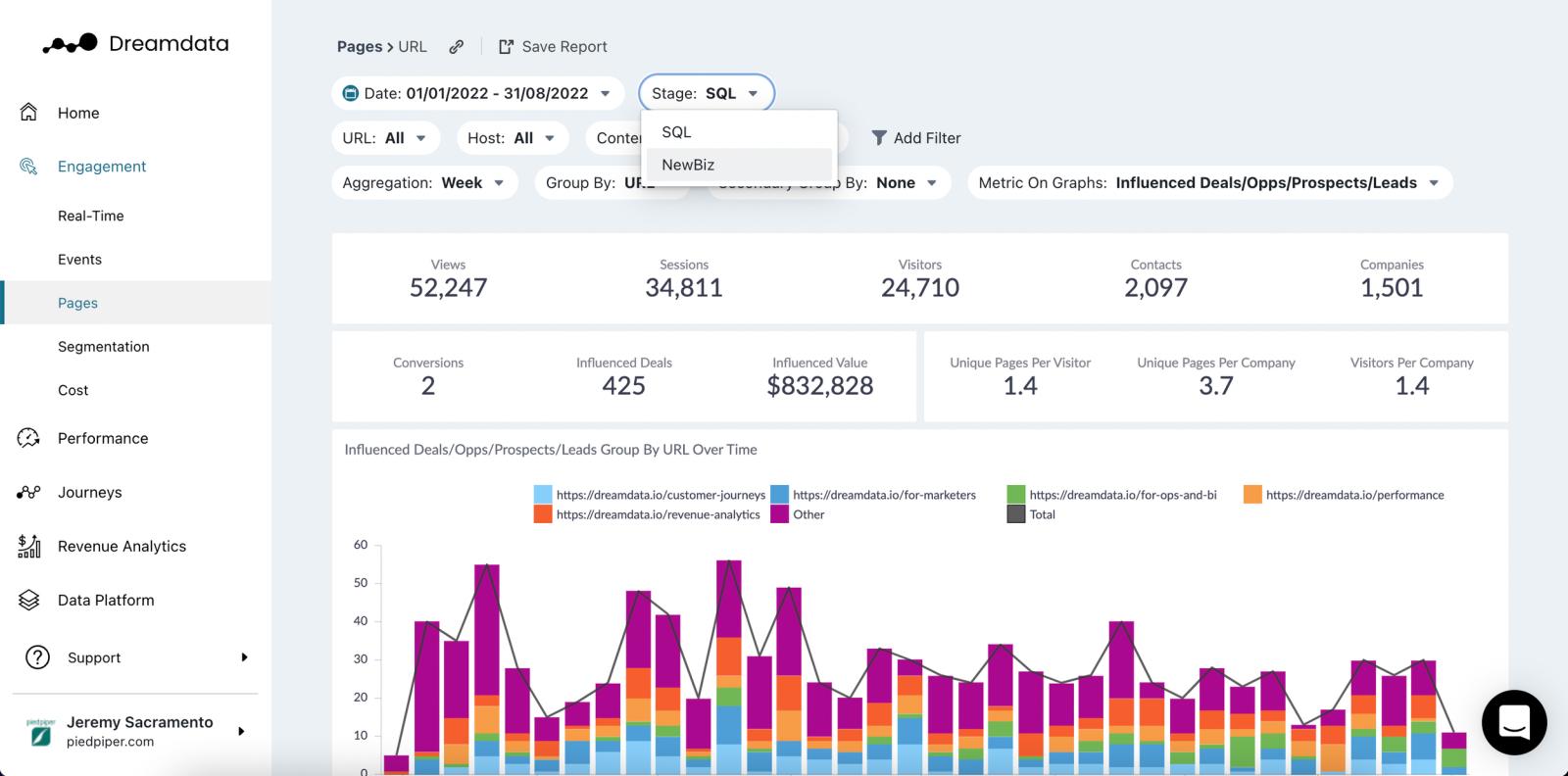
If you ended up looking at Rockerbox because you're a B2B SaaS company trying to do something it was never quite built for, Dreamdata is a saner choice.
The Salesforce integration is genuinely deep. Dreamdata reads pipeline movement in near-real-time and writes attribution data back to deals. Multi-touch attribution is weighted by deal size and stage, not just touch count.
It's not for ecom. It's not going to give you MMM or incrementality. But for B2B teams running long sales cycles where pipeline lives in Salesforce, it's a much better fit than forcing Rockerbox into the wrong shape.
Key capabilities
- Bi-directional Salesforce sync.
- Revenue-weighted multi-touch attribution.
- Account-level journey reports.
- Reverse-ETL friendly for warehouse stacks.
Limitations
- B2B only. Not for ecom.
- Setup needs a Salesforce admin.
- Best with longer sales cycles.
Pricing: Free tier. Paid plans from around $999/month.
Best for: B2B SaaS teams with Salesforce as the source of truth.
How to think about the choice
Rockerbox bundles three different things: multi-touch attribution, marketing mix modeling, and incrementality testing. Most teams looking at alternatives only really need one of those.
So the question to ask first is which methodology you actually use day-to-day. If your team logs into Rockerbox to check campaign performance and channel ROI, that's MTA, and you have plenty of cheaper options.
If your CFO uses it for quarterly budget planning, that's MMM, and Recast is more focused. If you're running structured experiments to prove channel impact, that's incrementality, and Haus or Measured are specialists.
The other question is whether your business actually fits the Rockerbox shape. If you're running a Shopify-only DTC brand, Triple Whale is purpose-built for that. If you're B2B SaaS, SourceLoop or Dreamdata are saner choices. If your funnel runs on info products, Hyros has spent years tuning for that case.
Buying Rockerbox to do a job a $99 tool can do is one of the more common mistakes in this category. The opposite (buying a $99 tool to do enterprise-grade incrementality testing) is also a mistake. Pick the tool that matches the job, not the marketing.



 Paid Social


