
Ruler Analytics Pricing in 2026: Plans, Real Costs, and a Cheaper Alternative
Ruler Analytics pricing in 2026: every plan by traffic tier, what each includes, hidden contract costs, and how the cost compares with SourceLoop.
Table of contents
- What Ruler Analytics Costs in 2026
- How Ruler's Visit-Based Pricing Works
- The tier-jump problem
- What Each Ruler Plan Includes
- Small
- Medium and Large
- Advanced
- Hidden Costs and Contract Terms
- Who Should Choose Ruler Analytics
- Ruler is a good fit if you
- Consider something else if you
- SourceLoop as a Ruler Analytics alternative
- What SourceLoop includes
- SourceLoop pricing
- Ruler Analytics vs SourceLoop pricing
Ruler Analytics is one of the few attribution tools that actually shows prices. That's refreshing. The catch is that the price moves with your website traffic, and the number on the page isn't always the number on the invoice.
Ruler is a solid choice for lead-gen businesses where phone calls matter. But a busy month, a paid campaign, or a content win can push you into a tier that costs nearly twice as much.
This guide breaks down Ruler Analytics pricing in 2026: each plan, what it includes, the costs that sit outside the subscription, and how the cost compares with SourceLoop.
What Ruler Analytics Costs in 2026
Ruler sells four plans: Small, Medium, Large, and Advanced. Each one is tied to a monthly website visit allowance. Here's the 2026 USD pricing reported by Usermaven's Ruler pricing breakdown:
| Plan | Monthly visits | Monthly billing | Annual billing (per month) | What it adds |
|---|---|---|---|---|
| Small | Up to 10,000 | $400 | $360 | Multi-touch attribution, call, form and chat tracking, CRM integrations |
| Medium | Up to 50,000 | $668 | $601 | Advanced segmentation, data-driven and impression attribution |
| Large | Up to 100,000 | $1,326 | $1,193 | Same features as Medium, more traffic |
| Advanced | 100,000+ | From $2,000 | From $1,800 | Marketing mix modeling and AI agent |
UK buyers see prices in pounds, and the numbers have shifted over time. Ruler's own blog still cites a Small Business tier from £199 a month for 5,000 visits, while a recent UK listing shows Small at £299 for 10,000 visits.
The takeaway is simple. Use these figures for budgeting, then get your exact tier, currency, and visit threshold in writing.
How Ruler's Visit-Based Pricing Works
Ruler charges by website traffic. That has a few practical effects:
- You pay for visits, not leads. A site with lots of traffic and few conversions pays the same as a site that converts well.
- Tier jumps are steep. Small to Medium is a 67% increase. Medium to Large nearly doubles the bill.
- Annual billing saves about 10%. Useful, but only if you're sure you'll stay for the full year.
- Some features are gated by tier. Data-driven attribution starts at Medium. MMM and the AI agent need Advanced.
The tier-jump problem
Say you sign up on Small during a quiet month at 8,000 visits. Then a Google Ads push or a viral post takes you to 14,000. You now need Medium, and your bill goes from $400 to $668 even though your lead count barely moved.
Before signing, ask sales three questions:
- How is the visit threshold measured, monthly or averaged?
- When does a tier change take effect on the invoice?
- Is there a grace period for one-off traffic spikes?
What Each Ruler Plan Includes
The plans differ mainly in visit allowance, with reporting depth growing at the top.
Small
The entry plan already covers the core of what most lead-gen teams want:
- Multi-touch attribution across forms, calls, and live chat
- Built-in call tracking with dynamic number insertion
- CRM and analytics integrations
- Phone, email, and chat support, plus onboarding help
Medium and Large
Both add advanced segmentation, data-driven attribution, and impression attribution. Large has the same features as Medium. You're paying for the extra traffic allowance.
Advanced
This is the only plan with marketing mix modeling and Ruler's AI agent for analysis and media planning. It also supports custom data setups for larger teams.
Hidden Costs and Contract Terms
The subscription is the headline. These are the details that change the real cost:
- 12-month minimum. Reviews and competitor analyses point to a 12-month contract. Check the renewal and notice terms.
- Call tracking usage. Tracking numbers and call minutes can carry extra charges. Ask for the included allowance and the overage rate.
- Tier upgrades. Traffic growth can move you up a plan mid-contract.
- Feature gating. If you need data-driven attribution, Small isn't enough.
- Setup time. G2 reviewers mention a complicated initial setup and CRM mapping issues. Factor in internal hours.
Tip: ask Ruler for a written 12-month total that splits subscription, call usage, onboarding, and the price of the next tier up.
Who Should Choose Ruler Analytics
Ruler suits some businesses much better than others.
Ruler is a good fit if you
- Get a large share of revenue from inbound phone calls and want call tracking in the same tool.
- Have steady traffic that sits comfortably inside one tier.
- Want hands-on onboarding and are happy with a 12-month term.
- Plan to use MMM later and can budget for the Advanced plan.
Consider something else if you
- Have seasonal or fast-growing traffic that could jump tiers.
- Mostly convert through forms, demos, trials, or online payments.
- Need month-to-month flexibility.
- Want attribution live today, not after a multi-week setup.
If phone leads are your focus, our guide on phone call conversion tracking walks through the setup.
SourceLoop as a Ruler Analytics alternative
SourceLoop is a lead source and marketing attribution tracking tool for the same kind of buyer Ruler targets: lead generation businesses, home services, legal and finance firms, agencies and SaaS teams. It ties every form, call, chat, booking and payment to the campaign behind it, then sends that data to your CRM and ad platforms.
The main difference is calls. SourceLoop doesn't issue tracking numbers; it attributes calls from CallRail, CallTrackingMetrics, Invoca or Mediahawk. If you want numbers and attribution from one vendor with hands-on onboarding, Ruler is the better fit. If you already have a call platform, or most leads come through forms and bookings, SourceLoop does the attribution for much less.
What SourceLoop includes
These are the features that map to Ruler's plans, with screenshots of each.
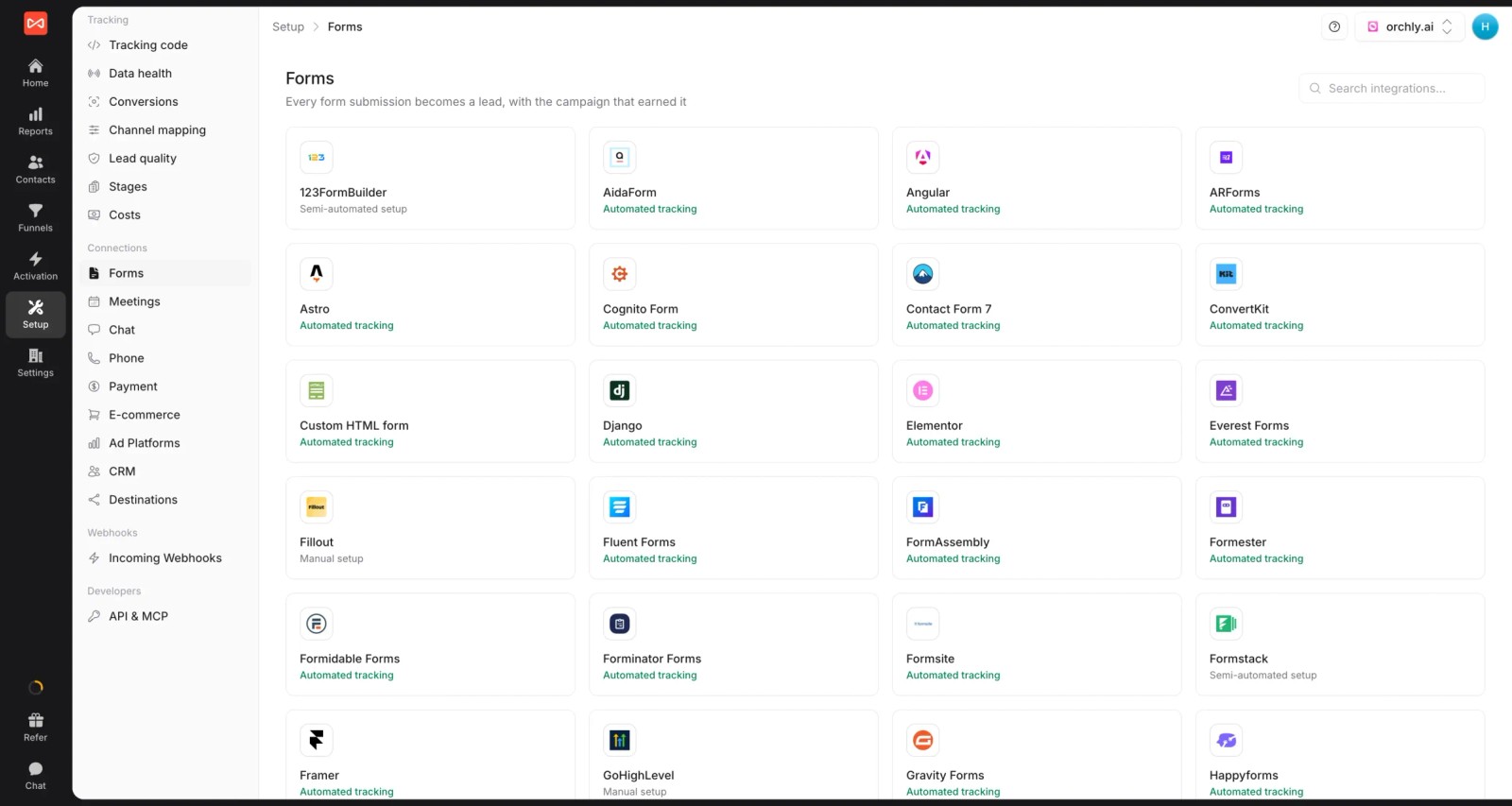
- Forms, chats and bookings: around 70 form, chat and booking tools are captured with their source, with no tag per form.
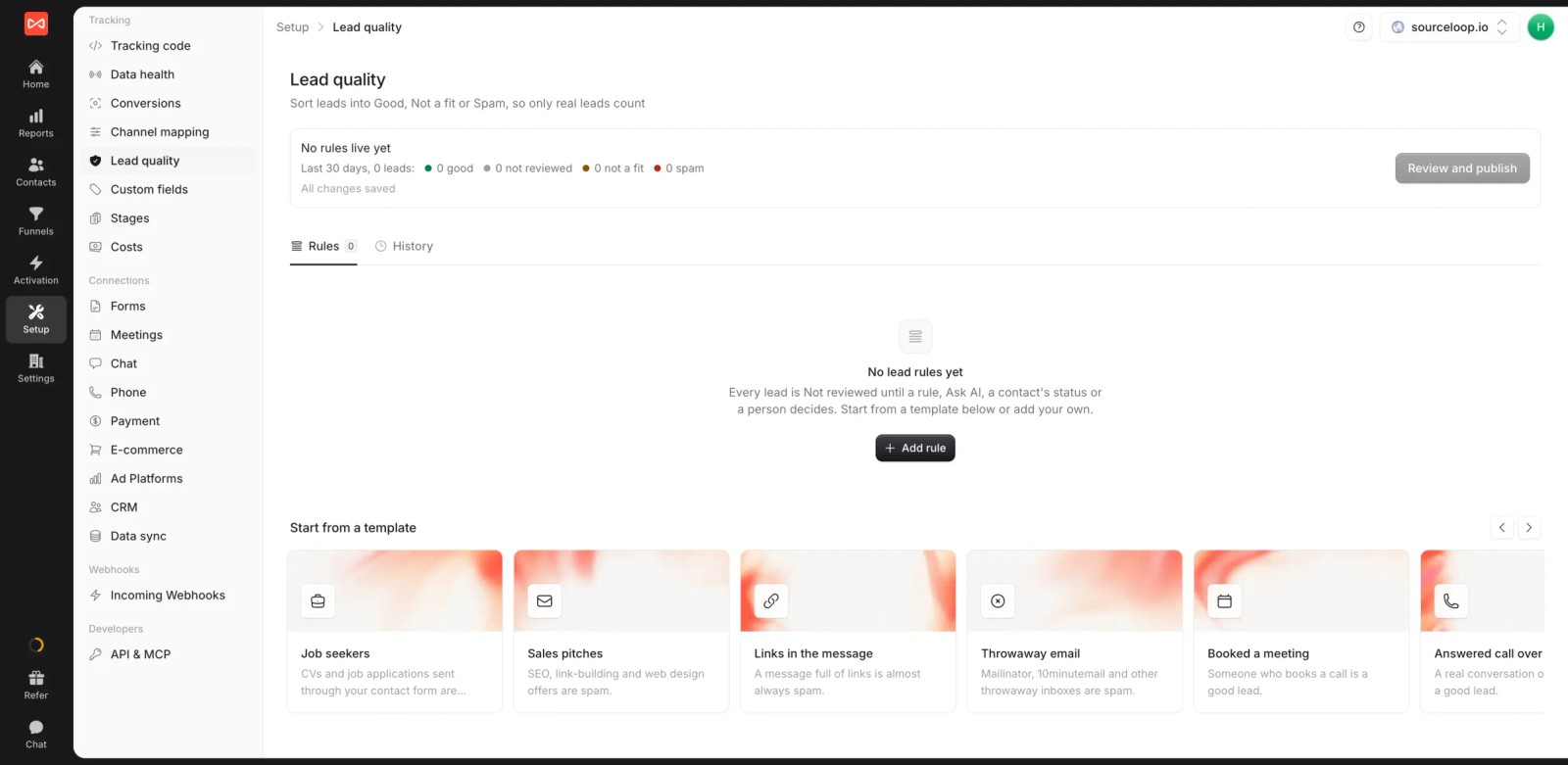
- Calls tied to the visit: calls from CallRail, CallTrackingMetrics, Invoca or Mediahawk are joined to the caller’s session, down to campaign and keyword, and the lead quality template counts answered calls over 60 seconds as good.
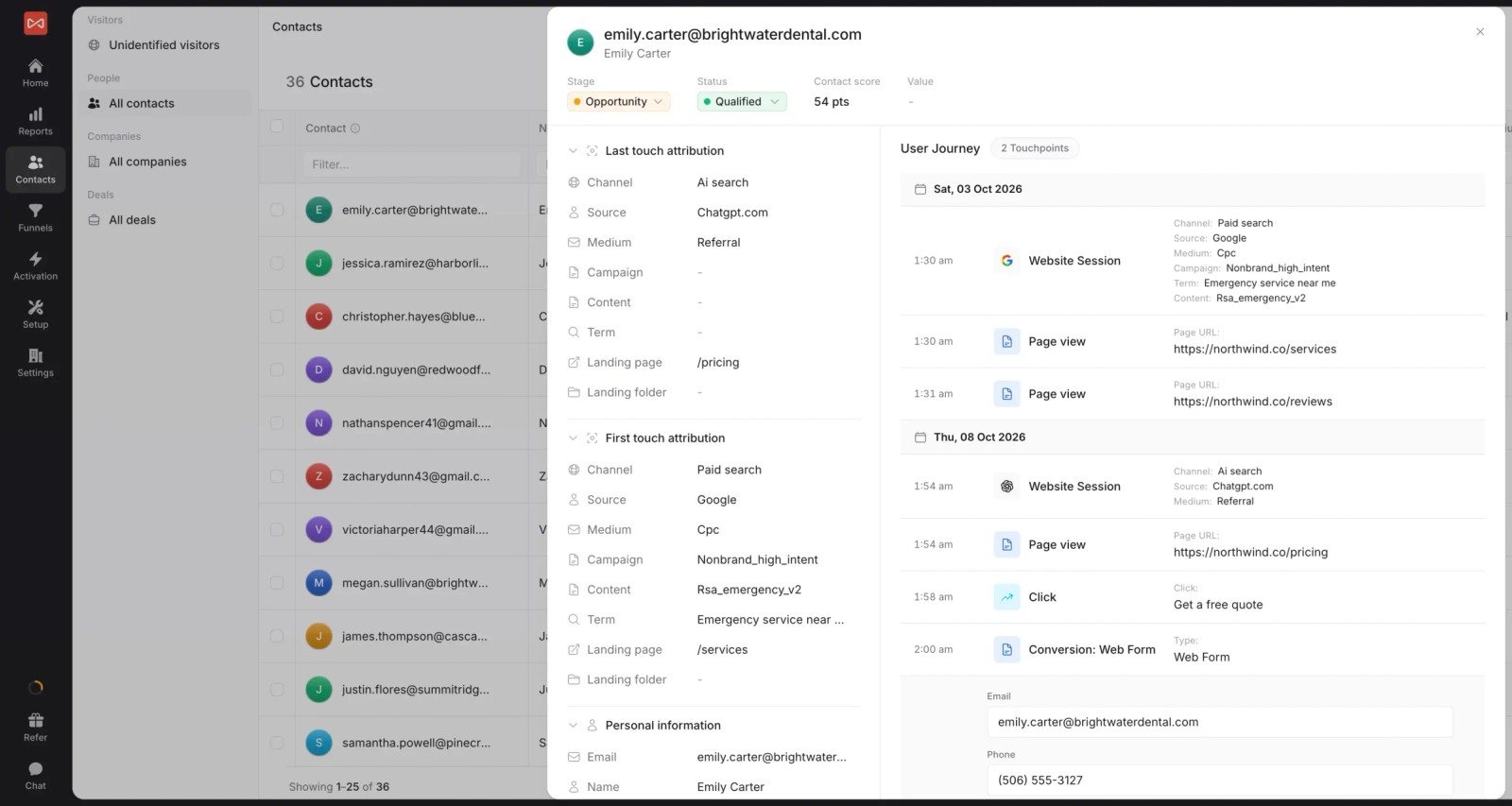
- Journeys on every lead: each visit, ad click and landing page before the call or form fill, which covers the full path rather than only first and last click.
- Leads and revenue by channel: conversions and revenue by channel under seven models, with first and last touch side by side.
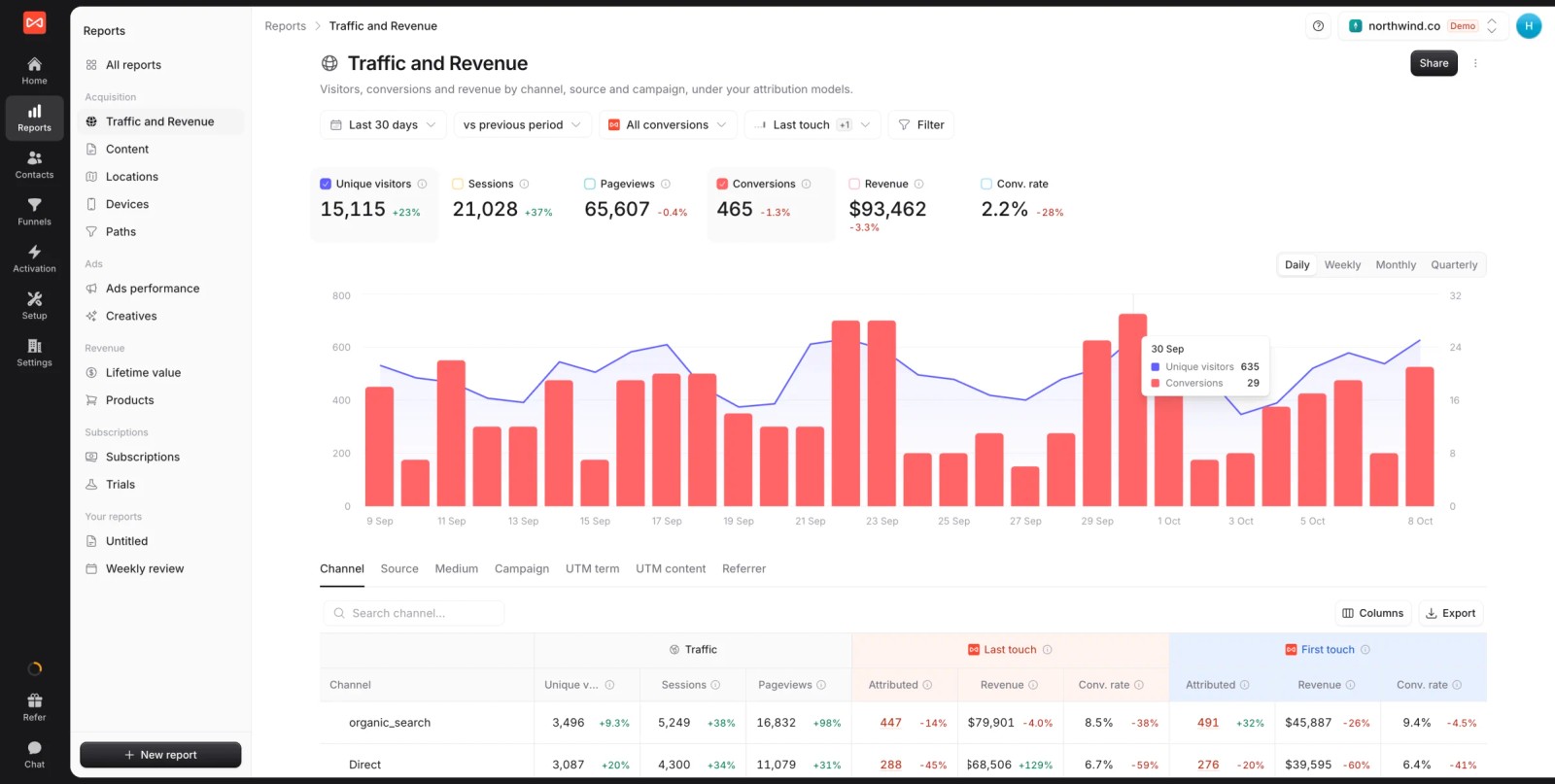
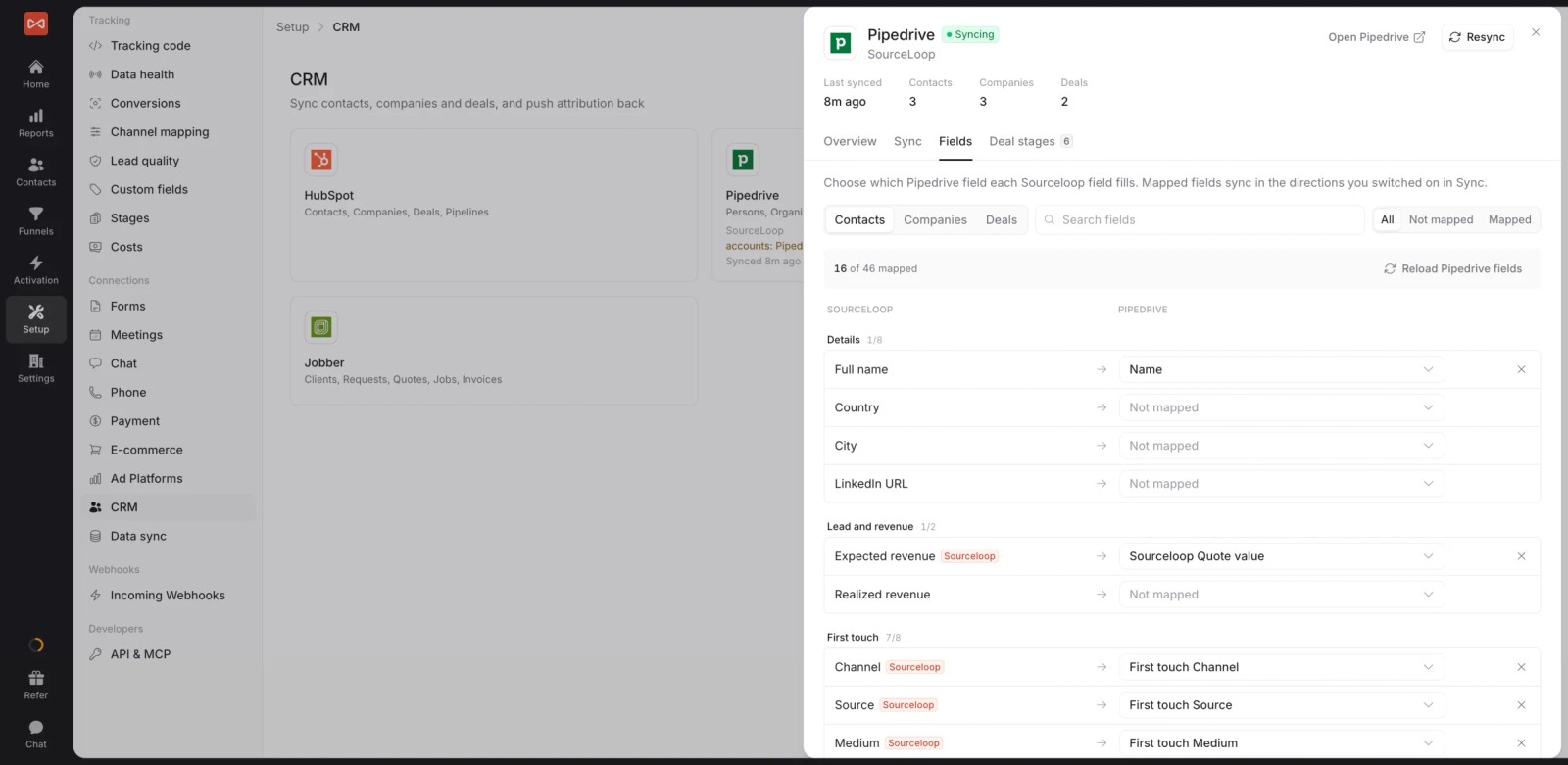
- CRM sync on Professional: HubSpot, Salesforce, Pipedrive and Jobber get attribution fields on each record, and won deals come back to credit revenue.
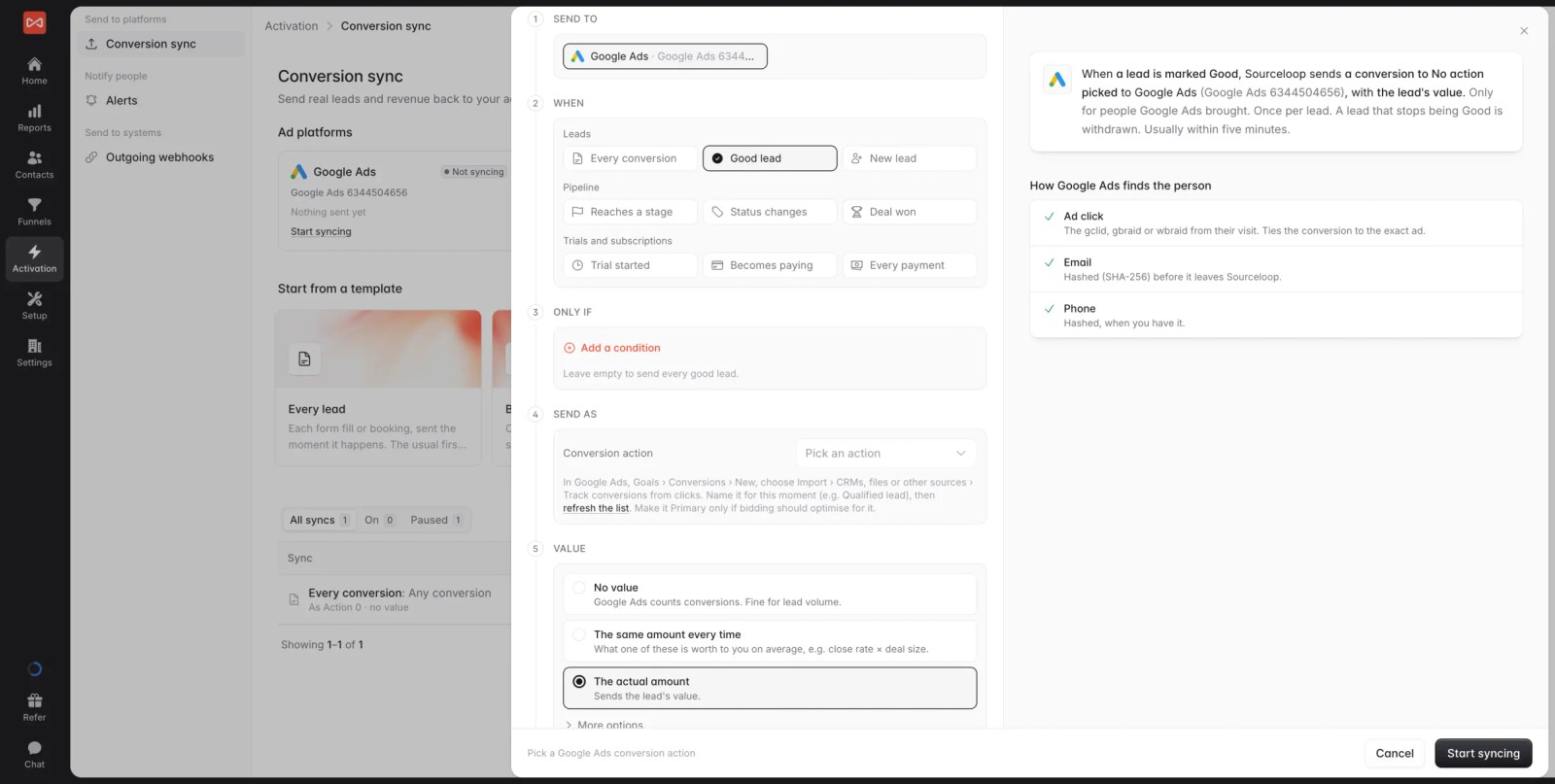
- Conversion sync: qualified calls, good leads and closed deals go to Google Ads, Meta, Microsoft Ads and ChatGPT Ads with their value.
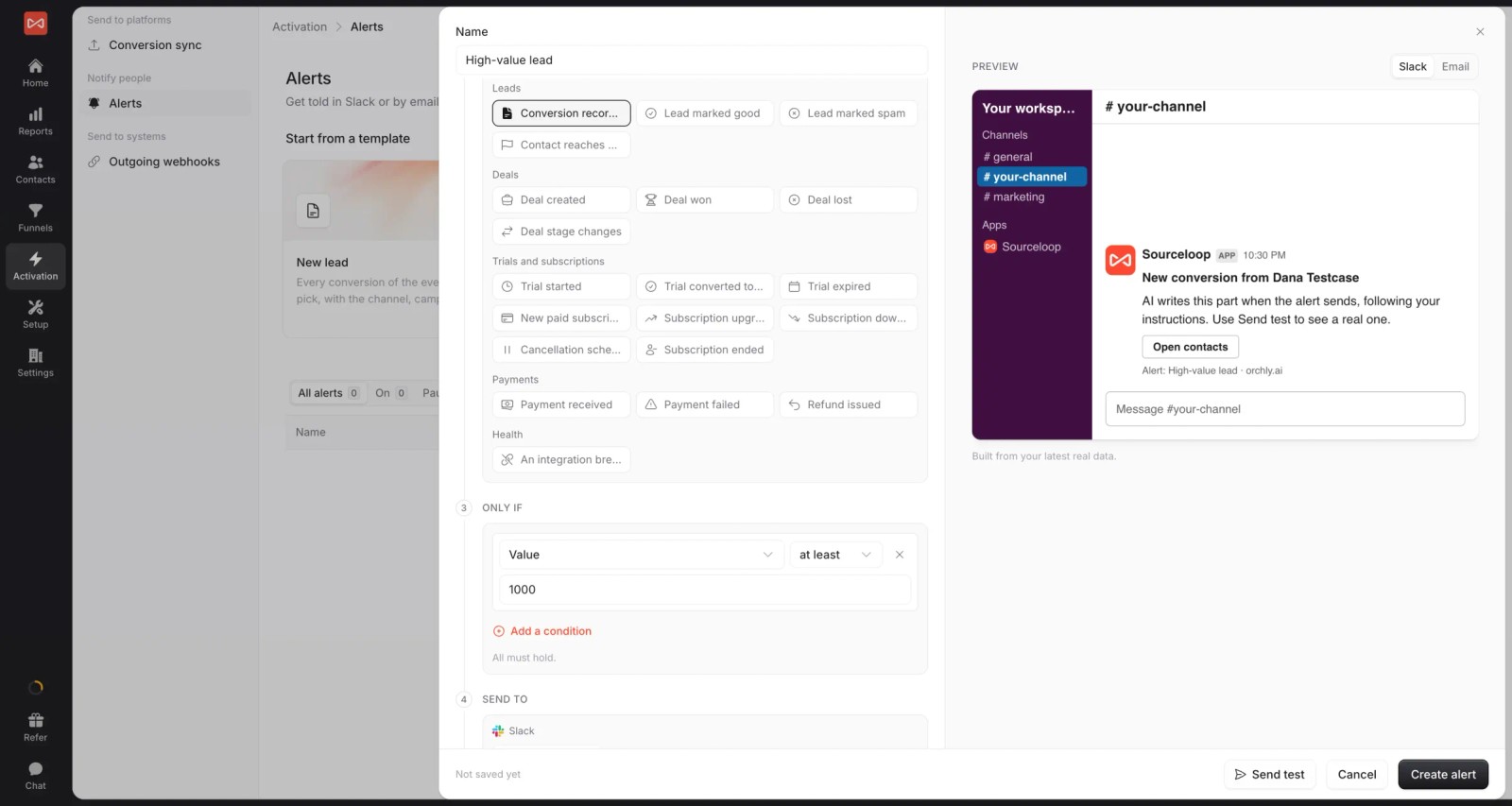
- Lead alerts: post new or high-value leads to Slack or email with their source, so sales can follow up fast.
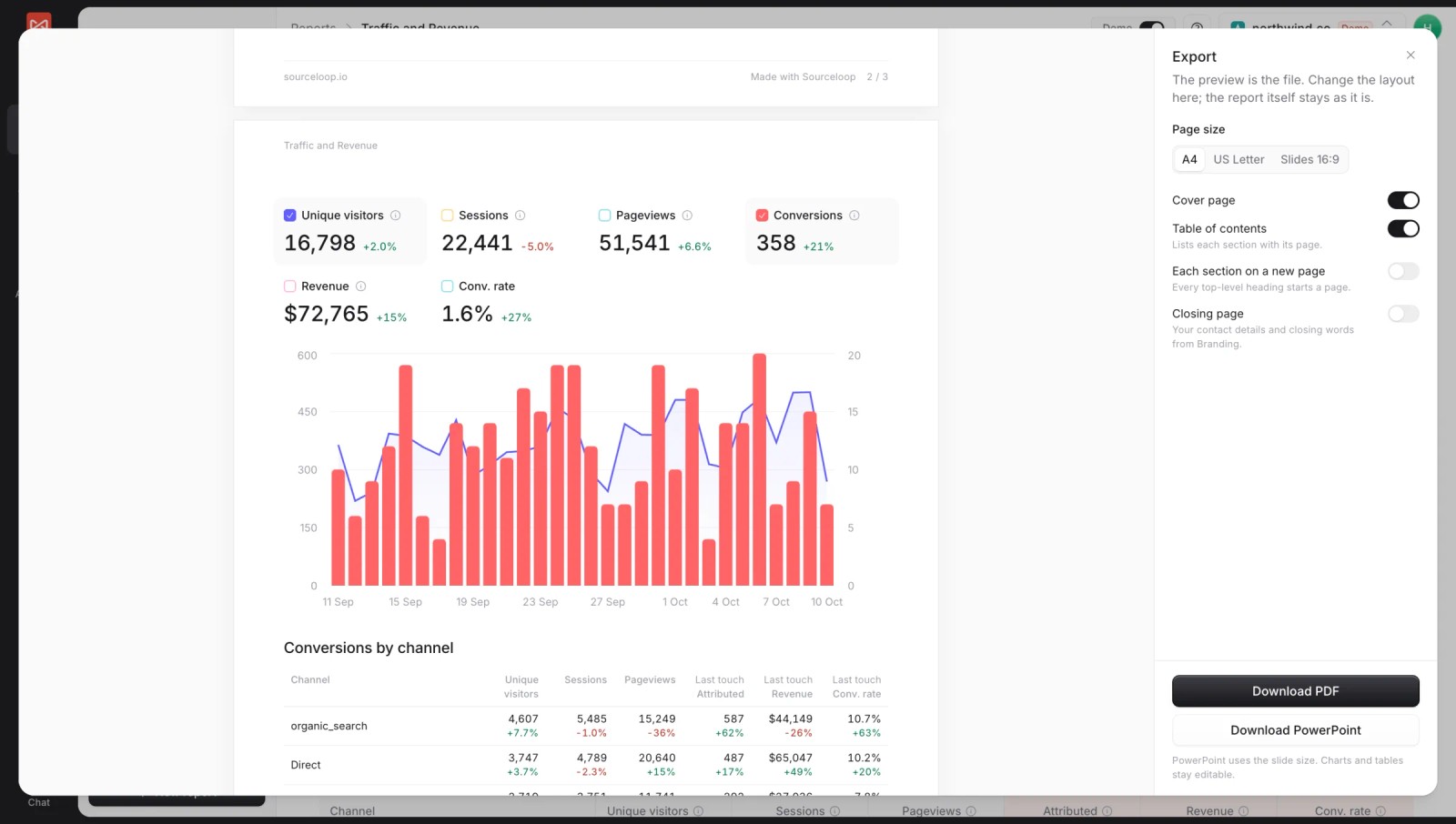
- Shareable reports: build a live report and share it as a link or download it as PDF or PowerPoint for a client or board meeting.
SourceLoop pricing
SourceLoop's plans are published and billed monthly or yearly. The meter is page views, conversions are unlimited, and passing the page view cap doesn't stop tracking.
| Plan detail | Essential | Professional | Agency |
|---|---|---|---|
| Monthly price | $49 | $99 | $249 |
| Billed yearly | $37/mo | $74/mo | $187/mo |
| Websites | 1 | 1 | 3 |
| Users | 1 | Unlimited | Unlimited |
| Page views a month | 30,000 | 100,000 | 1.5 million |
| Conversions | Unlimited | Unlimited | Unlimited |
| What it unlocks | Tracking, attribution reports, lead quality rules, alerts | Everything in Essential, plus CRM sync, conversion sync to ad platforms, API and MCP | Everything in Professional, plus white label reporting |
Extra websites are $19 a month, and every plan has a 7-day trial with no setup fee.
Ruler Analytics vs SourceLoop pricing
Both meter traffic, but in different units and with different steps.
| Pricing detail | Ruler Analytics | SourceLoop |
|---|---|---|
| Pricing model | Tiers by monthly website visits | Tiers by monthly page views |
| Entry price | Small, from $400/mo for 10,000 visits | Essential, $49/mo; Professional with CRM sync, $99/mo |
| What raises the bill | Crossing a visit tier, call usage | More page views or extra websites |
| Contract | 12 months, per reviews | Monthly, or yearly at 25% off |
| Trial | Demo first | 7 days, self-serve |
| Call tracking numbers | Included | Through CallRail, CTM, Invoca or Mediahawk |
| Marketing mix modeling | Advanced plan only | Not offered |
At around 10,000 visits a month (roughly 25,000 page views), Ruler Small is about $4,800 a year and SourceLoop Professional is $1,188, before any call platform you'd add. At around 50,000 visits, Ruler Medium is about $8,016 a year, while SourceLoop's Agency plan, which covers 1.5 million page views, is $2,988. If you'd need to buy call tracking separately, add that to SourceLoop's side.
Frequently asked questions
-
How much does Ruler Analytics cost per month?
2026 USD pricing starts at $400 a month for Small (up to 10,000 visits), then $668 for Medium, $1,326 for Large, and from $2,000 for Advanced. UK prices are listed in pounds and have varied over time.
-
Does Ruler Analytics charge per user?
No. Ruler prices by monthly website visits. Your bill changes when your traffic crosses a tier, not when you add team members.
-
Does Ruler Analytics require an annual contract?
Reviews point to a 12-month minimum term. Annual prepayment saves about 10%. Confirm renewal and cancellation terms before signing.
-
Which Ruler plan includes marketing mix modeling?
Only the Advanced plan, which starts around $2,000 a month. It also unlocks Ruler's AI agent.
-
What is a cheaper alternative to Ruler Analytics?
SourceLoop starts at $49 a month with unlimited conversions, and its $99 Professional plan adds CRM sync and ad conversion sync. It's monthly, with a 7-day trial. It attributes calls from your call tracking provider rather than issuing numbers itself.
-
Can SourceLoop track phone calls like Ruler?
Yes. SourceLoop connects to CallRail, CallTrackingMetrics, Invoca, and other call platforms, then ties each call to the visitor's session, campaign, and keyword. It doesn't issue tracking numbers itself. Learn more about keyword-level call tracking.

 Paid Social


