
Northbeam Pricing in 2026: Plans, Costs, and What You Actually Pay
Northbeam starts at $1,500/month for Starter and $3,500/month for Professional. See every tier, what drives the quote, and how SourceLoop compares.
Table of contents
- Northbeam pricing plans at a glance
- What you get at each tier
- Starter: $1,500/month
- Professional: $3,500/month
- Growth: custom pricing
- Enterprise: custom pricing
- What actually drives your Northbeam quote
- Who Northbeam's pricing actually makes sense for
- SourceLoop as a Northbeam alternative for lead-based businesses
- What SourceLoop includes
- SourceLoop pricing
- Northbeam vs SourceLoop pricing
- The bottom line
Northbeam's published pricing starts at $1,500 a month for Starter and $3,500 a month for Professional, with Growth and Enterprise quoted individually based on ad spend, according to Northbeam's own pricing page.
Those are list prices, not what most brands actually pay. Northbeam prices by how much you spend on ads and how much data it has to ingest, so the real quote moves with your account.
In this guide, I'll break down every tier, what pushes the number higher, and how Northbeam's cost compares with SourceLoop for lead-based businesses.
Northbeam pricing plans at a glance
Northbeam sells four tiers, and only two carry a public number. The rest require a sales call.
Plan | Price | Who it's for | Platform support
Starter | $1,500/month | Brands under ~$1.5M/year in ad spend | Shopify only
Professional | $3,500/month | Growth marketers spending up to $500K/month | Any ecommerce platform
Growth | Custom quote | Seven-figure brands spending under $200K/month, who want agency support bundled in | Shopify
Enterprise | Custom quote | Teams spending over $500K/month on ads | Any platform, including custom builds
These figures come directly from Northbeam's pricing page. Northbeam doesn't bill per seat. It bills against your ad spend, your data volume, and how often you need the dashboards refreshed, so the number on the page is a floor, not a quote.
What you get at each tier
Each tier is defined by ad spend, and the features step up with it.
Starter: $1,500/month
Starter is built for brands spending under roughly $1.5 million a year on paid media. It includes first-party multi-touch attribution across your ad channels, customizable dashboards, Northbeam's "Apex" attribution feed for optimizing ad delivery, Clicks + Deterministic Views for crediting view-through conversions, and access to the Northbeam MCP. Northbeam also advertises up to $100,000 in ad platform credits on this tier and access to the Northbeam MCP, which connects attribution data to AI tools like Claude, per its pricing page.
What Starter doesn't include matters just as much. According to Saras Analytics' review of the plan, Starter is Shopify-only, has no warehouse data export, and has no access to Media Mix Modeling.
Professional: $3,500/month
Professional is aimed at growth marketers spending up to $500,000 a month on ads, per Northbeam's pricing page. It carries everything in Starter, plus unlimited users, data exports and integrations, support for any ecommerce platform (not just Shopify), a dedicated media strategist, and more frequent data refresh options. Incrementality testing is available here, but it's listed as an optional add-on, not a baseline feature, according to Northbeam.
Growth: custom pricing
Growth sits below Professional in sophistication but targets a specific buyer, according to Northbeam's pricing page: seven-figure Shopify brands spending under $200,000 a month on ads who want Northbeam's attribution bundled with hands-on agency support, creative help, and media buying from a Northbeam partner agency. Northbeam doesn't publish a number for this tier; you book a demo to see if you qualify.
Enterprise: custom pricing
Enterprise is for brands spending more than $500,000 a month, Northbeam says. It layers on expert media buying guidance, a dedicated customer success manager with a shared Slack channel, optional hourly conversion data, granular touchpoint exports, geo-specific dashboards, and direct integration with any ecommerce platform, including custom builds. Media Mix Modeling+ and incrementality testing remain optional add-ons even here.
What actually drives your Northbeam quote
Four variables move the number beyond the published floor, and Northbeam is explicit that the sticker price is a starting point, not a bill.
- Monthly ad spend. This is the primary tier qualifier, per Northbeam. Starter targets brands under about $1.5M/year; Professional targets up to $500K/month; Enterprise starts above that.
- Pageviews and data volume. More site traffic means more events for Northbeam to ingest and reconcile, which third-party pricing coverage notes can push the quote above the published floor even for brands within a tier's spend range.
- Refresh frequency. Enterprise offers optional hourly conversion data for real-time media buying; Starter and Professional refresh on a slower, fixed schedule.
- Optional modules. Media Mix Modeling+ and incrementality testing sit outside every tier's base price, so a brand that wants both attribution and MMM should expect a materially higher quote than the headline number suggests.
There's also no published trial. Every plan requires a demo call before you see a real number, and contract length isn't disclosed publicly either. Before taking a quote at face value, Saras Analytics recommends asking directly about implementation or training fees, since those aren't listed on the pricing page.
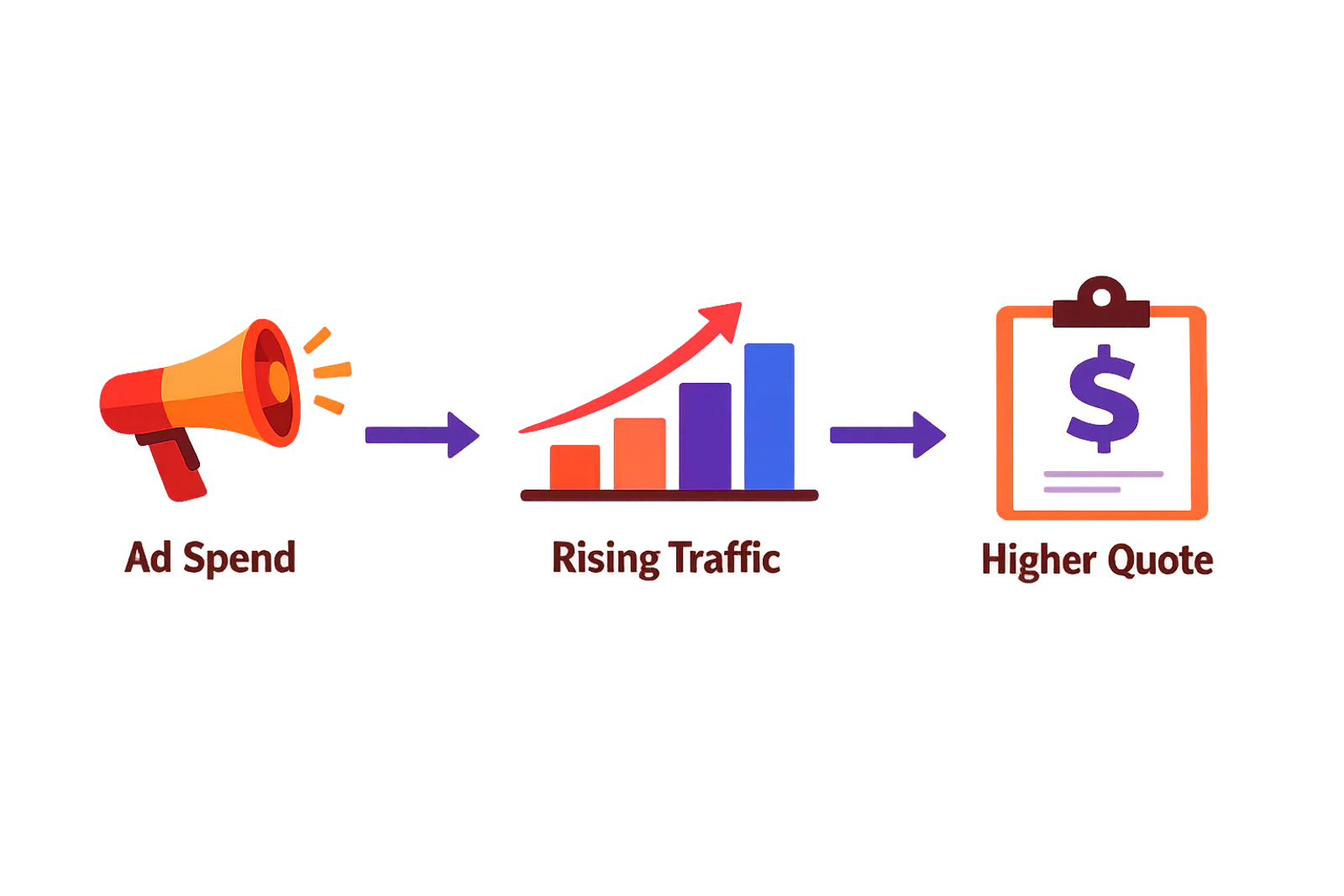
Treat the published Starter price as a floor for qualification, not as your final budget. Ask what ad-spend band, pageview limit, and refresh cadence the quote assumes before you compare it to anything else.
"Northbeam's pricing is primarily subscription-based, [but] brands should inquire about potential one-time implementation or training fees during the sales process, as these are not publicly disclosed," notes Saras Analytics.
Who Northbeam's pricing actually makes sense for
Northbeam's cost is easiest to justify for a seven-figure-plus DTC brand running media across Meta, Google, TikTok, Snapchat and Pinterest at once, where small gains in ROAS translate into real dollars. Northbeam's own site cites average gains of 3.5% in ROAS and a 4.9% drop in customer acquisition cost within 180 days of activation.
It's a harder number to defend for a brand still under six figures a month in ad spend, a team that needs lead attribution rather than ecommerce media measurement, or anyone who wants a self-serve setup without a sales call.
SourceLoop as a Northbeam alternative for lead-based businesses
SourceLoop is a first-party marketing attribution and measurement tool for businesses that sell through forms, demo requests, booked calls or subscriptions, where the deal closes weeks after the click. That means lead generation businesses, agencies and SaaS teams.
It isn't a Shopify tool and doesn't do media mix modeling, incrementality testing or view-through credit. If you run a DTC store with heavy paid social spend, Northbeam is built for you and SourceLoop isn't. If your revenue comes from leads, deals or subscriptions, Northbeam's ad-spend pricing buys capability you won't use.
What SourceLoop includes
These are the features that cover the attribution part of Northbeam's job for lead and subscription businesses.
- Revenue by channel and campaign: conversions and revenue by channel, with first and last touch side by side, from CRM deals and payment providers rather than store orders.
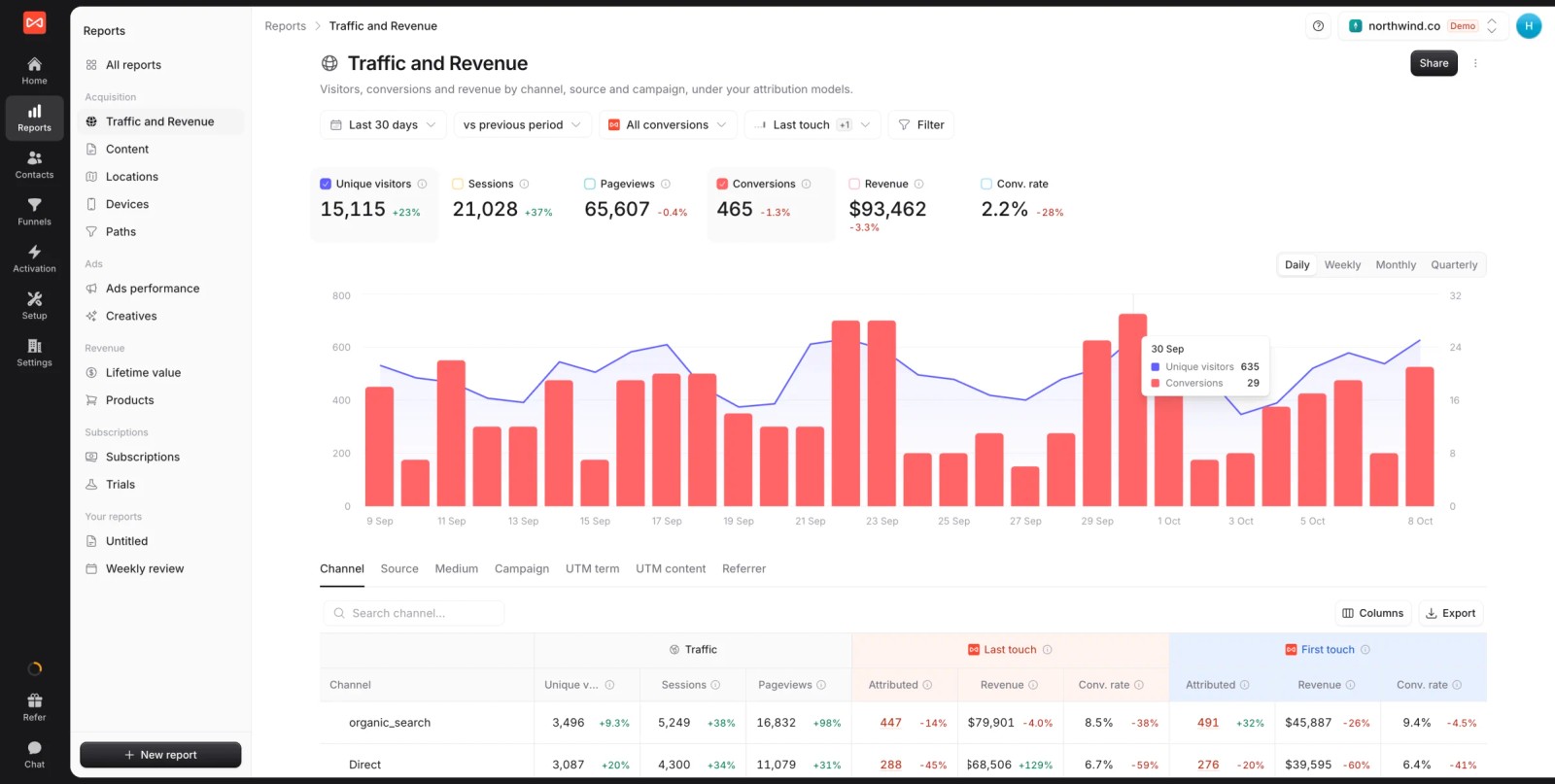
- Ad spend beside credited results: spend, clicks and platform-reported conversions next to what SourceLoop credits each ad platform, so over-reporting is visible.
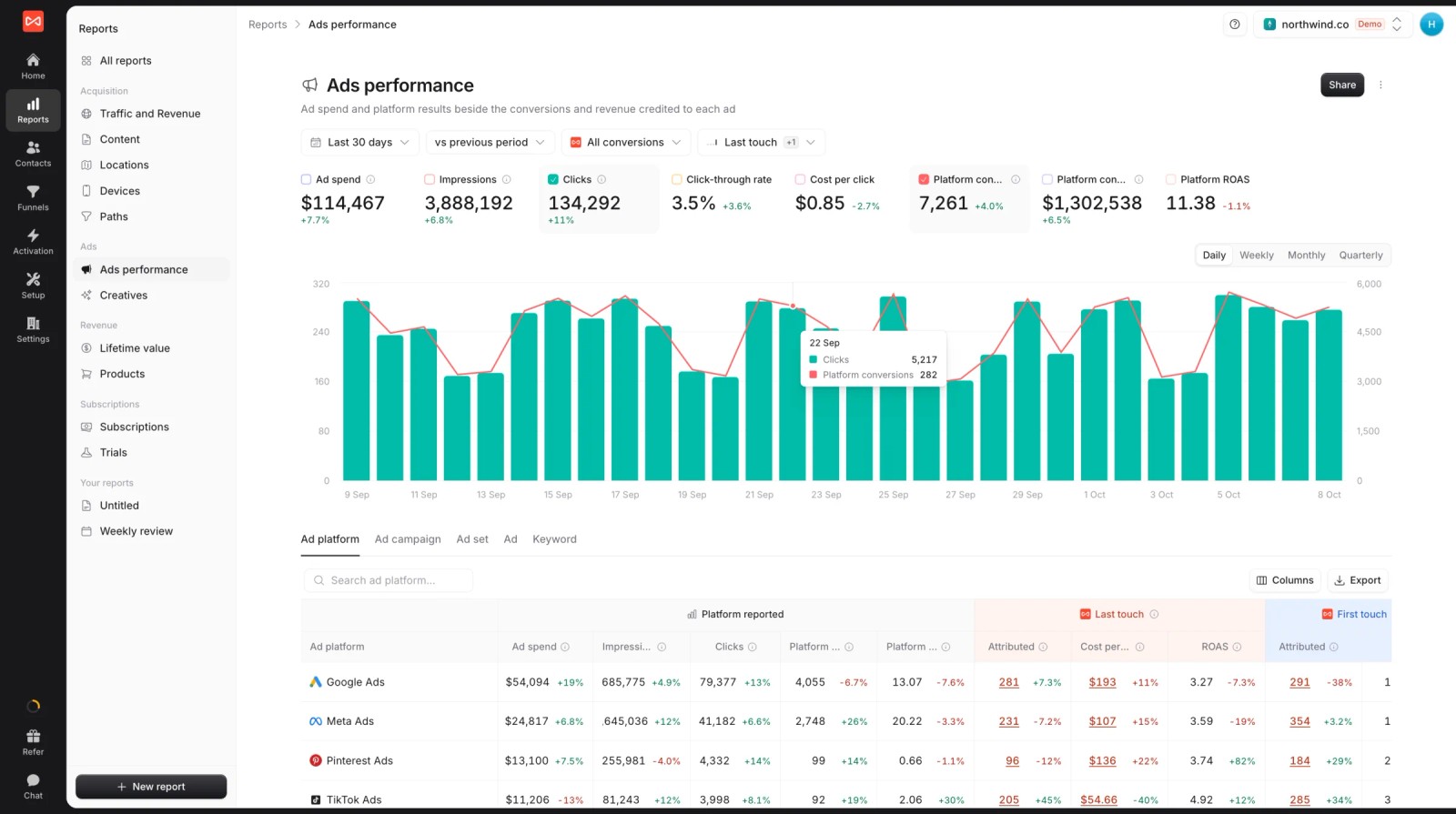
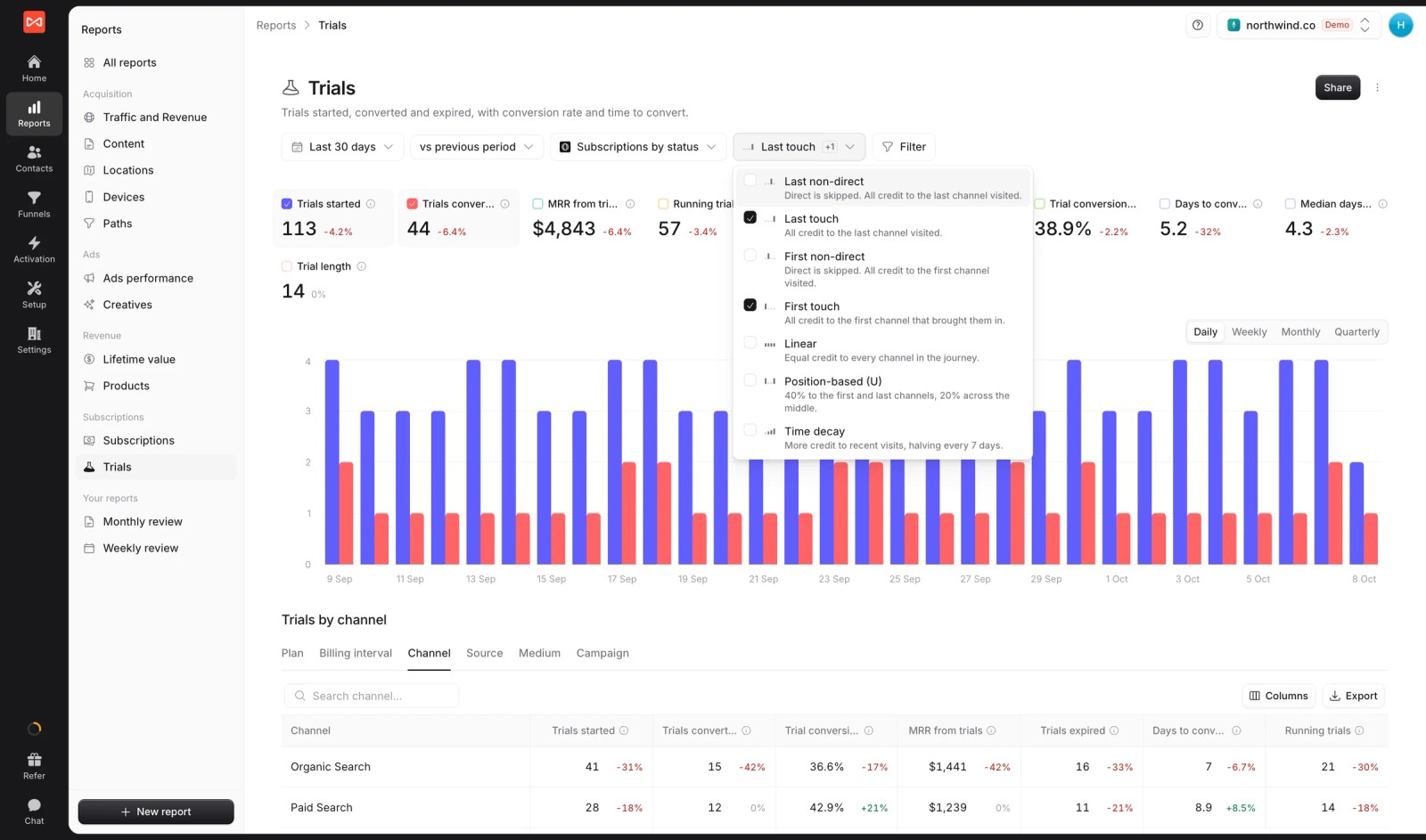
- Seven published models: first and last touch, first and last non-direct, linear, U-shaped and time decay, with the rules documented.
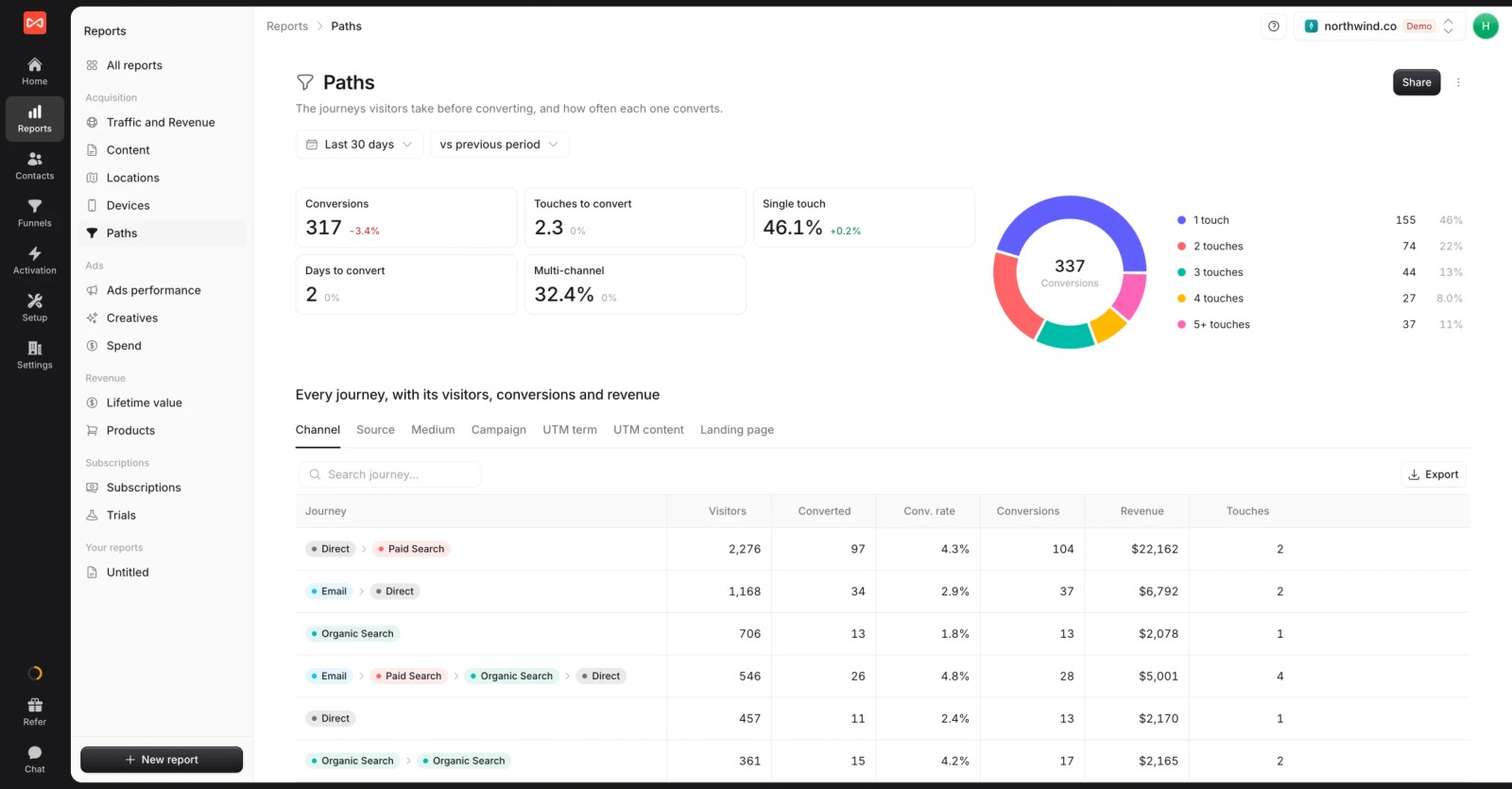
- Conversion paths: every channel sequence behind a conversion, with touches and days to convert, for long sales cycles.
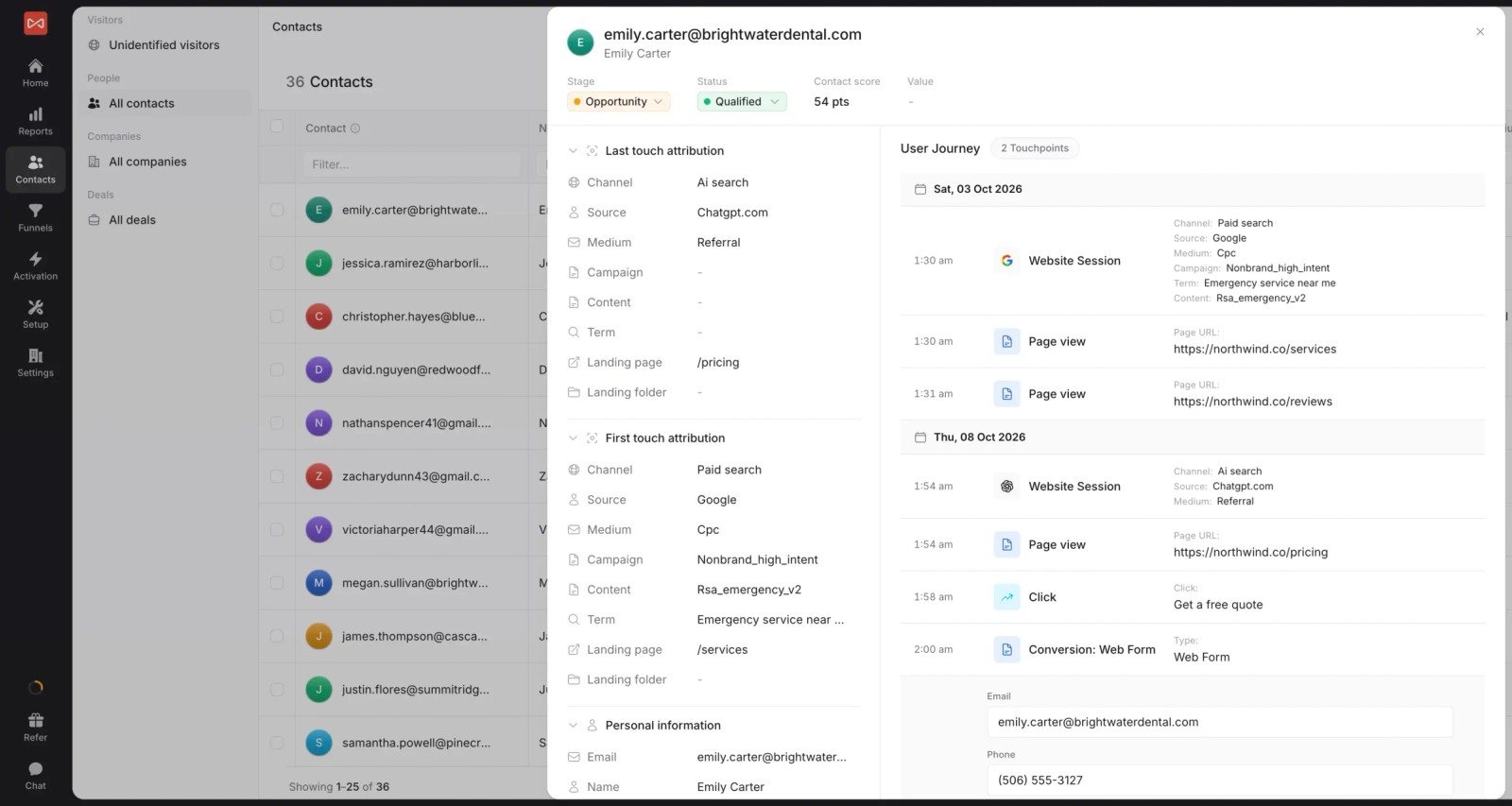
- Journeys on every lead: each visit, ad click and landing page before the lead, call or signup.
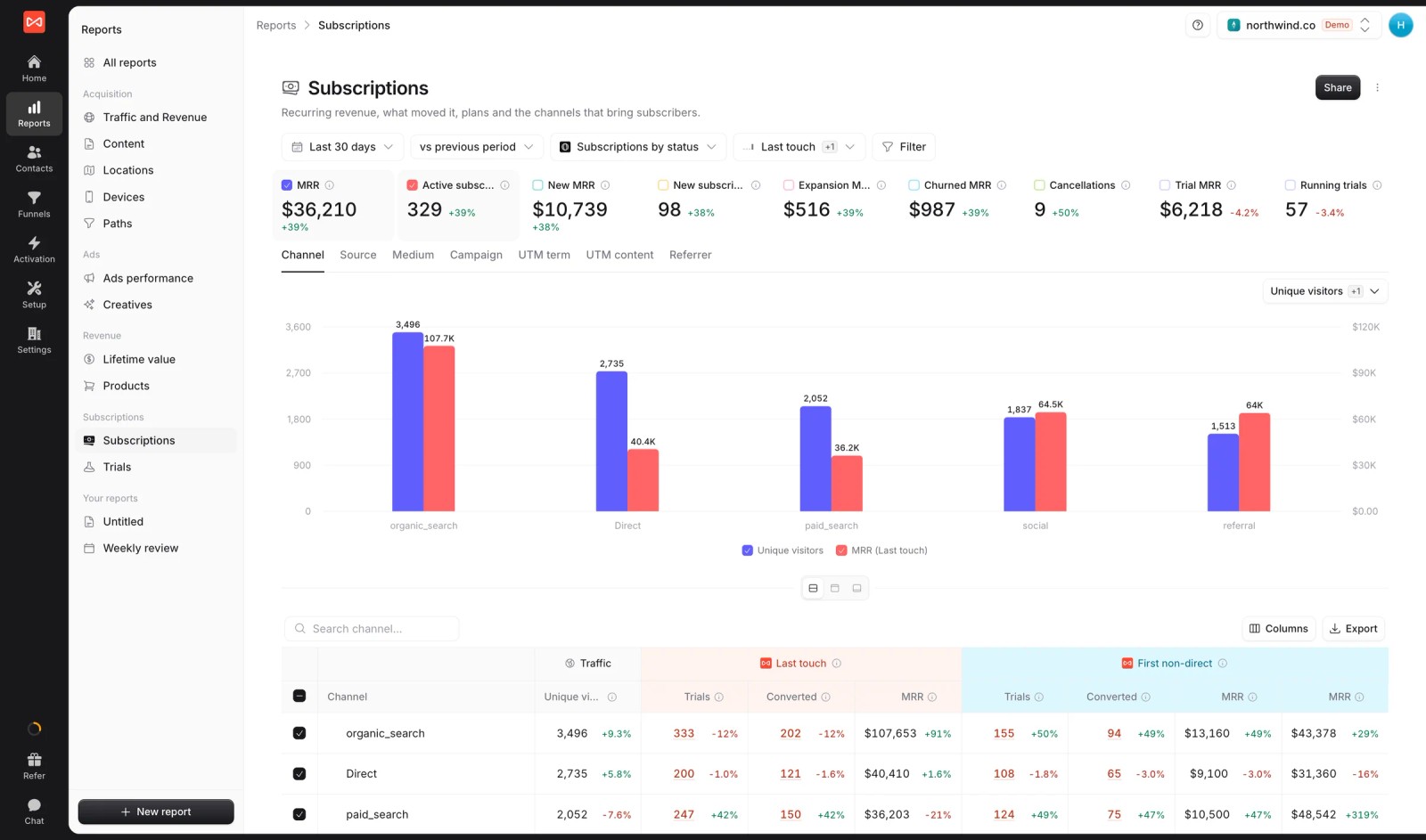
- Subscriptions and MRR by channel: new MRR, churn and trial MRR credited to the channel that acquired each customer, from Stripe, Paddle and other billing tools.
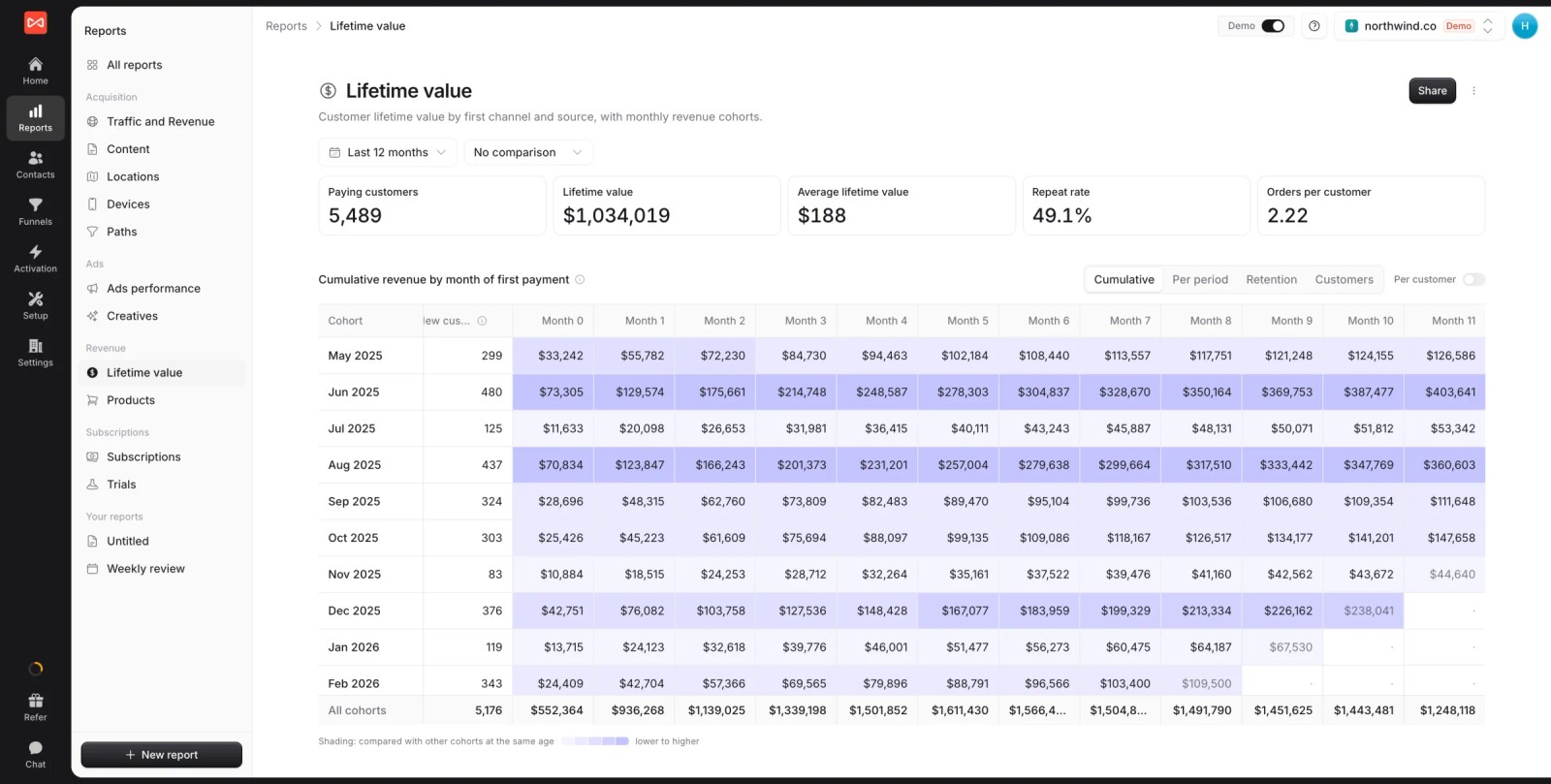
- Lifetime value cohorts: cumulative revenue by month of first payment, so you can see which channels bring customers who keep paying.
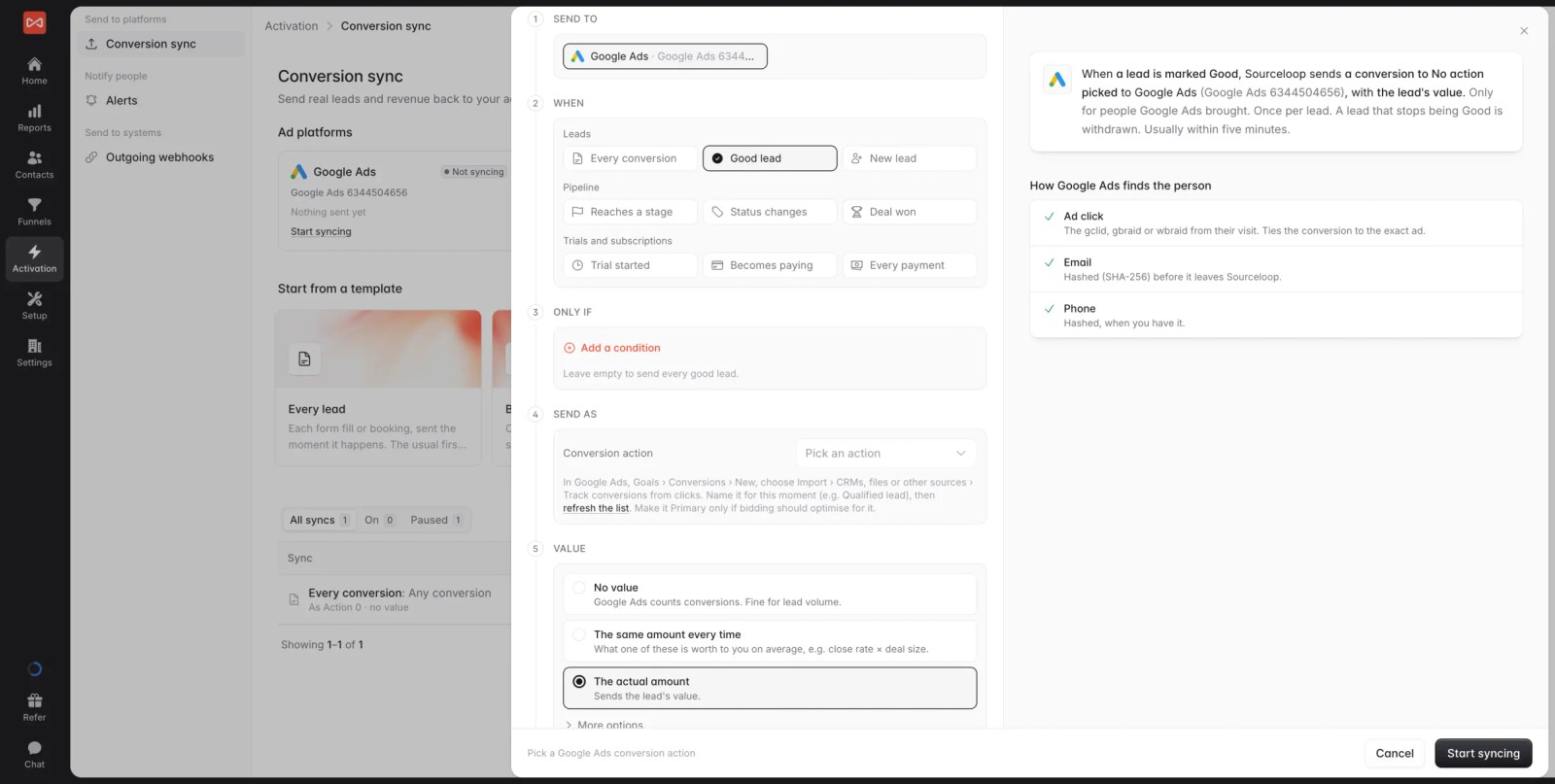
- Conversion sync: good leads, won deals and payments go back to Google Ads, Meta, Microsoft Ads and ChatGPT Ads on Professional, so bidding learns from revenue.
SourceLoop pricing
SourceLoop's plans are published and don't scale with ad spend. The meter is page views, with unlimited conversions.
| Plan detail | Essential | Professional | Agency |
|---|---|---|---|
| Monthly price | $49 | $99 | $249 |
| Billed yearly | $37/mo | $74/mo | $187/mo |
| Websites | 1 | 1 | 3 |
| Users | 1 | Unlimited | Unlimited |
| Page views a month | 30,000 | 100,000 | 1.5 million |
| Conversions | Unlimited | Unlimited | Unlimited |
| What it unlocks | Tracking, attribution reports, lead quality rules, alerts | Everything in Essential, plus CRM sync, conversion sync to ad platforms, API and MCP | Everything in Professional, plus white label reporting |
Extra websites are $19 a month, and every plan has a 7-day trial with self-serve setup.
Northbeam vs SourceLoop pricing
The two price on completely different things, which is why the numbers are so far apart.
| Pricing detail | Northbeam | SourceLoop |
|---|---|---|
| Pricing model | Tiers set by ad spend, plus data volume and add-ons | Three published tiers, metered on page views |
| Entry price | Starter, $1,500/mo | Essential, $49/mo |
| What raises the bill | Higher ad spend, more data, MMM and incrementality add-ons | More page views or extra websites |
| Revenue source | Ecommerce orders | CRM deals, payments and leads |
| Trial | None, demo first | 7 days, self-serve |
| Setup | Demo and onboarding | Self-serve |
| MMM and incrementality | Optional add-ons | Not offered |
Northbeam Starter alone is $18,000 a year. SourceLoop Professional, with CRM sync and conversion sync, is $1,188 a year, or $888 billed yearly. They aren't doing the same job, though: the gap only makes sense as a saving if your business runs on leads or subscriptions.
The bottom line
Northbeam's price reflects what it's built for: high-spend DTC brands that need multi-touch attribution and media mix modeling across a complex ad stack. At $1,500 to $3,500+ a month before add-ons, it's priced for brands where that accuracy pays for itself.
If your business runs on leads, demos, booked calls or subscriptions instead of a Shopify cart, look at a lead source tracking platform built for that sales motion before you book the demo.
Frequently asked questions
-
How much does Northbeam cost per month?
Northbeam's published pricing starts at $1,500/month for the Starter plan and $3,500/month for Professional. Growth and Enterprise are both quoted individually, according to Northbeam's pricing page.
-
Does Northbeam offer a free trial?
No. Northbeam doesn't publish a free trial or free tier anywhere on its site. Every plan requires booking a demo before you get a quote.
-
Why does Northbeam's quote go above the published starting price?
Because Northbeam bills against ad spend, pageviews, data volume, and refresh frequency, not a flat seat license. A brand within a tier's spend range can still land above the published floor if its traffic or data needs are high, as independent pricing coverage notes.
-
Is Media Mix Modeling included in Northbeam's price?
No. Media Mix Modeling+ and incrementality testing are listed as optional add-ons at every tier, including Enterprise, per Northbeam's own pricing page.
-
What's the difference between Northbeam Starter and Professional?
Starter is Shopify-only and capped around $1.5 million a year in ad spend. Professional adds support for any ecommerce platform, unlimited users and integrations, a dedicated media strategist, and optional incrementality testing, for brands spending up to $500,000 a month.
-
Is there a cheaper alternative to Northbeam?
Yes, if your revenue comes from leads, deals or subscriptions rather than a store. SourceLoop starts at $49 a month, with CRM sync and conversion sync on the $99 Professional plan and no ad-spend-based pricing. It doesn't offer media mix modeling or a Shopify-first setup, so DTC brands are better served by Northbeam.
-
How does Northbeam decide which tier a brand needs?
Mainly by monthly or annual ad spend. Starter fits brands under about $1.5M a year, Growth fits seven-figure brands under $200K/month, Professional fits brands up to $500K/month, and Enterprise fits anyone spending more than that, per Northbeam's own breakdown.

 Paid Social


