
7 Best AnyTrack Alternatives for Conversion Tracking
Seven AnyTrack alternatives for affiliates, lead gen, SaaS and ecommerce, compared on conversion API sync, pricing and setup, with real reviews.
Table of contents
AnyTrack does one job well: it collects conversions and pushes them to the ad platforms through their conversion APIs. For a lot of affiliates, that's enough.
People look elsewhere when they need more than the sync. Usually that's campaign controls, CRM revenue, or better pricing at their traffic level.
In this guide, I'll match seven alternatives to the reason you're leaving, with pricing and what users say about each.
How we compared them
We started on AnyTrack's free plan, then set up the alternatives we could use directly: RedTrack and ClickFlare on their trials, Stape on its free plan, and Cometly and Triple Whale, which we've tested ourselves. Wicked Reports sells through demos, so that section relies on its documentation and walkthroughs.
The brands and agencies we work with run everything from affiliate offers to lead gen and Shopify stores, so we judged each tool by who it suits. Reviews on G2 and threads on Reddit covered long-term use. We compared:
- Which ad platforms get conversions, and how they're matched
- Whether it tracks offers, leads and deals, or store orders
- How pricing grows with traffic or events
- How much technical setup it takes
SourceLoop is our product. We've ranked it first for lead-gen, agency and SaaS use, and pointed affiliates and ecommerce brands to better fits.
Last checked November 2026. Confirm current pricing with each vendor.
Why people look for AnyTrack alternatives
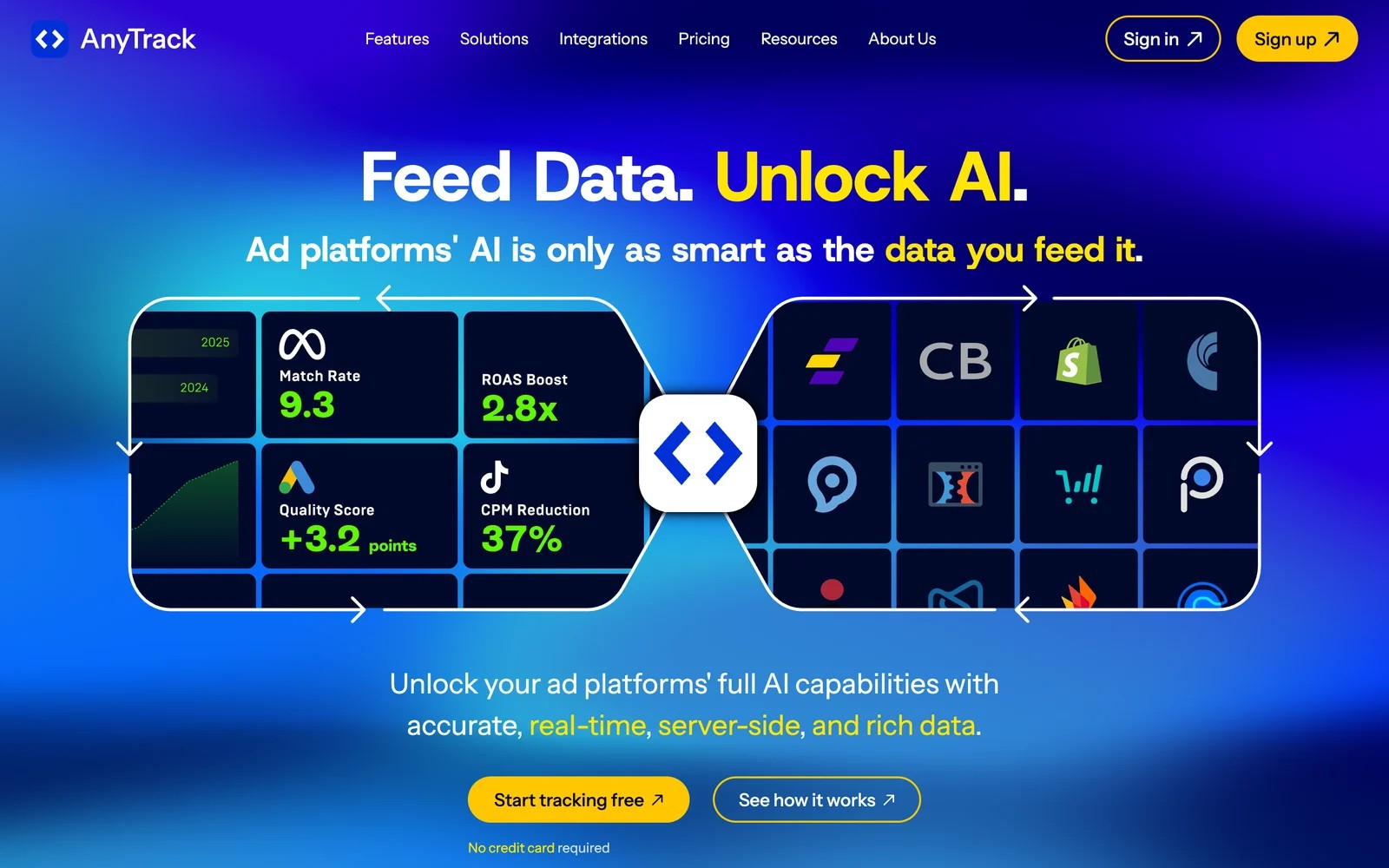
AnyTrack gathers conversions from affiliate networks, forms and stores, then sends them to seven ad platforms through their conversion APIs. Its pricing page lists a free plan for 5,000 sessions, with paid plans from $100 to $300 a month based on sessions and sites.
Users like the price and the affiliate focus:
"It seems to cater to affiliate marketers. It is a good alternative to many of the much more expensive attribution platforms in the market." (Source)
The usual reasons to move on are less about the sync and more about what's around it:
- No campaign controls: there's no lander rotation, offer split testing or rules engine like a full ad tracker.
- No CRM pipeline: it can send a lead, but it doesn't know which leads became customers.
- Pricing by sessions: traffic spikes push you into a higher plan, and earlier plans limited pixels too.
"the pricing plans are based on pixels." (Source)
AnyTrack alternatives compared
Here's how the 7 AnyTrack alternatives compare on fit, pricing and what they track, as of November 2026.
| Tool | Best for | Pricing | Free plan or trial | Conversion API | CRM leads and deals | Campaign controls |
|---|---|---|---|---|---|---|
 SourceLoop SourceLoop | Lead-gen businesses, agencies, SaaS | From $49/mo | Yes | Yes | Yes | No |
 RedTrack RedTrack | Affiliates and media buyers | From $169/mo | Yes | Yes | No | Yes |
 ClickFlare ClickFlare | Affiliates on Meta and native | From $89/mo | Yes | Yes | No | Yes |
 Stape Stape | DIY server-side tracking | Free plan, from $20/mo | Yes | Yes | No | No |
 Cometly Cometly | B2B SaaS paid acquisition | Usage-based | Yes | Yes | Yes | No |
 Wicked Reports Wicked Reports | Long sales cycles and LTV | From $499/mo | No | Higher plans | Yes | No |
 Triple Whale Triple Whale | Shopify and DTC brands | Priced by GMV | Yes | Yes | No | No |
The 7 best AnyTrack alternatives
Each pick below names the reason you'd switch, since that decides the right replacement.
1. SourceLoop
Best for: lead generation businesses, agencies and SaaS teams that want the ad platforms to learn from qualified leads and revenue, not every form fill.
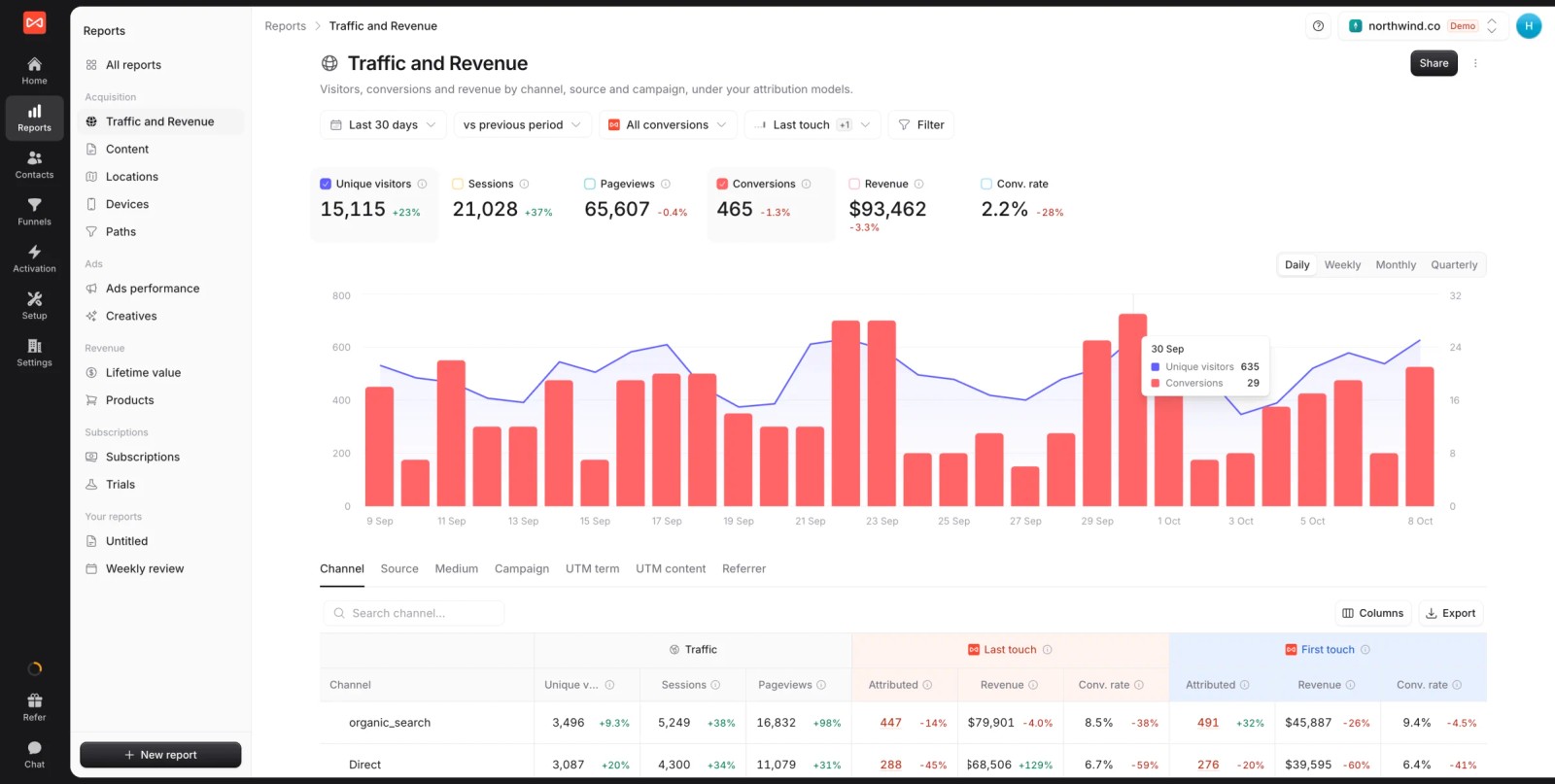
SourceLoop is a first-party marketing attribution and measurement tool. Like AnyTrack, it sends conversions to the ad platforms server-side. The difference is what it sends.
SourceLoop follows each lead into your CRM or billing system, so you can send only good leads, booked meetings, won deals or payments, each with a value. The bidding algorithm then chases customers, not form spam.
Key features
- Conversion sync on outcomes you choose: every lead, good leads, CRM stages, won deals, trials or payments, sent to Google Ads, Meta, Microsoft Ads and ChatGPT Ads.
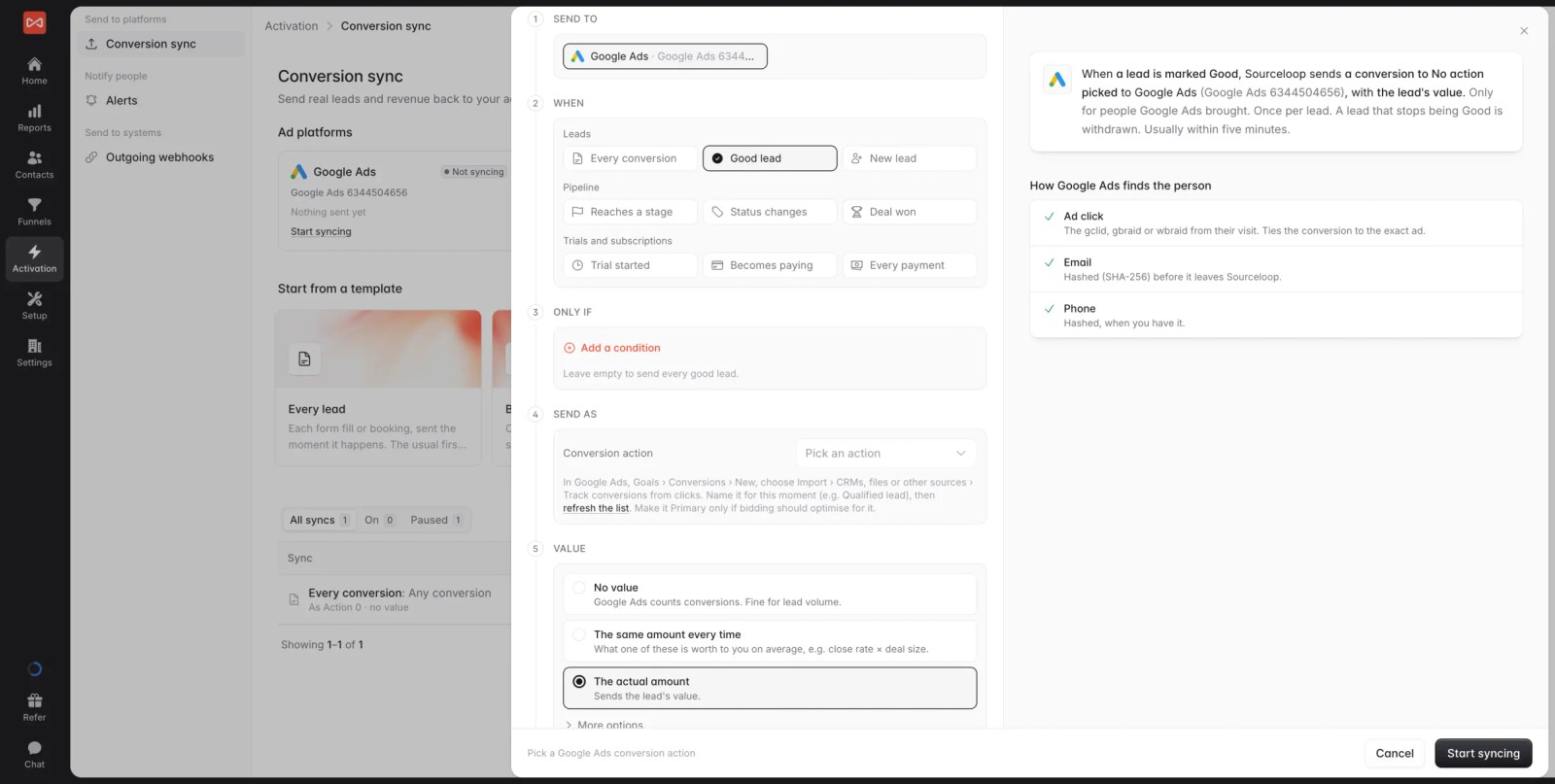
- Strong matching: each conversion carries the ad click ID plus hashed email and phone, which raises match rates. Read how server-side conversion sync works.
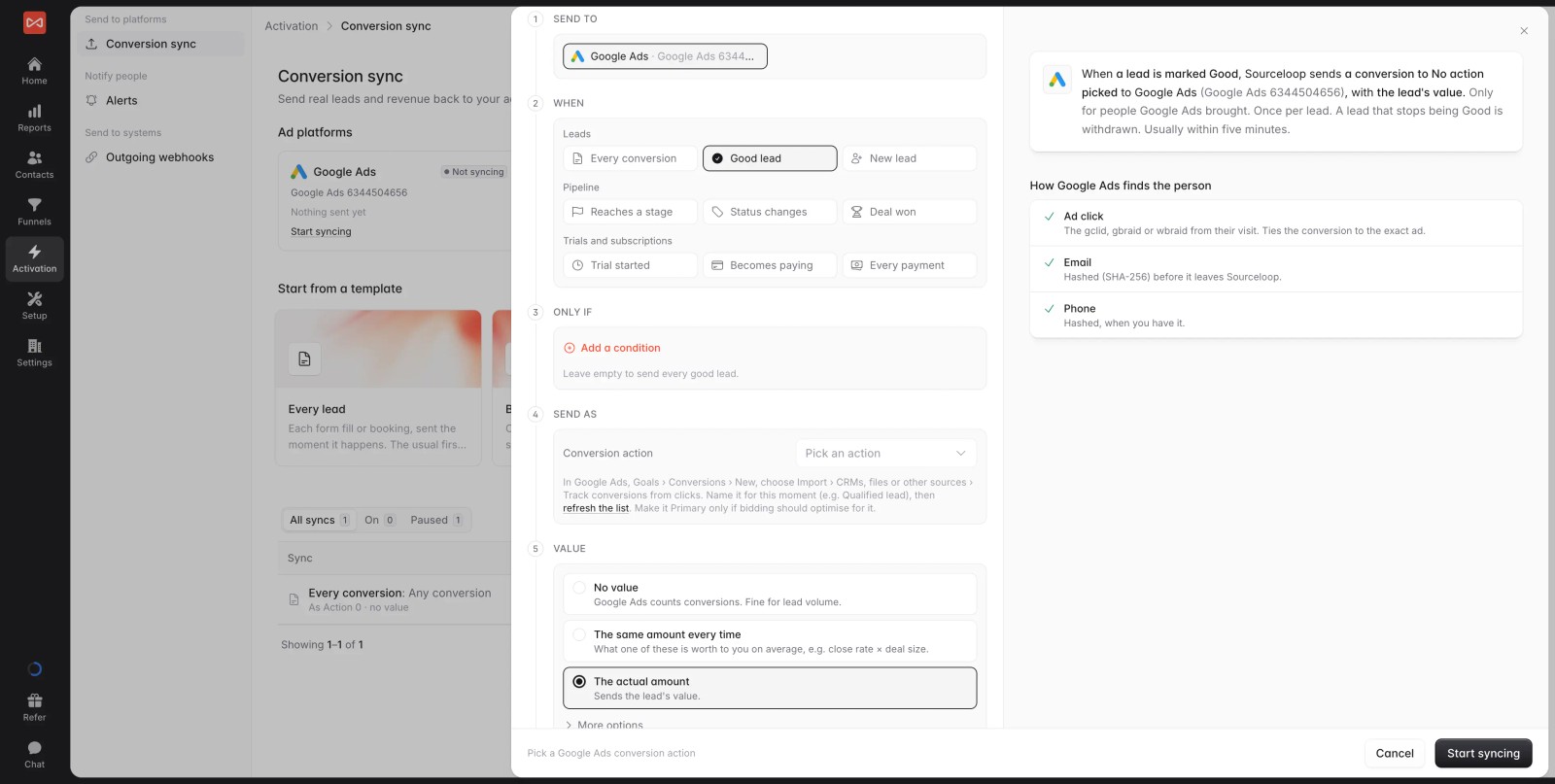
- First-party tracking: visitor data is collected first-party, the script can load from your own domain, and there's an optional cookieless mode and Google Consent Mode support.
- Ad spend beside credited results: platform-reported conversions and ROAS next to what SourceLoop credits each platform.
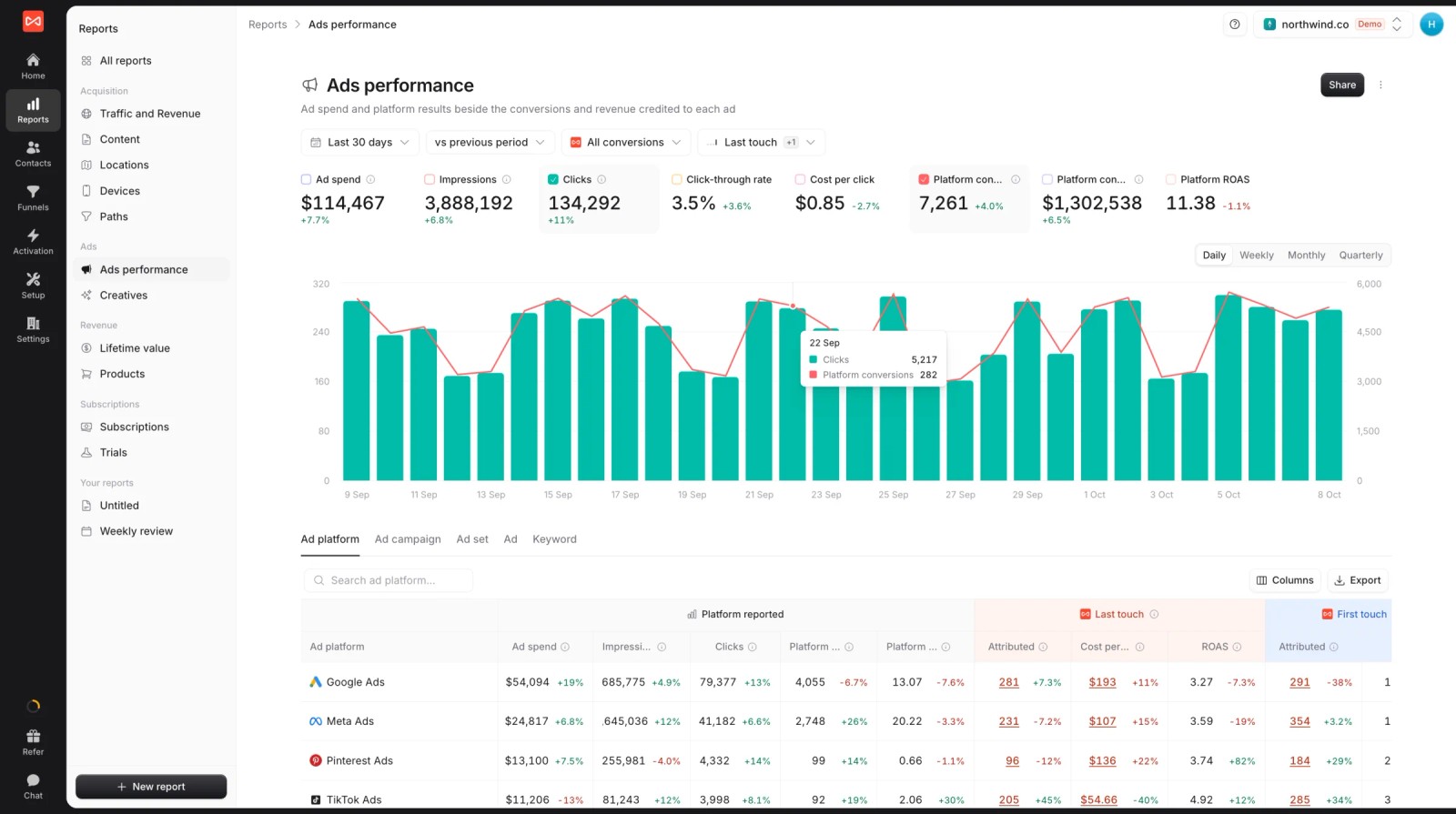
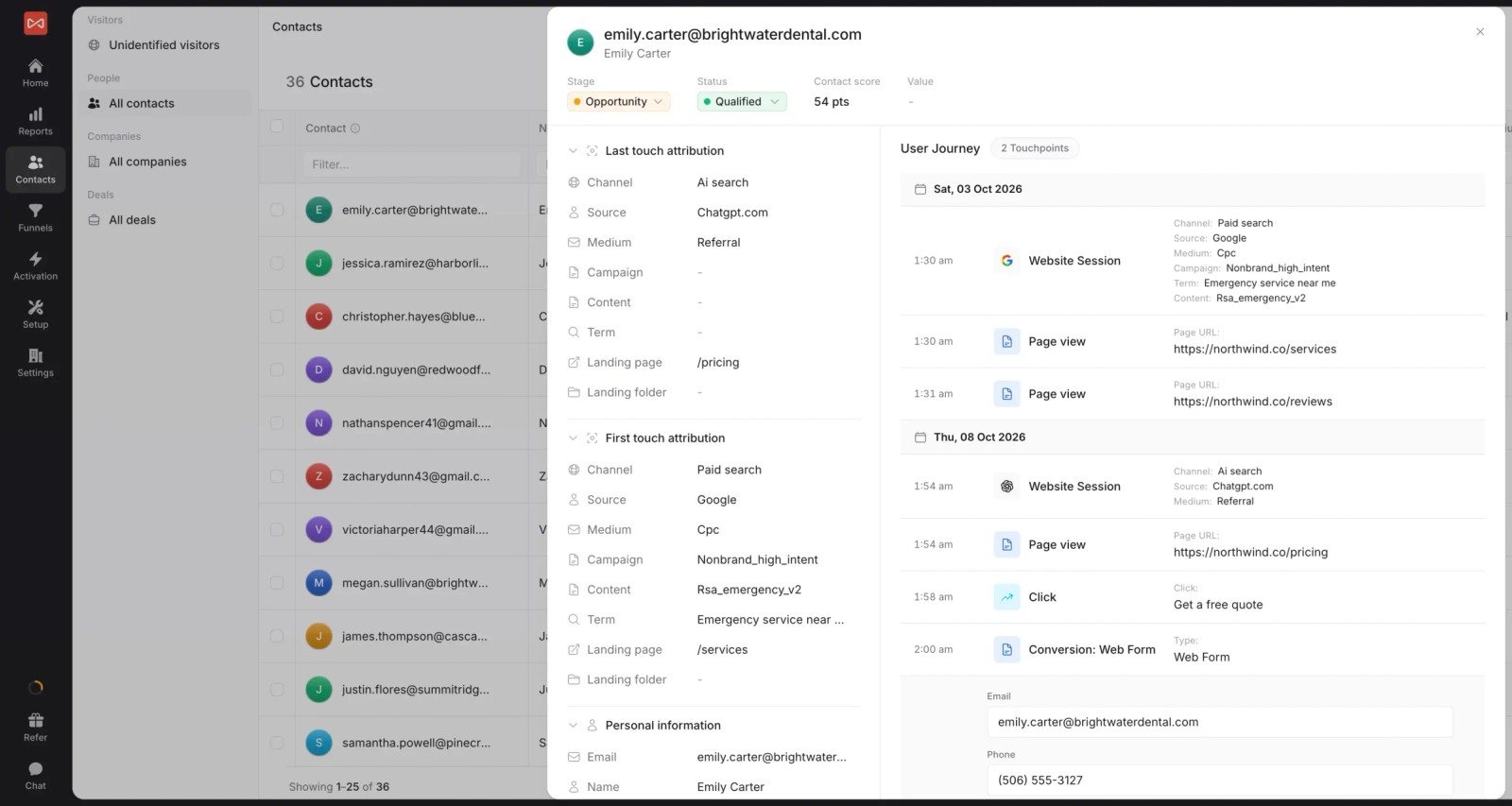
- Journey on every lead: each visit, ad click and landing page before the conversion, kept on the contact.
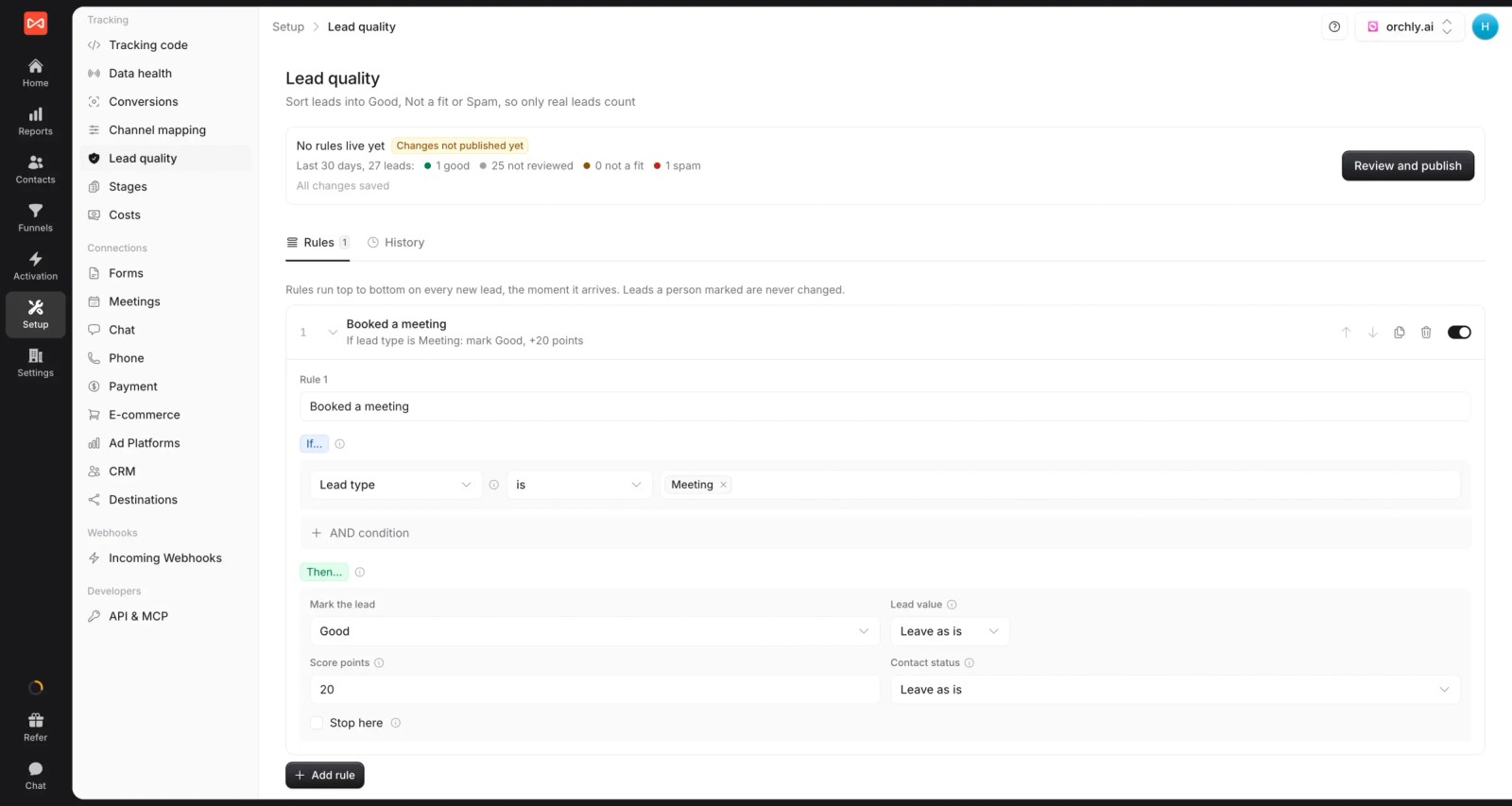
- Lead quality rules: mark leads Good, Not a fit or Spam from form answers, email domain or call length.
- CRM and payments: two-way sync with HubSpot, Salesforce, Pipedrive and Jobber, plus Stripe, Paddle and other billing providers for SaaS revenue.
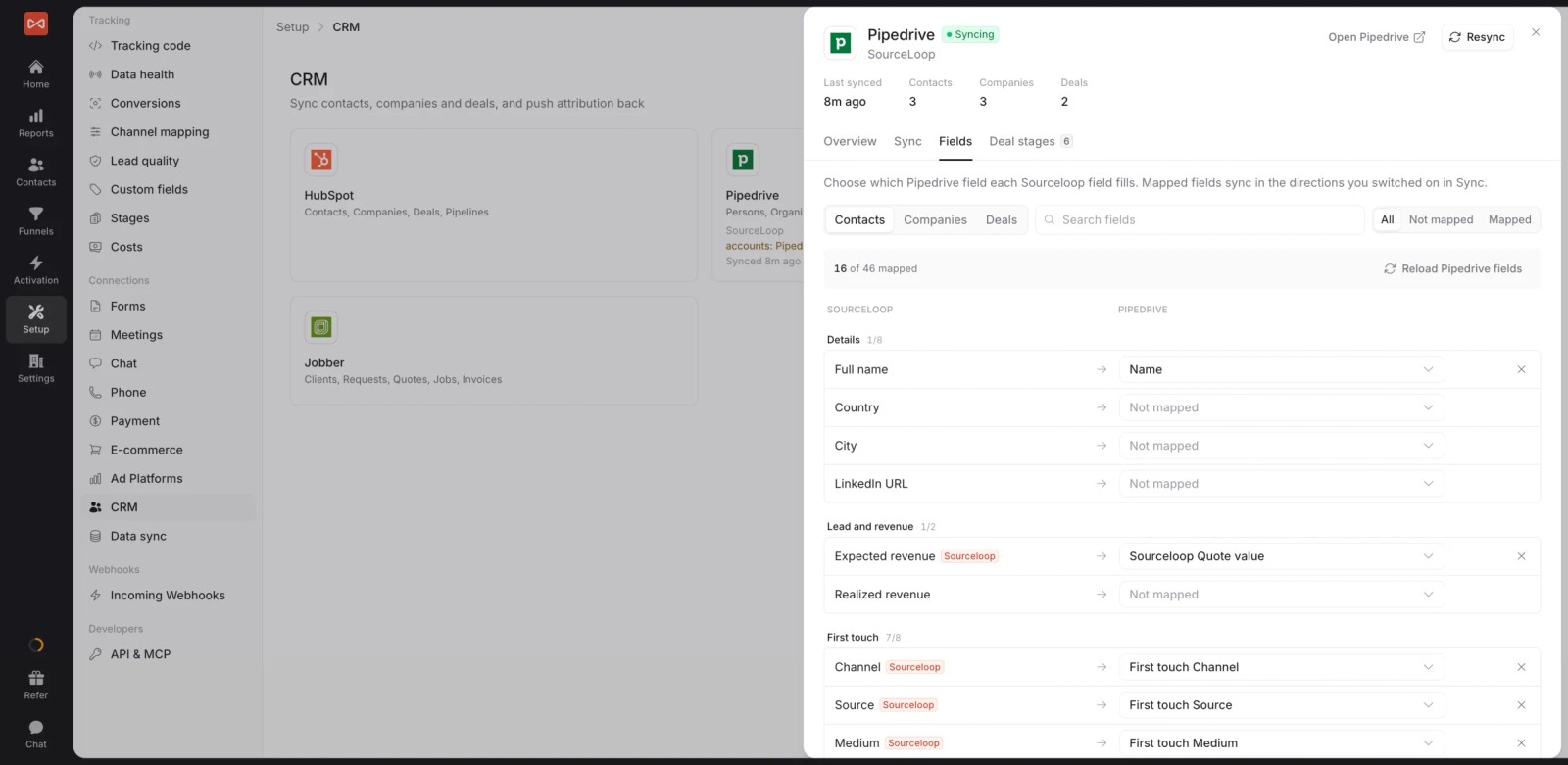
- Calls, forms and bookings: around 70 integrations, including CallRail and CallTrackingMetrics.
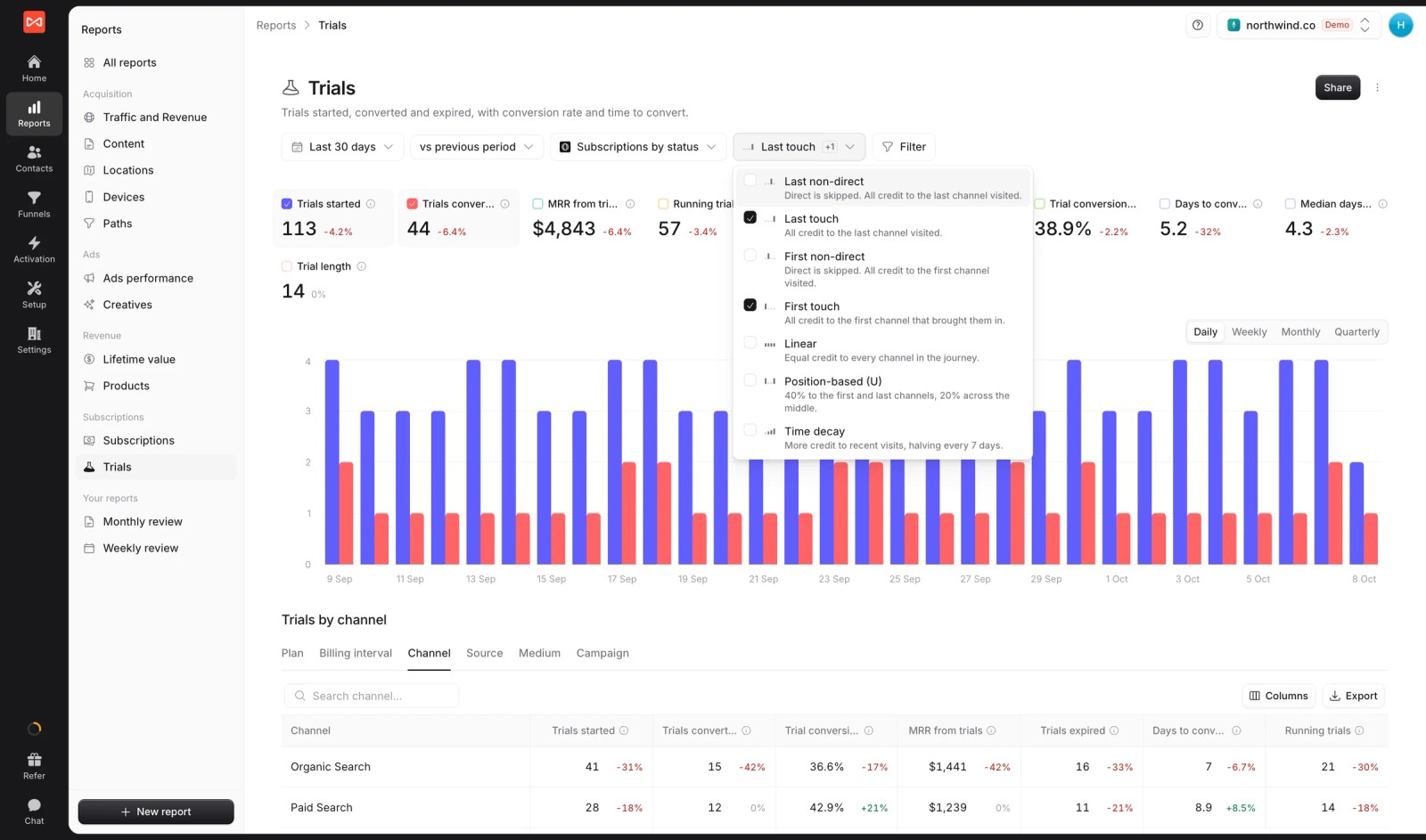
- Seven attribution models: first and last touch, first and last non-direct, linear, U-shaped and time decay, so you can compare how credit lands before deciding where spend goes.
- Multiple websites and white label: several sites under one login and your brand. If you're an agency, each client gets a branded workspace.
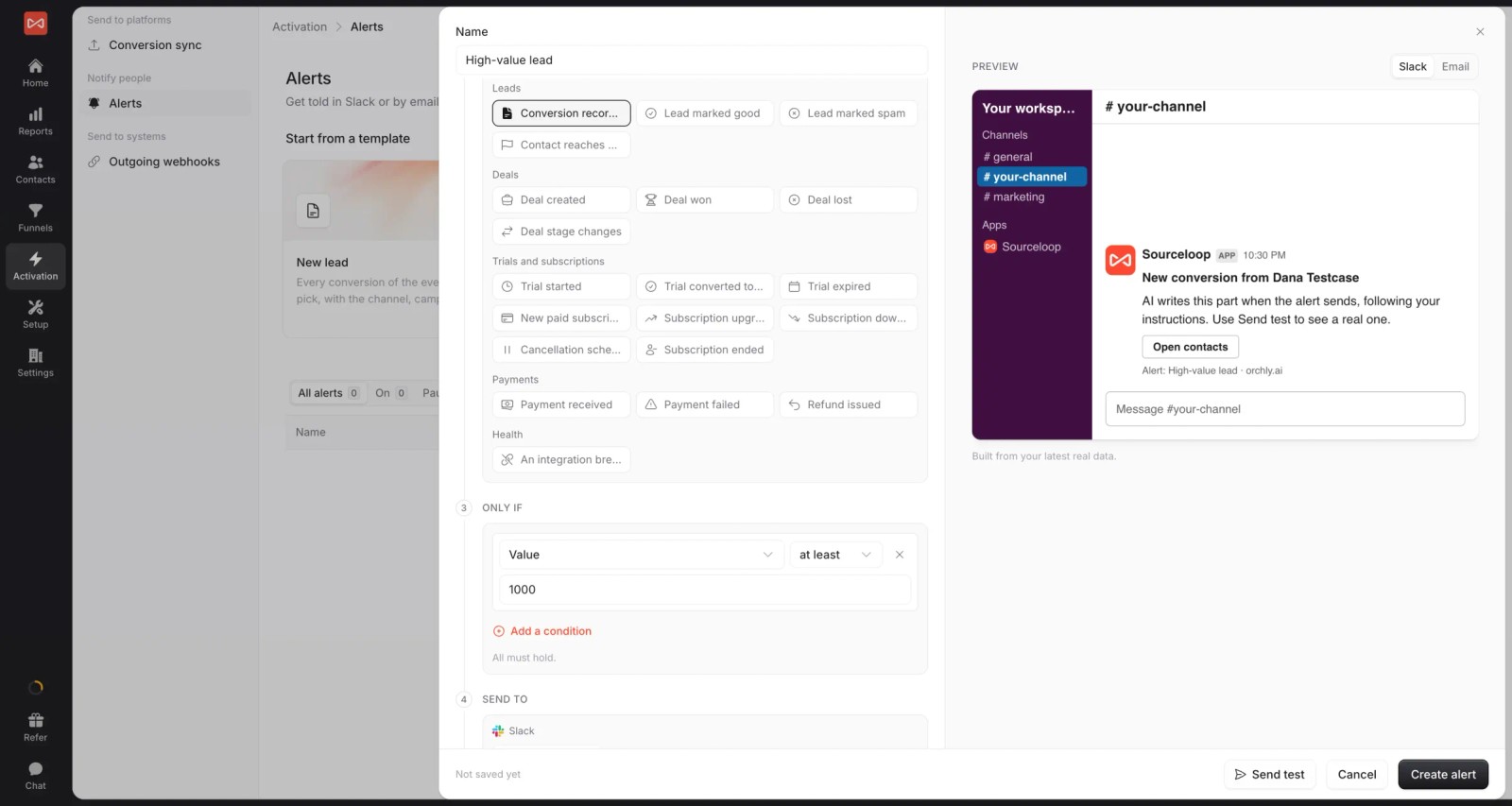
- Alerts: a Slack or email message when a paid lead arrives or a high-value conversion comes in, so nobody waits for the weekly report to notice a winning campaign.
Where it falls short
- No offer or lander rotation, and no affiliate network postbacks. Affiliates should look at RedTrack or ClickFlare.
- LinkedIn and TikTok conversion sync are coming soon. AnyTrack covers more ad platforms today.
Pricing
- Essential: $49/mo for one site and 30,000 page views, with tracking, attribution reports, lead quality rules and alerts
- Professional: $99/mo for 100,000 page views and unlimited users, adding CRM sync, conversion sync to the ad platforms, the API and MCP
- Agency: $249/mo for three sites and 1.5 million page views, adding white label reporting
- Unlimited conversions on every plan, and a 7-day trial. AnyTrack's paid plans start at $100.
Verdict: the right move when your conversions are leads or subscriptions and you want ad platforms optimizing for revenue. Not a fit for affiliate offer tracking.
2. RedTrack
Best for: affiliates and media buyers who've outgrown AnyTrack and need a full ad tracker.
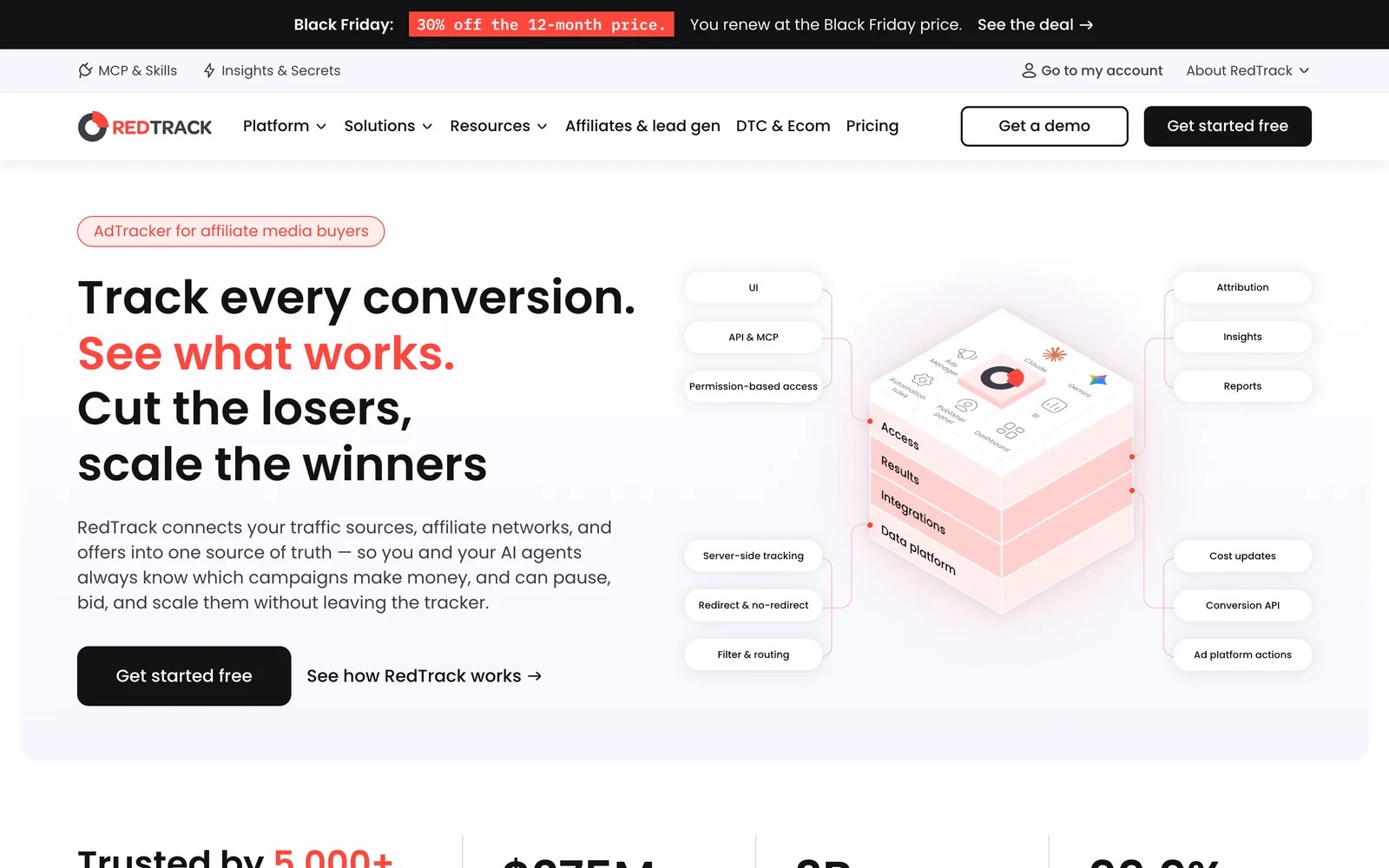
RedTrack adds everything AnyTrack leaves out: lander and offer rotation, A/B tests, stop rules, ad spend sync and an affiliate panel, alongside conversion API delivery.
We ran its 14-day trial. Coming from AnyTrack, the step up in control is obvious, and so is the step up in complexity. Expect to spend real time on setup.
Users praise its tracking and integrations. The common complaints are a dated interface and slow reports on long date ranges.
Key features
- Landers and offers can be rotated and split tested, with results broken out by variant, so you can see which page or offer converts best.
- Ad spend syncs from the ad platforms automatically, keeping profit and ROI current without daily manual imports.
- Stop rules pause losing campaigns based on thresholds you set, which protects budget when you can't watch campaigns all day.
- Conversions go back to the ad platforms through conversion APIs and S2S postbacks, matching what AnyTrack does while adding full campaign control.
Where it falls short
- It doesn't track CRM pipeline or won deals, so lead-gen teams can't optimise their campaigns on revenue.
- There's much more to configure than AnyTrack, which takes real time for marketers without a tracking background.
- The lowest plan costs well above AnyTrack's paid tiers, which matters if you're moving for price.
Our RedTrack alternatives guide compares it with the other trackers.
What users say
"The number of integrations it offers is impressive." (Source)
"The UI feels dated and a bit clunky compared to newer tools, and some of the reporting views take more clicks than they should to get to the breakdown you actually want." (Source)
"The dashboard is complex and it doesn't give me all the info I need." (Source)
Pricing
- Solo: $169/mo for 5 million events and one user
- Team: $399/mo for 20 million events
- Enterprise: $999/mo for 75 million events. 14-day trial.
3. ClickFlare
Best for: affiliates who want a full tracker with a cleaner interface and a lower entry price than RedTrack.
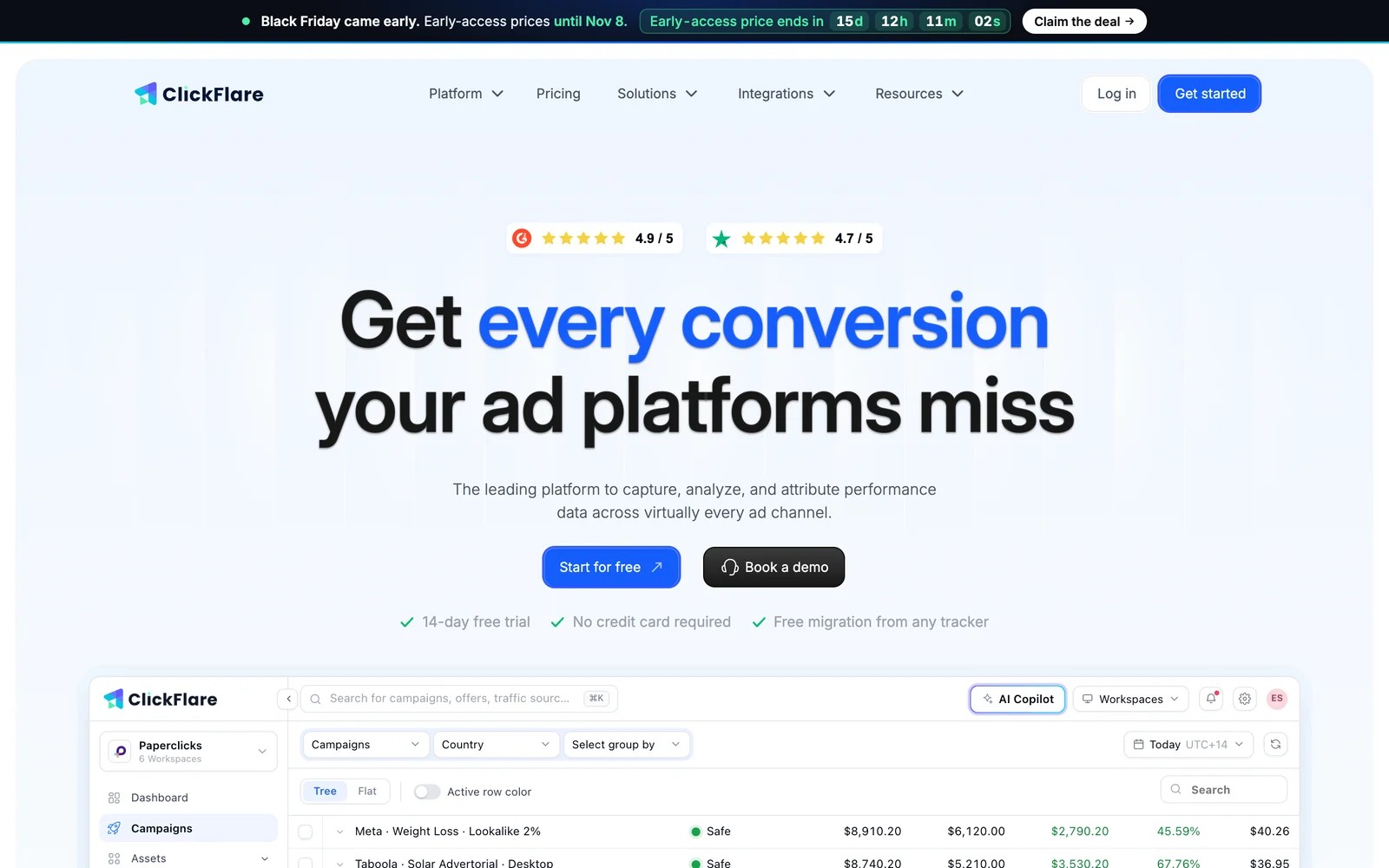
ClickFlare covers campaigns, offers, landers, postbacks and conversion APIs, with free migration from other trackers. It's especially popular with affiliates running Meta traffic.
On the trial, the interface felt modern and the drill-down reports were quick. The Meta conversion API setup is what users mention most, though getting events right still takes some trial and error.
Key features
- Drill-down reports pivot campaigns by ad, placement and sub-ID in a few clicks, which suits affiliates who optimise several times a day.
- The Meta conversion API and server-side events send accurate conversions back to Facebook, the setup most affiliate users praise.
- Custom dashboards track revenue, cost and profit across campaigns, so it's quick to see which offers are worth more spend.
- An AI copilot and workspaces help teams organise campaigns and ask questions of the data without exporting it first.
Where it falls short
- CRM leads and deals aren't tracked, so it can't tell you which conversions became paying customers.
- Phone call attribution isn't built in, which matters for offers that convert by phone.
- There's no free plan, only a 14-day trial, so testing over a longer period means paying.
What users say
"The Meta CAPI integration is the biggest thing for me." (Source)
"Setting up the Meta integration, postbacks and conversion events properly took some trial and error" (Source)
Pricing
- Starter: $89/mo ($69 billed yearly) for 1 million events
- Pro: $219/mo ($169 yearly) for 5 million events
- Higher tiers up to $2,199/mo, with a 14-day trial
4. Stape
Best for: marketers and developers comfortable with Google Tag Manager who want server-side tracking at the lowest cost.
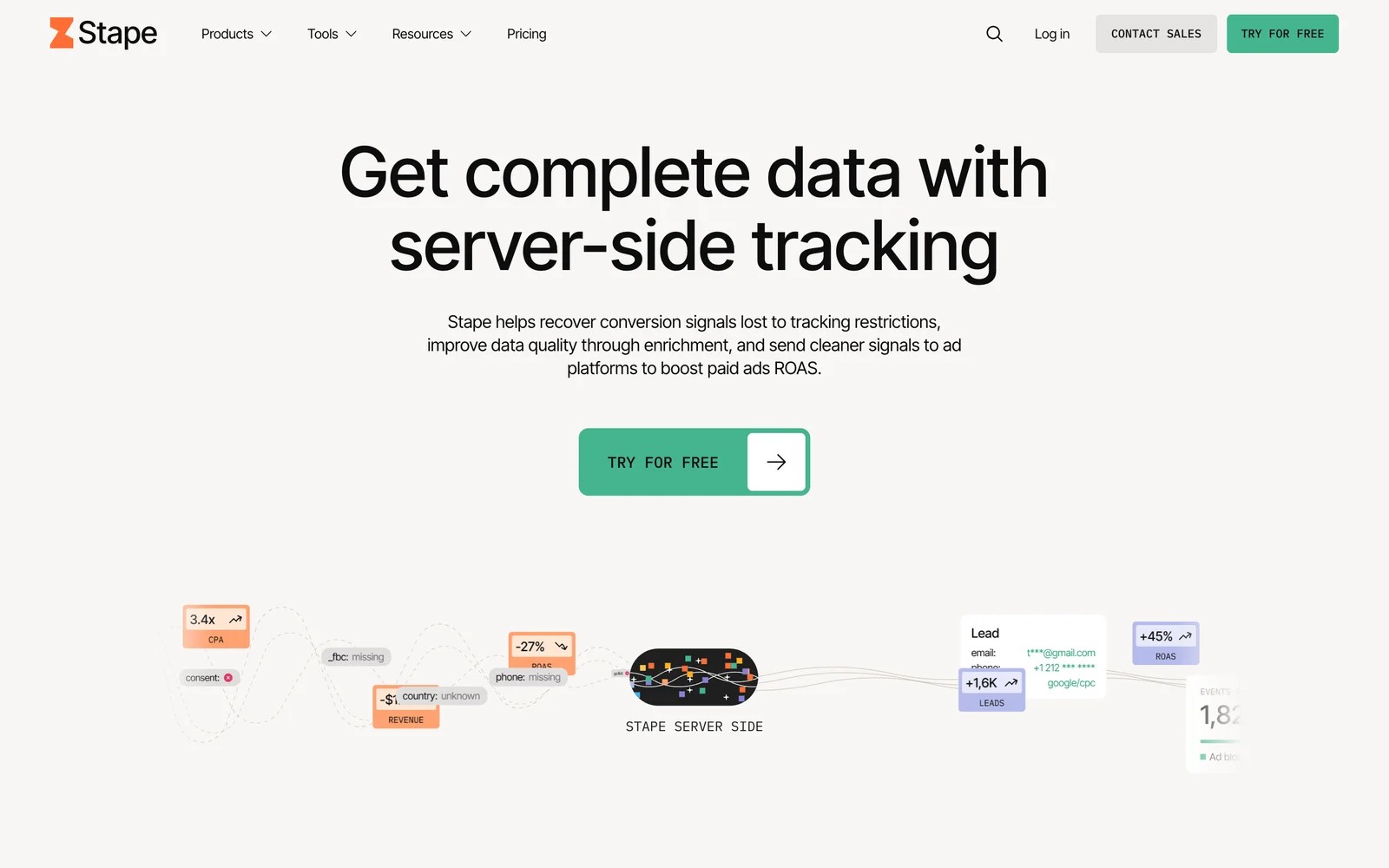
Stape hosts server-side Google Tag Manager containers and adds power-ups for conversion APIs, data enrichment and ad blocker recovery. It gives you the plumbing AnyTrack hides, so you build the setup yourself.
We set it up on the free plan. If you know GTM, getting a Meta conversion API setup working was quick, and Stape's guides filled the gaps. If you don't, the dashboard is a lot to take in.
There's no attribution reporting. Stape moves the data; your ad platforms and analytics tools report on it.
Key features
- Managed server-side Google Tag Manager hosting scales automatically, so you avoid maintaining servers, handling outages or planning capacity yourself.
- Power-ups like a custom loader and data tag help recover events that ad blockers would drop and enrich them before they reach ad platforms.
- Templates cover the Meta, Google and TikTok conversion APIs, which shortens setup for anyone already comfortable in Tag Manager.
- A free plan covers 10,000 requests a month, which is enough to build and test a full server-side setup before paying.
Where it falls short
- It's infrastructure with no attribution reporting, so results live in your ad platforms and analytics tools.
- You configure tags in Google Tag Manager yourself, which is hard going without GTM experience.
- CRM outcomes aren't tracked unless you build that pipeline yourself on top of the server container.
Our explainer on server-side tracking covers how this approach works.
What users say
"Stape made the transition to server-side tracking much easier than we anticipated." (Source)
"It really is a lot to digest at the beginning. The dashboard is jam-packed with activities, which may seem overwhelming when users first log in." (Source)
"Better support only on very high subscription plans" (Source)
Pricing
- Free: 10,000 requests a month
- Pro: $20/mo ($17 billed yearly) for 500,000 requests
- Business and Enterprise: $100 and $200/mo, for 5 and 20 million requests
5. Cometly
Best for: B2B SaaS teams that want conversion API sync tied to pipeline and closed-won revenue.
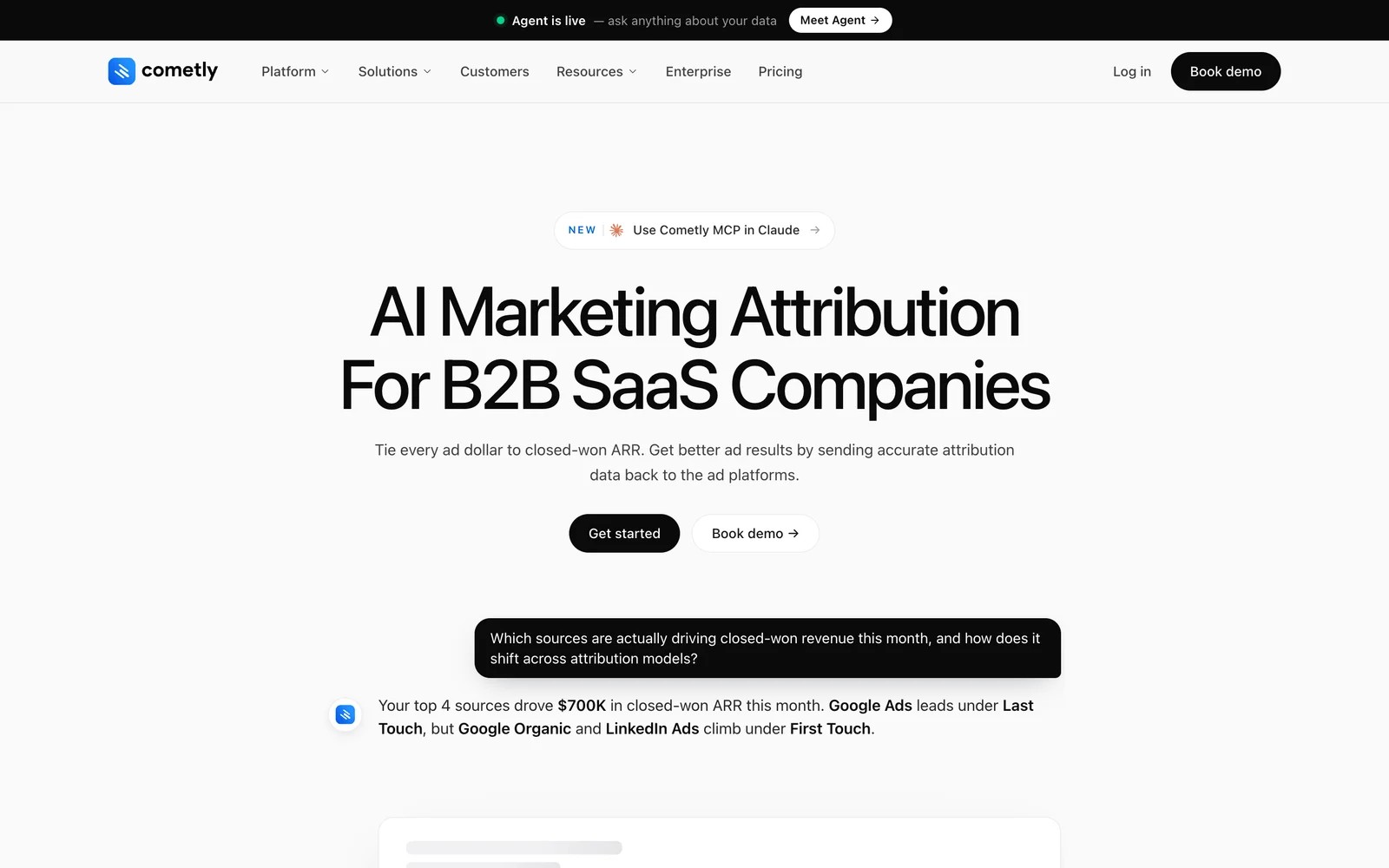
Cometly tracks ad clicks with a first-party pixel, follows leads into the CRM, and sends conversions back to Meta and Google. It now positions itself squarely for B2B SaaS.
We've tested it ourselves. Connecting the pixel and ad accounts was smooth, and ad-level revenue next to Ads Manager's numbers was useful. It's a bigger step up from AnyTrack than it looks, with more configuration to get pipeline data right.
Key features
- A first-party pixel and server-side tracking capture ad clicks that browser-based tracking misses, giving a fuller count of paid conversions.
- Multi-touch attribution follows each lead through to pipeline and closed-won revenue in the CRM, which suits B2B SaaS teams with sales cycles.
- Conversions, including offline sales, go back to Meta and Google through their conversion APIs, so campaigns optimise toward deals.
- An AI agent and MCP server answer questions about the data in plain language, which helps teams that don't want to build every report.
Where it falls short
- It doesn't track affiliate offers, so affiliates leaving AnyTrack will need a different kind of tool.
- Phone calls aren't tracked, which matters for businesses that close most of their sales by phone.
- Prices aren't shown on the pricing page, which makes comparing costs with AnyTrack harder.
What users say
"Cometly marries sales and marketing data into one platform and feeds it back to your ad channels for optimization so you can make data driven decision right from your Ad Accounts." (Source)
"Sometimes it takes a bit too long to set it up if you have complex Tech Stack." (Source)
Pricing
- Usage-based Core plan and quoted Enterprise. See our Cometly alternatives for comparisons.
6. Wicked Reports
Best for: brands with long sales cycles or repeat purchases that want lifetime value attribution.
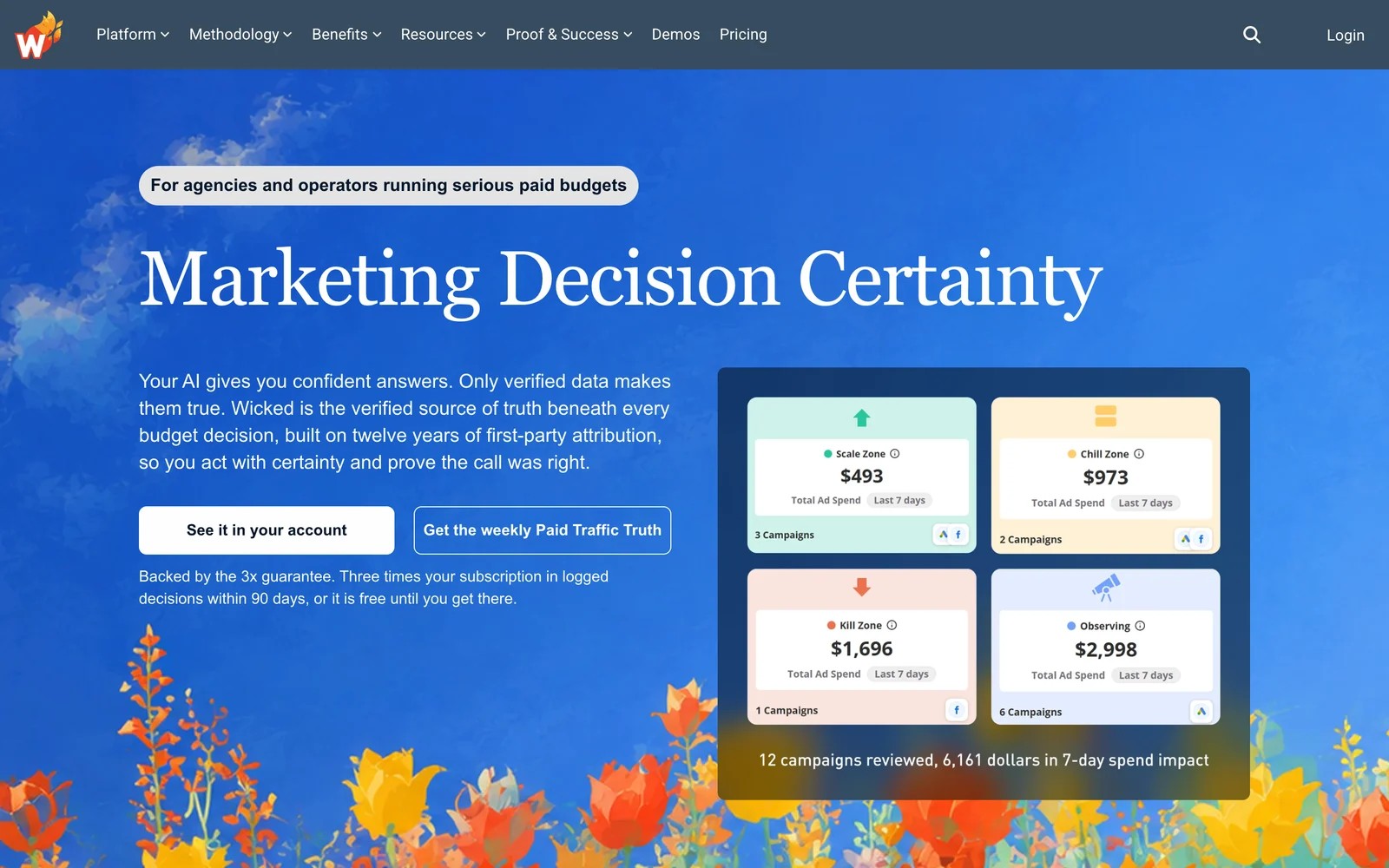
Wicked Reports ties ad spend to customer lifetime value, using lookback windows far longer than the ad platforms allow. Its FunnelVision views split results by top, middle and bottom of funnel.
It sells through demos, and most of its public reviews date from 2022. Users like the long windows and model choice. Some found the interface slow and clunky.
Brands we know on Wicked Reports use it mostly for weekly budget calls, checking which campaigns brought customers who bought again. They describe setup as a project with Wicked's team, not a quick install.
Key features
- Lifetime lookback and lookforward windows credit ads for sales months after the first click, which suits brands with long buying cycles.
- Cohort and LTV reports show which campaigns bring customers who keep buying, not just the cheapest first orders.
- FunnelVision splits results by top, middle and bottom of funnel, giving a fairer read on prospecting ads that rarely get last-click credit.
- Meta conversion API signals and AI recommendations come on the Maximize plan or as add-ons, for brands that want ads to learn from verified revenue.
Where it falls short
- There's no self-serve trial, so evaluating it means booking a demo and waiting for a walkthrough of your own data.
- Its cheapest plan costs more than AnyTrack's top plan, which rules it out for small advertisers and affiliates.
- It has no affiliate campaign controls like lander rotation or offer split tests, so affiliates would need a tracker as well.
See our Wicked Reports alternatives for more options.
What users say
"I really like that you can track longer than the standard 7 to 30 day attribution options available in the marketing channels." (Source)
"The user experience isn't the best, it can be pretty clunky and, not necessarily hard, but frustrating to navigate, dive deeper, and look around. It also takes forever to load." (Source)
Pricing
- Measure: $499/mo for brands up to $2.5M in annual revenue
- Scale and Maximize: $699 and $999/mo
- Enterprise: from $4,999
7. Triple Whale
Best for: Shopify and DTC brands that want attribution, analytics and conversion sync in one place.
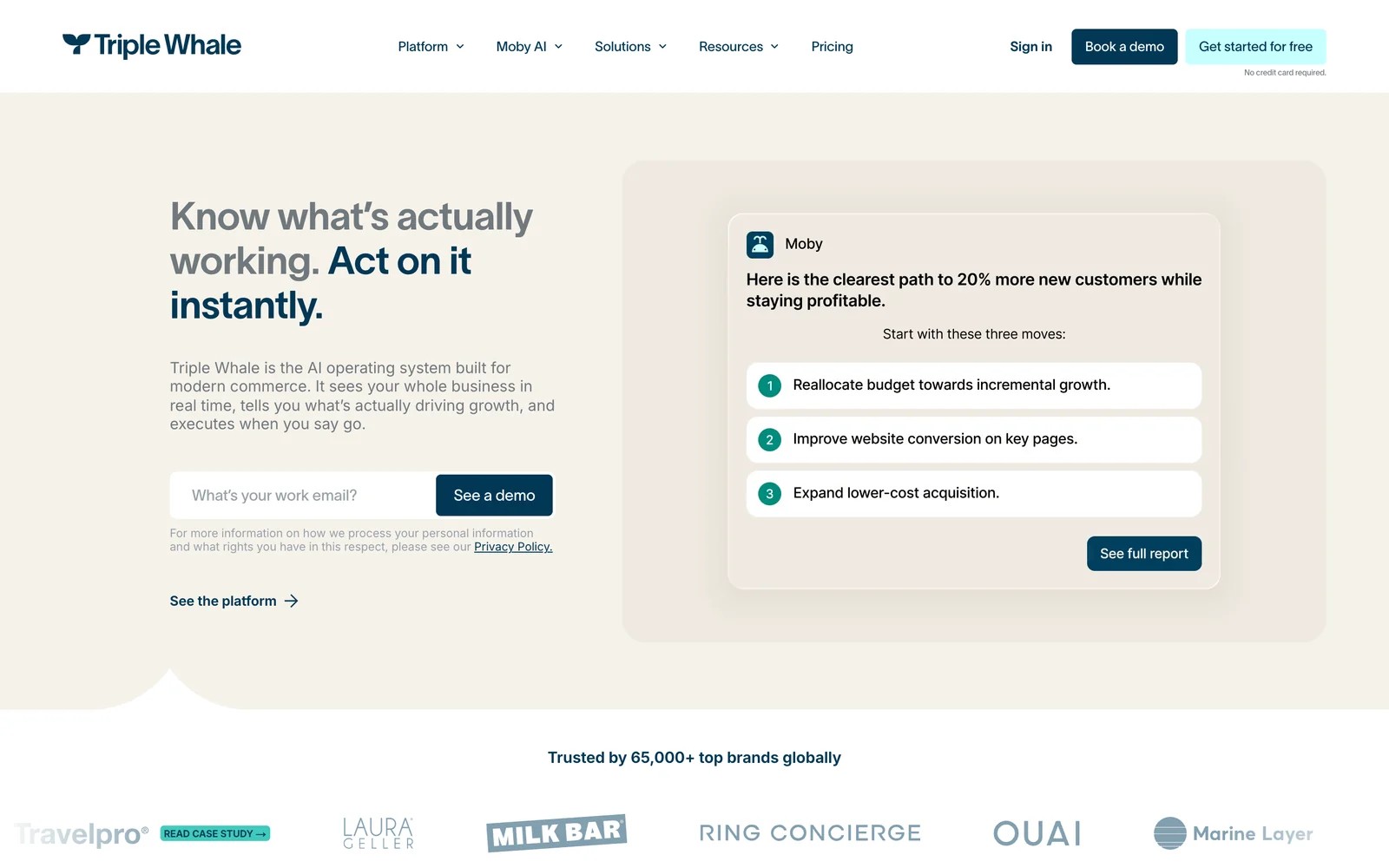
Triple Whale combines Shopify orders, ad spend and its own pixel, adds AI agents, and sends conversions back to the ad platforms. For a Shopify store, it covers far more than AnyTrack.
We've tested it ourselves. The summary dashboard is useful within a day. The pixel's numbers took some interpreting, since they rarely match what Meta reports.
Key features
- Shopify orders, ad spend and the Triple Pixel come together in one dashboard, covering far more than conversion syncing for a store.
- Orders are attributed across Meta, Google, TikTok and other paid channels, so brands can compare channels on their own data.
- AI agents answer questions and build reports, which saves time for small ecommerce teams without an analyst.
- Enriched conversions go back to the ad platforms, helping their algorithms find buyers when browser tracking misses purchases.
Where it falls short
- It doesn't serve affiliates or lead-gen businesses, because it only attributes store orders from ecommerce platforms.
- Costs rise with store revenue, so the bill grows as the brand sells more.
- Stores outside Shopify don't connect as smoothly, which limits it for brands on other platforms.
What users say
"I like that Triple Whale brings key ecommerce and marketing metrics into a single dashboard, making it much easier to understand performance across channels." (Source)
"The attribution system is consistently buggy and unreliable, causing more harm than good." (Source)
Pricing
- Priced by store GMV, with a free starter tier
How to choose
Match the replacement to the reason you're leaving AnyTrack.
1. What's missing today?
- Campaign controls for affiliate offers: RedTrack or ClickFlare.
- Lower cost and more control over the setup: Stape.
- Lead quality and CRM revenue: SourceLoop. It suits lead generation businesses, agencies and SaaS teams, and sends good leads, won deals or payments back to the ad platforms.
- B2B SaaS pipeline: Cometly or SourceLoop.
- Lifetime value over long cycles: Wicked Reports.
- Shopify analytics: Triple Whale.
2. Who will set it up?
- Someone fluent in GTM: Stape.
- A media buyer: RedTrack or ClickFlare.
- A marketer without a developer: SourceLoop or Triple Whale.
3. How does the bill grow?
- AnyTrack and Stape charge by sessions or requests, trackers by events, Triple Whale and Wicked Reports by revenue. SourceLoop meters page views and never charges per conversion.
Frequently asked questions
-
What does AnyTrack do?
AnyTrack collects conversions from affiliate networks, forms and stores, and sends them to ad platforms like Meta, Google and TikTok through their conversion APIs. It has a free plan and paid plans from $100 a month.
-
What is the best AnyTrack alternative for affiliates?
RedTrack and ClickFlare. Both add lander and offer rotation, split testing and rules on top of conversion API delivery. ClickFlare starts lower, at $89 a month.
-
What is the best AnyTrack alternative for lead generation?
SourceLoop. It follows each lead into the CRM, marks lead quality, and sends good leads or won deals to Google Ads, Meta and Microsoft Ads with their value, from $49 a month.
-
Is there a cheaper alternative to AnyTrack?
Stape has a free plan and paid plans from $20 a month, but you configure server-side Google Tag Manager yourself. SourceLoop starts at $49 a month with no per-conversion fees.
-
Do I need server-side tracking for conversion APIs?
Yes, conversion APIs are server-to-server by design. Tools like AnyTrack, SourceLoop and Triple Whale handle that for you, while Stape gives you the infrastructure to build it.
-
Can I run AnyTrack and another tool together?
Yes, but avoid sending the same conversion to an ad platform twice. Turn off one tool's sync for any event the other already sends, or use deduplication IDs.

 Paid Social


