
Ruler Analytics Alternatives: 7 Attribution Tools Marketers Actually Use
Looking for a Ruler Analytics replacement? Seven attribution platforms, from lean lead-source trackers to enterprise B2B suites, with honest pros, cons, and pricing.
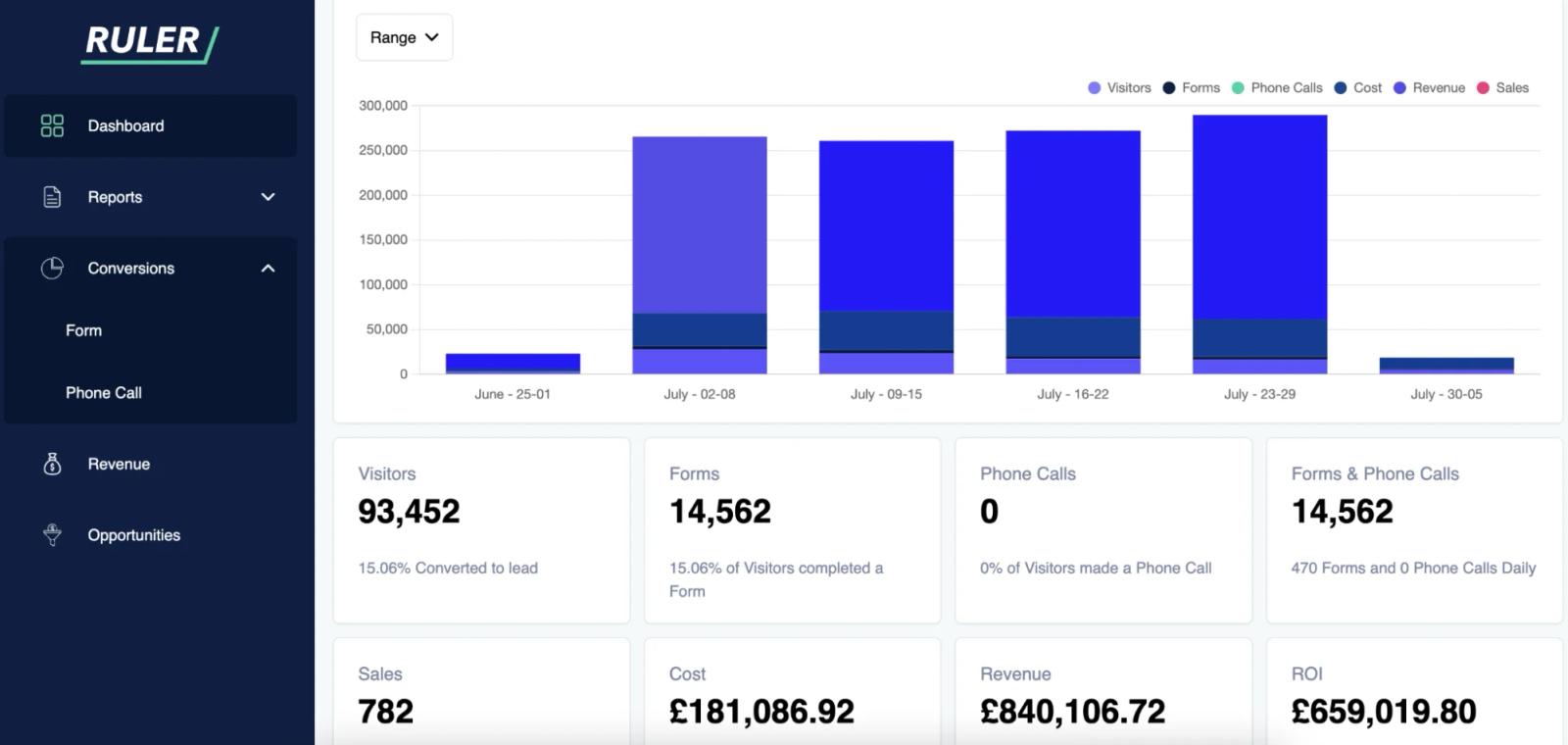
Table of contents
- Ruler Analytics alternatives compared
- 1. SourceLoop
- Contract terms and pricing model
- What the tracking script captures
- Attribution models and conversion paths
- Contacts Hub and CRM sync
- Channel reporting and conversion sync
- Pricing
- Watch-outs
- 2. HockeyStack
- Key capabilities
- Watch-outs
- Pricing
- 3. Dreamdata
- Key capabilities
- Watch-outs
- Pricing
- 4. WhatConverts
- Key capabilities
- Watch-outs
- Pricing
- 5. CallTrackingMetrics
- Key capabilities
- Watch-outs
- Pricing
- 6. Wicked Reports
- Key capabilities
- Watch-outs
- Pricing
- 7. Adobe Marketo Measure (formerly Bizible)
- Key capabilities
- Watch-outs
- Pricing
- How to pick the right one
- Wrap-up
Ruler Analytics works.
It tracks calls, forms, and meetings, ties them back to a source, and pushes that attribution into your CRM. The reasons teams look around aren't usually about the product being broken.
They're cost, setup time, or specific gaps that show up once your funnel grows past a certain point.
Here are seven attribution platforms worth comparing against Ruler, starting with the one most teams should try first.
Ruler Analytics alternatives compared
| Tool | Starts at | Contract | Free trial | Meter | Call tracking | Ad conversion sync | Best fit |
|---|---|---|---|---|---|---|---|
 SourceLoop SourceLoop |
$49 / mo | Monthly | 7 days | Page views | Via CallRail and others | 7 platforms | Lead gen, SaaS and agencies |
 Ruler Analytics Ruler Analytics |
~$179 / mo | 12 months | No | Monthly visits | Yes | Google and Meta | Call-heavy funnels |
 HockeyStack HockeyStack |
$1,399 / mo | Annual | No | Contacts | No | Limited | Mid-market B2B with ABM |
 Dreamdata Dreamdata |
Free tier, then ~$750 / mo | Annual | Free tier | Contacts | No | Limited | Long B2B sales cycles |
 WhatConverts WhatConverts |
$30 / mo | Monthly | 14 days | Usage plus overage | Yes | Google and Meta | Agencies proving lead ROI |
 CallTrackingMetrics CallTrackingMetrics |
$79 / mo | Monthly | 14 days | Usage plus overage | Yes | Google and Meta | Agency call tracking at scale |
 CallRail CallRail |
$45 / mo | Monthly | 14 days | Minutes and numbers | Yes | Google only | The default pure call tracker |
 Wicked Reports Wicked Reports |
~$260 / mo | Annual | No | Contacts | No | Google and Meta | Subscription ecommerce |
1. SourceLoop
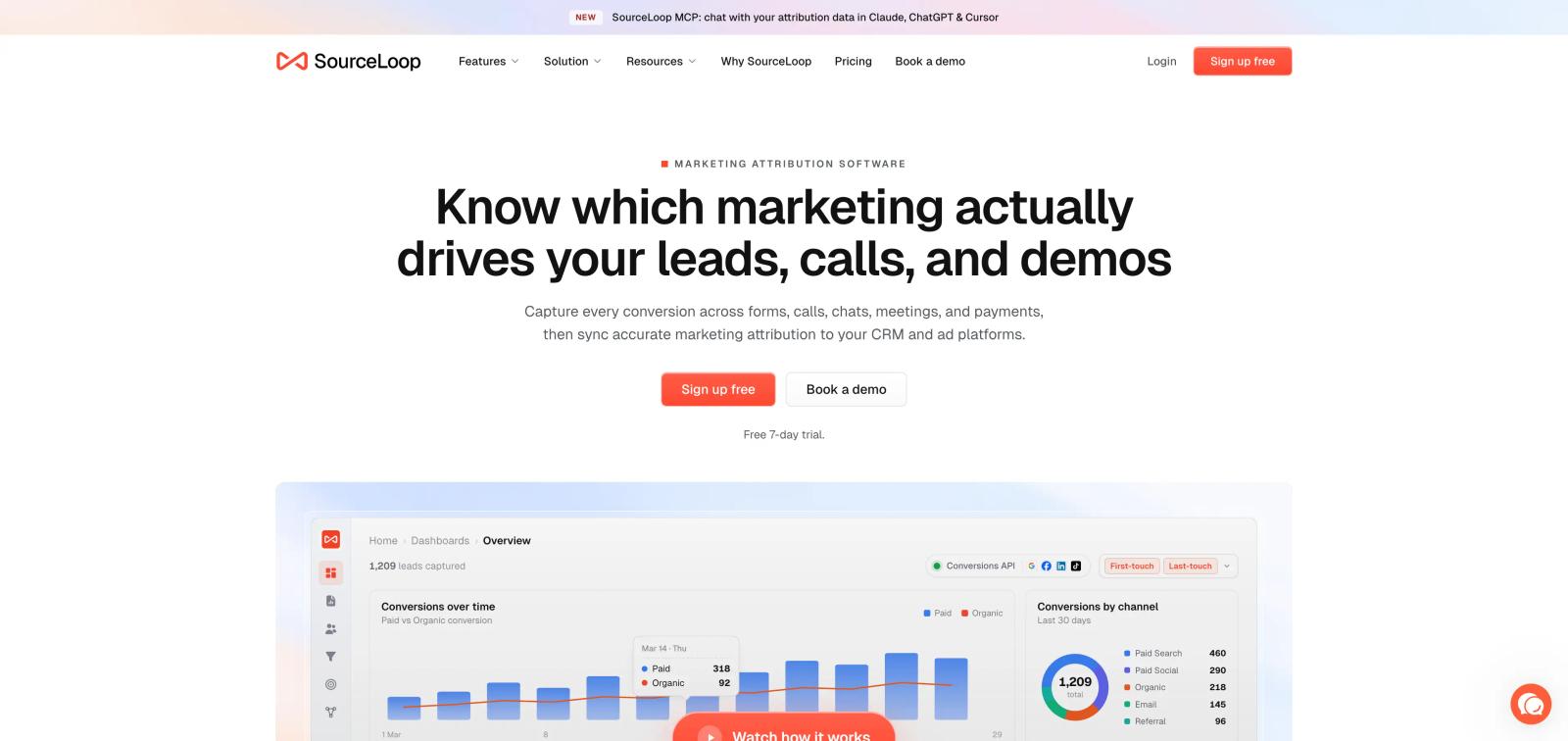
Ruler and SourceLoop do a similar job. Track the visitor, capture the form or call, tie it to the CRM, send the conversion back to the ad platforms.
The differences are commercial and structural rather than a long feature gap.
Contract terms and pricing model
Ruler runs on annual contracts, and the lack of cancellation flexibility is the complaint that comes up most. There is no free trial.
The meter is monthly visits. Entry plans cover around 5,000 a month, and the price climbs as traffic does.
SourceLoop bills monthly, meters conversions rather than visits, and gives you seven days with no card and no demo call.
If you are a content-led business, the meter is the part to check. Visits are the thing you are working to increase.
What the tracking script captures
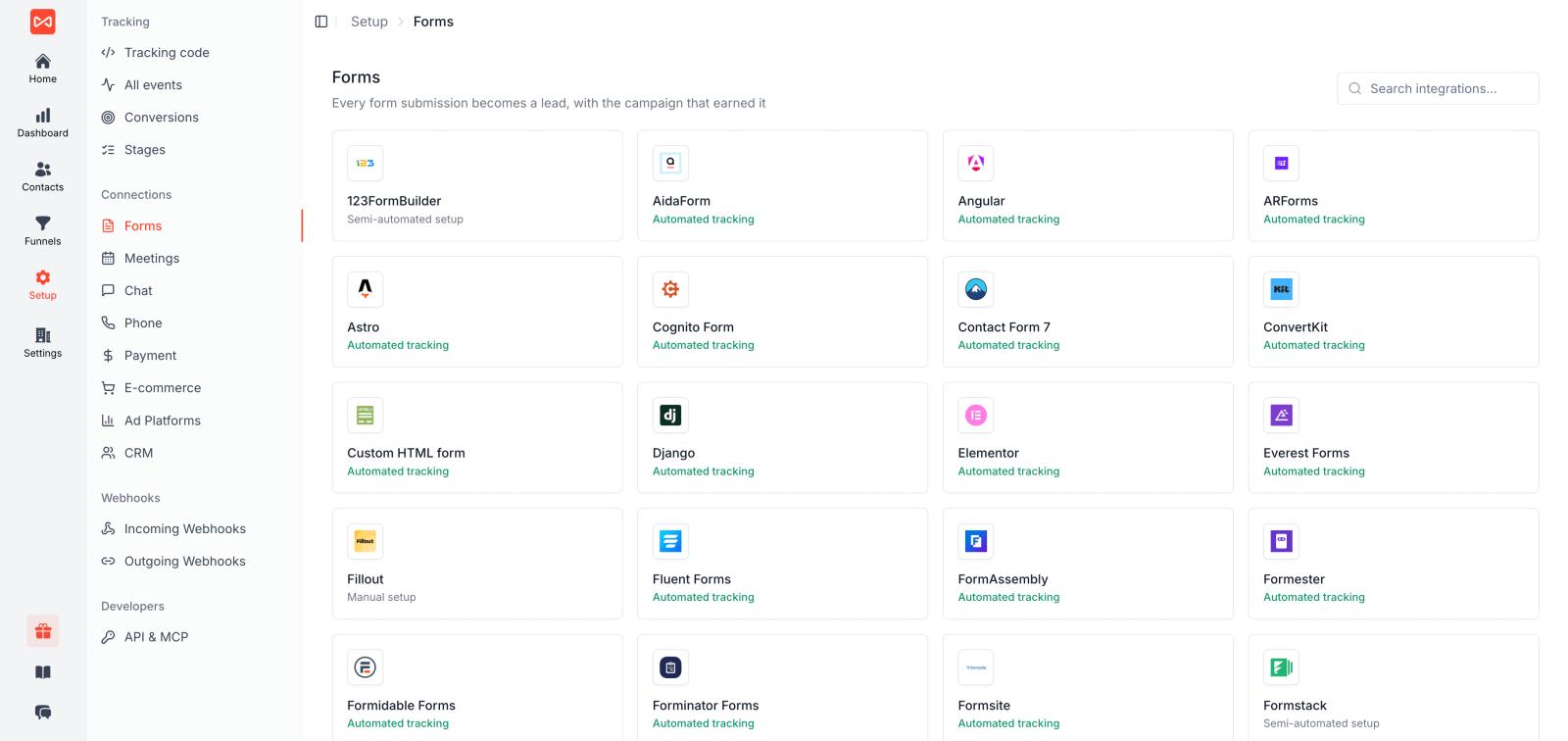
One script, and every visitor gets a first-party session with referrer, landing page, UTMs and the ad platform's click ID. Nine click IDs, read ahead of the referrer.
Around 70 lead tools are detected with no event code. Forms, meeting schedulers, chat widgets, call tracking platforms and payment providers.
Call tracking works through CallRail, CallTrackingMetrics and Invoca. SourceLoop matches the call back to the caller's browsing session, so the call inherits the full journey rather than arriving as an anonymous inbound.
Setup is same-day rather than a two to three week configuration.
Attribution models and conversion paths
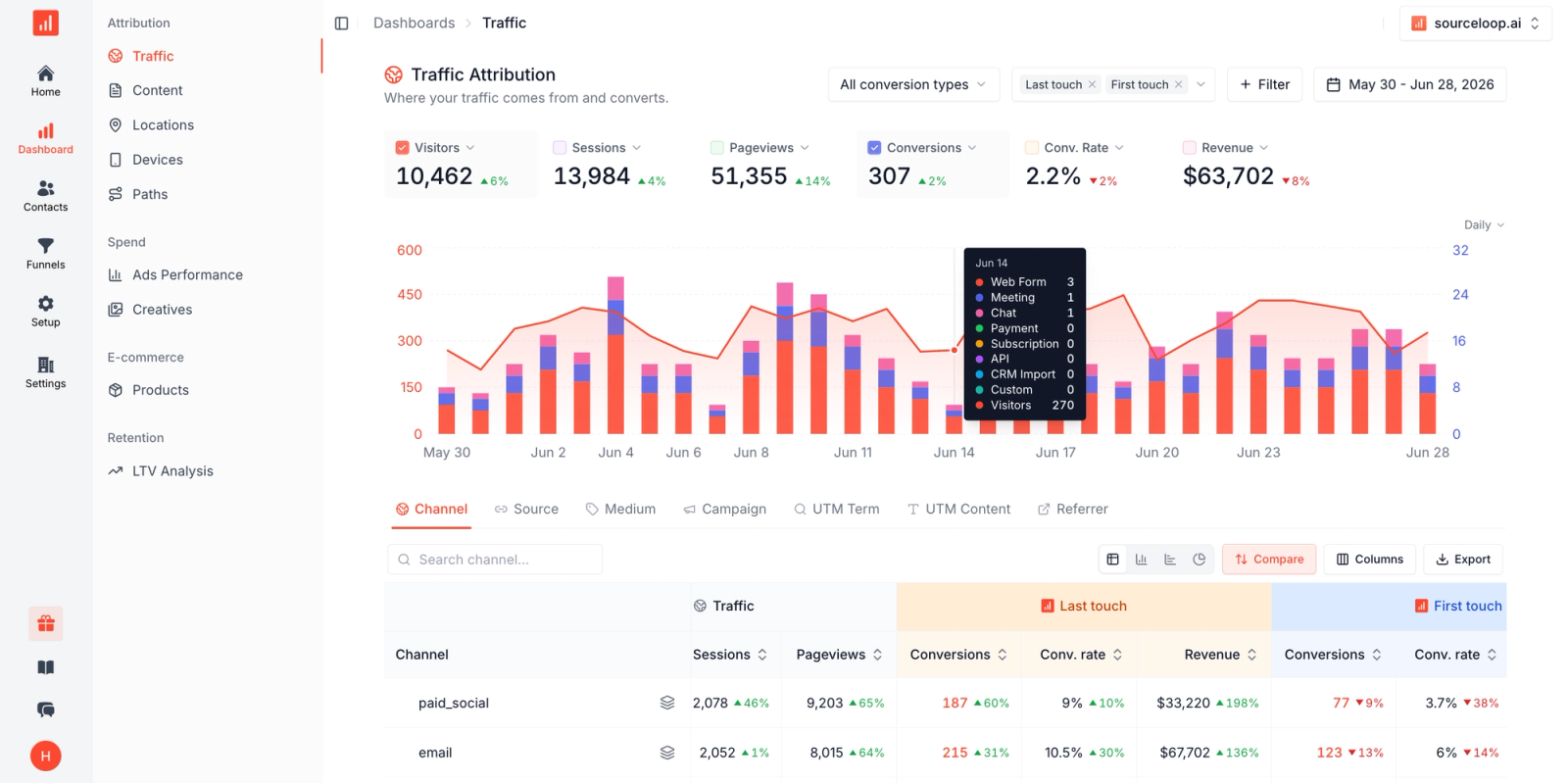
Seven attribution models on one stored journey, switchable from a dropdown.
The path view shows the actual sequences that end in conversion, with a toggle to collapse repeat touches so you can separate the structural path from raw frequency.
Contacts Hub and CRM sync
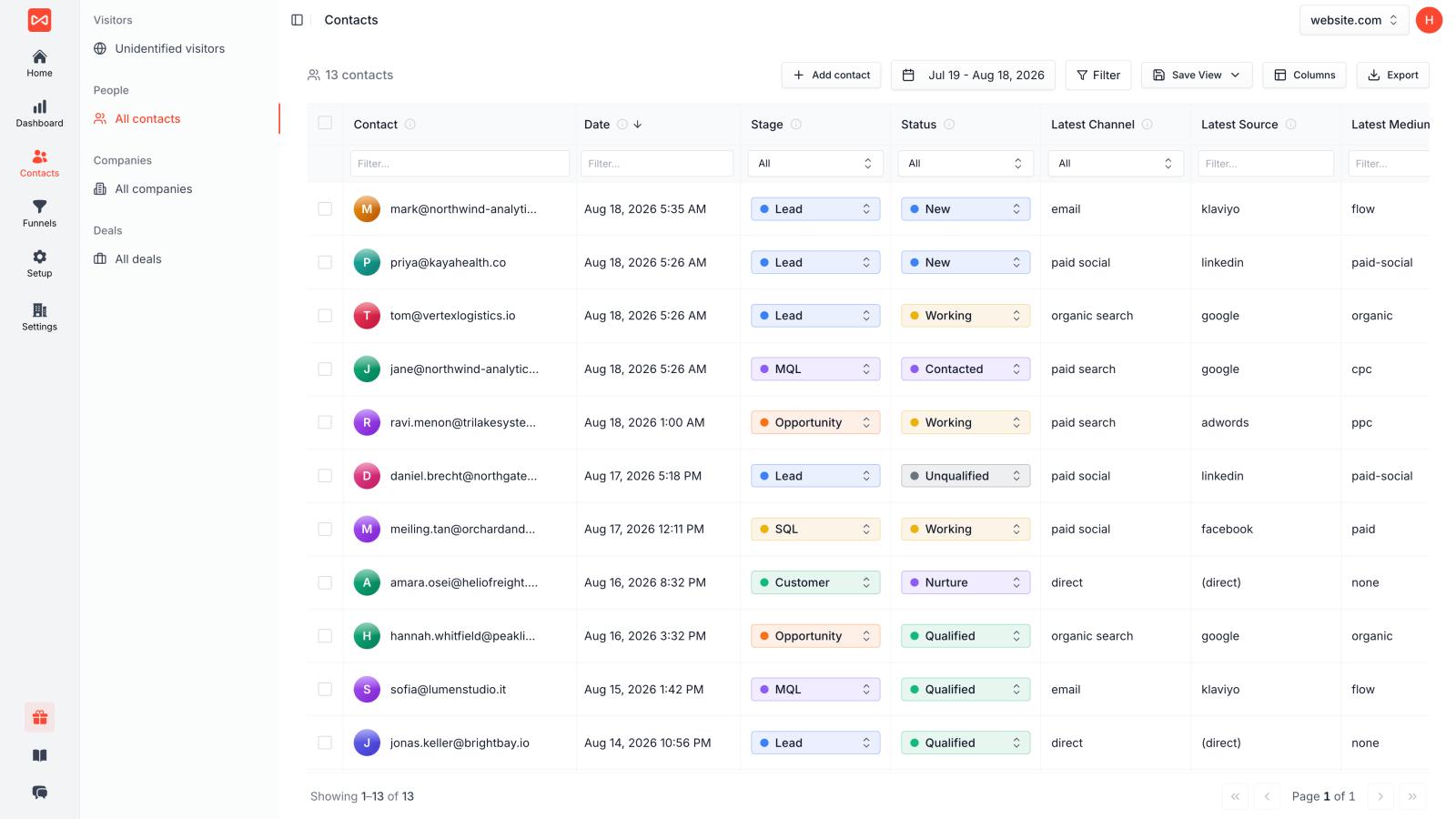
One row per real person after identity stitching, with first and last touch source, campaign, CRM status and booked revenue.
Open a row for the session-by-session journey behind it. Contacts roll up by company once someone identifies themselves.
CRM sync runs both ways with HubSpot, Salesforce, Pipedrive and Zoho.
Channel reporting and conversion sync
Connect Google, Meta, LinkedIn, TikTok and Microsoft and spend joins the journeys. Cost per qualified lead and revenue per campaign become columns.
Dashboards are custom-built rather than fixed, and there is a funnel builder for measuring drop-off between your own stages.
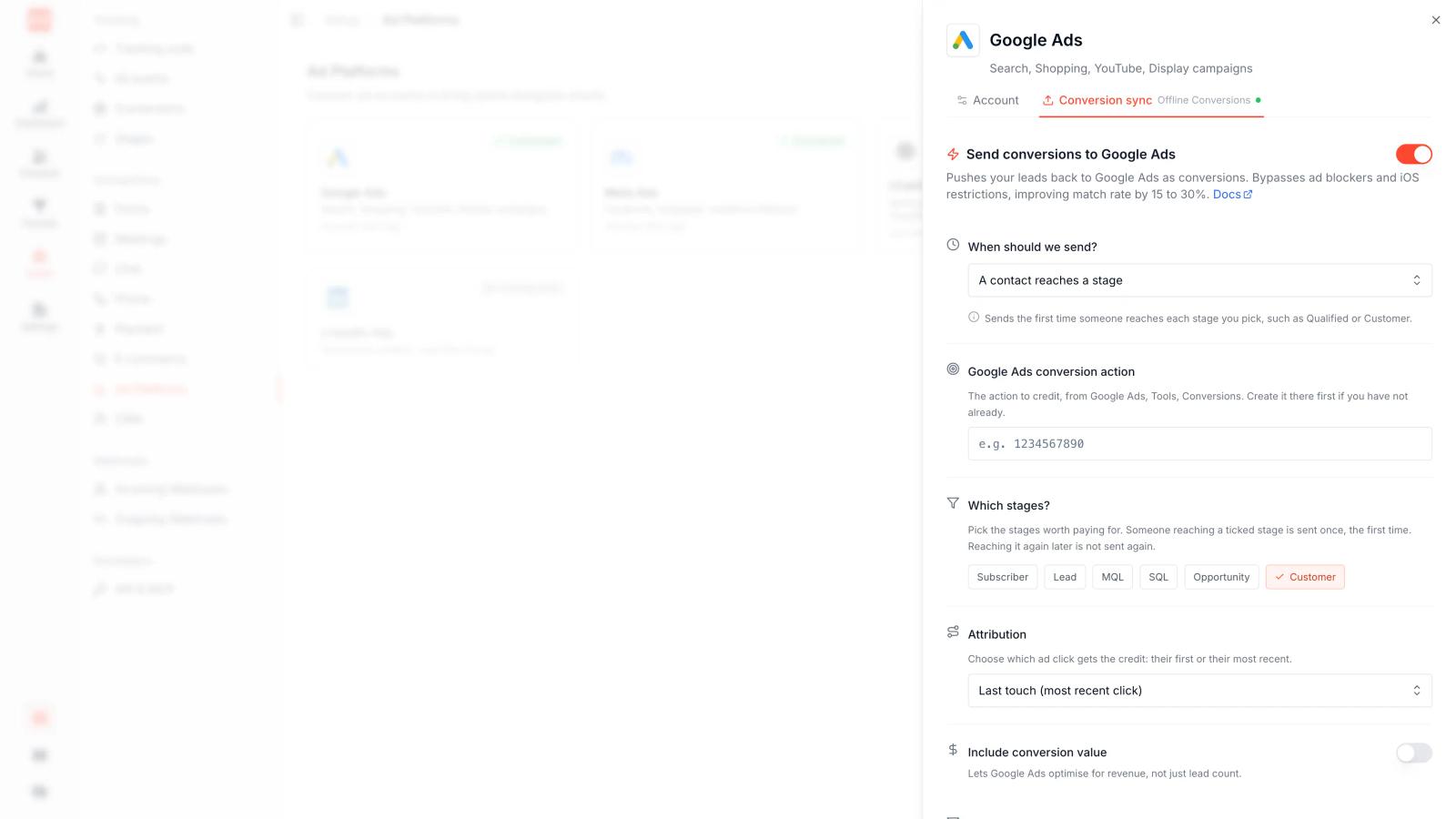
Conversions push back server-side to seven ad platforms, filtered per event and valued from your CRM's quote or realised figure.
Pricing
- Essential: $49 / month, 30k page views
- Professional: $99 / month, 100k page views
- Agency: $249 / month
Monthly billing, 7-day trial, no card.
Watch-outs
No anonymous account identification, so account rollup needs a captured email first.
No marketing mix modelling or incrementality testing.
Tracked conversions are unlimited on every plan, but the entry tier covers 30k page views a month, so a high-traffic site starts at Professional.
Ruler's integration list is longer if you need something obscure wired up without writing a webhook.
Best for: Lead-gen, SaaS and agency teams that want lead source plus the full journey without an annual commitment. Create a free SourceLoop account.
2. HockeyStack
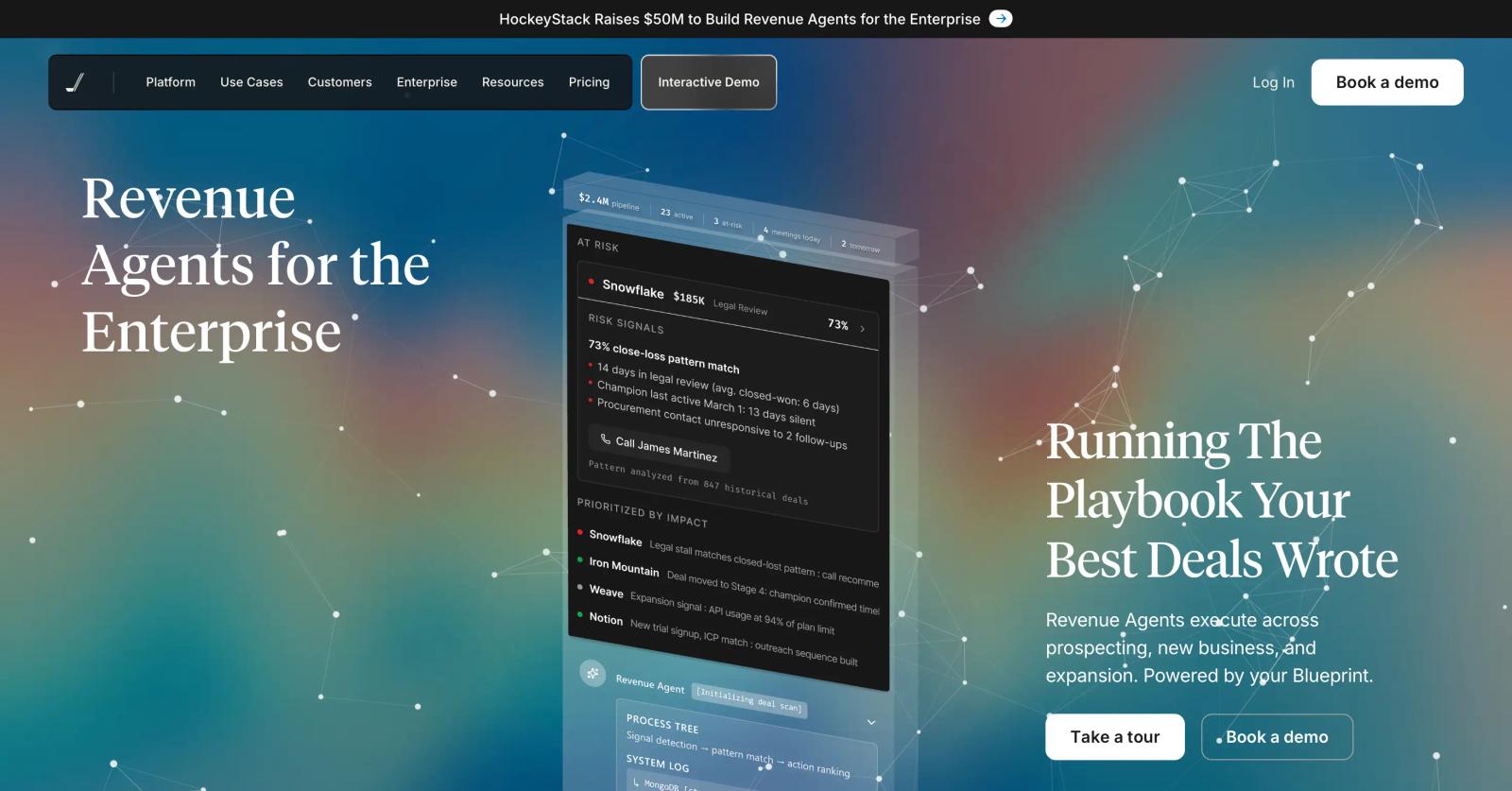
HockeyStack started as account-based analytics for B2B SaaS and grew into one of the more complete multi-touch attribution platforms in that segment. The pitch is depth.
Key capabilities
- Account-level journeys with stage, deal size, and ICP segmentation
- Native HubSpot and Marketo, warehouse-grade query speed
- AI assistant ("Odin") that produces real charts and summaries, not generic explanations
- Multi-touch and pipeline-weighted attribution
The dashboards are the real differentiator. You can slice journeys by stage, by deal size, by ICP segment, by source-of-influence. Queries return in under a second on most enterprise data sets.
The AI is one of the few I've seen that does more than rephrase what's on the dashboard. Asking "which campaigns drove enterprise pipeline last quarter" returns a real chart and a written summary. Not a hallucination.
Watch-outs
It's expensive. The Pro plan starts around $1,000 per month at low contact volumes. Enterprise can reach $50,000 a year for mid-market accounts.
It's also designed for B2B SaaS specifically. If you run a lead-gen funnel with calls and meetings, HockeyStack will work. You'll just pay for capabilities you don't need.
Pricing
Pro from ~$1,000 per month. Enterprise custom (typically $25k to $60k annually).
Best for: B2B SaaS marketing teams running multi-touch and ABM with serious data volume.
3. Dreamdata
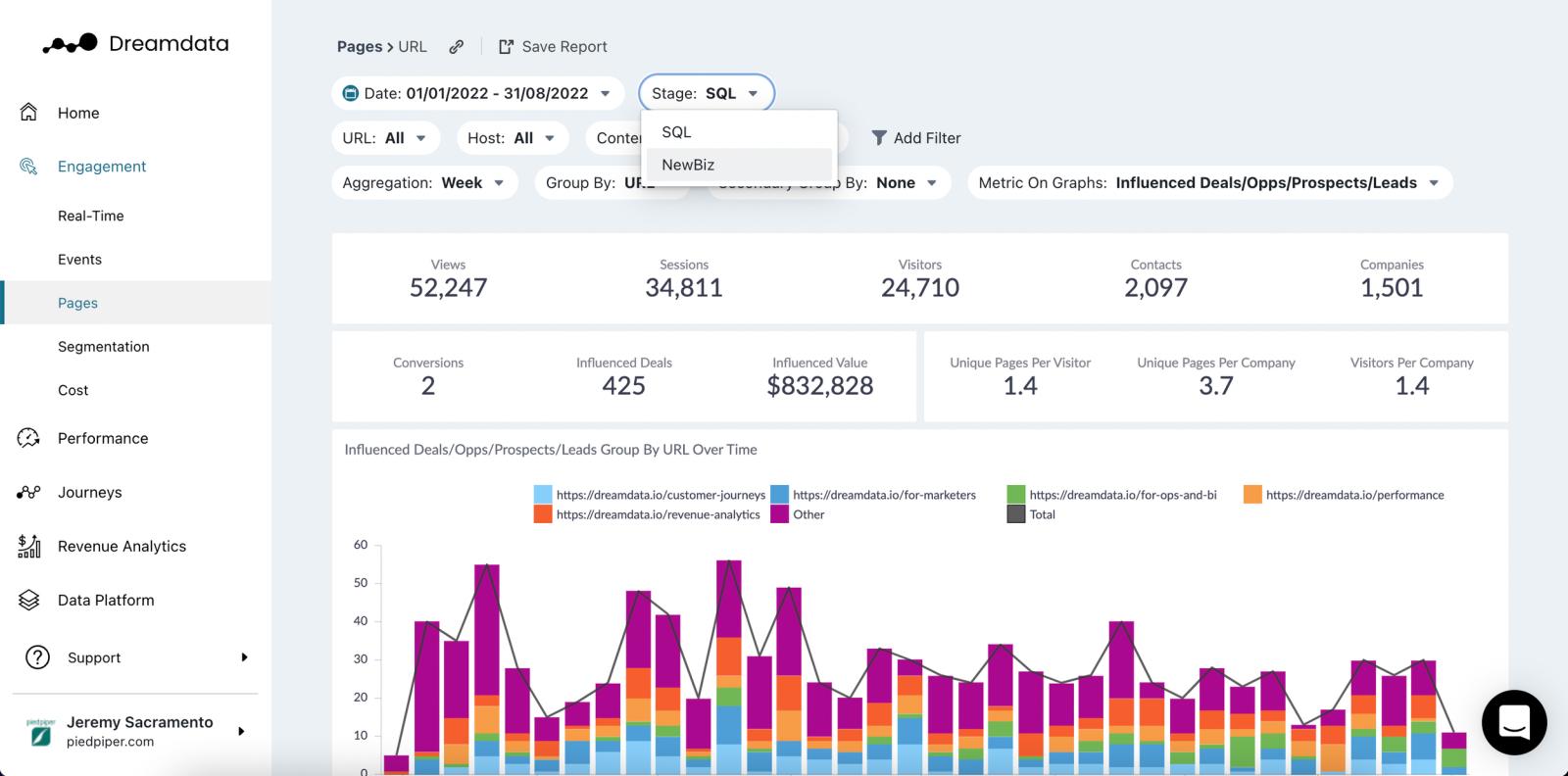
Dreamdata is a B2B revenue attribution platform with an unusual angle: revenue, not conversions, is treated as the source of truth.
Every contact, account, and deal gets tied back to the marketing touches that influenced it. Models respect deal size and stage.
Key capabilities
- Deepest Salesforce integration in this list, including pipeline movement reads and writes
- Free tier that's actually usable for a pilot
- Reverse-ETL friendly, plays well with warehouse stacks
- Weighted attribution that rewards closed-won deals over MQLs
Salesforce integration is the deepest in this list. Dreamdata reads stages, opportunity amounts, and pipeline movement in near real time, then writes attribution data back as custom fields.
For B2B teams with 6-month-plus sales cycles, this is the difference between guessing channel ROI and actually proving it.
Watch-outs
Setup needs a Salesforce admin. The data model is rich, which means a week of tuning what counts as an "influence" before the dashboards make sense. If your sales cycle is short or your CRM is messy, the value compounds slowly.
Pricing
Free for very low volumes. Team plan starts around $999/month. Business runs $2k+/month. Enterprise is custom.
Best for: B2B SaaS and services with longer sales cycles, where revenue (not lead count) is the metric that matters.
4. WhatConverts
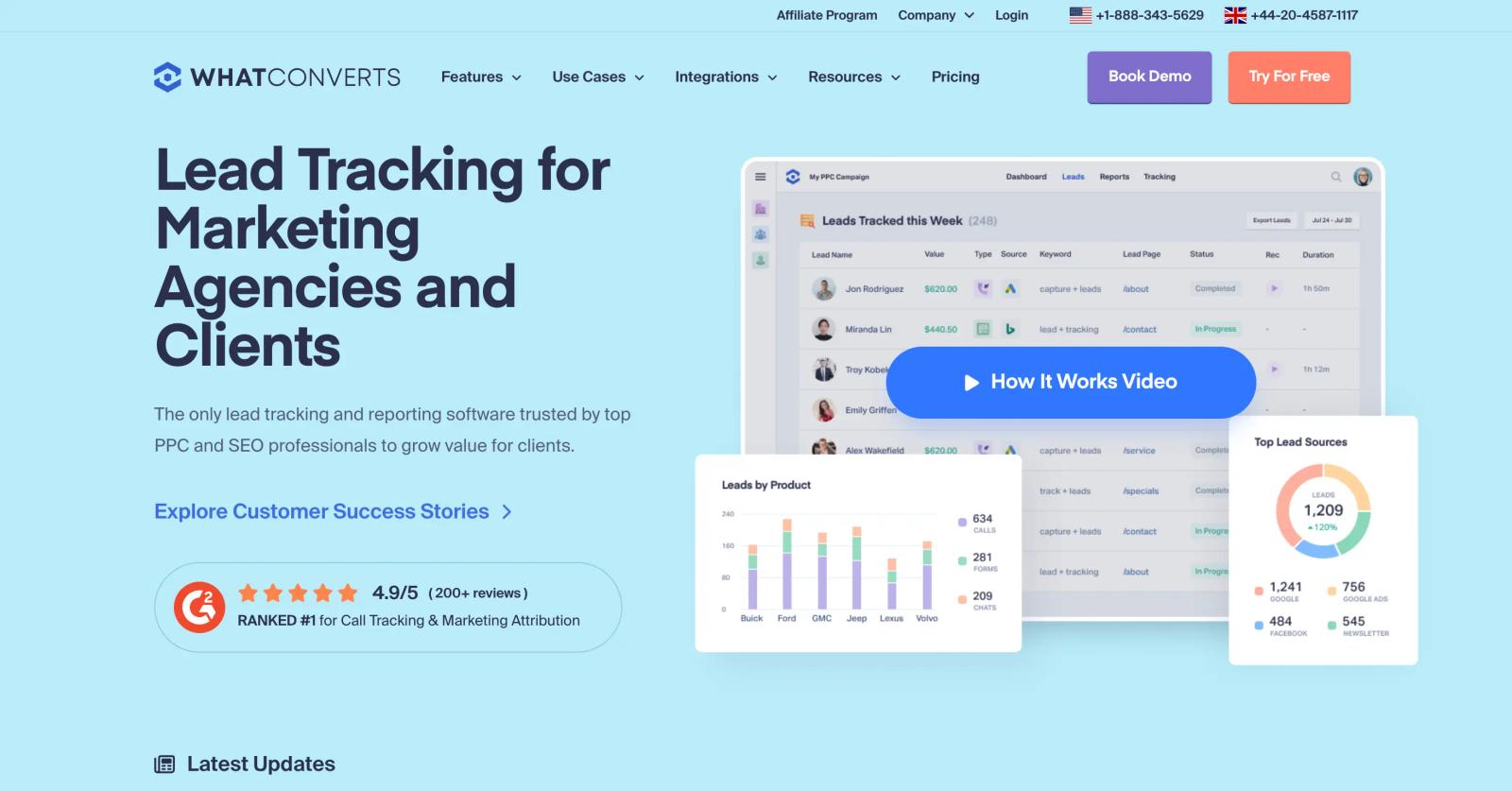
WhatConverts is the lead-gen agency favorite. It captures forms, calls, chats, and (more recently) e-commerce events. Built-in lead manager lets agencies hand reporting access to clients without exposing the rest of their stack.
Key capabilities
- Multi-client account architecture (run 30 clients without rebuilding the reporting layer)
- Mature call tracking with dynamic number insertion
- Form, chat, and e-com event capture
- Lead-volume-based pricing that scales fairly
If you run a marketing agency managing 30 clients, WhatConverts lets each client see their own leads and attribution without you rebuilding the reporting. Pricing scales by lead volume, which feels fair.
Watch-outs
It's a lead capture and routing tool first, attribution second. If your bar is "show me weighted multi-touch attribution by deal size," WhatConverts gets you halfway there.
The reporting is more about lead volume by source than revenue by campaign.
Pricing
From ~$30/month for solo accounts up to $200+/month for agency tiers.
Best for: Agencies, freelancers, and lead-gen businesses where calls are a meaningful part of the funnel.
5. CallTrackingMetrics
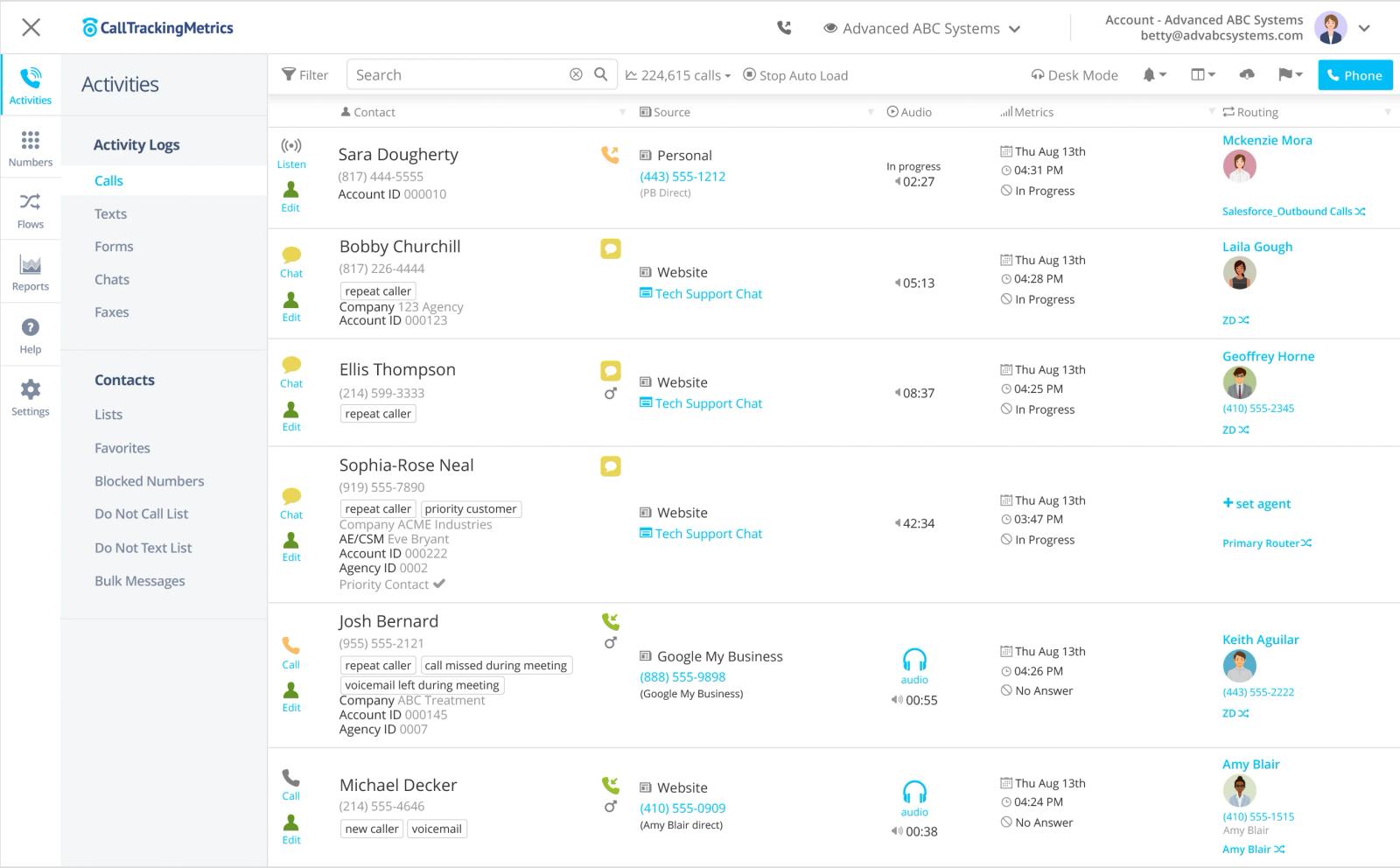
If most of your conversions happen on the phone (home services, healthcare, legal, professional services), call tracking is the spine of your stack. CallTrackingMetrics is one of the most complete tools in that category.
Key capabilities
- Dynamic number insertion (DNI) by source
- Call recording, transcription, and conversation analytics
- Form and chat layers that complement calls
- HubSpot and Salesforce integrations that push call data to the right contact and opportunity
Watch-outs
If forms and meetings are most of your funnel, you're paying for call infrastructure you don't really need. Reporting on web-only conversions is thinner than what you'd get out of HockeyStack or even SourceLoop.
Pricing
From around $45/month. Up to $300/month for higher call volumes. Enterprise quoted on usage.
Best for: Service businesses where the phone is the primary conversion event.
6. Wicked Reports
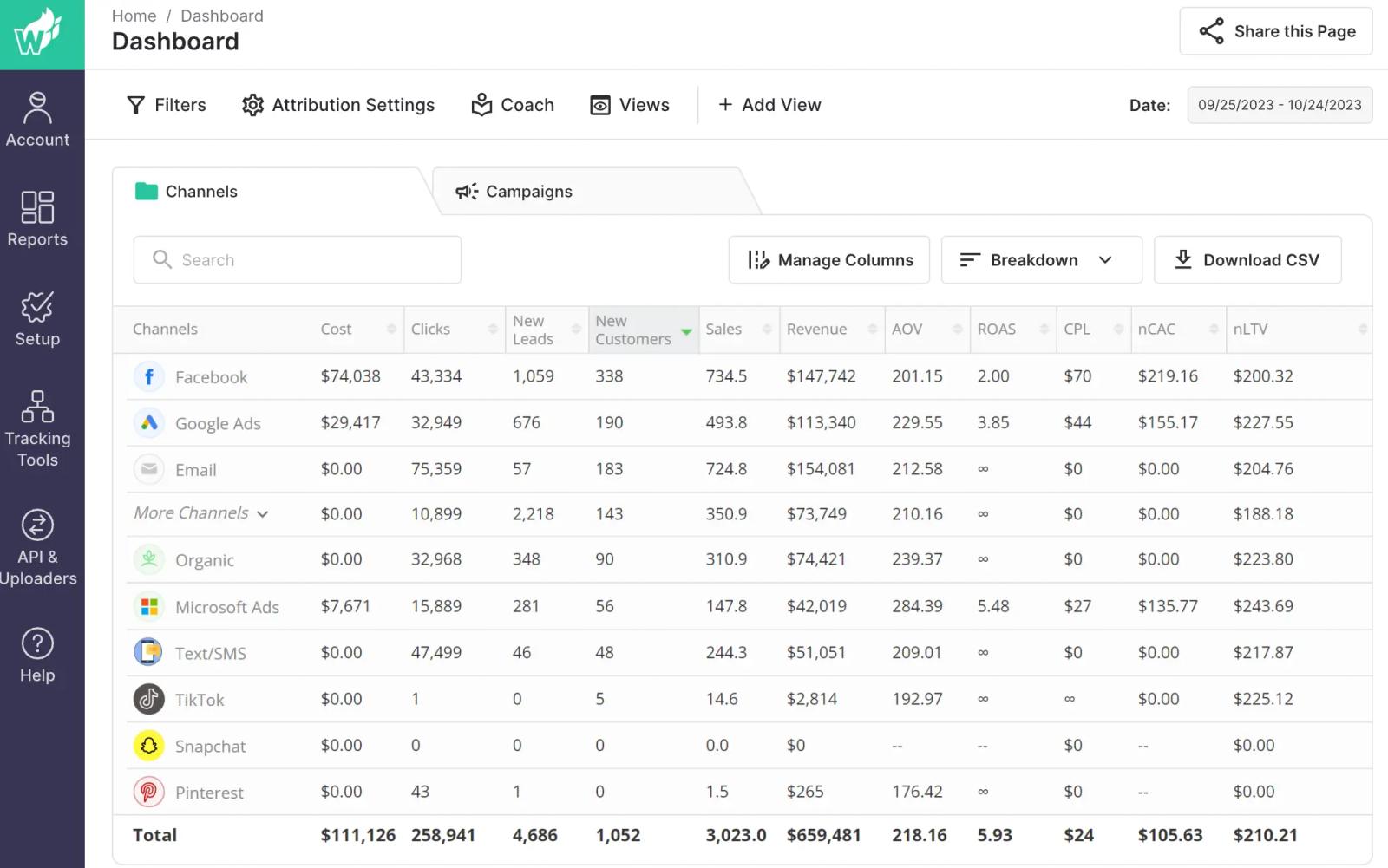
Wicked Reports is built specifically for DTC e-commerce and info-product brands. It pulls from Shopify, WooCommerce, Klaviyo, Meta, Google Ads, and the rest of the e-com stack. Output: customer-LTV-by-channel attribution that ad attribution alone can't produce.
Key capabilities
- Customer-LTV-by-channel attribution (not just first-purchase)
- Shopify, WooCommerce, Klaviyo, Meta, Google Ads native integrations
- Multi-touch with revenue weighting
- Repeat-purchase modeling
The customer-LTV layer is what makes it worth the price. Most e-com brands optimize ads for first purchase. Wicked attributes the full lifetime value back to the original acquisition channel.
That often flips the answer to "which channel is best?". Meta might bring in cheap first orders while email brings in cheap repeat orders. Wicked makes that visible.
Watch-outs
Pricing is steep (north of $1,000 a month for most stores), and setup is a real project. If your store does less than $1M ARR, the ROI is questionable.
The interface is also dense, which is a polite way of saying it takes a couple of weeks to feel comfortable.
Pricing
From ~$1,000/month. Scales by tracked revenue.
Best for: DTC and info-product brands doing $1M+ in revenue who need LTV-aware attribution.
7. Adobe Marketo Measure (formerly Bizible)
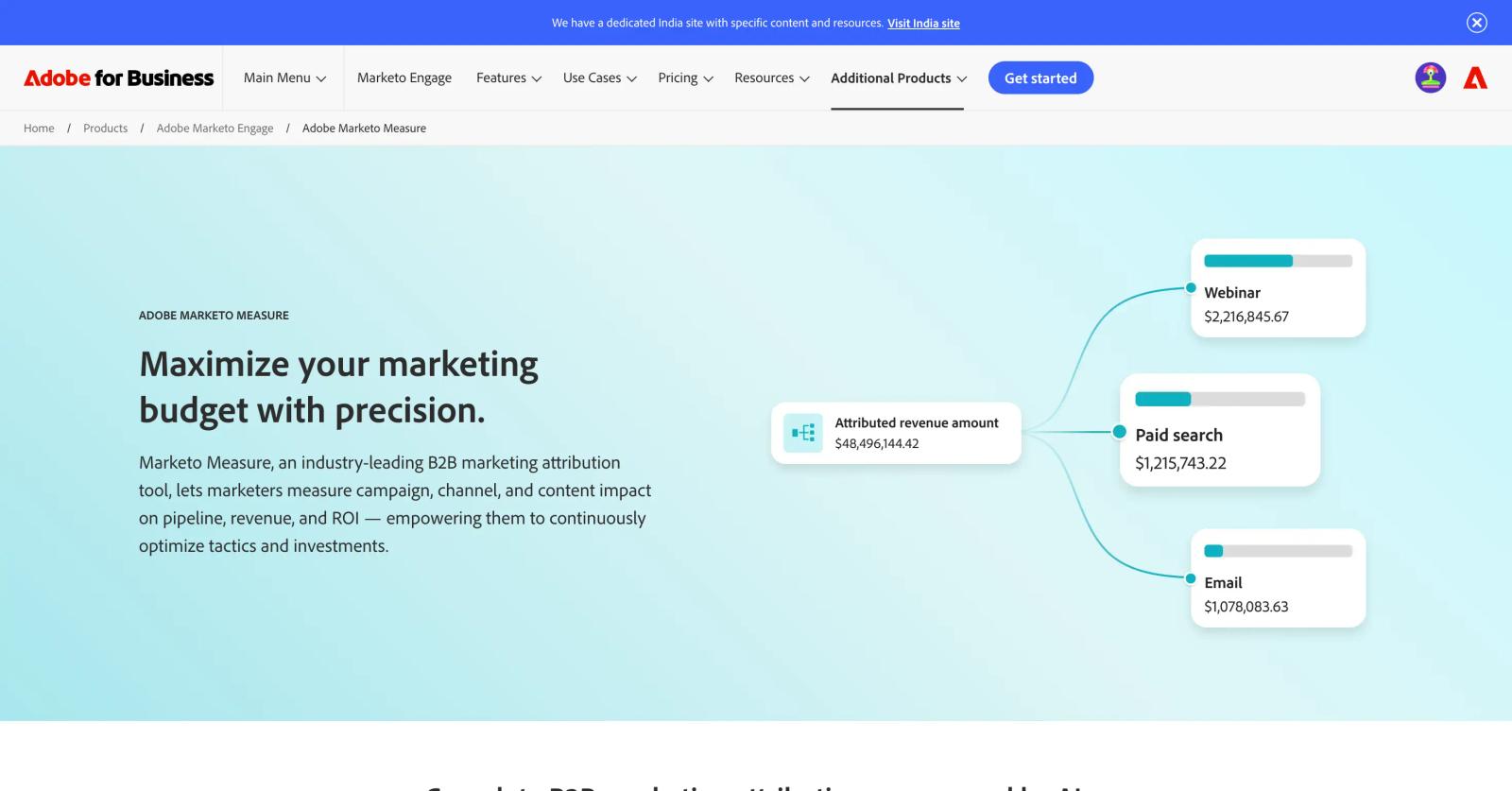
Marketo Measure is the enterprise B2B option, deeply tied to Adobe's stack and Salesforce. It's what large companies pick when "the right answer" matters more than time-to-value or platform fees.
Key capabilities
- Multi-touch revenue attribution at enterprise scale
- Native Salesforce and Marketo integration
- Custom attribution models, audited by finance teams
- Deep Adobe Experience Cloud connectivity
If you need to show channel ROI in a board meeting and you need it audited, Marketo Measure has the credibility.
Watch-outs
Implementation is real. Most companies budget 60 to 90 days, a Salesforce admin, and a Marketo admin. Pricing is custom and rarely below $2,000 per month, often much higher.
Once you're in, you're tied to the broader Adobe stack to get the most out of it.
Pricing
Custom. Typically $2,000+ per month, often $40k+ annually for mid-market.
Best for: Enterprise B2B with mature ops teams, six-figure marketing budgets, and a real need for board-grade attribution.
How to pick the right one
Start with the funnel, not the feature list.
For most teams (lead gen, SaaS signups, e-commerce, agencies, anything under roughly $20k a month in marketing spend), the right move is to get attribution flowing into your CRM cheaply, then layer depth in later.
SourceLoop is built exactly for this case: $49 to $249 per month, set up in an hour, and you get the same multi-touch attribution and offline ad sync the enterprise tools charge thousands for.
Create a free SourceLoop account and you'll have lead source flowing into HubSpot or Salesforce by tomorrow.
The teams that should look elsewhere are clear:
- B2B SaaS running ABM with six- or seven-figure ARR motions hit the ceiling on account-level journeys. HockeyStack or Dreamdata pay off there.
- DTC and info-product brands doing $1M+ in revenue need LTV-by-channel that Wicked Reports does best.
- Enterprise B2B with auditable, board-grade attribution requirements need Marketo Measure.
- Service businesses where calls are 70%+ of the funnel need a call-first tool like CallTrackingMetrics.
If none of those apply to you, you're in the SourceLoop bucket. The trial costs nothing and the migration takes a day.
Wrap-up
Ruler is fine. The question isn't whether to leave Ruler. It's whether your funnel, your CRM, your sales motion, and your budget look like the funnel Ruler was built for. If they don't, one of the seven above probably does.
If you want to see how the lean end of this looks, start a free trial of SourceLoop. 7 days, no card, attribution flowing into your CRM by tomorrow.
Frequently asked questions
-
Is Ruler Analytics worth it?
Yes, for the right team. If you run lead gen, your reporting needs aren't enterprise-deep, and the $200 to $500 per month range is comfortable, Ruler does what it says. Teams switch when their volume grows past the included tier, when their attribution needs grow past last-touch, or when they need something Ruler doesn't ship (e-com LTV, ABM, AI-driven insights).
-
What's the cheapest Ruler Analytics alternative?
SourceLoop at $49/month and WhatConverts at around $30/month for solo plans are the lowest entry points. Both will get lead source flowing into your CRM. The right choice depends on whether your funnel skews to forms, calls, or both.
-
Does anything here integrate with HubSpot and Salesforce?
All seven do, in some form. The depth varies. SourceLoop and WhatConverts handle the standard "attach attribution to a contact and push it" flow well. Dreamdata, HockeyStack, and Marketo Measure go deeper, reading and writing pipeline-level data inside Salesforce. If you need attribution showing on opportunities and pipeline, the bottom three are the safer pick.
-
Can I migrate from Ruler easily?
Forms and calls migrate cleanly. The script changes, the form actions change, and the call routing rules need to be rebuilt. Historical data is the painful part. Most attribution platforms don't import historical visitor sessions, so you'll have a gap of a few months where the new tool's lookback window starts filling up. Plan for that and don't switch right before a board meeting.
-
Do these tools track offline conversions?
Most of them do, in different ways. SourceLoop, HockeyStack, Dreamdata, WhatConverts, and Marketo Measure can push offline conversions back to Google Ads, Meta CAPI, and LinkedIn Ads. Wicked Reports does the same for e-com platforms. CallTrackingMetrics handles the call-as-conversion case natively.



 Paid Social


