
7 Best Lifesight Alternatives in 2026: [Compared & Ranked]
Compare 7 Lifesight alternatives for marketing attribution. Honest reviews of Sourceloop, Triple Whale, Rockerbox, and more with pricing and use cases.
Table of contents
- Quick Comparison of the Best Lifesight Alternatives
- 1. Sourceloop, Best Lifesight Alternative for B2B SAAS and Lead-Based Businesses
- Why Sourceloop Works for Leads & B2B Attribution
- Sourceloop vs Lifesight
- 2. Triple Whale: Best Lifesight Alternative for Shopify and DTC Brands
- Why Triple Whale Works for Ecommerce Attribution
- Triple Whale vs Lifesight
- 3. Rockerbox: Best Lifesight Alternative for Multichannel Performance Teams
- Why Rockerbox Works for Performance Marketing
- Rockerbox vs Lifesight
- 4. SegmentStream: Best Lifesight Alternative for Enterprise Measurement and Optimization
- Why SegmentStream Works for Enterprise Marketing
- SegmentStream vs Lifesight
- 5. Attribution.app: Lifesight Alternative for Transparent B2B Attribution
- Why Attribution.app Works for Mid-Market B2B
- Attribution.app vs Lifesight
- 6. Dreamdata: Lifesight Alternative for B2B Account-Based Attribution
- Why Dreamdata Works for B2B SaaS
- Dreamdata vs Lifesight
- 7. Ruler Analytics: Lifesight Alternative for Lead-Gen and Call Tracking
- Why Ruler Analytics Works for Lead-Gen Businesses
- Ruler Analytics vs Lifesight
The best Lifesight alternative depends on your business model: **Sourceloop** leads for B2B SAAS and lead-based businesses, **Triple Whale** dominates Shopify ecommerce attribution, and **SegmentStream** serves enterprise teams needing unified measurement with automated optimization.
If you're switching from Lifesight because of pricing, implementation complexity, or a business model mismatch, one of these seven alternatives will fit better.
Quick Comparison of the Best Lifesight Alternatives
Compare the top Lifesight alternatives by attribution capabilities, use cases, pricing, implementation, and the type of marketing teams they’re best suited for.
| # | Tool | Pricing Model | Best For | Key Differentiator | Setup Complexity |
|---|---|---|---|---|---|
| 1 | SourceLoop | Transparent subscription | B2B SaaS, lead-gen, agencies | First-party tracking, CRM attribution, offline conversion sync | Low, usually self-serve |
| 2 | Triple Whale | $219/month Foundation plan | Shopify and DTC brands | First-party tracking, fast ecommerce insights | Low to moderate |
| 3 | Rockerbox | Quote-based | Multichannel performance teams | MTA + MMM + incrementality testing | Moderate, needs marketing ops |
| 4 | SegmentStream | Quote-based, $100K+ annual | Enterprise, $100K+/month spend | AI-driven budget optimization, warehouse-native | High, requires data team |
| 5 | Attribution.app | From $199/month | Small to mid-market B2B | Deterministic click tracking, transparent pricing | Moderate |
| 6 | Dreamdata | Quote-based | B2B SaaS, account-based marketing | Account-level attribution, journey mapping | Moderate to high |
| 7 | Ruler Analytics | From £199/month | Lead-gen businesses | Call tracking, closed-loop attribution | Moderate |
1. Sourceloop, Best Lifesight Alternative for B2B SAAS and Lead-Based Businesses
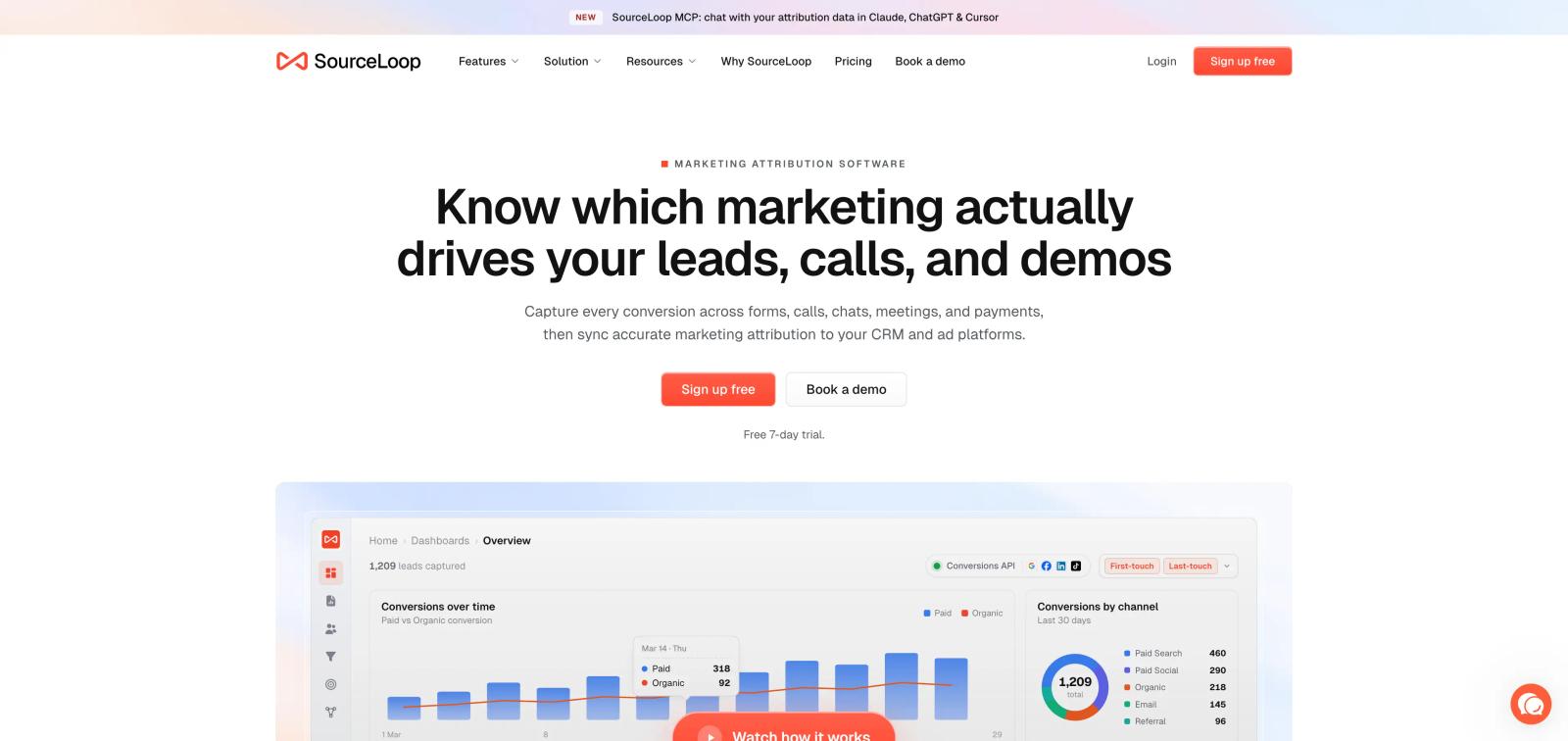
Sourceloop is lead source tracking and marketing attribution software built for businesses that sell through forms, demo requests, and booked calls.
Unlike Lifesight's aggregate measurement focus, Sourceloop connects every lead and customer to the campaigns, channels, keywords, landing pages, and touchpoints that influenced them, directly inside your CRM.
Why Sourceloop Works for Leads & B2B Attribution
- CRM attribution written into the record. Sourceloop creates custom attribution fields in HubSpot, Pipedrive, or Salesforce and populates them automatically: first touch and latest touch channel, source, medium, campaign, term, content, landing page, plus a lead score. Your sales reps see the marketing origin inside the contact record they already work in, without logging into another dashboard.
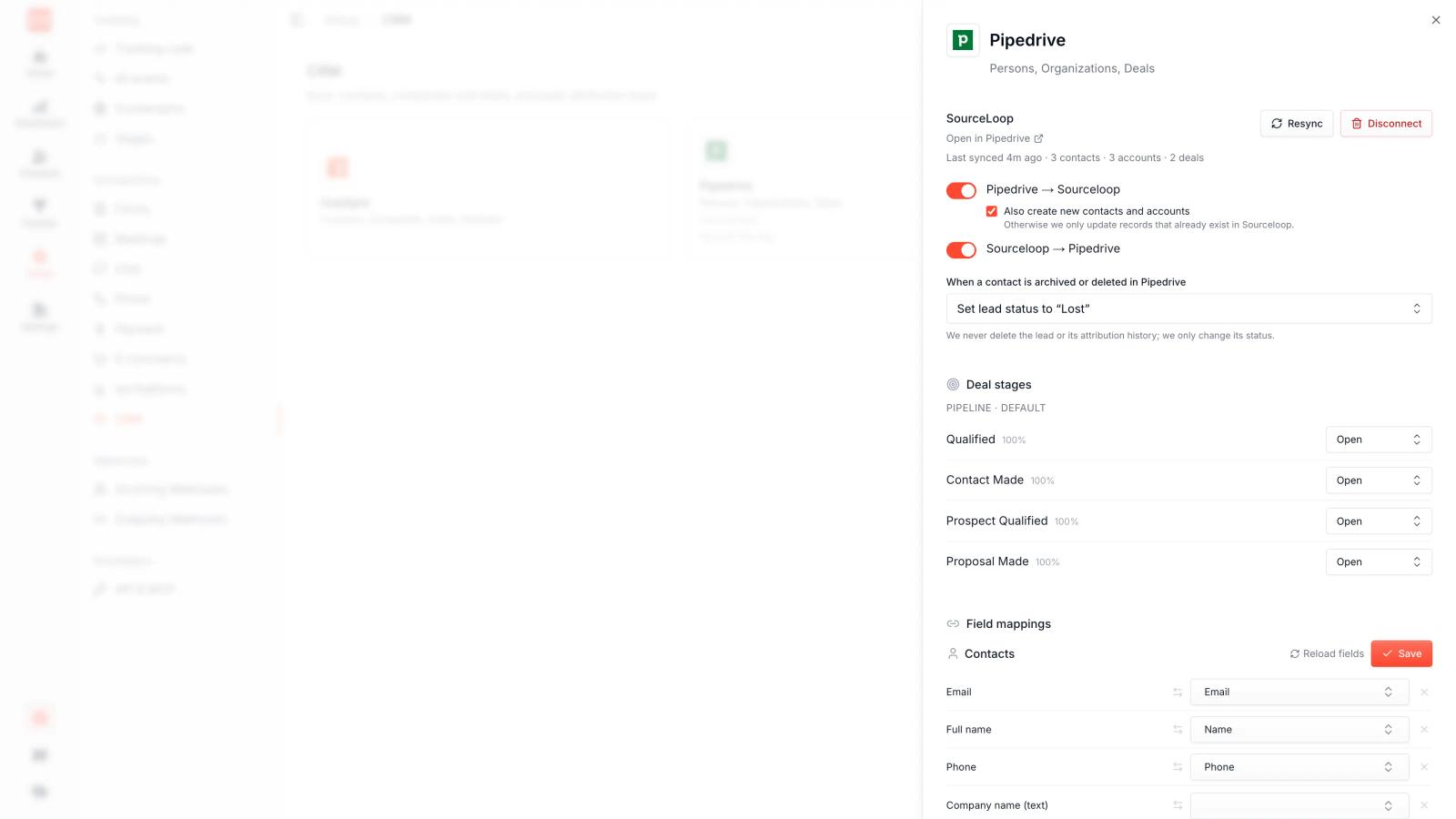
- Full journey tracking, not just first or last click. Every session, referrer, ad, page view, and event is captured in order, from first anonymous visit to conversion. You see the complete path per lead rather than choosing between single-touch models.
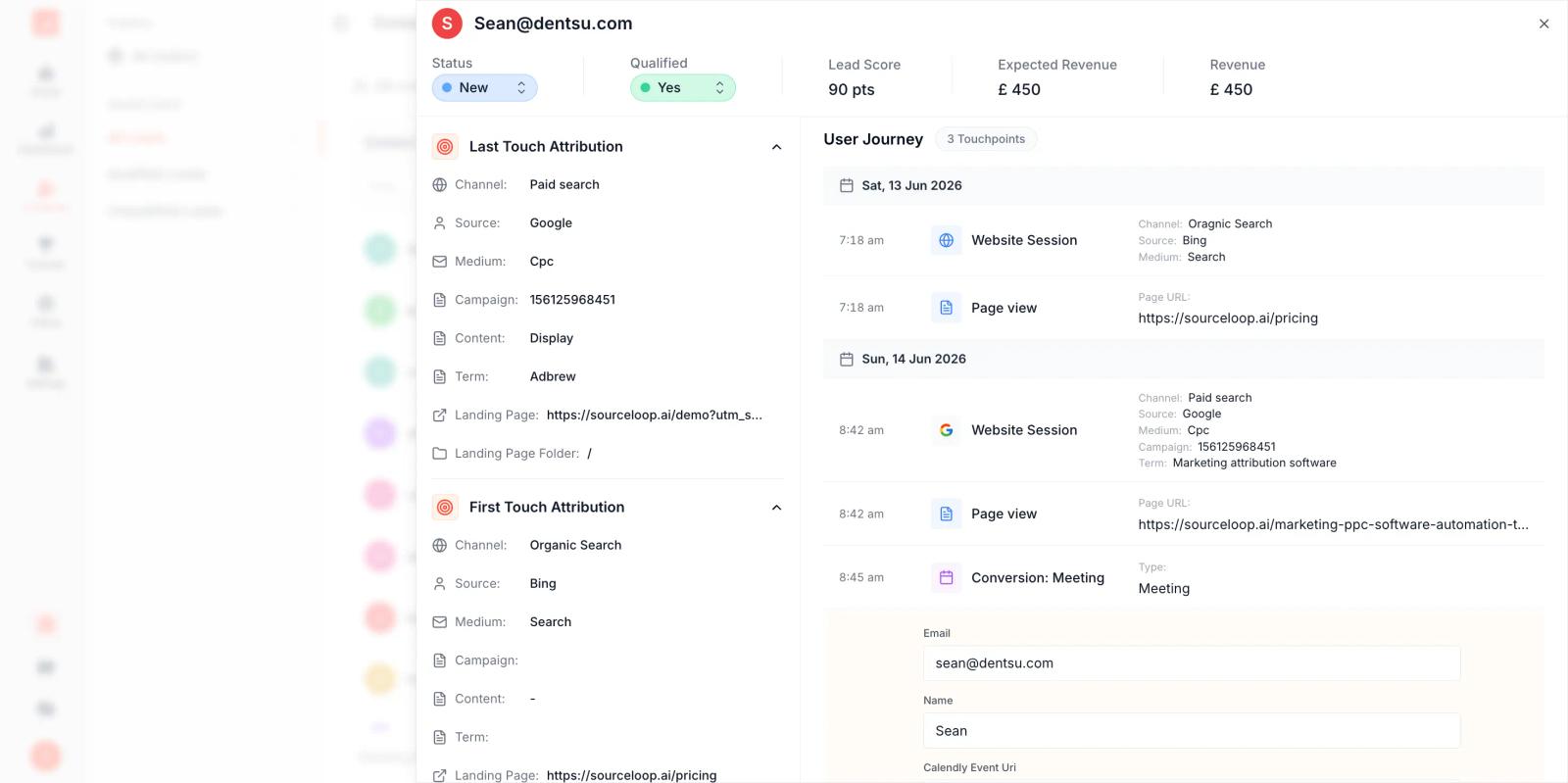
- Revenue closes the loop. Deal values and won/lost status sync back from your CRM, and Shopify order revenue arrives by webhook. Learn more about how to track lead source across every channel in our comprehensive guide. You report on revenue and customer acquisition cost, not just form fills.
- Offline conversion sync for Google Ads and Meta. Qualified leads and closed revenue push back to the ad platforms as offline conversions, so automated bidding optimizes toward real customers instead of raw form submissions.
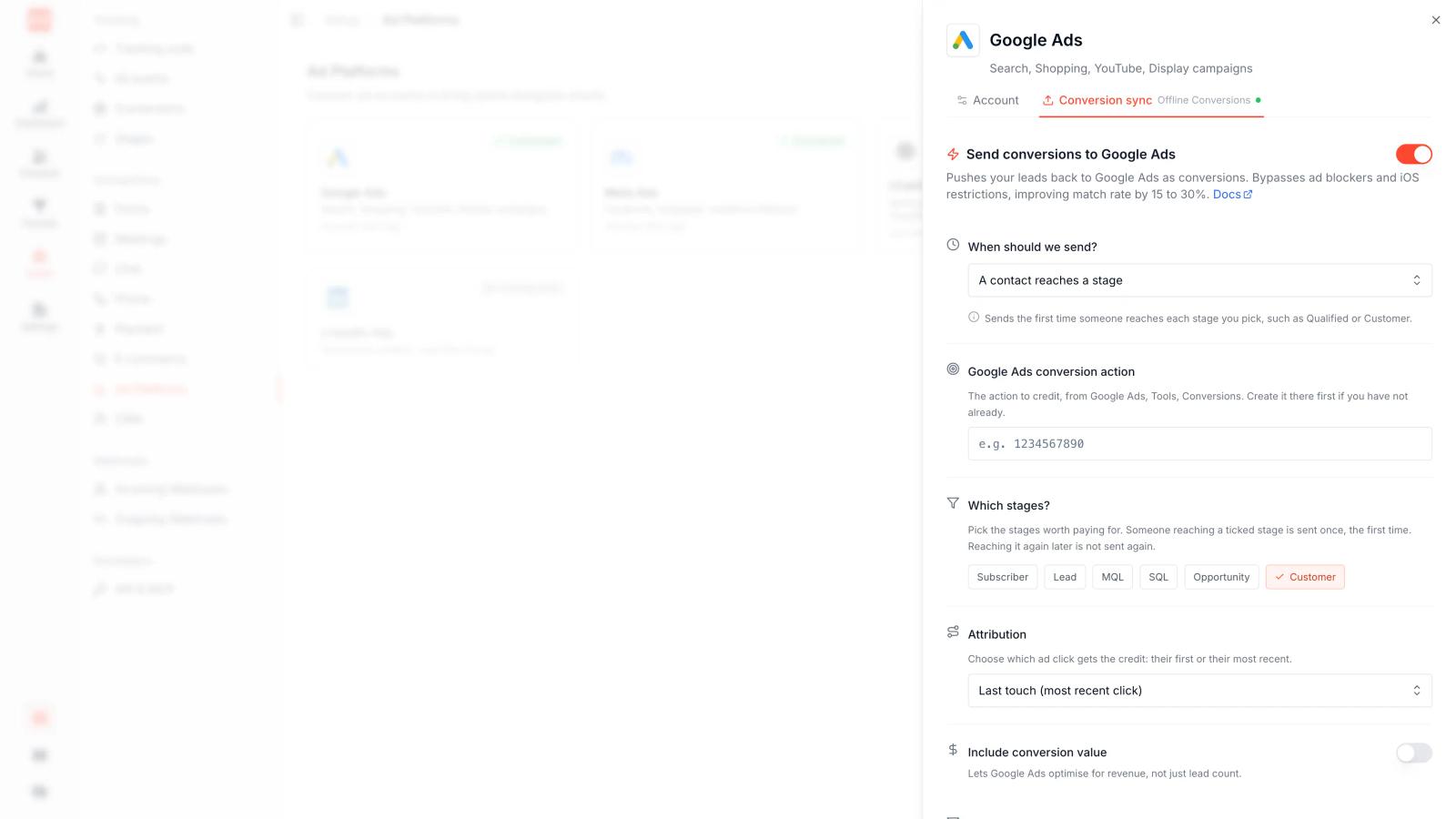
- First-party tracking that survives privacy changes. Sourceloop runs on your own domain with optional fully cookieless mode for GDPR-sensitive teams, similar to other cookieless tracking solutions built for privacy-first attribution. Attribution persists through iOS and browser tracking restrictions.
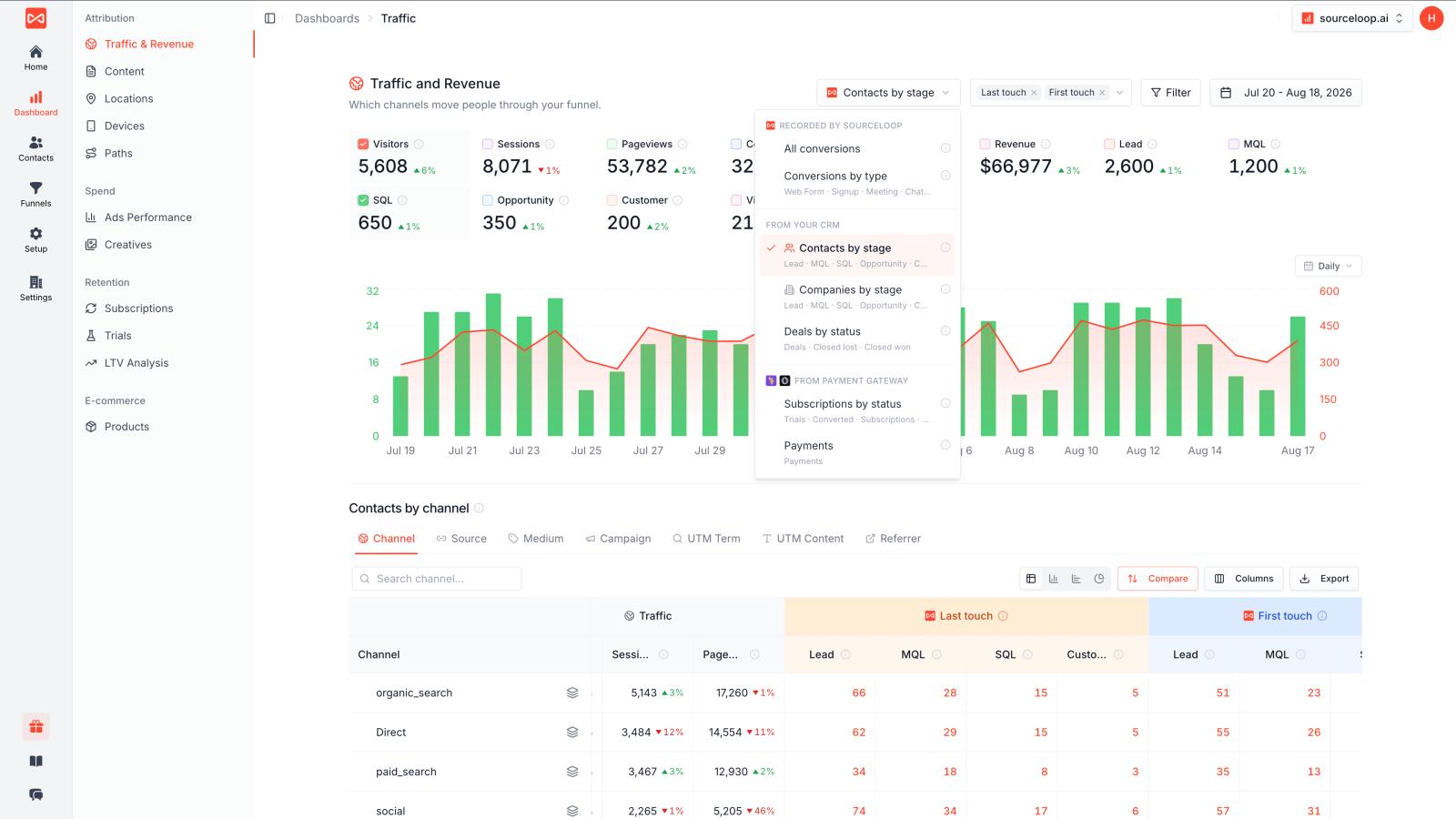
Sourceloop vs Lifesight
Feature | Sourceloop | Lifesight
Primary use case | B2B lead attribution, CRM integration, Ads Sync | Enterprise unified measurement
Attribution granularity | Lead-level journey tracking | Aggregate channel modeling
CRM integration depth | Native fields, two-way sync | Data export and import
Offline conversion sync | Google Ads, Meta Ads, OpenAI Ads | Multiple platforms via API
Setup time | 10-15 min, mostly self-serve | Weeks to months, requires analytics team
Pricing transparency | Starting at $49/mo | Quote-based
Sourceloop fits B2B SaaS, agencies, consultancies, healthcare practices, legal and financial services, and any business whose sales cycle outlives the click. Customer reviews consistently highlight the platform's strengths in CRM integration and the ease of setup compared to enterprise alternatives.
If your revenue is decided by humans rather than a checkout button, Sourceloop's lead-level attribution answers the questions Lifesight's aggregate models don't address.
Pricing: Starts at $49/mo for 30k visitors
2. Triple Whale: Best Lifesight Alternative for Shopify and DTC Brands
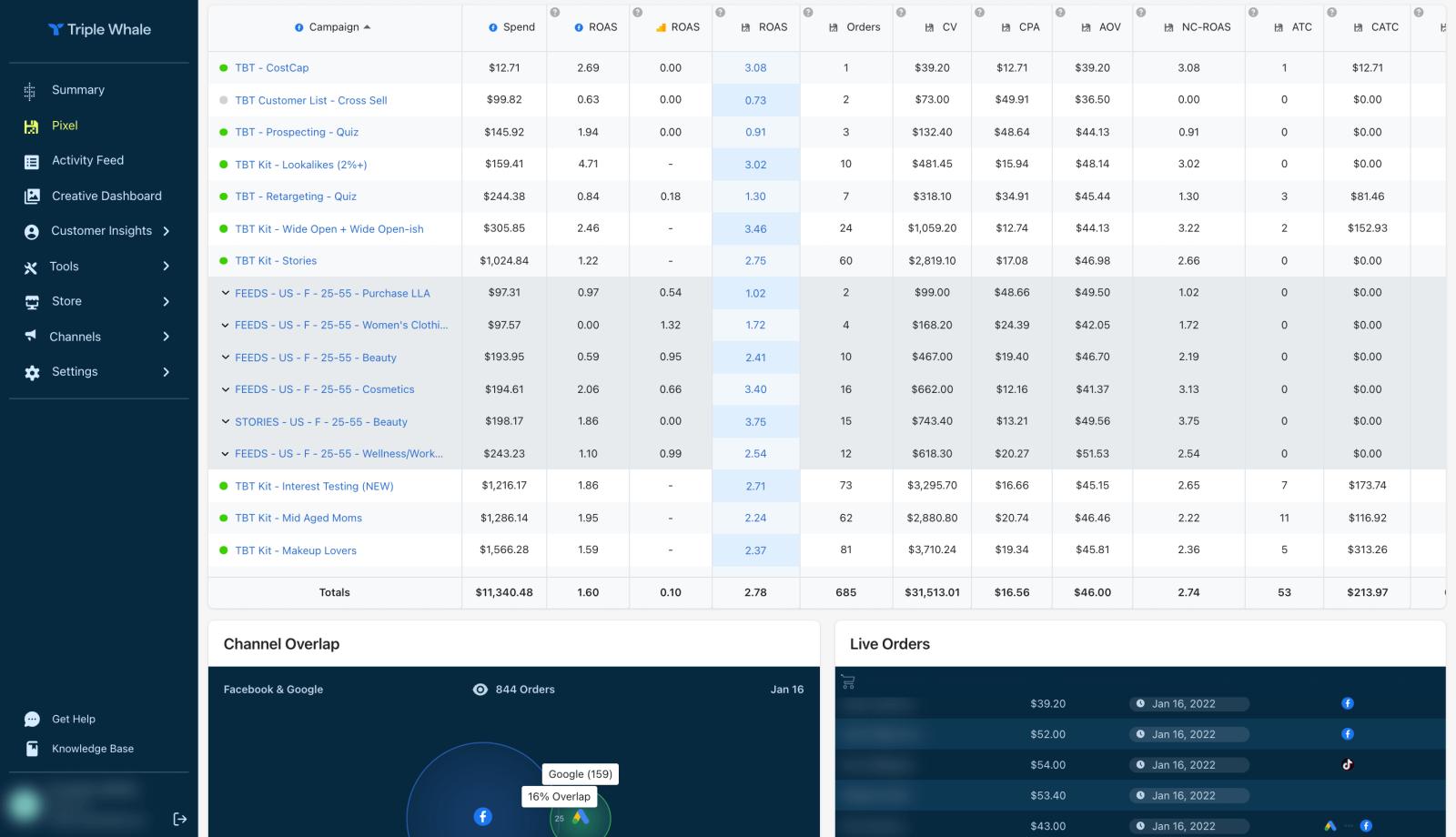
Triple Whale is an ecommerce attribution and analytics platform built specifically for Shopify and DTC brands. Where Lifesight delivers unified measurement across channels, Triple Whale focuses on fast, accurate ecommerce insights with first-party tracking and real-time dashboards.
Why Triple Whale Works for Ecommerce Attribution
- Shopify-native integration. Triple Whale connects directly to your Shopify store and pulls order data, product analytics, customer cohorts, and LTV metrics without custom implementation. The Triple Pixel tracks visitors across your site with first-party data, maintaining accuracy through iOS and cookie restrictions.
- Multi-touch attribution built for paid media. The platform offers seven attribution models including Linear All, Linear Paid, First Click, Last Click, Triple Attribution (proprietary), Total Impact, and Clicks & Deterministic Views. You see which ads drive conversions, not just which get last-click credit.
- Creative and product-level analytics. Triple Whale breaks down performance by creative asset, ad copy, and product SKU. You identify winning creatives and top-selling products within the same dashboard, connecting ad spend to inventory decisions.
- Post-purchase survey attribution. Automated surveys at checkout ask customers how they discovered you, adding self-reported attribution data to tracked touchpoints. This captures dark funnel influence from podcasts, word-of-mouth, and offline channels.
- Marketing Mix Modeling on higher tiers. Triple Whale's Professional plan includes MMM with predictive budget simulation, bringing Lifesight-style aggregate modeling to mid-market ecommerce teams at a fraction of enterprise pricing.
Triple Whale vs Lifesight
Feature | Triple Whale | Lifesight
Primary platform | Shopify, ecommerce | Platform-agnostic
Attribution models | 7 rule-based and blended | Incrementality-adjusted, causal
Creative analytics | Native ad creative breakdown | Not emphasized
Post-purchase surveys | Built-in | Not offered
MMM availability | Professional tier and above | Core capability
Starting price | $219/month (Foundation) | \~$999/month (estimated)
Triple Whale fits Shopify stores, DTC consumer brands, and ecommerce teams that prioritize speed and ecommerce-specific insights over enterprise measurement frameworks. If you're selling physical products online and need attribution running today rather than next quarter, Triple Whale delivers.
Pricing: Free plan for basic attribution; Foundation plan from $219/month; Professional and Growth tiers with MMM and advanced features quoted based on GMV. Visit Triple Whale pricing for current details.
3. Rockerbox: Best Lifesight Alternative for Multichannel Performance Teams
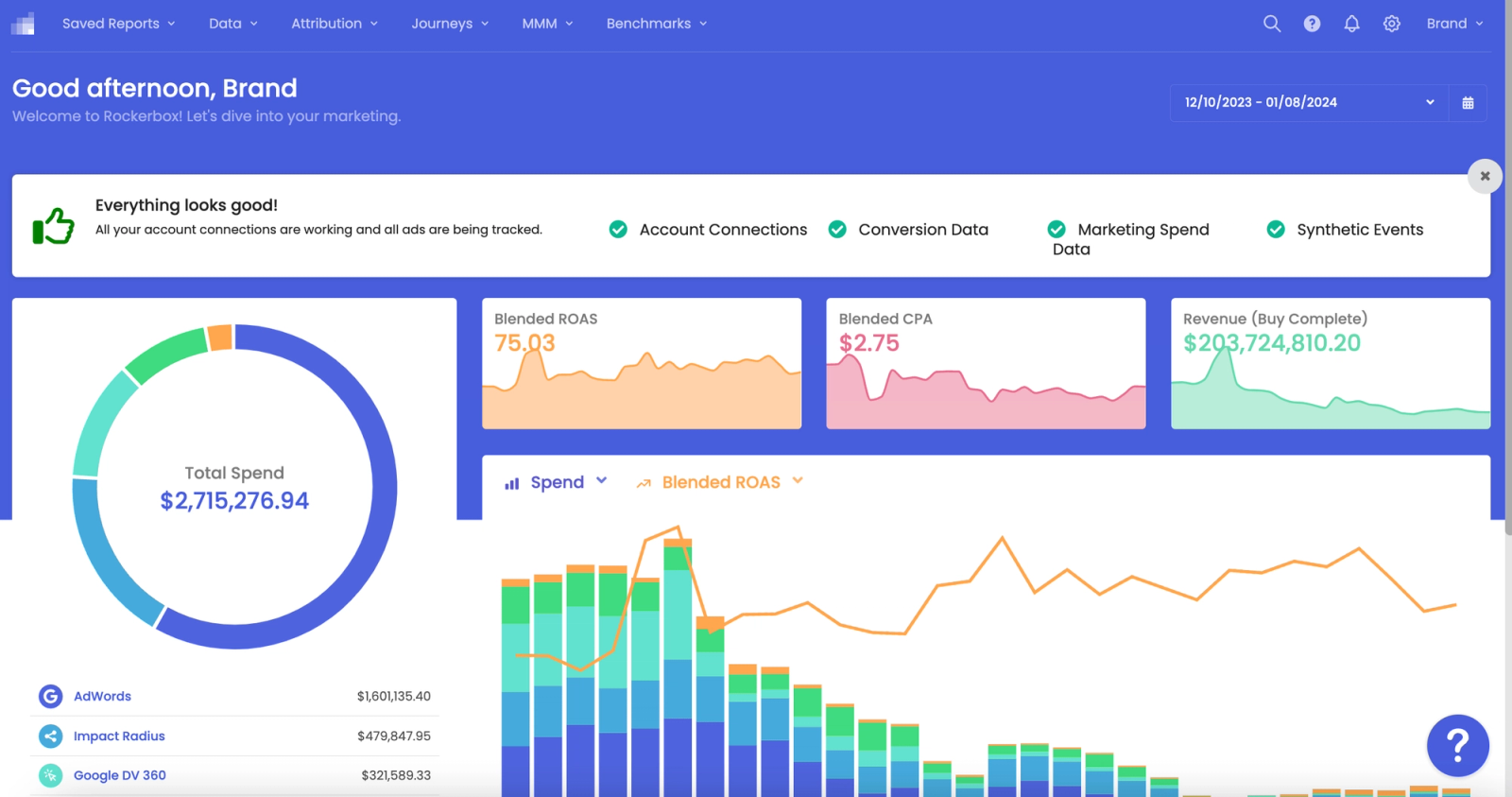
Rockerbox is a unified measurement platform combining multi-touch attribution, marketing mix modeling, and incrementality testing. Like Lifesight, Rockerbox serves performance marketers who need multiple measurement methodologies, but with stronger multichannel data unification and more transparent implementation processes.
Why Rockerbox Works for Performance Marketing
- MTA, MMM, and incrementality in one platform. Rockerbox offers all three methodologies on a shared data foundation. You start with the method you need today, multi-touch attribution for tactical decisions, MMM for budget planning, or incrementality testing for causal validation, and add others as your measurement maturity grows. No need to switch platforms or rebuild integrations.
- 200+ integrations across online and offline channels. Rockerbox tracks paid social, search, display, video, CTV, linear TV, direct mail, podcasts, affiliates, and influencers. The platform captures clicks and views across digital channels plus offline attribution through promo codes and post-purchase surveys, unifying data that most tools leave fragmented.
- Data warehouse integrations. Rockerbox integrates with BigQuery, Redshift, and Snowflake, pushing analytics-ready datasets into your own BI tools or internal dashboards. You own your attribution data and combine it with other business data without exports or API limits.
- Geo lift and incrementality testing. Rockerbox designs and executes geo-based holdout tests to measure true incremental lift from channels, complementing attribution with causal measurement. This matches Lifesight's incrementality focus while offering stronger self-service test configuration.
- SOC 2 certified data foundation. Your marketing data lives in a centralized, security-certified system. Rockerbox manages data ingestion, identity resolution, and deduplication, giving you a single source of truth across platforms.
Rockerbox vs Lifesight
Feature | Rockerbox | Lifesight
Measurement methods | MTA, MMM, incrementality testing | Causal attribution, MMM, incrementality
Data warehouse support | BigQuery, Redshift, Snowflake | Export options
Channel coverage | 200+ integrations | Broad platform support
Geo testing | Self-service configuration | Available
Implementation | Moderate, marketing ops friendly | High, requires data science
Pricing model | Quote-based, tier by company size | Quote-based
Rockerbox fits DTC brands, multichannel ecommerce companies, and performance marketing teams that need unified measurement without sacrificing tactical, campaign-level insights. If you're running both online and offline channels and want attribution that scales into MMM and incrementality, Rockerbox delivers Lifesight's measurement depth with clearer implementation paths.
Pricing: Quote-based. Contact Rockerbox for pricing tailored to your business size and channel mix.
4. SegmentStream: Best Lifesight Alternative for Enterprise Measurement and Optimization
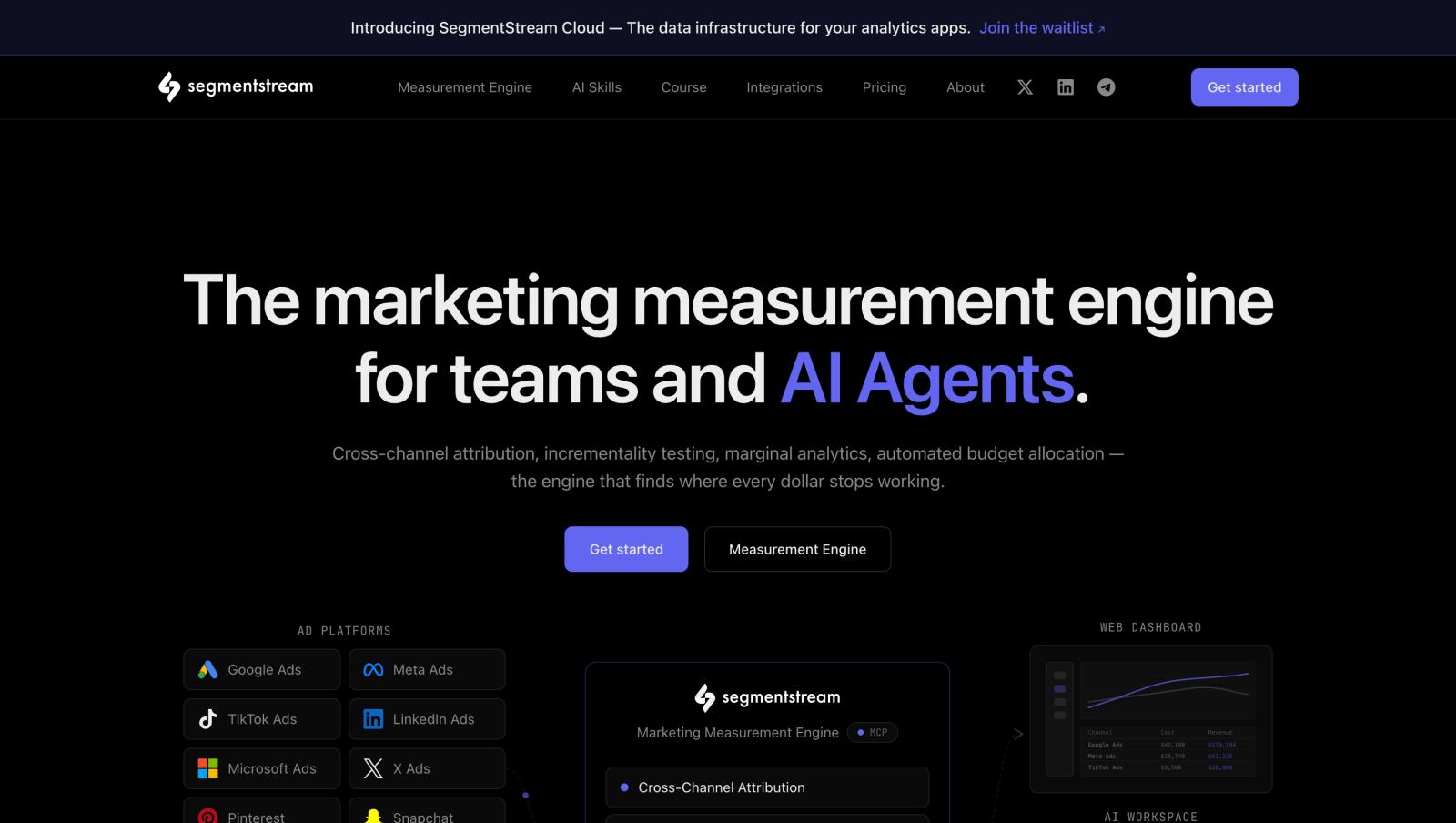
SegmentStream is an AI-powered marketing measurement and optimization platform built for brands spending $100K+ per month on paid media. Where Lifesight focuses on unified measurement, SegmentStream extends into automated budget execution through its "Continuous Optimization Loop" that bridges measurement and real-time advertising optimization.
Why SegmentStream Works for Enterprise Marketing
- Measurement that executes, not just reports. SegmentStream's core differentiator is its agentic AI framework: Measure → Predict → Validate → Optimize → Learn → Repeat. The platform doesn't stop at showing you where to move budget, it calculates marginal ROAS per channel, recommends reallocation, and applies changes automatically with one-click approval.
- Cross-channel attribution your finance team can verify. SegmentStream offers First-Touch, Last Paid Click, Last Paid Non-Brand Click, and custom multi-touch attribution models. The custom attribution evaluates session-level behavioral signals, engagement depth, key events, navigation patterns, micro-conversions, and assigns credit based on measured incremental lift in conversion probability. Finance trusts the model because it's built on incrementality validation, not vendor claims.
- Expert-led incrementality testing. SegmentStream's measurement specialists design, execute, and interpret geo holdout experiments end-to-end. They handle market selection, synthetic control modeling, MDE and power analysis, and confidence intervals, delivering causal proof of channel performance.
- Marketing Mix Optimization that acts automatically. Weekly marginal ROAS analysis models where each additional dollar creates or destroys value. SegmentStream recommends budget shifts and applies them across Google Ads, Meta, and other platforms through native API integrations.
- Warehouse-native architecture. SegmentStream runs inside your own BigQuery, Snowflake, or Databricks warehouse. Your marketing data never leaves your infrastructure, meeting enterprise security and compliance requirements.
- Native MCP Server for AI assistants. SegmentStream ships a Model Context Protocol server that lets AI assistants like Claude connect directly to the measurement engine. While most tools offer "chat with your data," SegmentStream's MCP integration enables AI to run full marketing workflows: performance analysis, forecasting, decision-making, and budget execution.
SegmentStream vs Lifesight
Feature | SegmentStream | Lifesight
Core differentiator | Automated budget execution | Unified measurement platform
Attribution approach | Multi-model + ML custom | Incrementality-adjusted causal
Incrementality testing | Expert-led geo experiments | Available
Budget optimization | Automated with one-click apply | Forecasting and recommendations
Data architecture | Warehouse-native (BigQuery, Snowflake, Databricks) | Cloud platform
AI integration | Native MCP server for assistants | AI-powered insights
Minimum spend | $100K+/month recommended | Enterprise pricing tier
SegmentStream fits enterprise ecommerce, DTC, B2B SaaS, finance, travel, and performance-driven brands that spend heavily on paid media and need measurement to drive automated decisions. If you're evaluating Lifesight because you want unified measurement but also need the system to execute budget changes, SegmentStream's optimization loop delivers both. For more context on measurement approaches, see our guide on marketing measurement tools.
Pricing: Quote-based for brands spending $100K+ per month on paid media. Visit SegmentStream pricing to get started.
5. Attribution.app: Lifesight Alternative for Transparent B2B Attribution
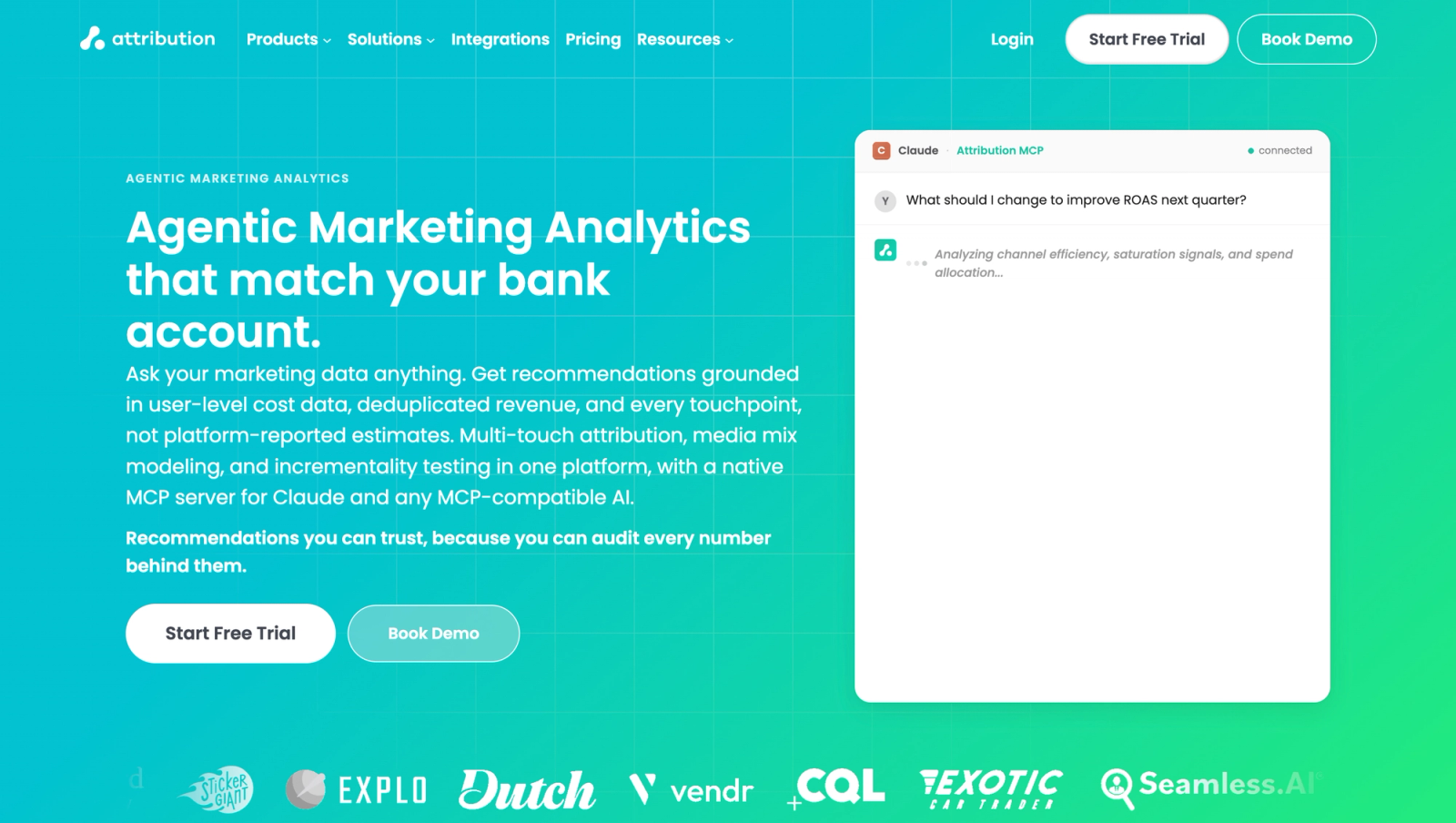
Attribution.app (formerly Attribution) is a deterministic marketing attribution platform focused on click-based tracking, transparent pricing, and B2B use cases. Where Lifesight builds aggregate models, Attribution.app delivers user-level auditability with configurable attribution windows.
Why Attribution.app Works for Mid-Market B2B
- Deterministic click tracking. Attribution.app uses click-based attribution without probabilistic modeling or view-through guesses. Every conversion traces back to a documented click, giving you full auditability down to the user level. You can drill into individual journeys and verify attribution logic yourself.
- Fully customizable attribution models. The platform supports First Touch, Last Touch, Time Decay, and Position-Based models with custom weighting. You define lookback windows, lookforward windows (for B2B sales cycles), and how credit distributes across touchpoints. No black boxes.
- Campaign-level break-even analysis. Attribution.app calculates profitability per campaign, showing which efforts drive positive ROI and which destroy margin. This financial lens matches B2B decision-making better than aggregate channel metrics.
- Account-based attribution. The platform tracks multiple contacts within the same account and attributes revenue at the account level, matching B2B sales processes where buying committees involve many people.
- Transparent pricing from £199/month. Attribution.app publishes pricing tiers publicly, starting at £199/month. Mid-market teams get predictable costs and faster buying decisions.
Attribution.app vs Lifesight
Feature | Attribution.app | Lifesight
Attribution method | Deterministic click-based | Incrementality-adjusted, causal
Model customization | Fully configurable rules | Fixed causal models
User-level auditability | Complete drill-down | Aggregate reporting
Account-based support | Native | Not emphasized
Pricing | Public tiers from £199/month | Quote-based, \~$999+/month
Best fit | Mid-market B2B | Enterprise multichannel
Attribution.app fits small to mid-market B2B companies, lead-gen businesses, and teams that want transparent, auditable attribution without enterprise complexity. If Lifesight's unified measurement feels like overkill and you need clear user-level tracking at a known price, Attribution.app delivers.
Pricing: From £199/month. Visit Attribution.app pricing for current tiers.
6. Dreamdata: Lifesight Alternative for B2B Account-Based Attribution
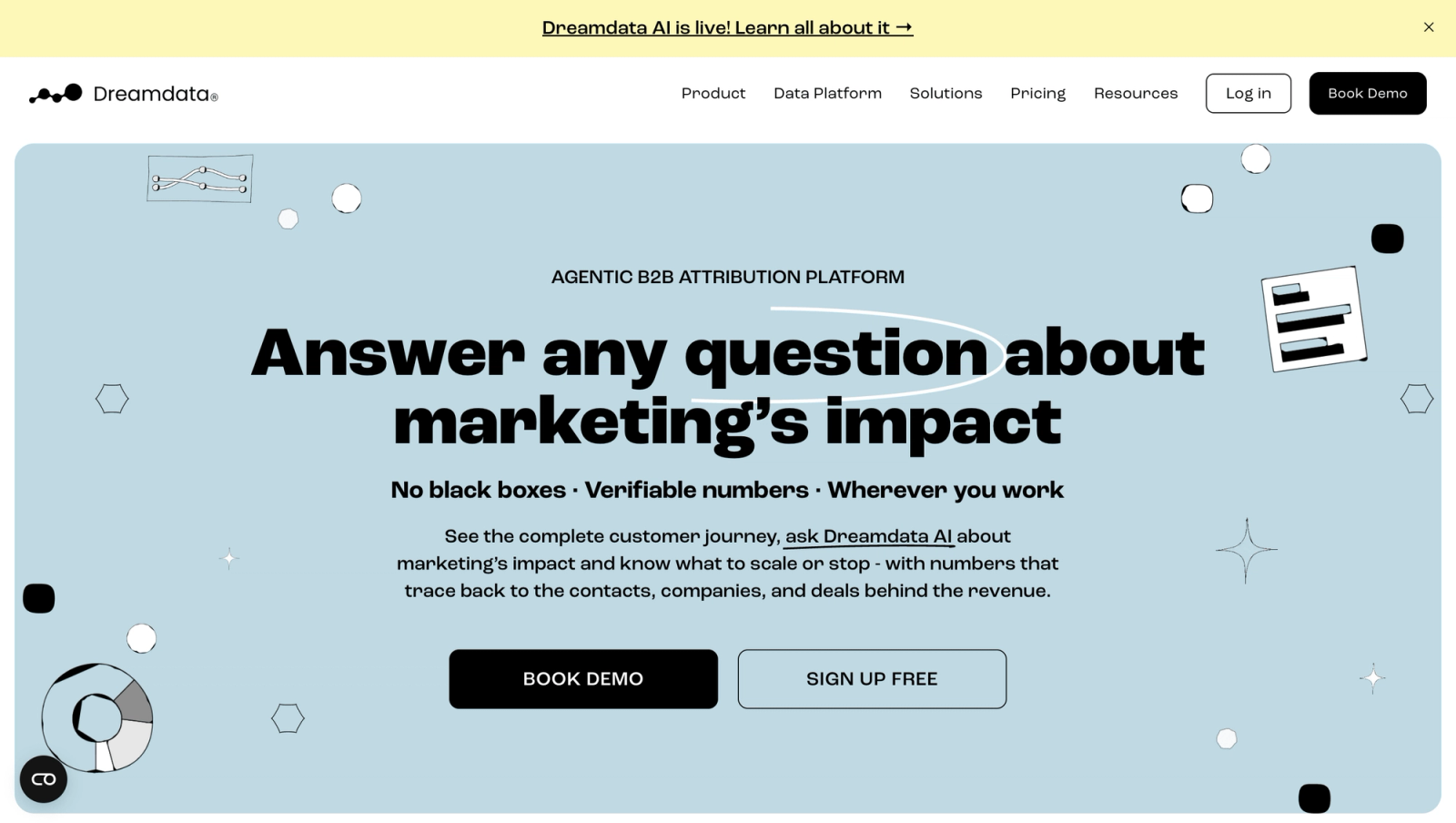
Dreamdata is a B2B revenue attribution platform built for account-based marketing and long sales cycles. Where Lifesight focuses on paid media optimization, Dreamdata maps complete customer journeys from anonymous visitor to closed-won deal, connecting marketing touchpoints to pipeline and revenue.
Why Dreamdata Works for B2B SaaS
Account-level journey mapping. Dreamdata tracks every touchpoint across all contacts within an account, stitching together website visits, ad clicks, content downloads, demo requests, and sales interactions into a unified account timeline. You see how buying committees engage with your marketing over weeks or months.
Multi-touch attribution for B2B sales cycles. The platform supports First Touch, Last Touch, Linear, Time Decay, Position-Based, and custom attribution models calibrated for long sales cycles. Dreamdata's lookback windows extend to match your actual time-to-close, not generic 30-day defaults.
CRM and marketing automation integration. Dreamdata connects with Salesforce, HubSpot, Pipedrive, and major marketing platforms, pulling deal data and campaign touchpoints into a shared data model. Attribution fields write back to your CRM so sales teams see marketing influence inside the records they use.
Revenue attribution and pipeline reporting. Dreamdata attributes closed revenue and pipeline creation to specific campaigns, channels, and content assets. You report marketing's contribution in the same financial terms your CFO uses.
Intent data and anonymous visitor tracking. The platform identifies companies visiting your website before they convert, showing which accounts are in-market and which content they consume. This enriches attribution with earlier-funnel signals.
Dreamdata vs Lifesight
Feature | Dreamdata | Lifesight
Primary use case | B2B account-based attribution | Enterprise multichannel measurement
Attribution level | Account and contact | Aggregate channel
Sales cycle support | Long B2B cycles | Broad use cases
Anonymous tracking | Account identification | Standard tracking
CRM integration | Deep two-way sync | Export and import
Best fit | B2B SaaS, ABM programs | Enterprise DTC and multichannel
Dreamdata fits B2B SaaS companies, account-based marketing programs, and businesses with sales cycles spanning months. If Lifesight's aggregate measurement doesn't answer "which accounts engaged with which campaigns," Dreamdata's journey mapping does.
Pricing: Quote-based. Contact Dreamdata for pricing based on your account volume and integrations.
7. Ruler Analytics: Lifesight Alternative for Lead-Gen and Call Tracking
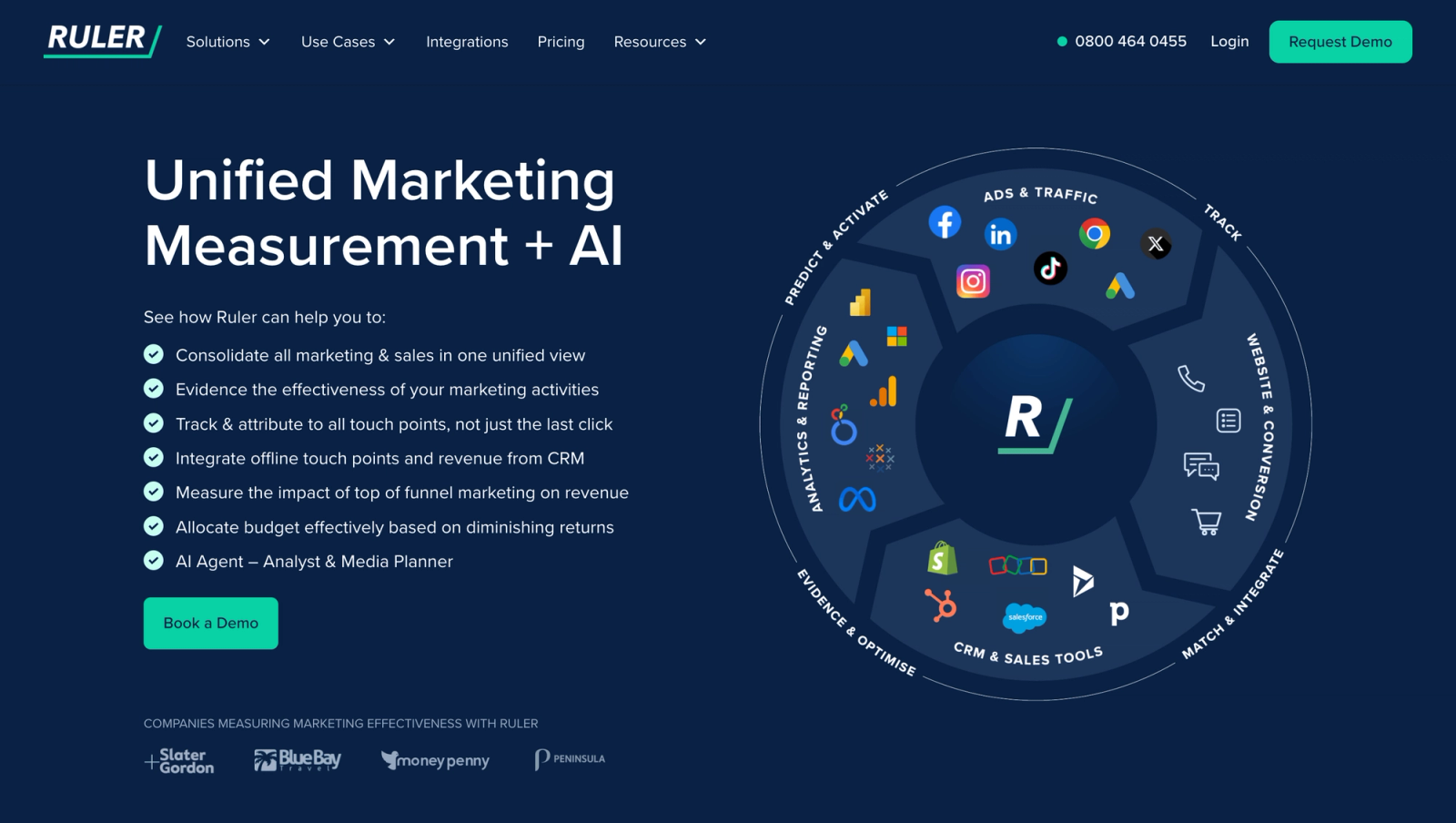
Ruler Analytics is a closed-loop attribution platform built for lead-generation businesses, combining marketing attribution with call tracking and revenue attribution. Where Lifesight serves enterprise paid media optimization, Ruler focuses on phone calls, form fills, and live chat as primary conversion events.
Why Ruler Analytics Works for Lead-Gen Businesses
- Call tracking built into attribution. Ruler assigns dynamic phone numbers to visitors based on their marketing source, capturing which campaign, keyword, and landing page drove each call. Call recordings, duration, and outcomes feed into attribution models alongside digital conversions.
- Form and live chat attribution. Every form submission and live chat conversation connects to the visitor's full marketing journey. You see which channels drive qualified leads, not just website visits.
- Closed-loop revenue attribution. Ruler integrates with CRM systems to pull deal values and closed-won status, attributing revenue back to the original marketing touchpoint. You report on cost per customer and ROI, not just cost per lead.
- Multi-touch attribution for offline conversions. Ruler supports First Click, Last Click, Linear, Time Decay, and Position-Based models, applying them to phone calls and offline conversions just like digital events. Marketing influence is measured across the full customer journey.
- Transparent pricing from £199/month. Ruler publishes pricing publicly, starting at £199/month based on visitor volume. Small and mid-market teams get predictable costs.
Ruler Analytics vs Lifesight
Feature | Ruler Analytics | Lifesight
Primary use case | Lead-gen with call tracking | Enterprise multichannel measurement
Call tracking | Dynamic number insertion, recordings | Not offered
Form and chat attribution | Native | Standard tracking
Revenue attribution | Closed-loop CRM sync | Available through integrations
Pricing | Public tiers from £199/month | Quote-based, \~$999+/month
Best fit | Contractors, clinics, legal, financial services | Enterprise DTC and ecommerce
Ruler Analytics fits home services contractors, healthcare practices, legal and financial services firms, and any business where phone calls drive revenue. If Lifesight's digital-first measurement misses your most important conversion event, the phone call, Ruler closes that gap.
Pricing: From £199/month based on visitor volume. Visit Ruler Analytics pricing for current tiers.
Frequently asked questions
-
Frequently Asked Questions
-
What is the best Lifesight alternative?
The best alternative depends on your use case. SourceLoop is a strong choice for first-party, full-funnel attribution and lead-level tracking; Triple Whale is better suited to ecommerce brands; and SegmentStream and Rockerbox are better fits for advanced measurement and incrementality.
-
Is SourceLoop a good alternative to Lifesight?
Yes. SourceLoop is a strong alternative for teams that need first-party marketing attribution, multi-touch attribution, conversion tracking, and CRM integration. It connects marketing touchpoints to leads, opportunities, customers, and revenue, while also syncing conversion data back to platforms like Google Ads and Meta.
-
What is the difference between SourceLoop and Lifesight?
Lifesight focuses heavily on aggregate measurement, attribution, MMM, and incrementality, while SourceLoop focuses on tracking individual customer journeys and connecting marketing touchpoints to conversions and revenue. SourceLoop is particularly useful when you need attribution data inside your CRM and actionable lead-level insights.
-
Which Lifesight alternative is best for ecommerce?
Triple Whale is a strong option for Shopify and DTC brands that want ecommerce-focused attribution, analytics, and creative performance insights. For businesses with more complex measurement requirements, SegmentStream and Rockerbox offer broader attribution and incrementality capabilities.
-
What is the best Lifesight alternative for B2B and lead generation?
SourceLoop is a strong fit for B2B and lead-based businesses because it tracks journeys across website visits, forms, calls, meetings, and other conversions, then connects attribution data with CRM records and revenue.
-
Do Lifesight alternatives support multi-touch attribution?
Yes. Several alternatives support multi-touch attribution, but their approaches differ. SourceLoop provides multiple attribution models for tracking the customer journey, while platforms such as SegmentStream, Rockerbox, and Triple Whale combine attribution with broader measurement capabilities.
-
How quickly can I switch from Lifesight?
Implementation time varies by platform and data complexity. SourceLoop is designed for fast, self-serve setup, while enterprise-focused platforms may require more technical configuration, data integration, and implementation support.
-
Should I choose attribution, MMM, or incrementality?
They answer different questions. Attribution helps identify which touchpoints contributed to conversions, MMM measures channel performance at an aggregate level, and incrementality tests whether marketing actually caused additional conversions. Many larger teams use a combination, while teams focused on lead-level campaign optimization may get more value from attribution first.


 Paid Social


