
GDPR-Compliant Conversion Tracking [2026 Guide]
Master GDPR-compliant conversion tracking with first-party data, server-side tracking, and consent management. Maintain accuracy while respecting privacy.
Table of contents
- Understanding GDPR and Conversion Tracking
- Where Does Your Tracking Stand?
- Scenario 1: You already have conversion tracking installed
- Scenario 2: You have no conversion tracking at all
- Four Approaches to GDPR-Compliant Conversion Tracking
- 1. Consent-Based Third-Party Tracking
- 2. First-Party Tracking Infrastructure
- 3. Server-Side Tracking
- 4. Cookieless Tracking Methods
- Choosing GDPR-Compliant Conversion Tracking Tools
- Implementing GDPR-Compliant Conversion Tracking
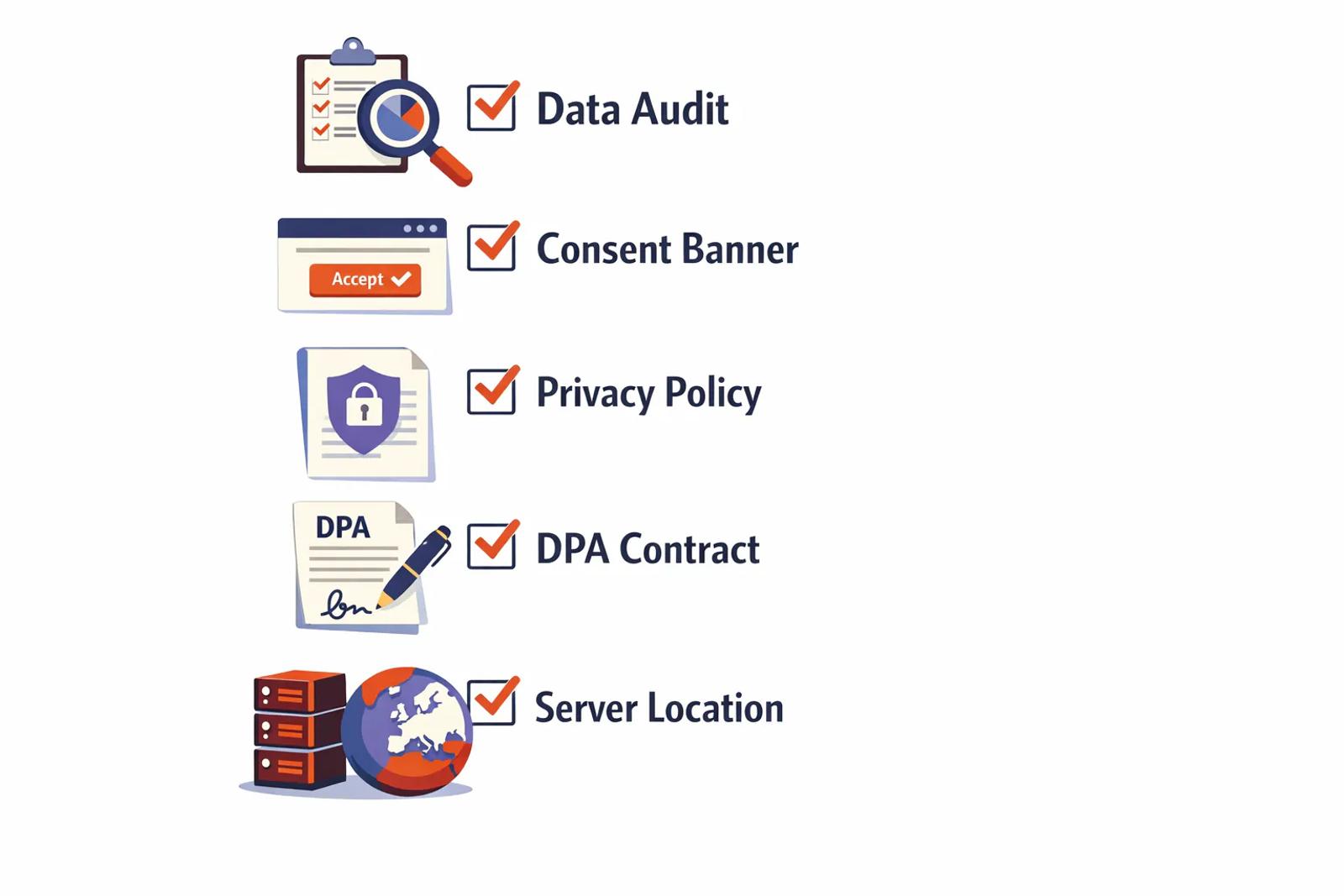
- Step 1: Audit your current tracking
- Step 2: Choose your compliance architecture
- Step 3: Implement consent infrastructure
- Step 4: Update privacy documentation
- Step 5: Establish data processing agreements
GDPR-compliant conversion tracking requires obtaining explicit user consent before placing non-essential cookies, using first-party tracking infrastructure, and providing granular control over data collection.
Unlike traditional pixel-based tracking that sends user data directly to advertising platforms, compliant systems give businesses control over what information is collected, where it is stored, and when it is shared.
Businesses tracking conversions in the EU must comply with both the General Data Protection Regulation (GDPR) and the ePrivacy Directive, which together govern how personal data is collected and processed through website cookies and tracking technologies.
Understanding GDPR and Conversion Tracking
The General Data Protection Regulation (GDPR) and the ePrivacy Directive work together to regulate conversion tracking in the European Union.
While GDPR governs how personal data is processed after collection, the ePrivacy Directive specifically addresses the technical means of collection, including cookies and similar tracking technologies.
According to Cookiebot's GDPR guidance, "valid consent must be freely given, granular, and unambiguous." Pre-ticked boxes and continued browsing do not qualify as consent. Website owners bear legal responsibility for cookie compliance, even when cookies originate from third-party services like Google Analytics, Meta Pixel, or Google Ads conversion tags.
Conversion tracking typically processes personal data including IP addresses, device identifiers, browsing behavior, and campaign interaction history. Under GDPR, this data processing requires a lawful basis, most commonly explicit consent for marketing and analytics purposes.
Where Does Your Tracking Stand?
If you're reading this, you likely fall into one of two scenarios:
Scenario 1: You already have conversion tracking installed
Meta Pixel, Google Ads conversion tags, LinkedIn Insight Tag, or similar scripts are running on your website. You're tracking leads and sales, but you're uncertain whether your current setup complies with GDPR requirements for EU visitors.
Scenario 2: You have no conversion tracking at all
You're receiving leads and sales from your website, but you cannot attribute them back to specific marketing campaigns, ad groups, or keywords. You want to implement tracking, but you need to do it compliantly from the start.
The 3 approaches below address both scenarios. If you already have tracking pixels installed, the consent-based and first-party tracking methods show you how to make your existing setup compliant. If you're starting from scratch, server-side and cookieless approaches offer privacy-first alternatives that build compliance into the foundation.
Four Approaches to GDPR-Compliant Conversion Tracking
1. Consent-Based Third-Party Tracking
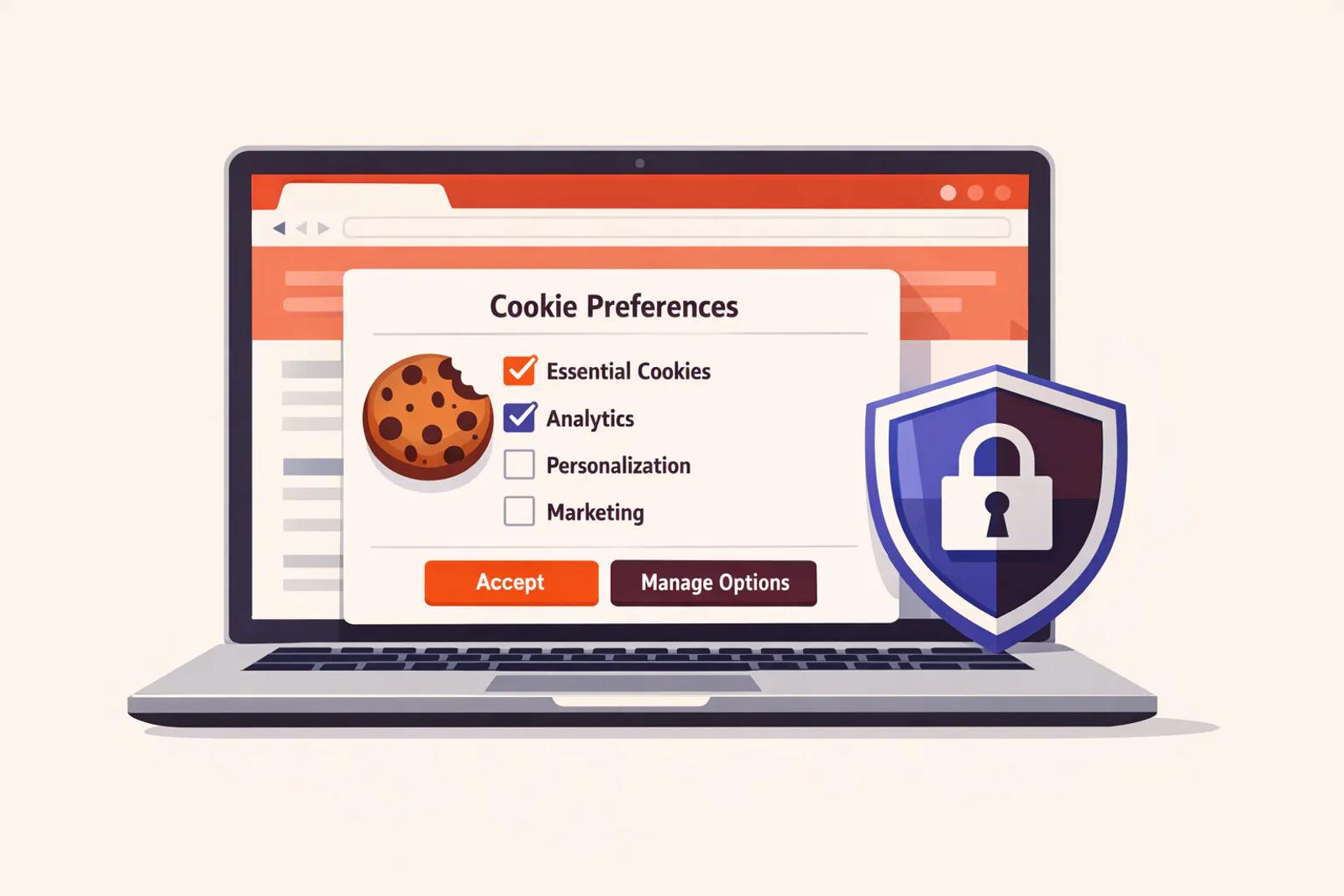
The traditional approach uses a Consent Management Platform (CMP) to obtain explicit permission before loading tracking pixels and cookies.
When a user grants consent, standard conversion tracking tools like Google Analytics, Meta Pixel, and LinkedIn Insight Tag activate normally.
Advantages:
- Works with existing marketing technology stacks
- No technical infrastructure changes required
- Clear audit trail of user consent decisions
Disadvantages:
- Significant data loss from users who decline consent (typically 40-60% in EU markets)
- Incomplete conversion attribution from non-consented users
- Ongoing consent renewal requirements (at least annually)
Consent-based tracking requires a GDPR-compliant CMP that blocks cookies by default, provides granular opt-in choices, and documents consent timestamps and preferences. Popular solutions include Cookiebot, OneTrust, and Usercentrics.
Research from consent management providers shows that average EU consent rates range from 40-70% depending on industry, website type, and banner design. This means businesses relying solely on cookie-based tracking lose visibility into 30-60% of their website visitors.
2. First-Party Tracking Infrastructure
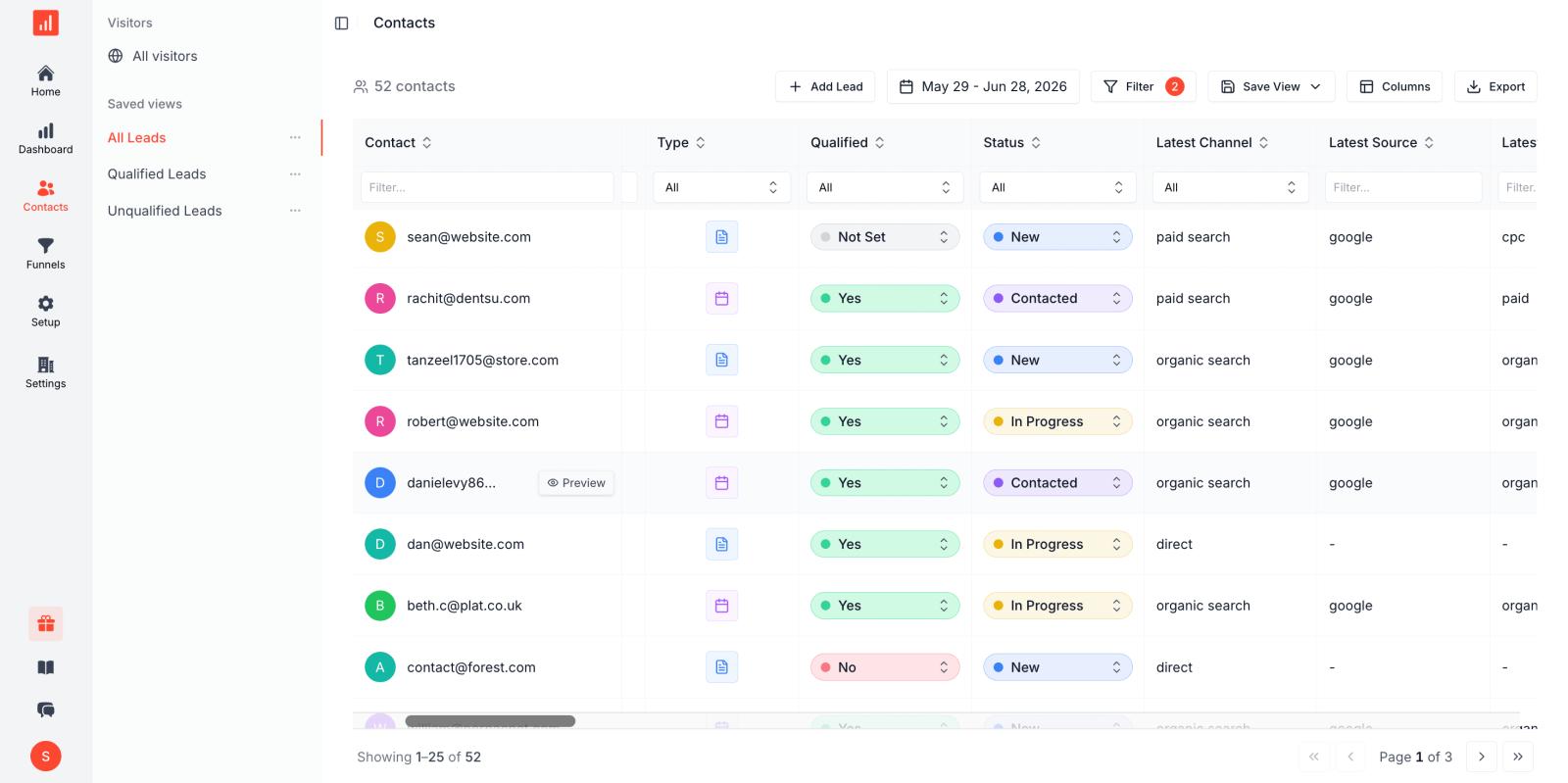
First-party tracking collects data directly on your own domain rather than sending visitor information to third-party servers first. This approach reduces the number of data processors involved and gives businesses direct control over data collection, storage, and sharing.
SourceLoop uses first-party tracking to capture visitor behavior across ads, website pages, forms, and CRM records. The tracking script runs on your domain, and data is collected via your own domain before being selectively shared with advertising platforms or analytics tools.
How first-party tracking improves compliance:
- Reduced processor chain: Fewer third parties processing personal data means simpler data protection agreements and lower compliance risk
- Greater control: You decide exactly what data is collected, where it is stored, and who receives it
- Better transparency: Users can review a single privacy policy explaining your practices rather than navigating multiple vendor policies
- Consent signal propagation: Your consent management system can control all tracking from a single integration point
First-party conversion tracking still requires consent for non-essential uses, but it dramatically simplifies the compliance architecture. Instead of managing consent for dozens of vendor scripts, you manage consent for your own collection system and then control downstream sharing.
3. Server-Side Tracking
Server-side tracking moves data collection from the visitor's browser to your web server. Instead of the browser directly contacting Google, Meta, or other platforms, your server collects conversion events and forwards them through server-side APIs.
According to research on server-side tracking and GDPR, this approach offers several compliance advantages:
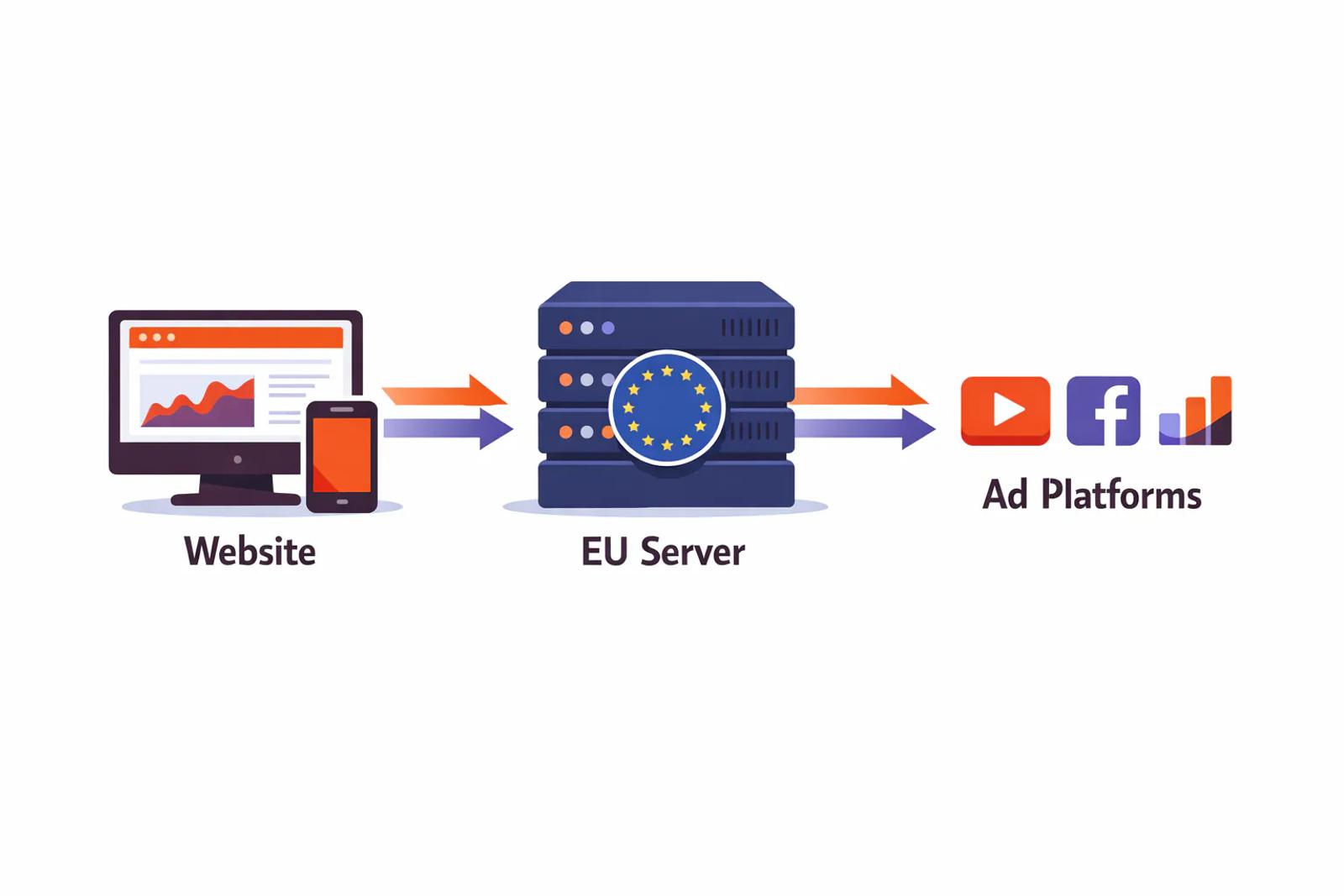
Data anonymization control: Server-side systems can strip personally identifiable information before sending conversion data to advertising platforms. You can hash email addresses, remove precise IP locations, and control exactly which data points are shared.
Consent enforcement: Your server checks consent status before forwarding any data to third parties, ensuring no personal data reaches advertising platforms for non-consented users.
Cookie lifetime control: First-party cookies set from your server are not subject to browser-level restrictions like Safari's Intelligent Tracking Prevention (ITP) or Firefox's Enhanced Tracking Protection.
Ad blocker resistance: Browser extensions cannot block server-side API calls, improving data accuracy for consented users.
SourceLoop's approach combines first-party tracking with optional server-side forwarding to ad platforms. Conversion events are captured on your domain, and offline conversions sync to Google Ads and Meta only when consent has been granted and leads qualify according to your criteria.
SourceLoop's approach combines first-party tracking with optional server-side forwarding to ad platforms. Conversion events are captured on your domain, and offline conversions sync to Google Ads and Meta only when consent has been granted and leads qualify according to your criteria.
4. Cookieless Tracking Methods
Fully cookieless tracking eliminates browser storage entirely, removing the need for cookie consent banners. However, this approach has significant limitations for conversion attribution.
Session-based tracking processes conversion data without persistent identifiers. You can track that a conversion occurred from a particular campaign during a browser session, but cannot attribute returning visitors or track the full customer journey across multiple sessions.
**SourceLoop's Cookieless Mode** offers a privacy-first alternative for EU/UK visitors. By toggling on Cookieless Mode, the tracking script sets no cookies and no local storage on the visitor's device.
Instead, visitors are recognized using a privacy-friendly server signal that resets every day. This allows you to attribute conversions accurately within a single day's journey without requiring a cookie consent banner for those visitors.
Aggregated measurement provides conversion volume and statistical trends without individual-level tracking. Google's Consent Mode uses aggregated conversion modeling for non-consented users, estimating total conversion volumes through statistical modeling rather than direct measurement.
Server-side fingerprinting attempts to identify users through combinations of browser properties, screen resolution, fonts, and other technical attributes. This method is legally questionable under GDPR because it tries to identify individuals without consent and is explicitly prohibited in some EU member states.
For B2B businesses with longer sales cycles, cookieless approaches typically provide insufficient data for meaningful attribution. Most companies tracking leads through forms, phone calls, and CRM systems need persistent identifiers to connect conversions back to their marketing sources.
Choosing GDPR-Compliant Conversion Tracking Tools
The conversion tracking platform you select directly impacts your GDPR compliance burden. Consider these factors:
Data processing location: Does the tool offer EU data hosting? Where are the company's servers located? What mechanisms exist for international data transfers?
Default privacy settings: Does the platform require configuration to become compliant, or does it offer privacy-first defaults? How much technical expertise is needed to implement data protection properly?
Consent integration: How does the tool integrate with consent management platforms? Can it automatically respect consent signals without custom development?
Data retention controls: Can you configure how long personal data is stored? Does the platform automatically delete data according to your privacy policy?
Processor agreements: Does the vendor provide a standard DPA, or must you negotiate terms? What sub-processors does the vendor use?
Privacy features: Does the platform offer IP anonymization, user identification control, and data minimization settings?
For businesses prioritizing compliance alongside attribution accuracy, platforms combining first-party tracking, CRM integration, and selective third-party sharing provide the best balance. SourceLoop's approach captures complete customer journeys in your own database while giving you granular control over what personal data, if any, reaches advertising platforms.
Implementing GDPR-Compliant Conversion Tracking
Step 1: Audit your current tracking
Document every tracking technology currently active on your website: analytics platforms, advertising pixels, heatmap tools, chatbots, and form tracking. Identify which process personal data and which fall under necessary, preference, statistics, or marketing categories.
Tip: Transitioning to a first-party platform like SourceLoop allows you to consolidate multiple third-party scripts (like Meta Pixel and Google Ads tags) into a single, secure first-party script, dramatically simplifying your audit and compliance overhead.
Step 2: Choose your compliance architecture
For businesses tracking B2B conversions through forms and CRM systems, the most practical approach is a hybrid setup like SourceLoop's, which combines:
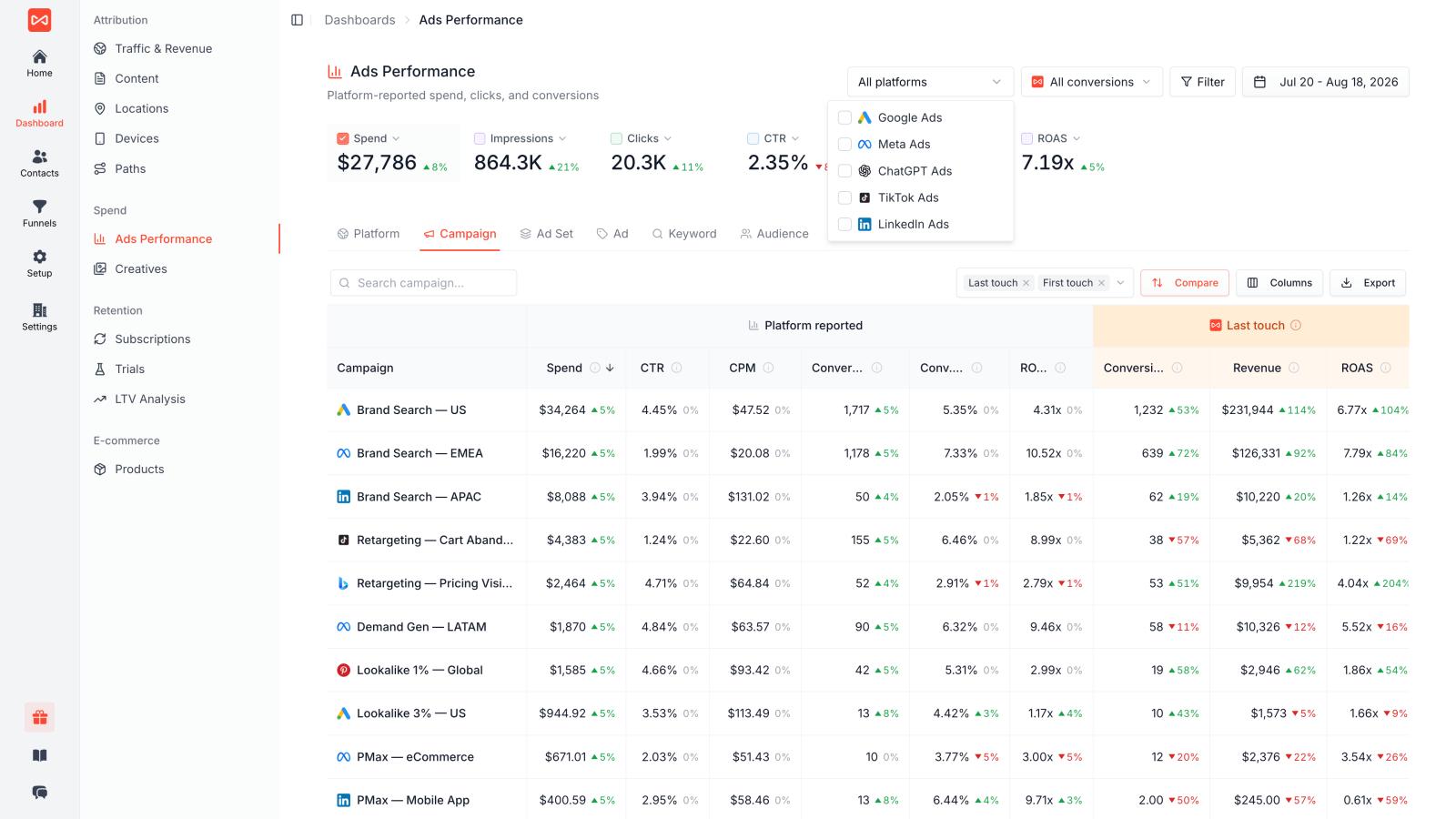
- First-party tracking: Running the tracking script on your own domain to minimize third-party data leakage.
- Consent-gated forwarding: Only sending conversion data to ad platforms (like Google Ads and Meta) once consent is verified.
- Cookieless fallback: Utilizing SourceLoop's Cookieless Mode for EU/UK visitors to maintain basic attribution without requiring a cookie banner.
Step 3: Implement consent infrastructure
Deploy a CMP that blocks non-essential cookies by default and requires explicit opt-in action. Configure granular consent categories so users can separately control analytics, advertising, and personalization uses.
If you are using SourceLoop, you have two compliant paths:
- With a CMP: Integrate your CMP with SourceLoop so the tracking script only sets persistent cookies once the user clicks "Accept."
- Without a CMP (Cookieless): Simply toggle on Cookieless Mode in your SourceLoop dashboard. This updates your tracking snippet (
cookieless: true) so it sets no cookies or local storage, allowing you to compliantly track daily attribution without needing a cookie banner at all.
Step 4: Update privacy documentation
Revise your privacy policy to clearly explain:
- What data your conversion tracking collects
- Why you collect it (the lawful basis)
- How long you retain it
- Which third parties receive it
- How users can withdraw consent or request deletion
Link your privacy policy prominently from your cookie banner and ensure it uses clear, non-legal language that average users can understand.
Step 5: Establish data processing agreements
GDPR requires written data processing agreements (DPAs) with every service provider that processes personal data on your behalf.
Review and sign DPAs from Google Ads, Meta, your CRM, your analytics platform, and your attribution software (SourceLoop provides a standard, GDPR-compliant DPA acting as your secure data processor).
Frequently asked questions
-
Frequently Asked Questions About GDPR Conversion Tracking
-
Do first-party cookies require consent under GDPR?
Yes, if they process personal data for marketing or analytics purposes. The technical classification as "first-party" does not exempt cookies from GDPR consent requirements. Only strictly necessary cookies for core website functionality are exempt. Conversion tracking cookies, whether first-party or third-party, require explicit consent when used for marketing attribution.
-
Can I use server-side tracking without a consent banner?
No. Server-side tracking changes where data processing occurs, not whether it requires consent. If your server-side system collects personal data for marketing purposes, you must obtain consent before collection begins. Server-side architectures do make consent enforcement more reliable by centralizing control, but they do not eliminate the legal requirement for user permission.
How long can I store conversion tracking data under GDPR?
GDPR requires data retention periods to be "no longer than necessary" for the stated purpose. For marketing attribution, this typically means:
- Active campaign data: 6-12 months for current campaign optimization
- Historical attribution data: 2-3 years for trend analysis and reporting
- Anonymized aggregate data: Can be retained indefinitely after removing all personal identifiers
Your privacy policy must specify your retention periods, and you must implement automated deletion processes to enforce them.
-
What happens if a user withdraws consent?
You must immediately stop processing their personal data for the purposes they withdrew consent for. In practice:
- Stop activating tracking cookies for that user
- Delete or anonymize their existing tracking data (unless you have another lawful basis)
- Stop sharing their data with advertising platforms
- Document the consent withdrawal with timestamp and method
Users can withdraw consent as easily as they granted it. Your consent management system must support one-click withdrawal, and your tracking infrastructure must respect the updated preference immediately.
-
Does GDPR apply to B2B tracking?
Yes. While GDPR focuses on natural persons (individuals), business email addresses and browsing behavior from work computers still constitute personal data. A lead form collecting a prospect's work email, name, and company processes personal information subject to GDPR, even in a B2B context. The regulation applies whenever you can identify an individual, regardless of whether they are acting in a business or personal capacity.




 Paid Social


