
How to track lead source in Zoom Scheduler
Find out which channel, campaign, or content drives every meeting booked through Zoom Scheduler, with the full visitor journey on each invitee.


On this page
Zoom Scheduler quietly turned Zoom into a serious Calendly competitor in 2023, and a lot of teams have moved to it for the obvious reason: it’s bundled with the Zoom subscription you’re already paying for. The catch is the same one every meeting tool has, Zoom can tell you a meeting was booked, but not which Google ad, blog post, or email campaign produced it. This guide closes that gap.
Setup runs about five minutes. No API access, no developer apps to register, no extra cost on top of your Zoom plan.
What SourceLoop captures from Zoom Scheduler
Every meeting booked through your embedded Zoom Scheduler lands in SourceLoop with:
- Original referral source plus the full UTM set from the visitor’s first session
- Pre-meeting touchpoints: the ordered list of every page the prospect viewed leading up to the booking
- Total time spent on your site before they finally hit “book”
- Visit recurrence: number of return sessions before the conversion
- Email captured from the Zoom Scheduler form
- Inbound channel of the final session (which often differs from the first-touch source)
- Origin landing page and referring URL
- Device, country, and browser for segment-level analysis
Before you start
You’ll need:
- A SourceLoop workspace (free trial)
- Edit access to the website where the Zoom Scheduler embed will live
- A Zoom paid plan with Scheduler enabled and at least one booking type set up
Step 1: Install the SourceLoop tracking script
In SourceLoop, navigate to Setup via the left-hand menu and open the Tracking code tab. Copy the snippet displayed.
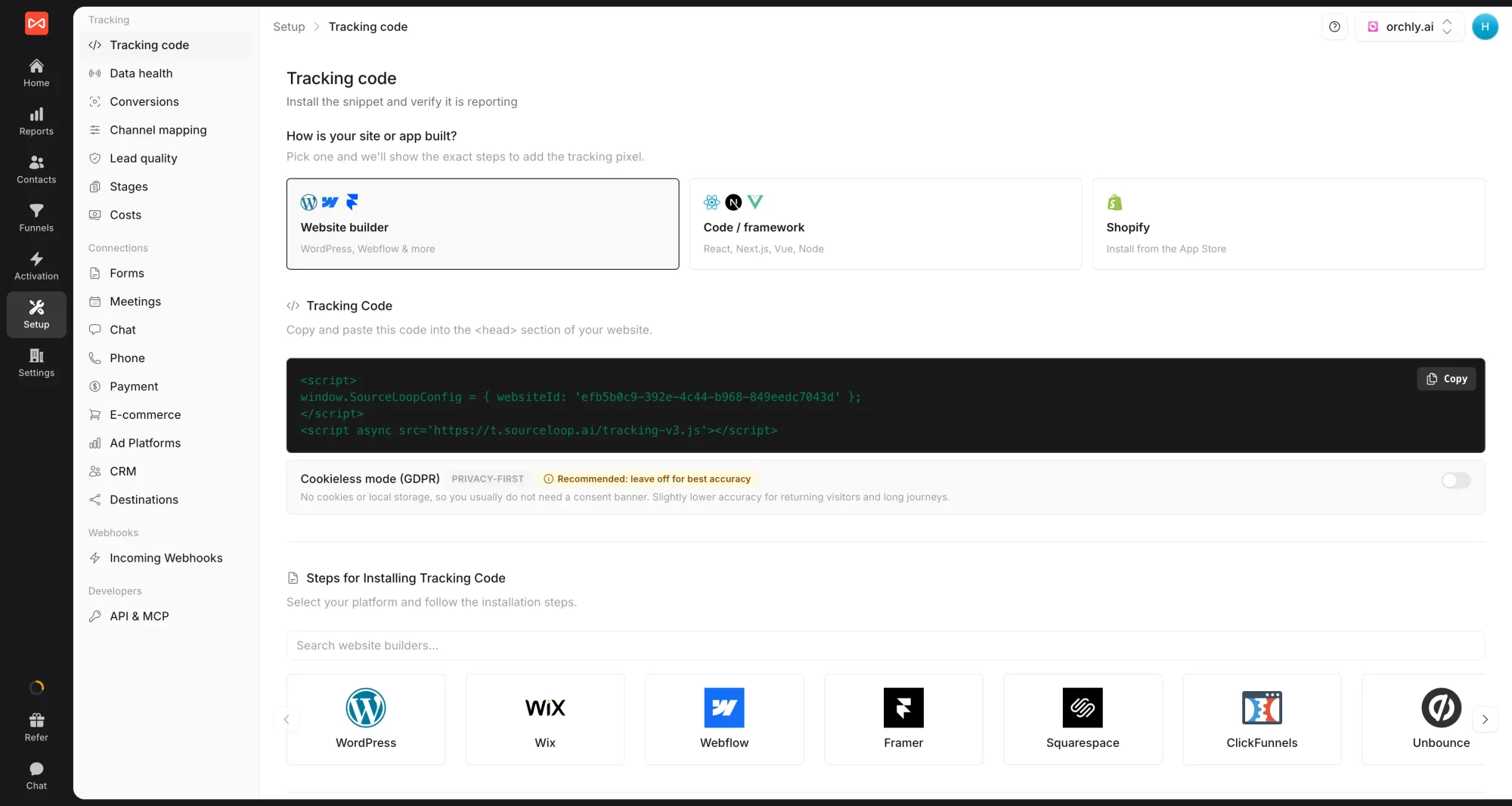
Paste the snippet into the <head> of every page on your site, especially the page that hosts your Zoom Scheduler embed. Site-wide installation is recommended so SourceLoop builds the complete pre-booking journey for each visitor.
Step 2: Embed Zoom Scheduler on your booking page
Inside Zoom, head to Scheduler -> your booking type -> Customize -> Embed. Zoom offers two embed flavors:
- Inline embed: the Zoom Scheduler renders directly inside your page
- Pop-out link: opens Scheduler as an overlay when a visitor clicks a button or link
Either one works the same way for attribution. The constraint is the same as ever, the page that displays the embed must have the SourceLoop snippet in its <head>. Once both are in place, meetings booked through the Scheduler are tied back to the marketing channel that originally drove the visit.
Step 3: Verify it’s working
Open your booking page in an incognito tab, append ?utm_source=test&utm_medium=verify&utm_campaign=zoom-check to the URL, and book a test slot with a real email you control.
Check Contacts in SourceLoop, the test meeting should appear in a few seconds with the test UTMs attached. If something isn’t right, append ?sl_debug=1 to the page URL to enable diagnostic console output.
Where to see Zoom Scheduler bookings
Three SourceLoop surfaces give you complementary views of your Zoom Scheduler data:
Contacts
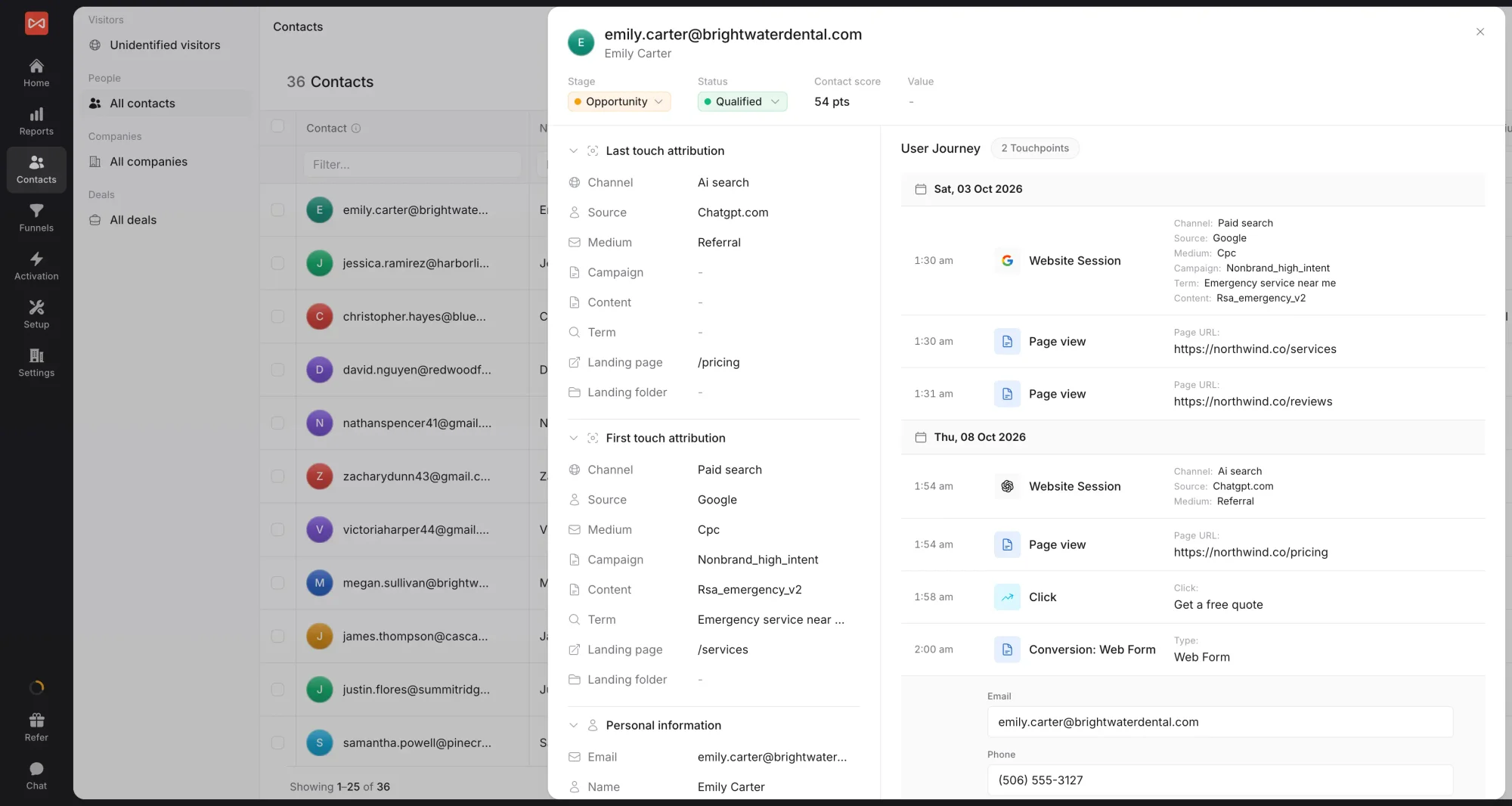
Go to app.sourceloop.ai/contacts and each Zoom Scheduler booking shows up as a contact row. Expand a row to see the entire pre-meeting timeline, useful prep before hopping on the actual Zoom call.
Traffic and Revenue report
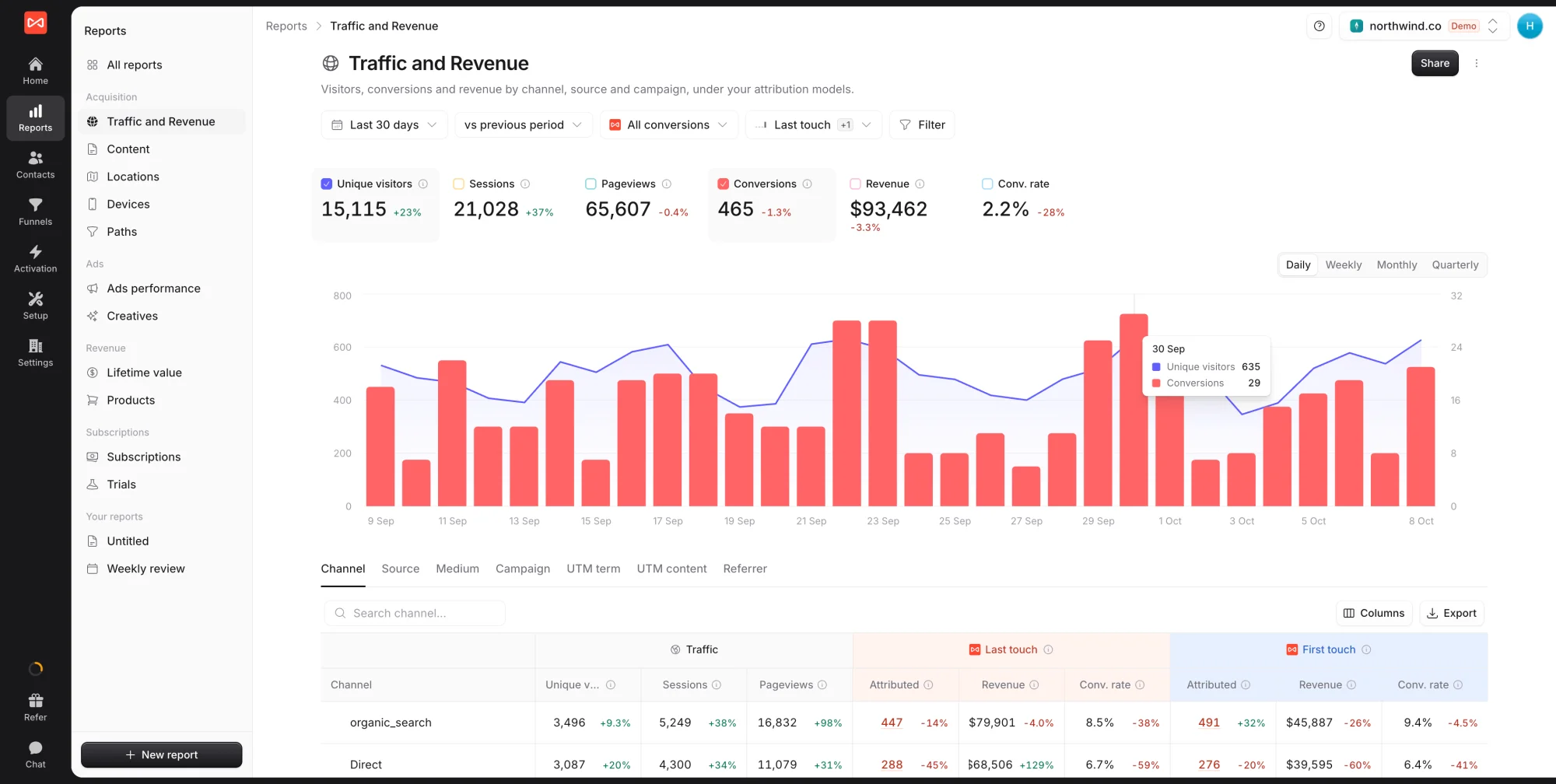
The Traffic and Revenue report at app.sourceloop.ai/reports/traffic groups Zoom Scheduler bookings by source, medium, and campaign. It’s how you spot patterns like “our LinkedIn organic posts produce more booked meetings than the entire paid Facebook campaign.”
Funnel reports
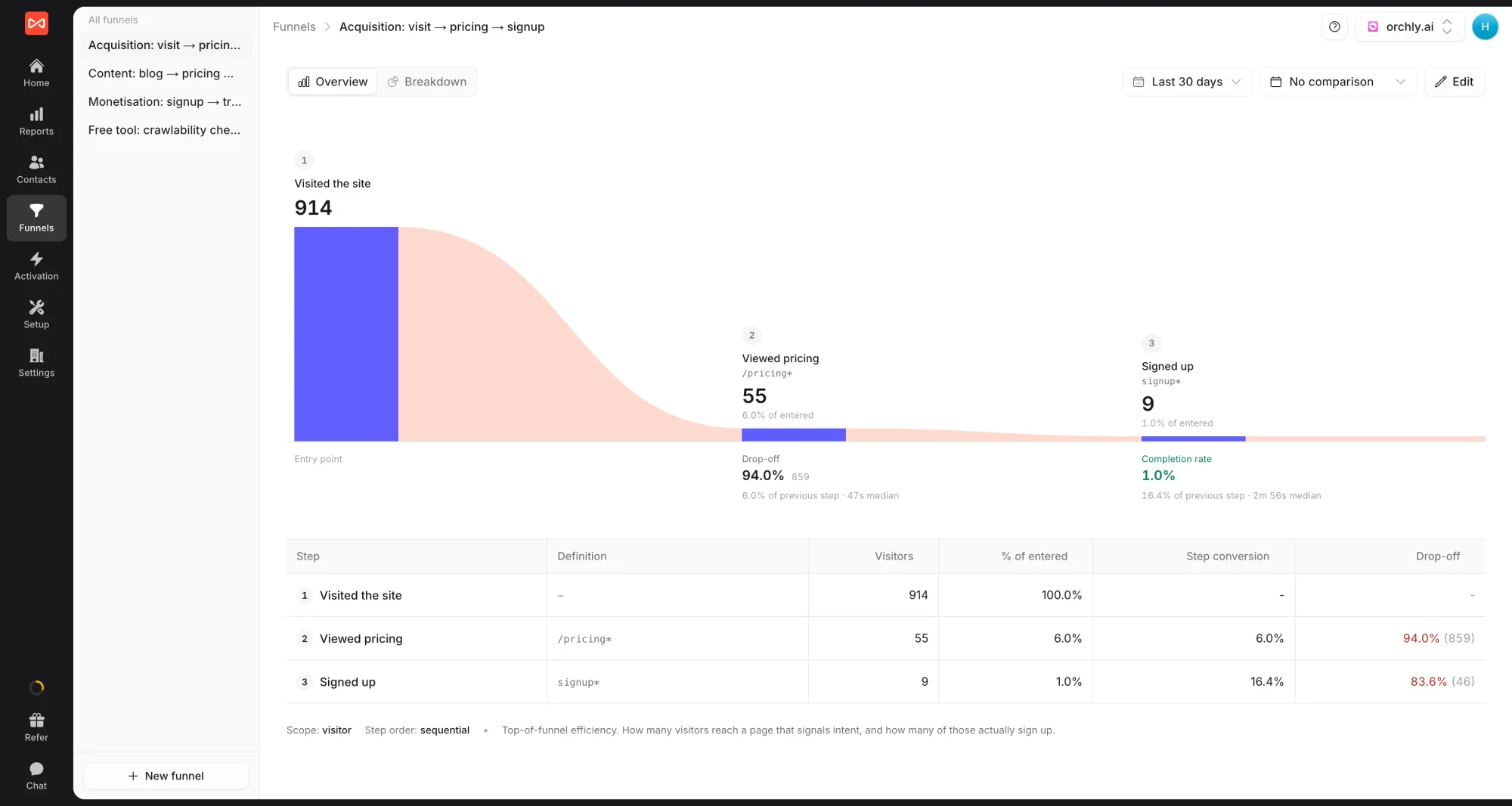
Open app.sourceloop.ai/funnels and configure a funnel ending in “Zoom Scheduler booking”. Cut it by source or landing page to find where prospects either turn into booked meetings or drop off.
When paid acquisition is part of the picture, you can also push Zoom Scheduler bookings as offline conversions to Google Ads and Meta so the bidding algorithms learn from real booked calls instead of vanity clicks. The conversion sync guide covers the offline-conversion wiring.
That wraps Zoom Scheduler, every booking is now tied to whatever channel actually produced it.
Frequently asked questions
-
Do I need a paid Zoom plan for this to work?
Zoom Scheduler itself requires a Zoom paid plan (Pro and above), but that's a Zoom limitation, not a SourceLoop one. Once Scheduler is available in your account, SourceLoop tracks it on every plan including Basic SourceLoop subscriptions.
-
Does this work with Zoom's team scheduling and round-robin features?
Yes. Attribution is captured at the embed level, so single-user, team, and round-robin schedulers all flow into SourceLoop the same way.
-
My organization runs Zoom for Government / dedicated tenant. Will that work?
Yes, as long as the Scheduler embed loads on a page where the SourceLoop script is also installed. The integration doesn't depend on Zoom's standard domain or any region-specific endpoint.
-
I include my Zoom Scheduler link in my email signature. Will those bookings be tracked?
No. Bookings made through a raw `zoom.us/scheduler/...` URL bypass your website entirely, so SourceLoop never sees those visitors and has no way to attribute them. Embed the scheduler on a landing page if you want signature traffic in your reports.
-
Does this require any Zoom API access or developer setup?
No. There's no OAuth, no API key, no developer app to register on the Zoom side. Setup happens entirely on your website with the SourceLoop tracking script and the Zoom Scheduler embed.

 Paid Social


