
How to track lead source in ConvertKit (Kit)
Find out which channel, podcast, or piece of content actually drove every ConvertKit signup, with the full pre-signup journey saved on each subscriber.


On this page
ConvertKit (rebranded as Kit) is the email tool creators, podcasters, course-sellers, and indie newsletter writers reach for first. The catch: it tells you who subscribed but rarely where they came from. This guide brings that context to every Kit signup, so you can credit the podcast guest spot, the LinkedIn post, or the ad that actually drove a new subscriber.
Three-step setup, around five minutes.
What SourceLoop captures from ConvertKit / Kit
Each ConvertKit signup lands in SourceLoop with:
- Acquisition channel plus the visitor’s full UTM parameter set
- Pre-signup browsing trail in chronological order
- Time on site before subscribing
- Number of return visits before the signup
- Email captured from the ConvertKit form (Name and other fields are also forwarded if present)
- Original landing page and the URL that referred them
- Source of the converting session, useful when first-touch and last-touch differ
- Device, country, and browser
Before you start
You’ll need:
- A SourceLoop workspace (free trial)
- Edit access to the website where the ConvertKit form will be embedded
- A ConvertKit (Kit) account with at least one form built under Grow -> Landing Pages & Forms
Step 1: Install the SourceLoop tracking script
Sign in to SourceLoop, head to Setup -> Tracking code in the left sidebar, and copy the snippet.
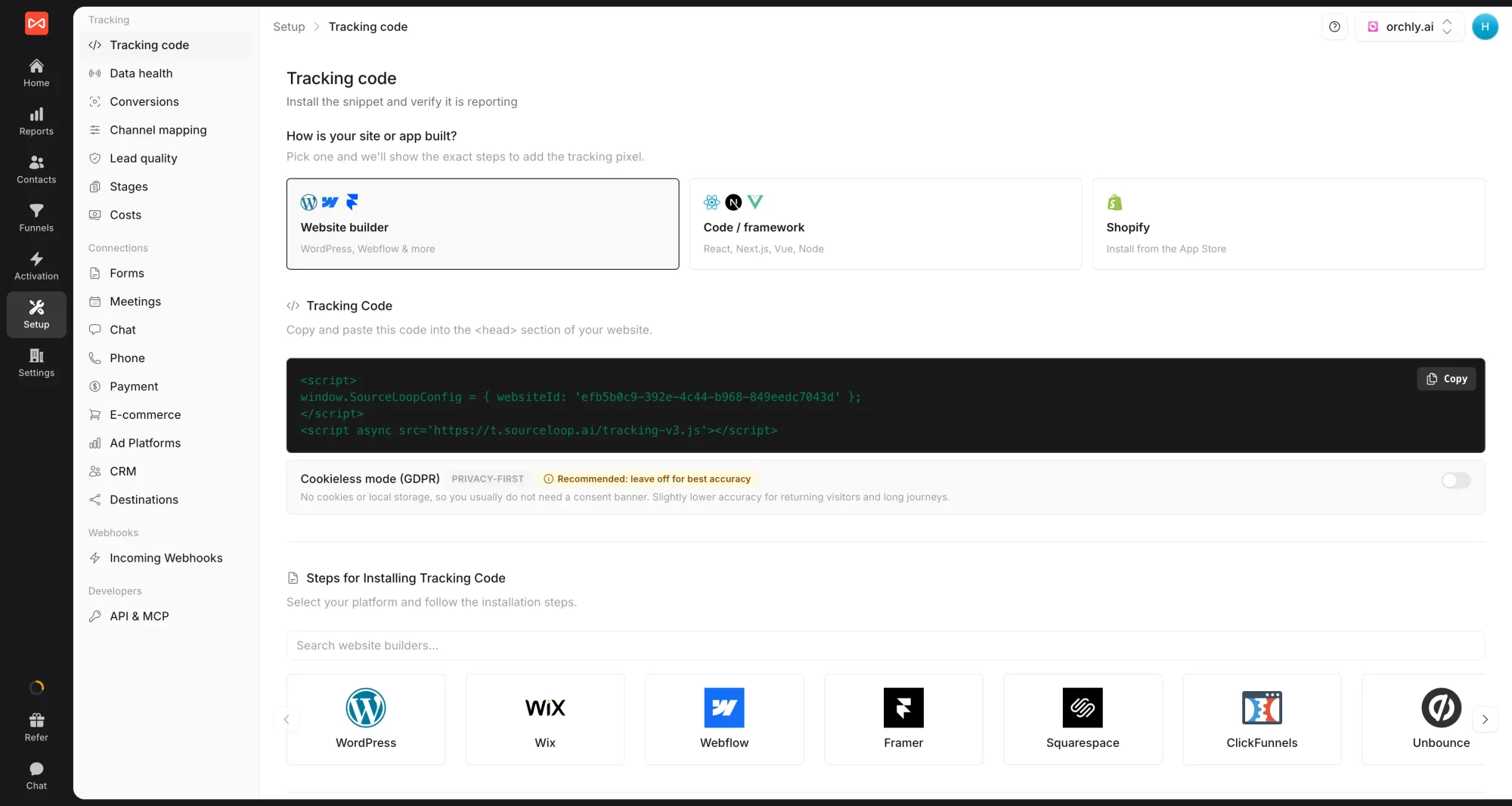
Paste the snippet inside the <head> of your site so it loads on every page that will host a ConvertKit form.
Step 2: Embed your ConvertKit form
In ConvertKit (Kit), navigate to Grow -> Landing Pages & Forms and either pick an existing form or create a new one.
A few notes:
- Choose either the Inline or Modal/Slide-in embed type for full SourceLoop compatibility
- Click Embed and copy the JavaScript or HTML snippet
- Paste the snippet into your site where you want the form to appear (or in your site’s
<head>for floating/modal embeds) - Confirm the form includes an Email field, this is what SourceLoop uses to identify the lead
Step 3: Verify it’s working
Open your site in an incognito window, navigate to (or trigger) your ConvertKit form, enter a name and email, and submit.
Within seconds, the new subscriber should appear on Contacts in SourceLoop as a Web Form conversion with the submitted email and the visitor’s attribution data attached.
Where to see ConvertKit signups in SourceLoop
Contacts
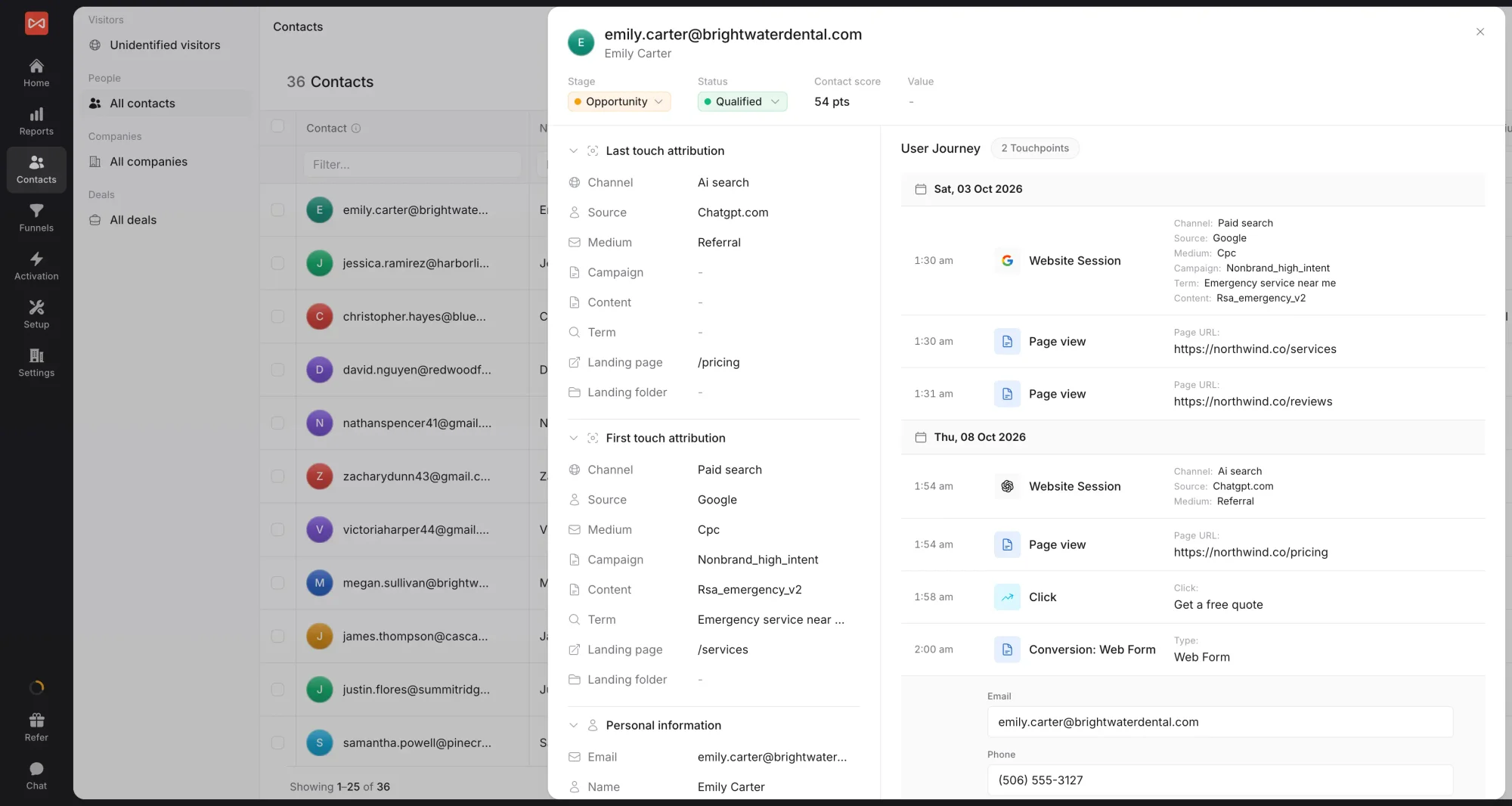
Each ConvertKit signup becomes a row at app.sourceloop.ai/contacts. Expand the row to see the visitor’s pre-signup journey, including the originating channel and every page they viewed before subscribing.
Traffic and Revenue report
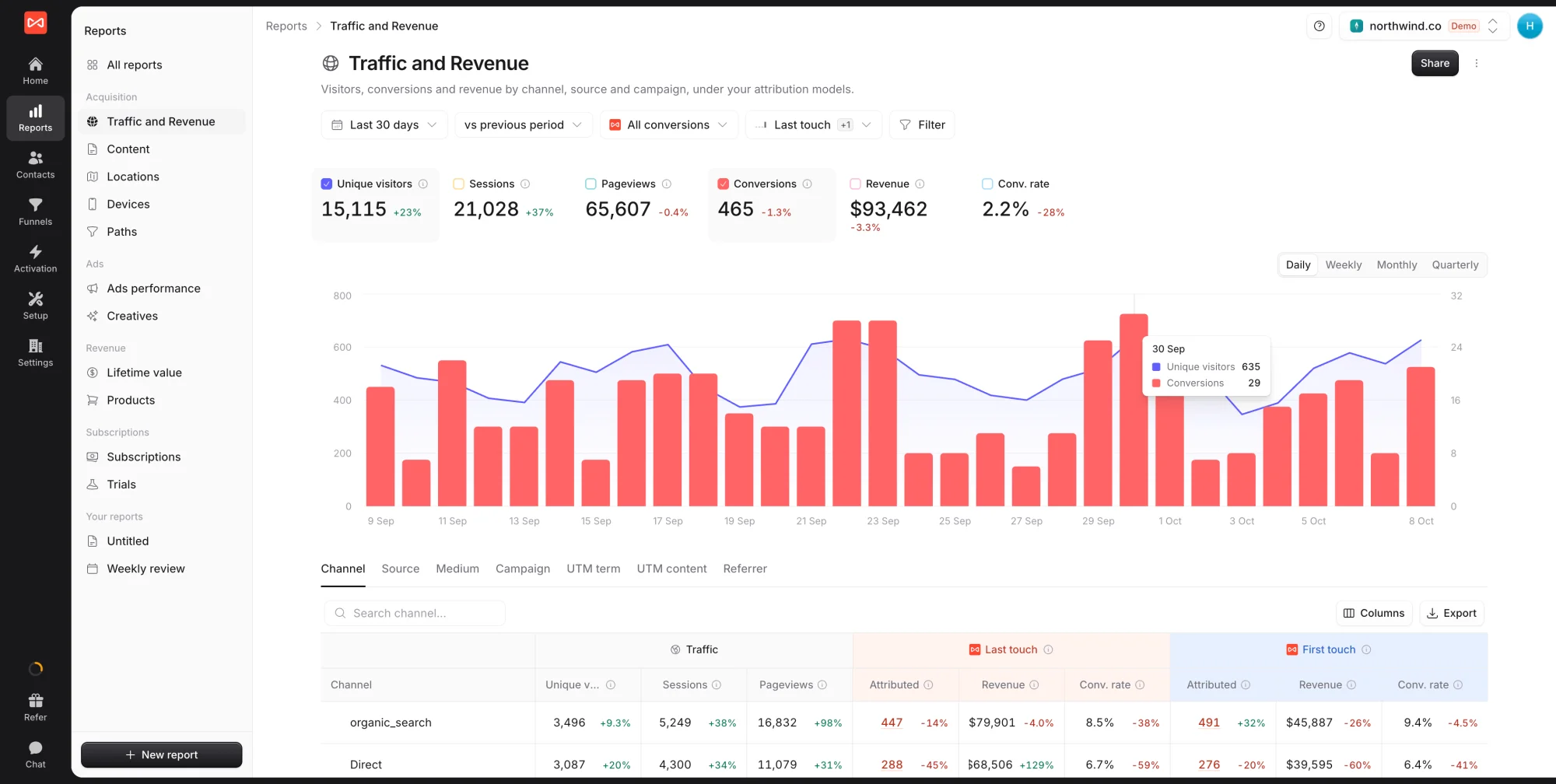
app.sourceloop.ai/reports/traffic groups your ConvertKit signups by source, medium, and campaign. Useful for creators who want to know “did that podcast appearance actually drive subscribers?”
Funnel reports
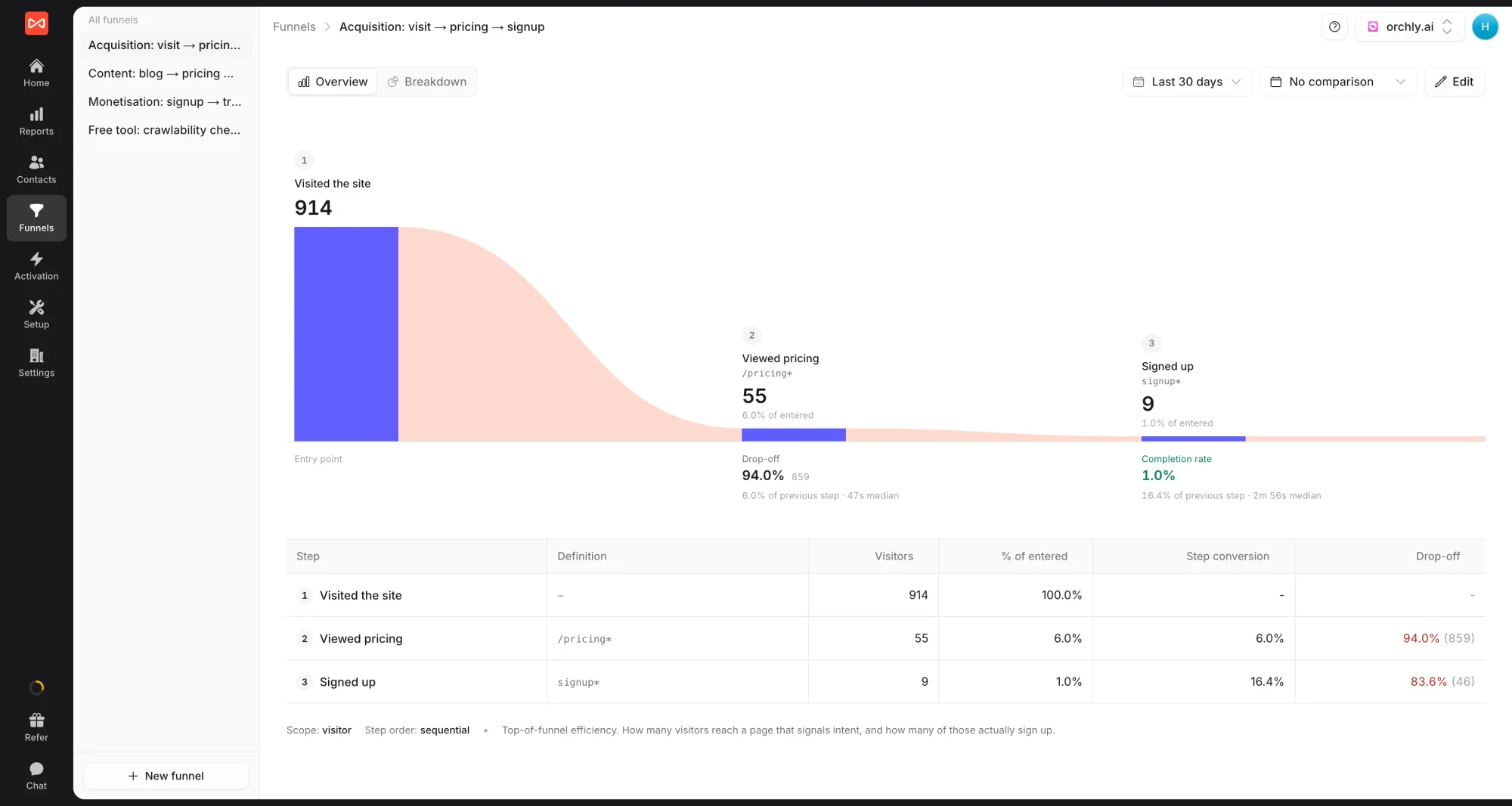
Build a funnel in app.sourceloop.ai/funnels ending in “ConvertKit signup”. Slice by source to find your most subscriber-friendly traffic sources.
If you run paid ads to grow your list, push ConvertKit signups to Google Ads and Meta as offline conversions so the bidding algorithms learn to optimize for real subscribers rather than just clicks. The conversion sync guide walks through the setup.
Frequently asked questions
-
Does this work on the ConvertKit Free plan?
Yes. The integration uses the standard ConvertKit form embed, which is available on every plan including Free.
-
Will this work with ConvertKit's Landing Pages too, or only embedded forms?
SourceLoop captures form submissions on your own site that has the tracking script. If you use a ConvertKit Landing Page (hosted at pages.convertkit.com), that page isn't on your domain and the tracker isn't there, so those signups won't be attributed. Embed forms on your own site for full attribution.
-
I'm using ConvertKit's modal/popup form. Does the popup count as a tracked page?
Yes, as long as the parent page hosting the popup has the SourceLoop snippet. The popup itself doesn't need any extra setup.
-
Will SourceLoop interfere with ConvertKit's sequences, automations, or tagging rules?
No. The subscription itself reaches ConvertKit exactly as it would otherwise, triggering every sequence and tag rule you've set up. SourceLoop adds attribution data on its side without touching the ConvertKit-side flow.
-
Does this work after the ConvertKit rebrand to "Kit"?
Yes. ConvertKit and Kit are the same product, the embed code and integration behavior haven't changed with the rebrand.

 Paid Social


