
How to track lead source in Cognito Forms
Get the missing marketing dimension on every Cognito Forms entry, the channel, campaign, and landing page behind it, plus the full journey.


On this page
- What SourceLoop captures from Cognito Forms
- Before you start
- Step 1: Add SourceLoop’s tracking snippet to your site
- Step 2: Use the JavaScript embed on a tracked page
- Step 3: Send a verification submission
- Where to see Cognito Forms submissions in SourceLoop
- Contacts
- Traffic and Revenue report
- Funnel reports
Cognito Forms is the SaaS form builder that punches well above its price tier, calculations, signatures, payments, document templates, all on a famously generous free plan. The single thing it doesn’t do is tell you which marketing channel sent each lead. SourceLoop closes that gap with no Cognito-side configuration.
Three quick steps, around five minutes, and from then on every form fill carries its acquisition story.
What SourceLoop captures from Cognito Forms
Each submission flows into SourceLoop bundled with:
- The marketing source that delivered the visitor (paid, organic, social, referral, direct, etc.)
- UTM parameters: source, medium, campaign, term, content
- Page sequence the visitor stepped through before submitting
- Session-level time on site ahead of the conversion
- Visit count prior to the form fill
- Email and name read from the Cognito Forms fields
- First-touch landing page of the visitor’s history
- Source for the converting session (often distinct from first-touch)
- Device, country, browser
Before you start
You’ll need:
- A SourceLoop workspace (free trial)
- Edit access to the page where your Cognito Form is embedded
- A Cognito Forms account with a form you can embed via the script embed
Step 1: Add SourceLoop’s tracking snippet to your site
From SourceLoop, head to Setup -> Tracking code in the left nav and copy the snippet.
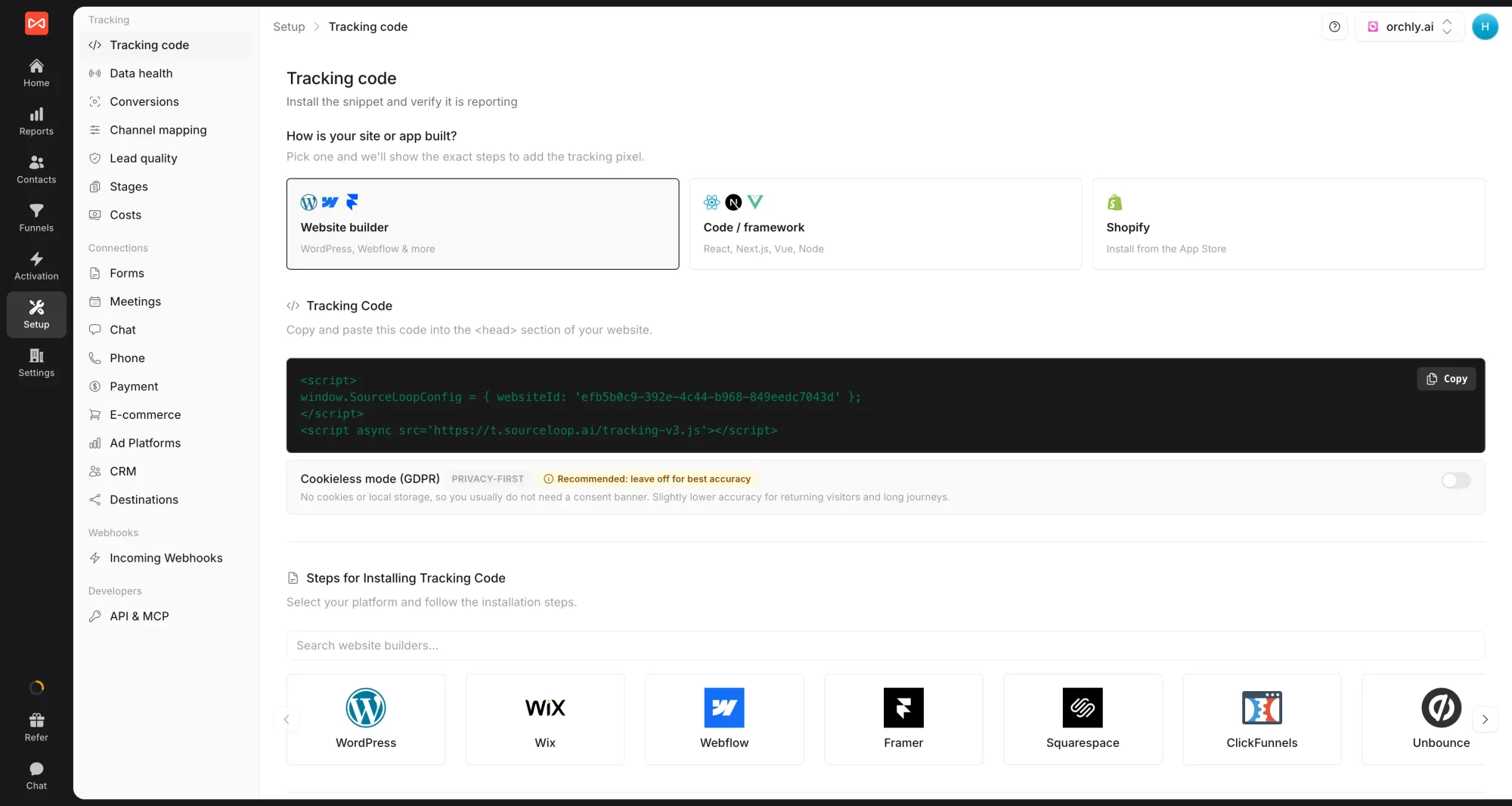
Paste it into the <head> of your site. Site-wide is best, but at minimum it needs to run on every page where you plan to embed a Cognito Form. WordPress users have header-injection plugins; static site builds have layout templates; Webflow/Framer have project-level head settings; tag managers can fire it on all pages.
Step 2: Use the JavaScript embed on a tracked page
In Cognito Forms, open your form, click Publish -> Embed Form, and copy the seamless embed snippet (the JavaScript version, not the iframe).
Paste that snippet into the page where your form should appear. The page must also have the SourceLoop snippet from Step 1.
Step 3: Send a verification submission
Open the page hosting your form in an incognito window, append ?utm_source=test&utm_medium=verify&utm_campaign=cognito-check to the URL, and submit a test entry with an email address you can check.
Within seconds, the entry should show up at the top of Contacts in SourceLoop with the three test UTMs attached.
Where to see Cognito Forms submissions in SourceLoop
Contacts
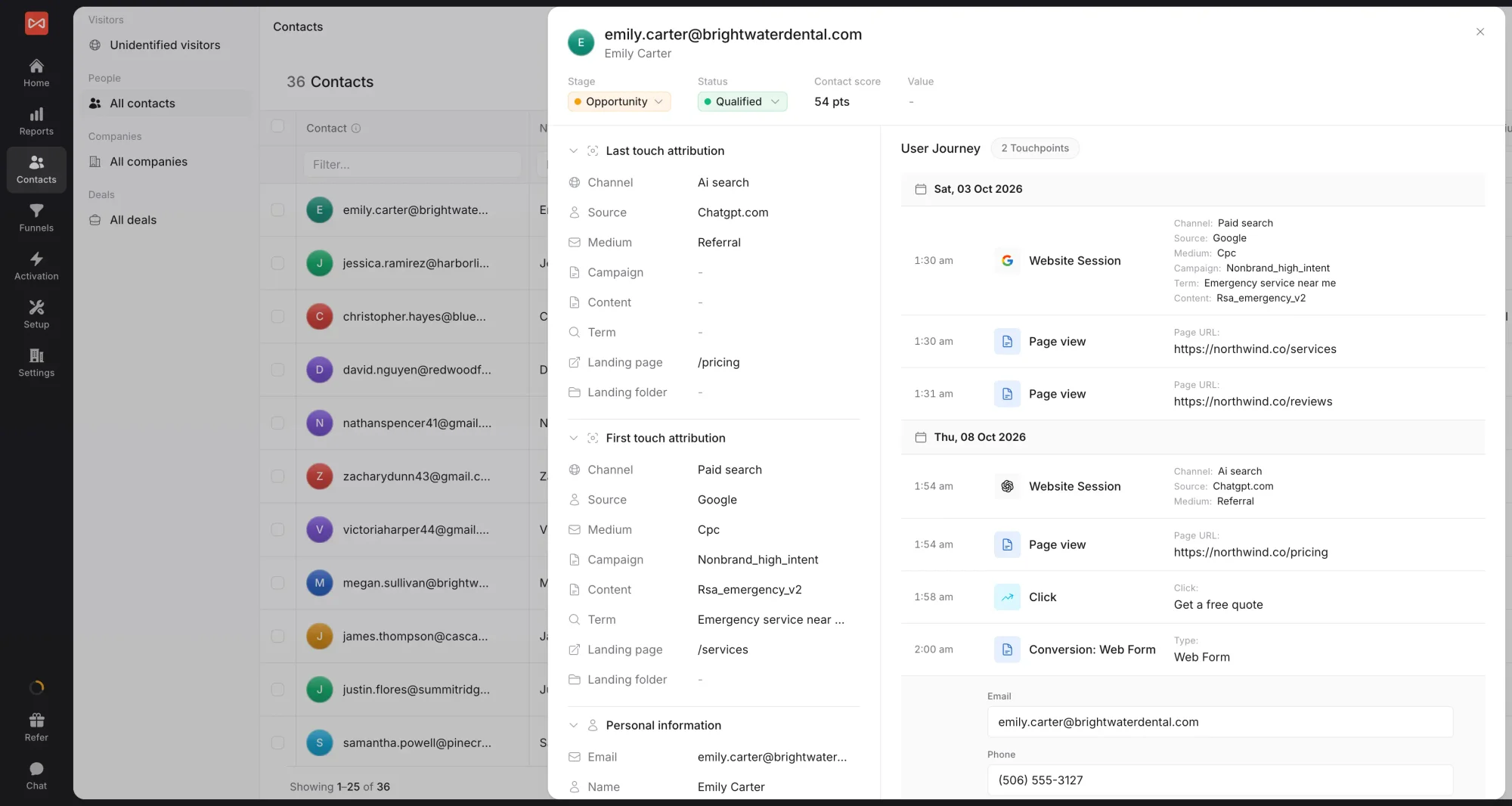
Every Cognito Forms submission becomes a contact row at app.sourceloop.ai/contacts. Click a contact to see their complete browsing path: every page, every prior session, every touchpoint that led to the submission.
Traffic and Revenue report
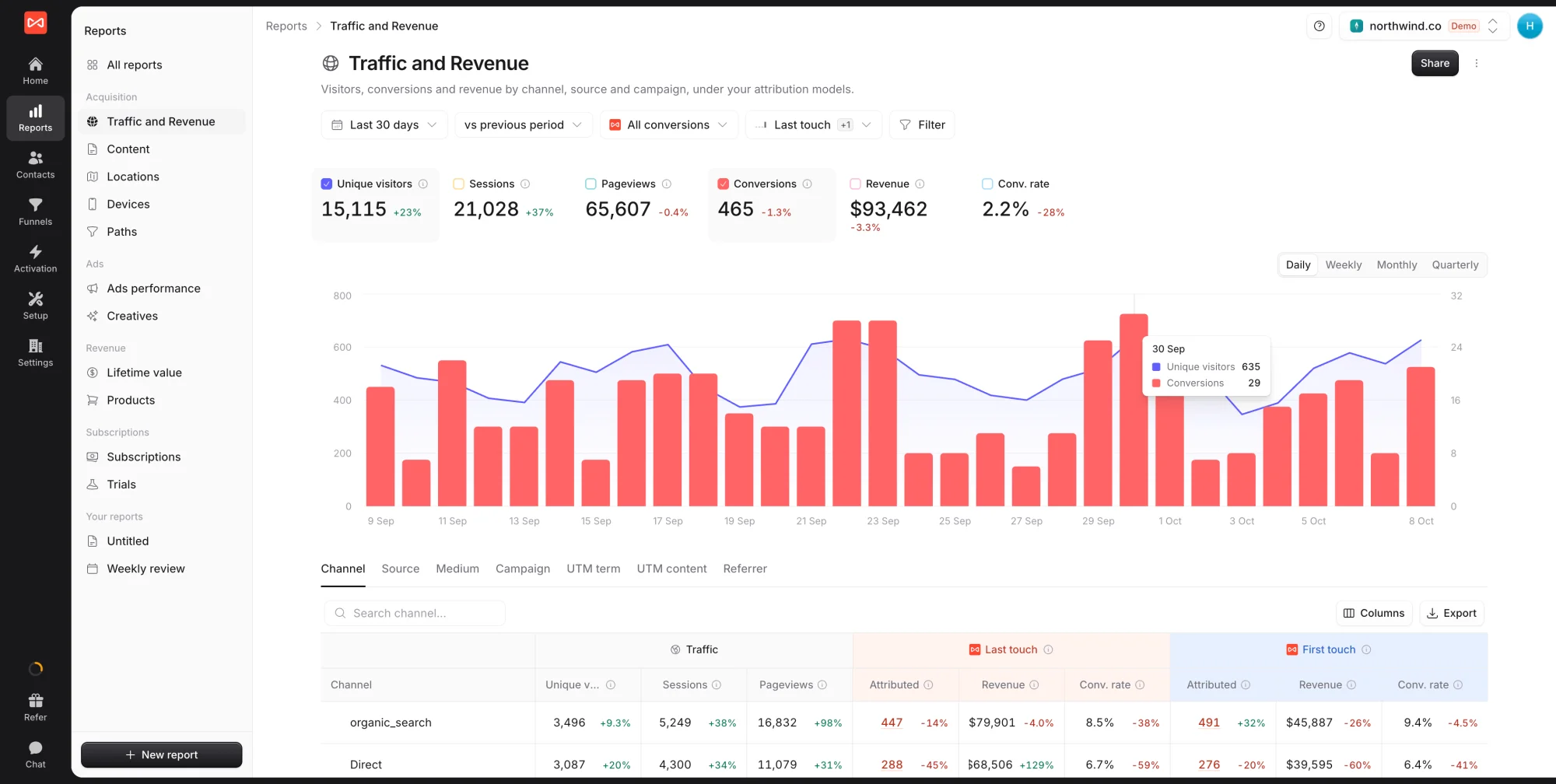
Pop open app.sourceloop.ai/reports/traffic for the cross-channel view. Cognito submissions get grouped by source, medium, and campaign so you can compare what’s driving leads vs. what’s only driving traffic.
Funnel reports
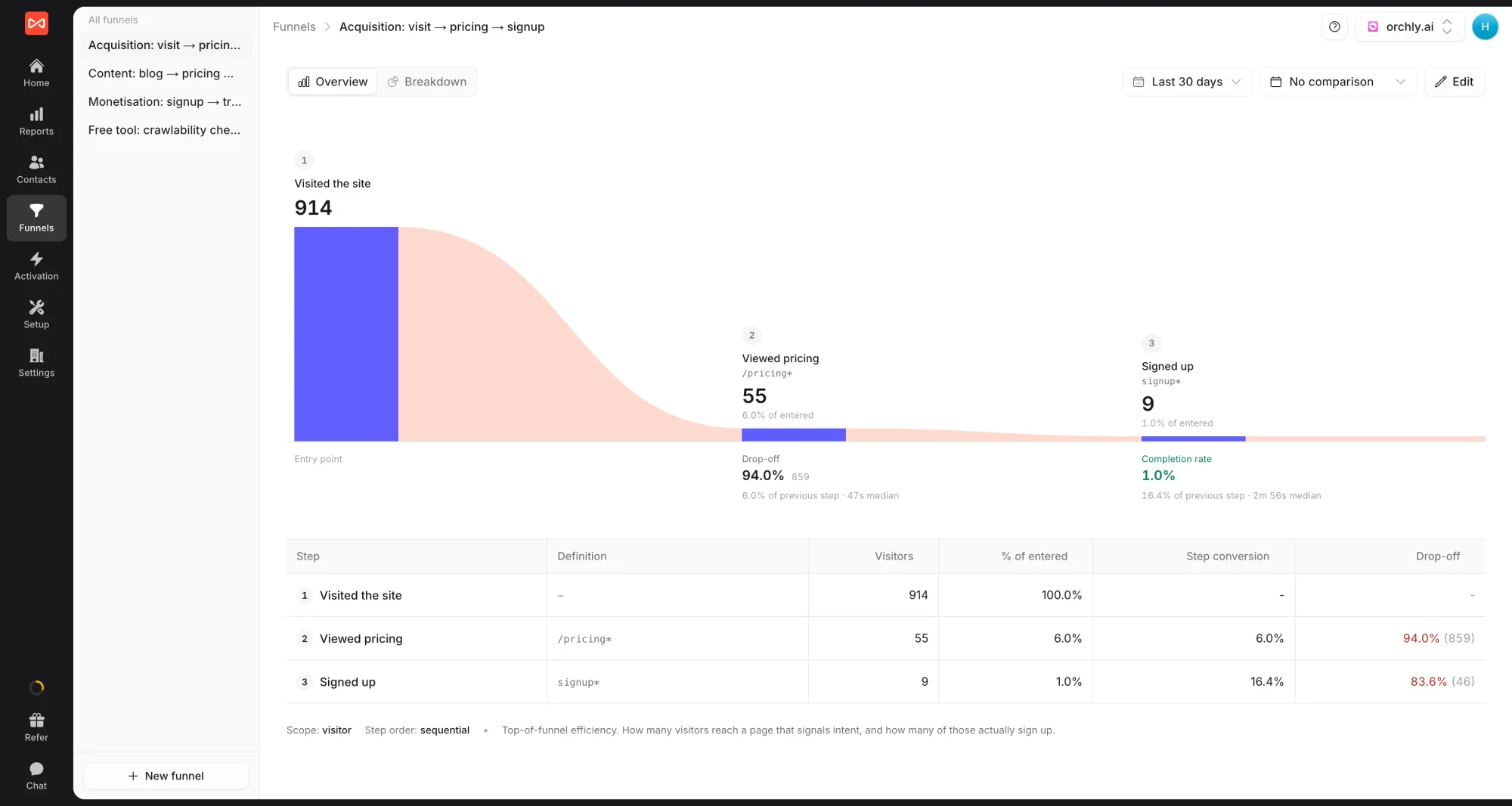
In app.sourceloop.ai/funnels, build a funnel that ends in “Cognito Forms submission”. Slice by source, landing page, or device to surface the highest-converting routes from first visit to form fill.
If paid acquisition is part of your mix, mirror Cognito submissions back to Google Ads and Meta as offline conversions so the bidding algorithms train on actual leads. The conversion sync guide covers the wiring.
Frequently asked questions
-
Does this work on Cognito Forms' free plan?
Yes. Cognito Forms' generous free plan supports embedding forms on external sites, which is the only requirement on the Cognito side. SourceLoop attaches attribution regardless of your Cognito plan level.
-
I embed Cognito Forms with a JavaScript snippet vs an iframe. Does it matter?
The JavaScript "seamless" embed is what we recommend. Iframes complicate cross-frame data sharing, so attribution is most reliable when the form renders inline on your page via the script embed.
-
Are Cognito Forms' calculation, conditional-logic, and document-generation features safe to use?
Yes. Everything you've built inside Cognito Forms, calculations, dynamic fields, document templates, signatures, payments, runs untouched. SourceLoop only attaches marketing context to the submission itself.
-
I link directly to a Cognito Forms hosted URL (cognitoforms.com/...). Will those submissions be attributed?
No. Direct links to the Cognito-hosted version of your form bypass your site entirely, so there's no SourceLoop tracking on those pageviews. Embed the form on your own page and send traffic there instead.
-
Does this conflict with Cognito Forms' built-in spam protection (CAPTCHA, profanity filter)?
No. Spam protection runs entirely inside Cognito Forms. SourceLoop only attaches attribution to submissions that successfully complete, which is what you want.

 Paid Social


