
How to track lead source in ARForms
Stop losing the marketing context behind every ARForms submission. Tie each lead back to the campaign and journey that delivered it.


On this page
- What SourceLoop captures from ARForms
- Before you start
- Step 1: Install SourceLoop’s snippet on your WordPress site
- Step 2: Confirm the form is on a tracked, published page
- Step 3: Submit a test entry to verify
- Where to see ARForms submissions in SourceLoop
- Contacts
- Traffic and Revenue report
- Funnel reports
ARForms is the WordPress form plugin that leans into aesthetics, slick AJAX submissions, premium templates, drag-and-drop builder, and a CodeCanyon following. Useful for agencies and lead-gen sites, but it doesn’t say which marketing channel produced each entry. SourceLoop fills in that missing field.
Three steps, around five minutes, no ARForms-side configuration required.
What SourceLoop captures from ARForms
Every ARForms submission lands in SourceLoop tagged with:
- Acquisition source of the visitor (paid, organic, social, referral, direct)
- All UTM parameters parsed from the landing URL
- Page-by-page browsing path taken before the form fill
- Cumulative time on site ahead of the conversion
- Number of distinct sessions before the submission
- Email + name from the ARForms fields
- Landing page of the visitor’s first session
- Source of the converting session (often distinct from first-touch)
- Device, country, browser of the lead
Before you start
You’ll need:
- A SourceLoop workspace (free trial)
- WordPress admin access (or another way to edit
<head>markup) - An ARForms form embedded on a published WordPress page
Step 1: Install SourceLoop’s snippet on your WordPress site
From SourceLoop, head to Setup -> Tracking code in the sidebar and copy the snippet shown.
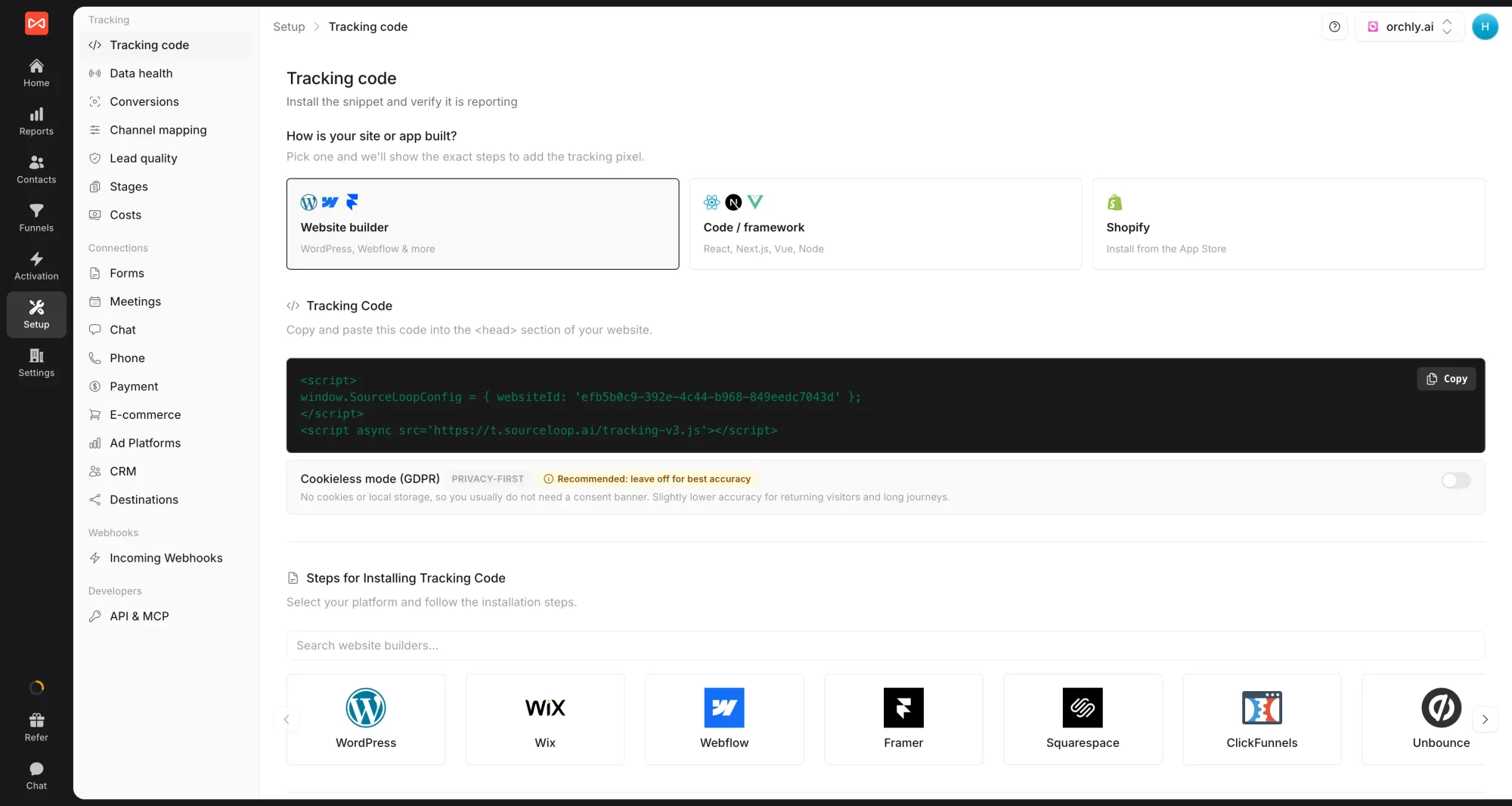
Drop it into the <head> of your WordPress site. The usual WordPress paths:
- A header-injection plugin (Insert Headers and Footers, WPCode)
- Your active theme’s
header.php, just before</head> - A “Custom Code” field inside Yoast, Rank Math, or SEOPress
- Google Tag Manager set to fire on All Pages
The script must load on every page that contains an ARForms form.
Step 2: Confirm the form is on a tracked, published page
There’s no per-form switch to flip inside ARForms. Once the snippet is live, every ARForms form on every page that includes the snippet is attributable.
Worth confirming:
- The form is on a published page or post (not a draft or private page)
- The form collects an email address, SourceLoop uses email as the lead ID
- Any performance plugin isn’t deferring SourceLoop past the form’s submit handler
Step 3: Submit a test entry to verify
Open the form’s page in an incognito tab with ?utm_source=test&utm_medium=verify&utm_campaign=arforms-check glued to the URL. Submit a real entry using an email you can check.
Within seconds, the submission should land on Contacts in SourceLoop with the three test UTM values shown on the record.
Where to see ARForms submissions in SourceLoop
Contacts
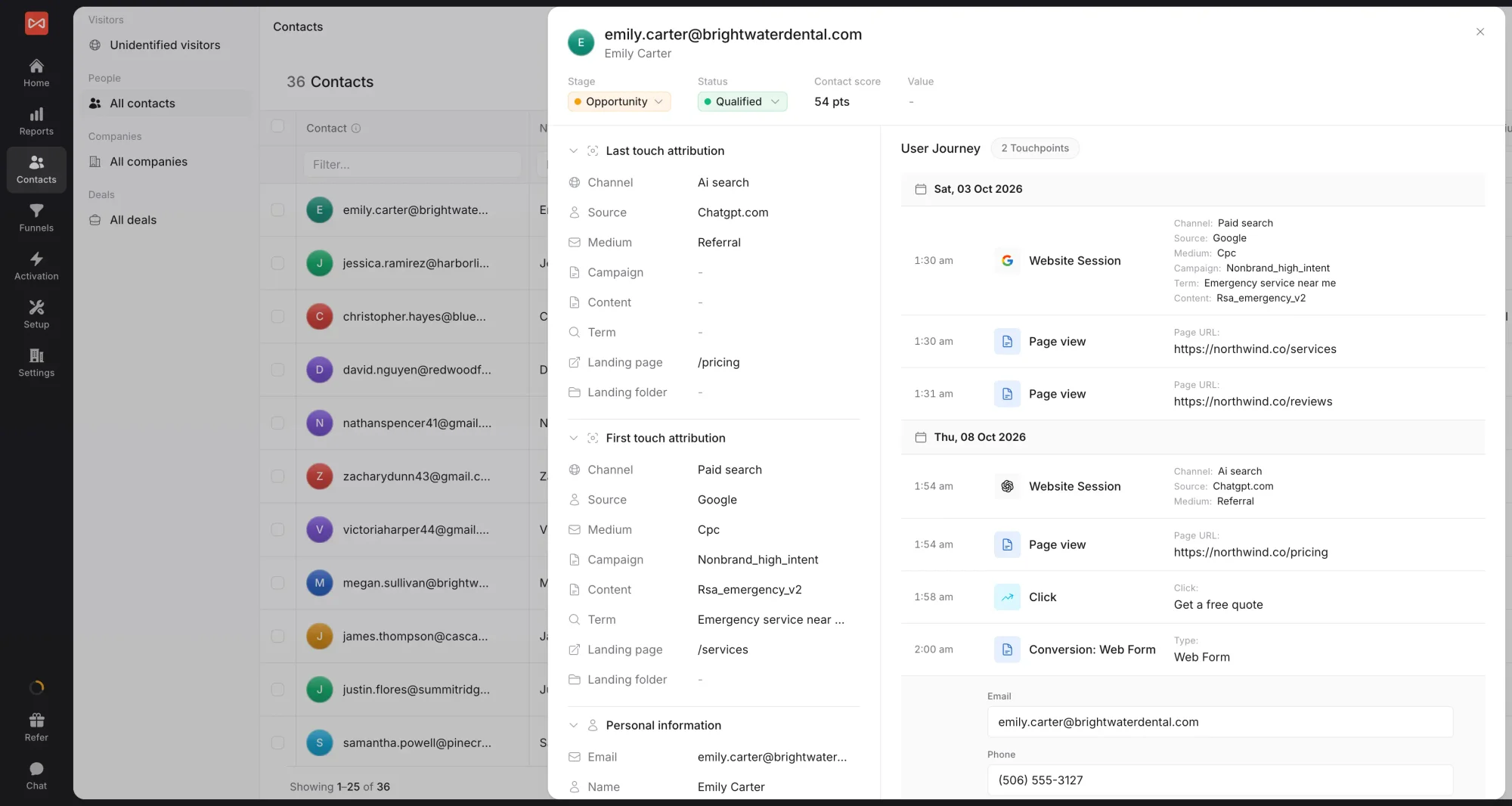
Each submission becomes a contact row at app.sourceloop.ai/contacts. Open a contact to see the full timeline, every page visited, every prior session, every campaign that touched them before the submission.
Traffic and Revenue report
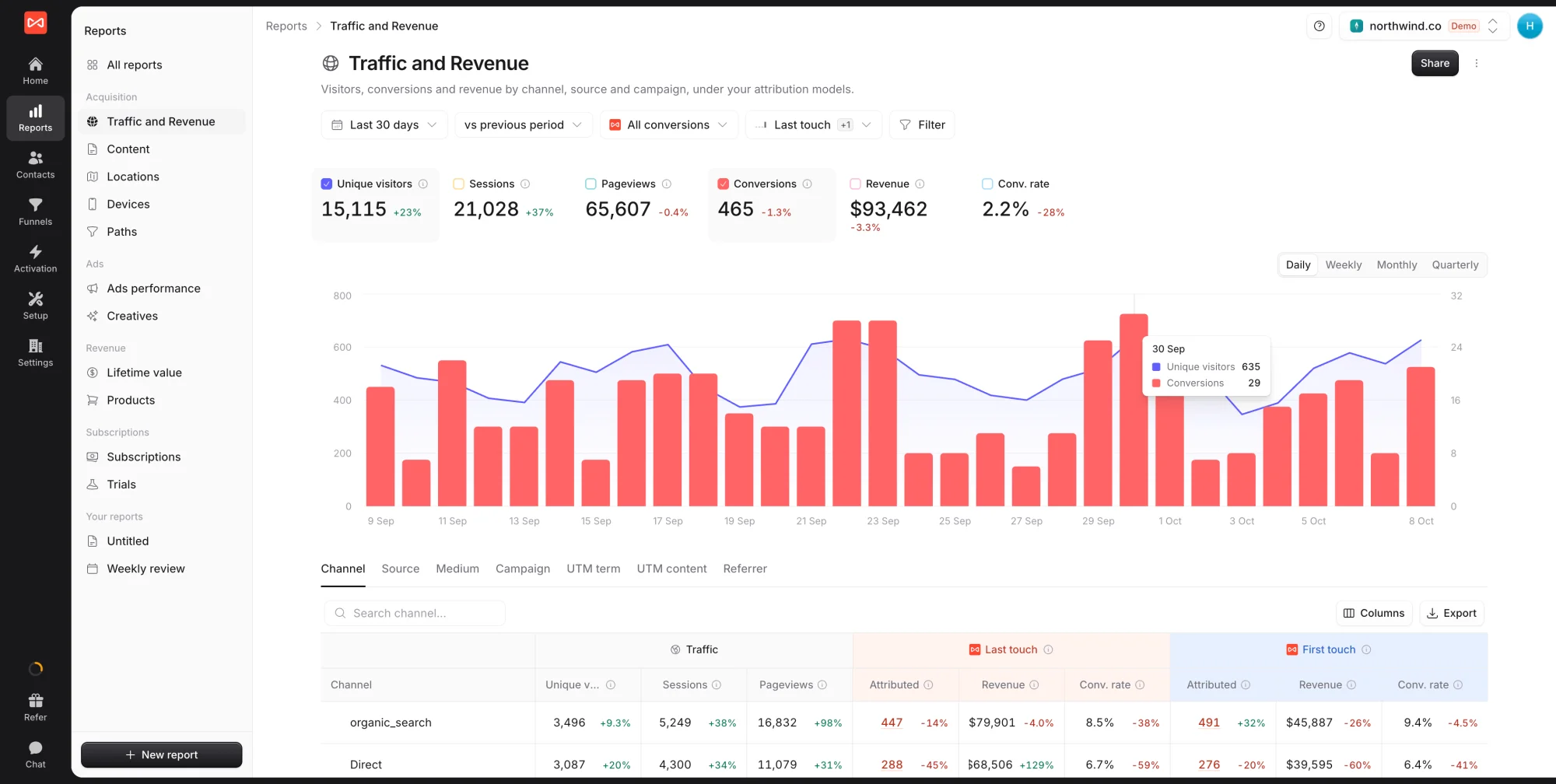
app.sourceloop.ai/reports/traffic rolls up ARForms submissions by source, medium, and campaign. A quick read on which channels are actually pulling weight, vs. which ones just send traffic.
Funnel reports
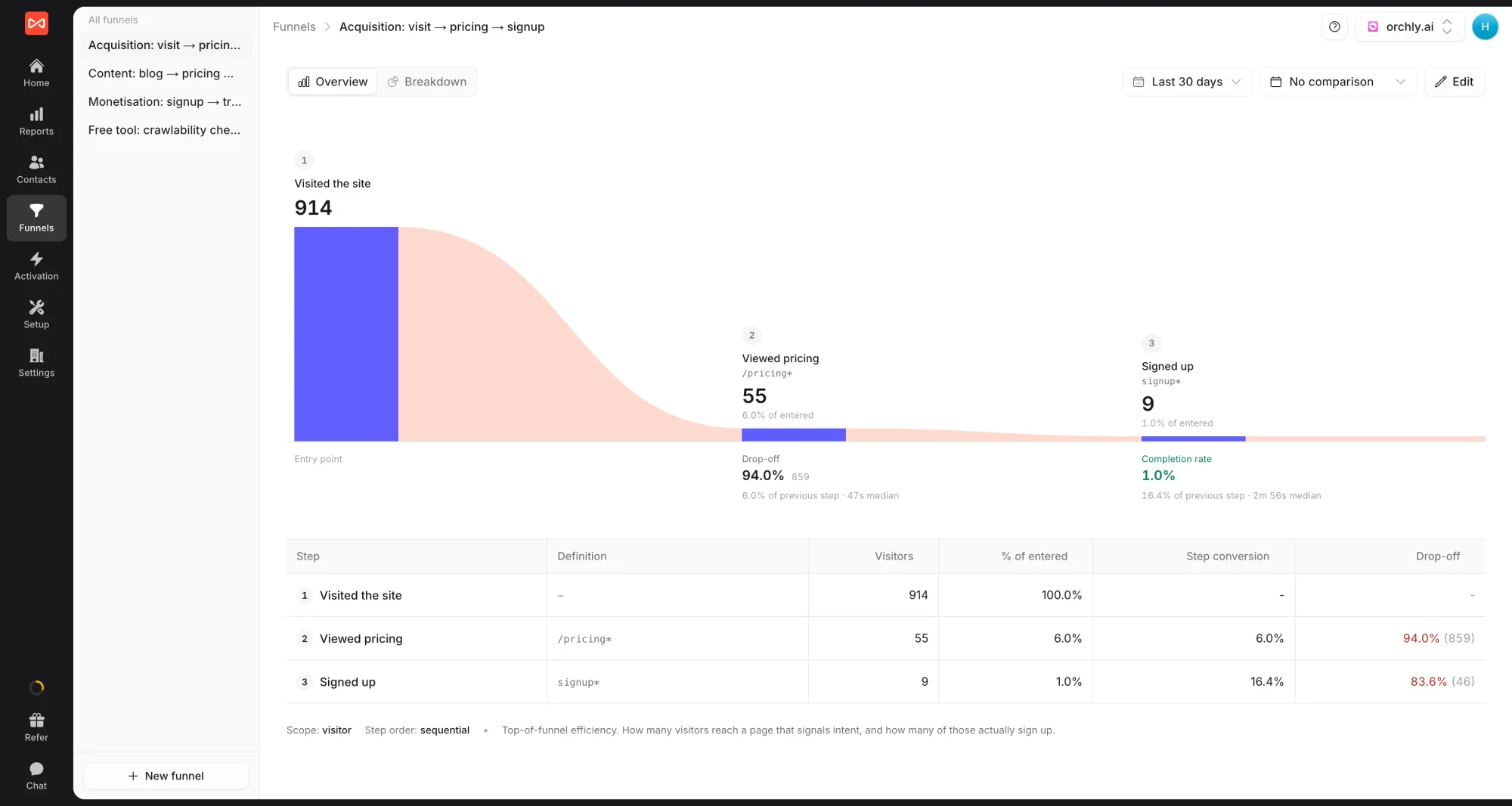
Build a funnel at app.sourceloop.ai/funnels with “ARForms submission” as the final step. Slice by source, content, or device to find the highest-converting paths from first visit to form fill.
If paid acquisition is in the mix, forward ARForms submissions back to Google Ads and Meta as offline conversions so the auction algorithms train on real lead generation. The conversion sync guide covers the setup.
Frequently asked questions
-
ARForms uses AJAX submissions by default. Does that affect SourceLoop?
No. Whether ARForms submits via AJAX or a full page reload, SourceLoop attaches attribution to the submission event the same way.
-
Can I track ARForms used in popup, slider, or modal mode?
Yes. ARForms' popup, modal, and slider variants all fire submissions the same way once the visitor reaches the end of the form.
-
My ARForms form is on a page protected by a membership plugin. Will tracking work?
Yes, as long as the SourceLoop snippet loads on that protected page. If the membership plugin defers script loading aggressively, place the SourceLoop snippet outside the deferred bundle.
-
Are ARForms' Mailchimp, ActiveCampaign, GetResponse, and webhook connections affected?
No. All your existing ARForms integrations continue to fire as configured. SourceLoop layers attribution data on top in its own dashboard, without intercepting anything ARForms does.
-
I custom-styled my ARForms with CSS. Does the snippet impact styling?
No. SourceLoop's snippet is invisible, no DOM injection, no CSS, no styling impact whatsoever. Your ARForms designs render exactly as before.

 Paid Social


