
How to track lead source in QuestionScout
Layer marketing attribution on top of every QuestionScout form so each response carries the source, campaign, and journey that produced it.


On this page
QuestionScout sits in the prosumer form-builder tier, deep logic, generous customisation, professional themes, and a famous AppSumo lifetime deal. The blind spot it shares with every form tool is acquisition data, you see the answers, never the channel. This guide solves that for QuestionScout submissions.
Three steps, around five minutes, no configuration required inside QuestionScout itself.
What SourceLoop captures from QuestionScout
For each QuestionScout form fill, SourceLoop attaches:
- Marketing source (organic, paid, referral, social, direct)
- Full UTM parameter set parsed from the landing URL
- Sequence of pages browsed before submission
- Time spent on site during the visit (or visits) leading up
- Repeat-visit count before they finally responded
- Email and name pulled from your QuestionScout fields
- First-touch landing page the lead originally arrived on
- Source attributed to the converting session specifically
- Device type, country, browser
Before you start
You’ll need:
- A SourceLoop workspace (free trial)
- Edit access to the page where your QuestionScout form is embedded
- A QuestionScout account with a form published and embeddable
Step 1: Install the SourceLoop snippet
Inside SourceLoop, head to Setup -> Tracking code in the left sidebar and copy the snippet.
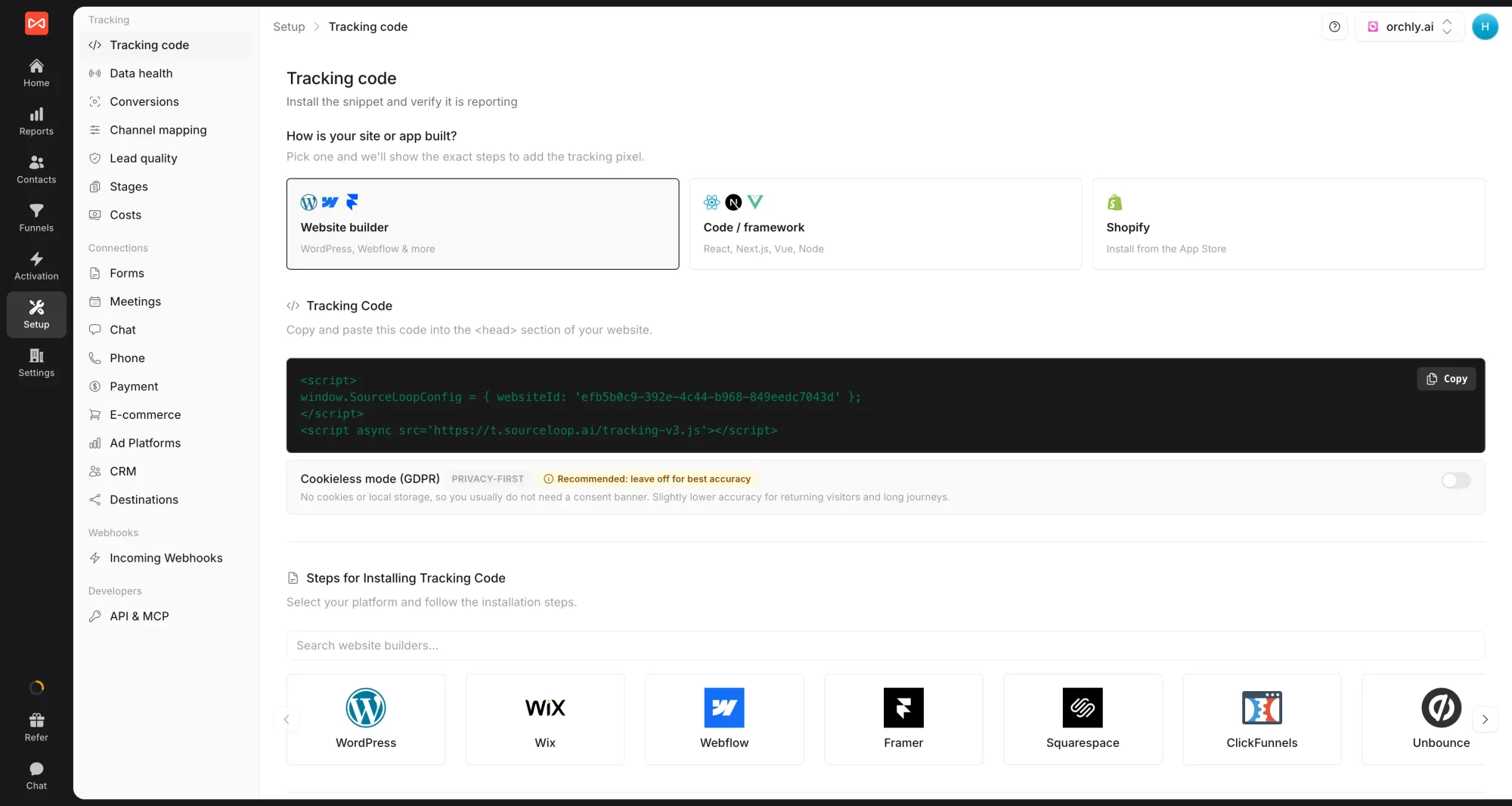
Add it to the <head> of the site (or pages) hosting your QuestionScout embed. WordPress: header-injection plugin or header.php. Webflow: Project Settings -> Custom Code -> Head Code. Framer: site-level Custom Code. Static sites: your global layout template. Tag manager: an All Pages tag. The snippet just needs to load on every page where a QuestionScout form might appear.
Step 2: Embed your QuestionScout form on a tracked page
In QuestionScout, open your form, click Share -> Embed, and copy the embed snippet. Paste it into the page where the form should appear, and make sure that page also has the SourceLoop snippet from step 1.
Step 3: Send a test response
Visit your form’s page in an incognito tab, append ?utm_source=test&utm_medium=verify&utm_campaign=questionscout-check to the URL, and submit a real response with an email you can access.
Within seconds, the new lead should appear at the top of Contacts in SourceLoop, with the test UTM values pinned to the record.
Where to see QuestionScout submissions in SourceLoop
Contacts
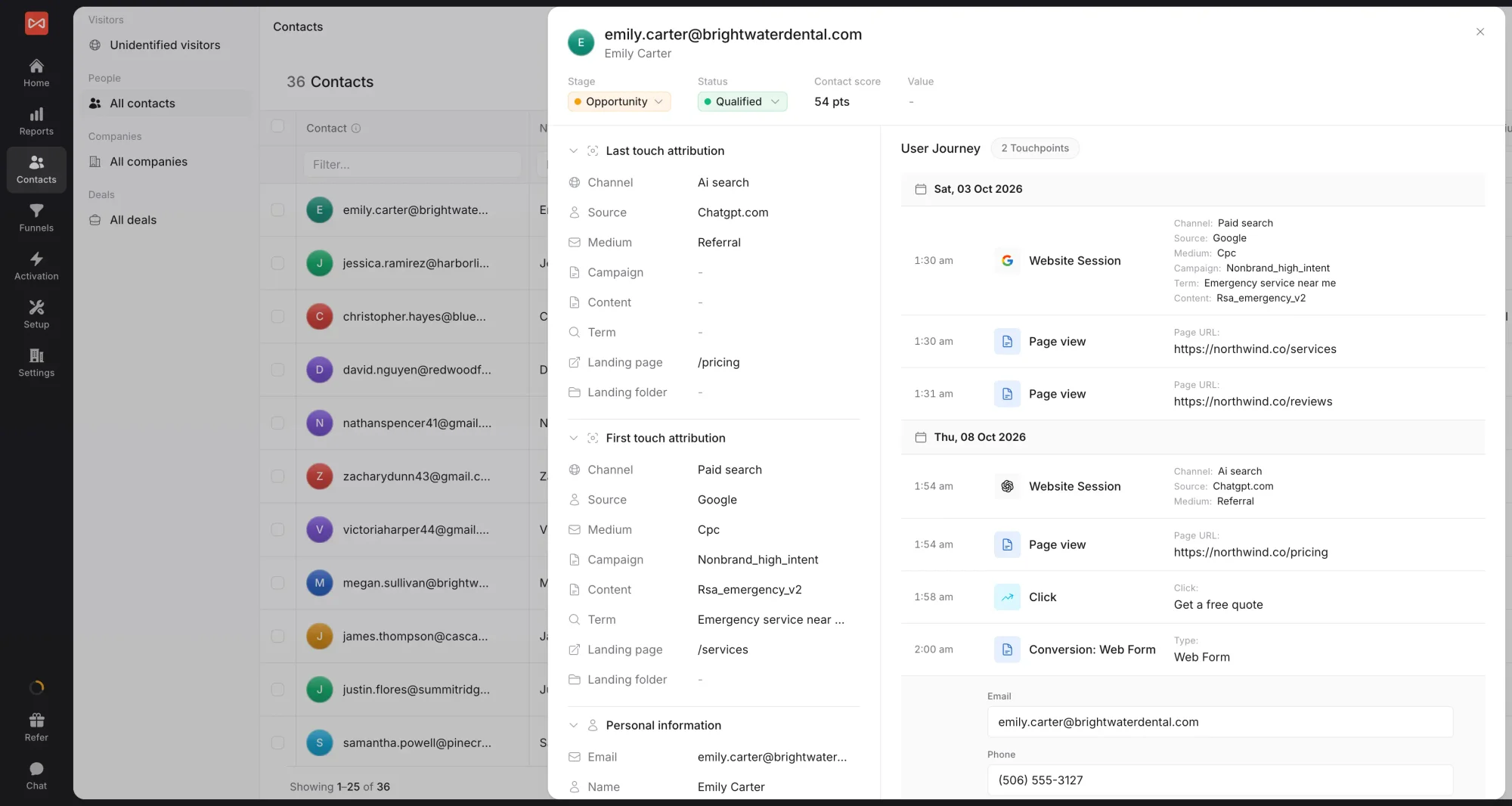
Each response becomes a contact row at app.sourceloop.ai/contacts. Drill into a contact to see their entire pre-response journey, every page they read, every campaign that touched them.
Traffic and Revenue report
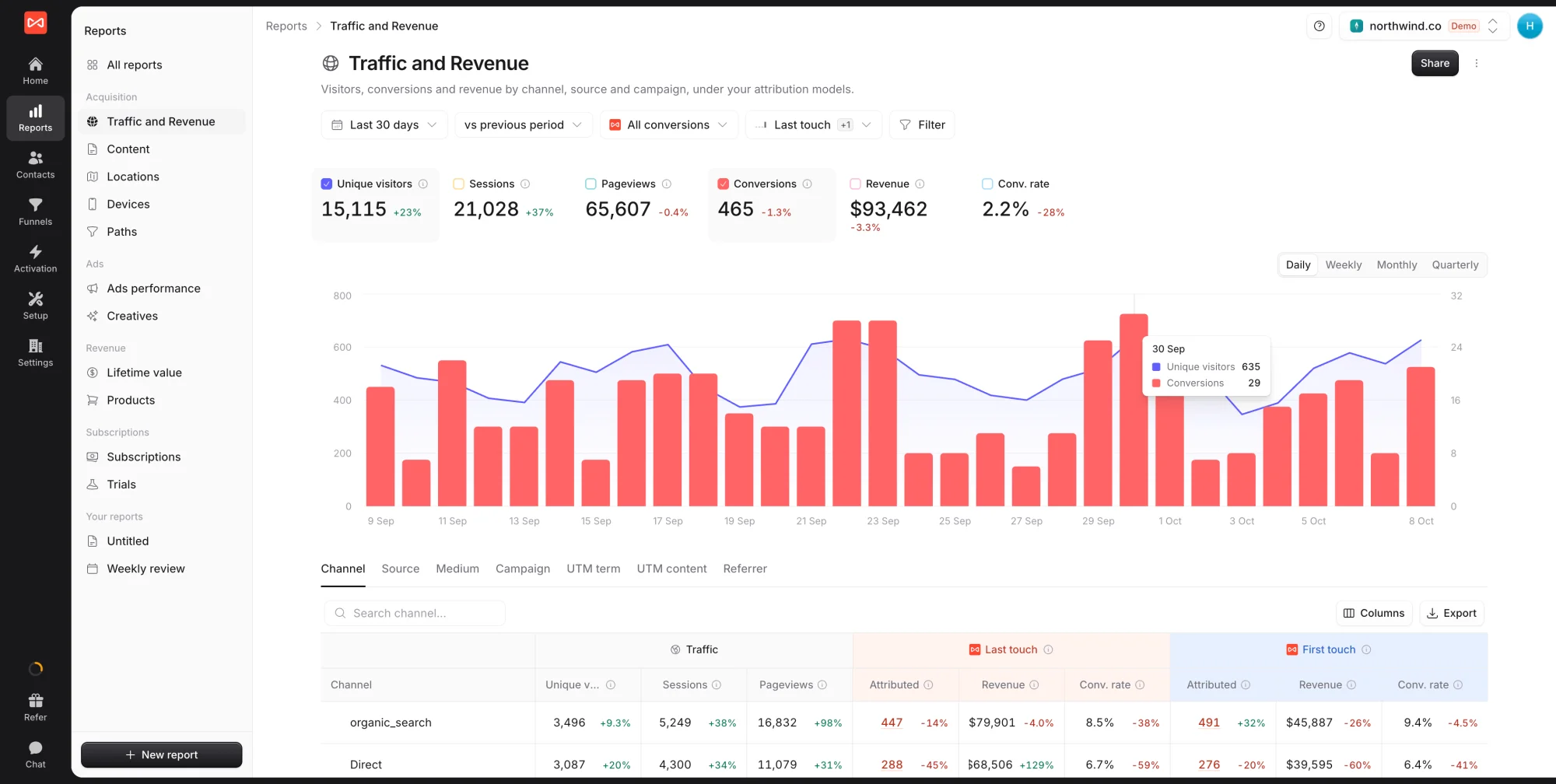
For the rollup, app.sourceloop.ai/reports/traffic groups QuestionScout submissions by source, medium, and campaign. A quick read on what’s bringing in respondents vs. what’s just bringing in traffic.
Funnel reports
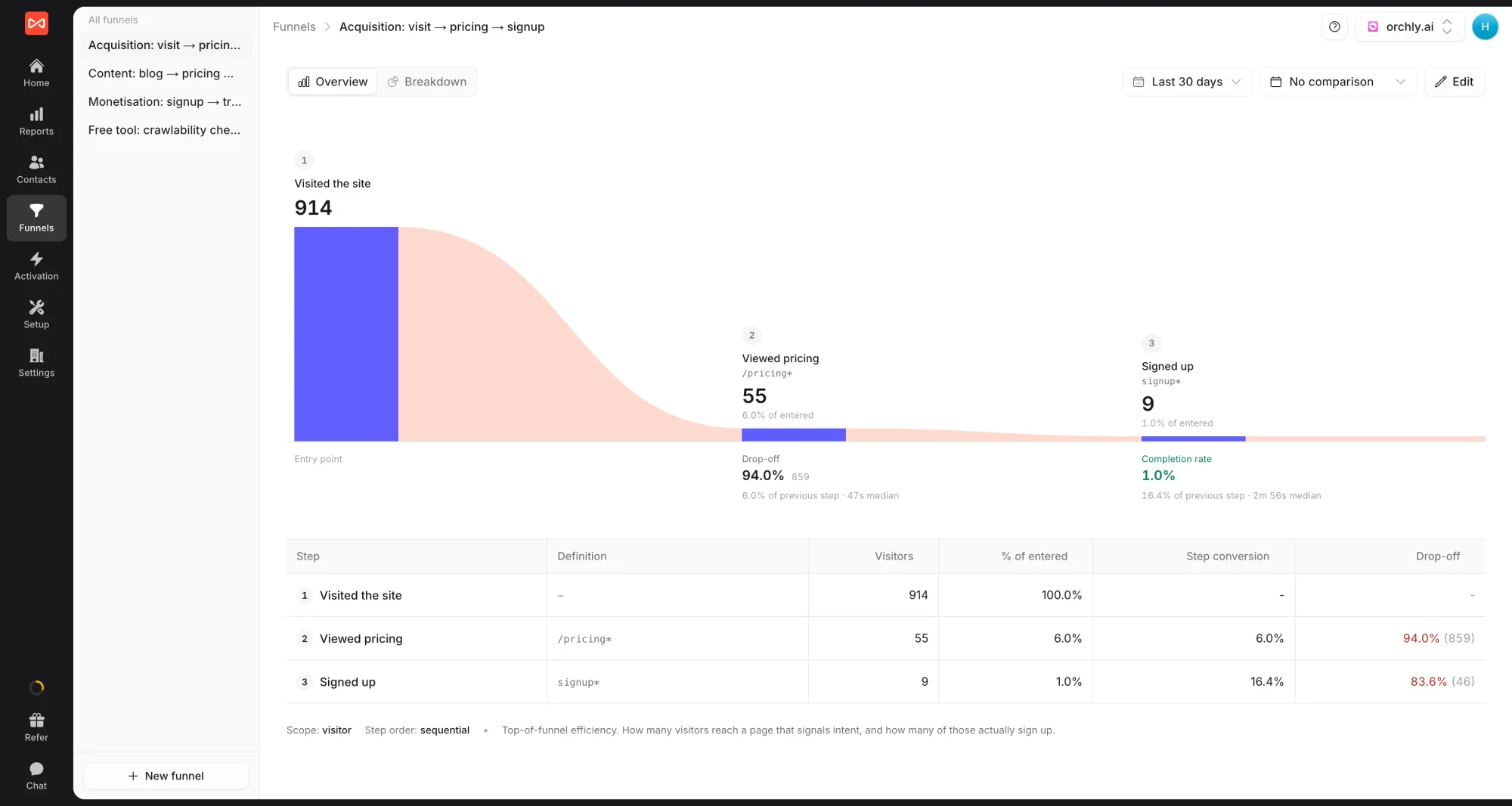
In app.sourceloop.ai/funnels, build a funnel ending in “QuestionScout submission”. Cut by source, landing page, or device to expose your highest-converting paths.
If paid acquisition is in the mix, forward QuestionScout submissions to Google Ads and Meta as offline conversions so the auction algorithms train on real form fills instead of clicks. The conversion sync guide walks through the setup.
Frequently asked questions
-
QuestionScout has deep logic, calculations, and themes. Will any of that break?
No. Everything you've built inside QuestionScout (skip logic, calculations, hidden fields, custom themes) runs the same way. SourceLoop simply tags the final submission with marketing data, it doesn't interact with the form internals.
-
Does this work on the QuestionScout AppSumo lifetime deal?
Yes. The tier you're on doesn't matter, SourceLoop runs in the browser, completely outside QuestionScout's billing tiers and feature gates.
-
I use QuestionScout's embed code on my landing page. Is that the right path?
Yes. The embed-on-your-site model is exactly what attribution needs, the visitor lands on a SourceLoop-tracked page, then fills the form there. The QuestionScout-hosted public form URL would skip your tracking.
-
Are my QuestionScout webhook and Zapier integrations affected?
No. Submissions continue to fire your webhooks, Zaps, and any other connected destinations exactly as configured. SourceLoop captures the lead independently on its own backend.
-
Can QuestionScout's "Hidden Fields" feature be used to pass UTMs into the submission record?
You can do that natively in QuestionScout, but it's not required for SourceLoop. SourceLoop already captures UTMs at the session level and attaches them to the lead automatically, so you don't have to wire hidden fields specifically for attribution.

 Paid Social


