
How to track lead source in Gravity Forms
Capture which marketing channel drove every Gravity Forms submission, with the complete visitor journey saved alongside each lead.


On this page
Gravity Forms is the premium form plugin many WordPress agencies and serious site owners build on, deep customization, robust add-ons, enterprise-grade reliability. The blind spot remains the same as every form tool: it can tell you what was submitted, but not which marketing channel earned the submission. This guide fills that in.
Three steps, around five minutes, no Gravity Forms API calls required.
What SourceLoop captures from Gravity Forms
Each Gravity Forms submission arrives in SourceLoop with:
- Acquisition channel plus the full UTM parameter set
- Page-by-page browsing path ahead of the submission
- Cumulative session time on your site before the form fill
- Number of separate visits before the conversion
- Email and name from the Gravity Forms fields
- First-touch landing page and the URL that referred them
- Source of the converting session, often distinct from first-touch
- Device, country, and browser
Before you start
You’ll need:
- A SourceLoop workspace (free trial)
- Admin access to your WordPress site
- A Gravity Forms license (any tier) with at least one form built and embedded on a page
Step 1: Install the SourceLoop tracking script
Sign in to SourceLoop, open Setup -> Tracking code in the left sidebar, and copy the snippet.
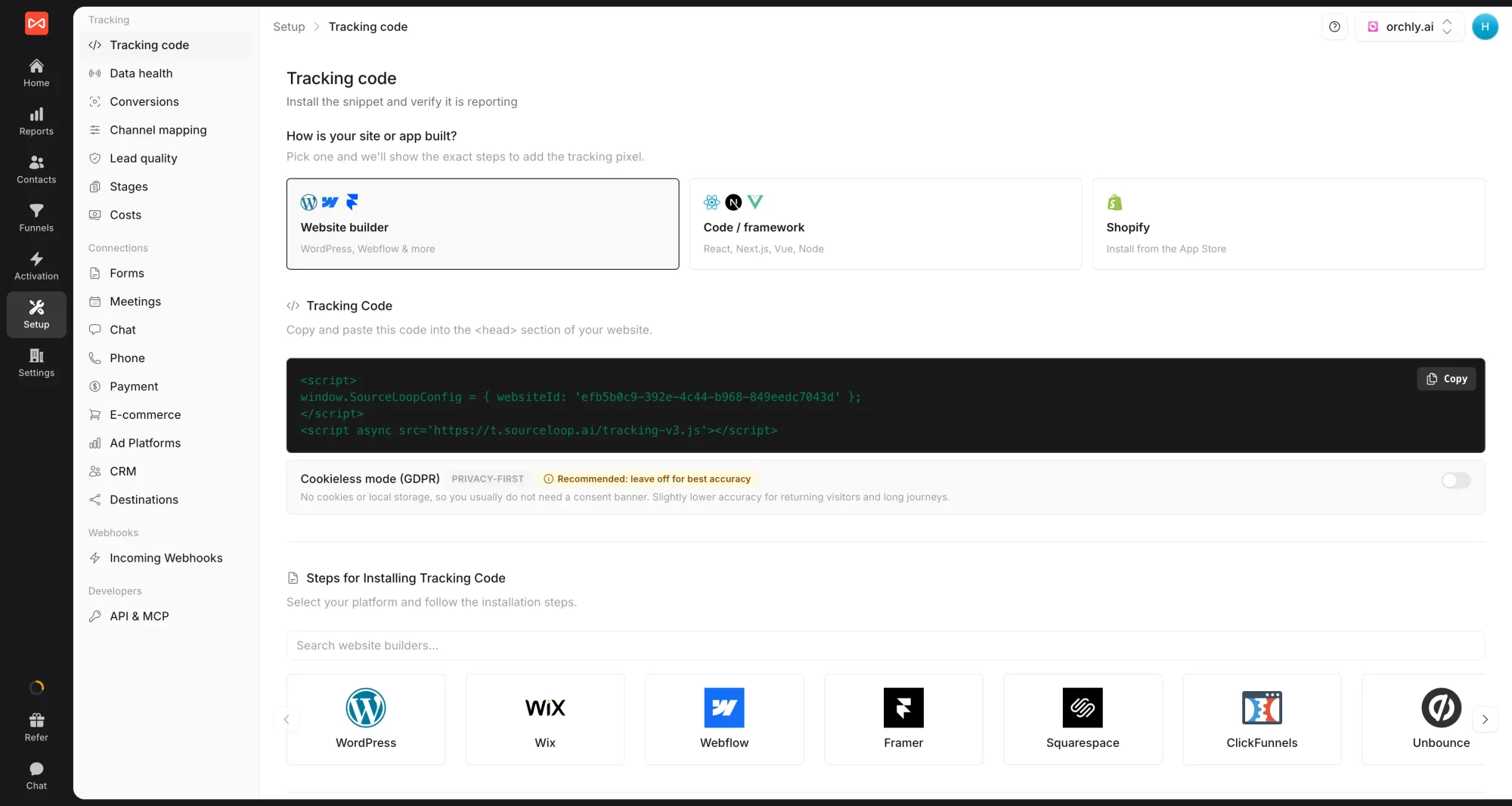
Add the snippet to the <head> of your WordPress site. The simplest path is a header injection plugin like “Insert Headers and Footers”, but pasting into your theme’s header.php works equally well. If you use a tag manager, drop it in as a Custom HTML tag set to fire on all pages.
Step 2: Confirm your form is on a published page
Once the tracking script is live, every Gravity Forms form on every published page is ready to be tracked. No per-form configuration needed.
A few sanity checks:
- The form is embedded on a published WordPress page (drafts don’t carry the snippet)
- The form collects an email field (SourceLoop uses email to create the lead)
- Your form’s confirmation message or redirect continues to work as expected
Step 3: Verify it’s working
Open the form page in an incognito tab, add ?utm_source=test&utm_medium=verify&utm_campaign=gravity-check to the URL, and submit a test entry using a real email you control.
Within seconds, the submission should appear on Contacts in SourceLoop with the test UTMs attached.
Where to see Gravity Forms submissions in SourceLoop
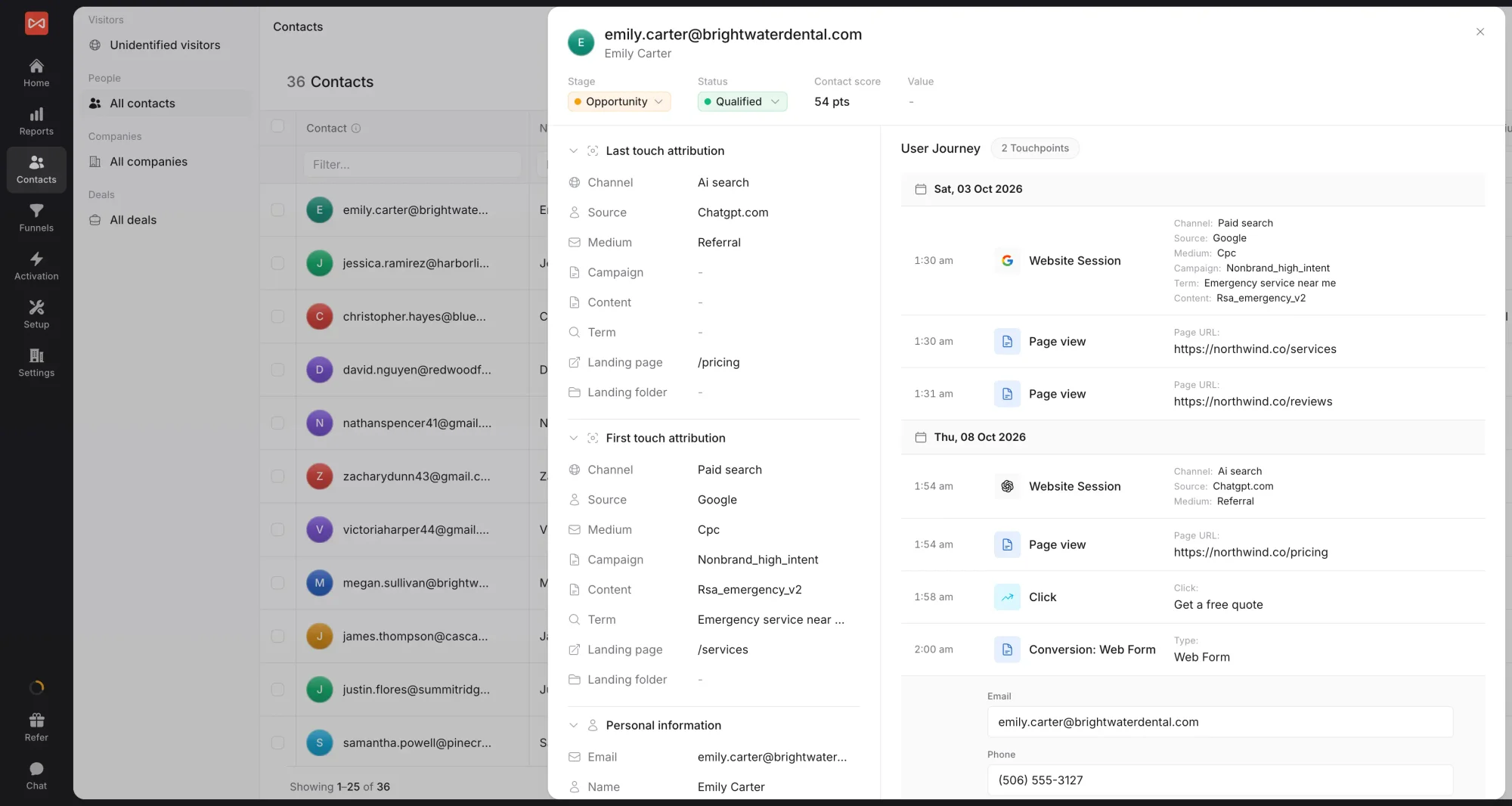
Contacts
Every Gravity Forms submission appears as a row at app.sourceloop.ai/contacts. Expand a row for the visitor’s complete pre-submission journey.
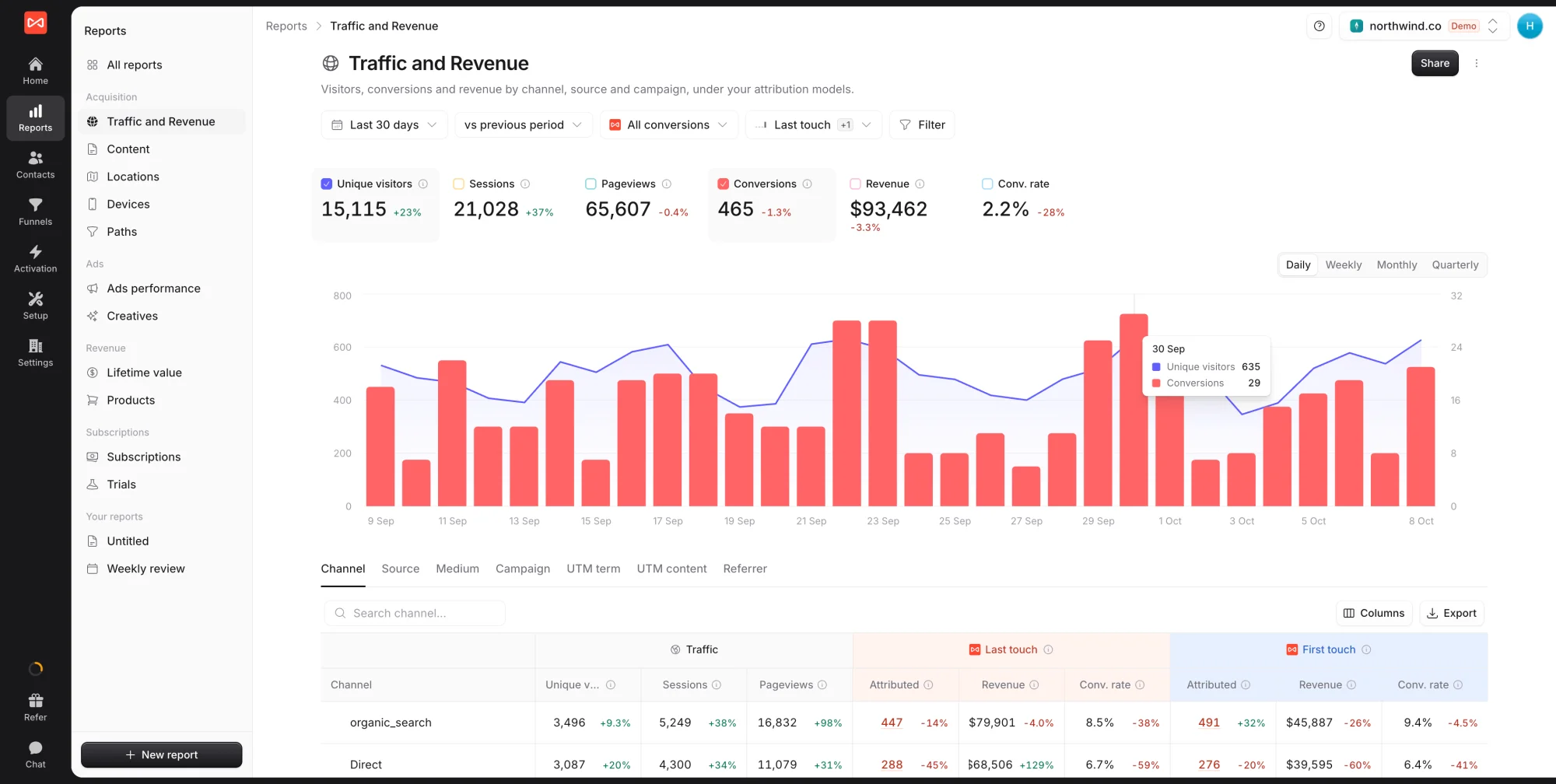
Traffic and Revenue report
app.sourceloop.ai/reports/traffic groups your Gravity Forms submissions by source, medium, and campaign.
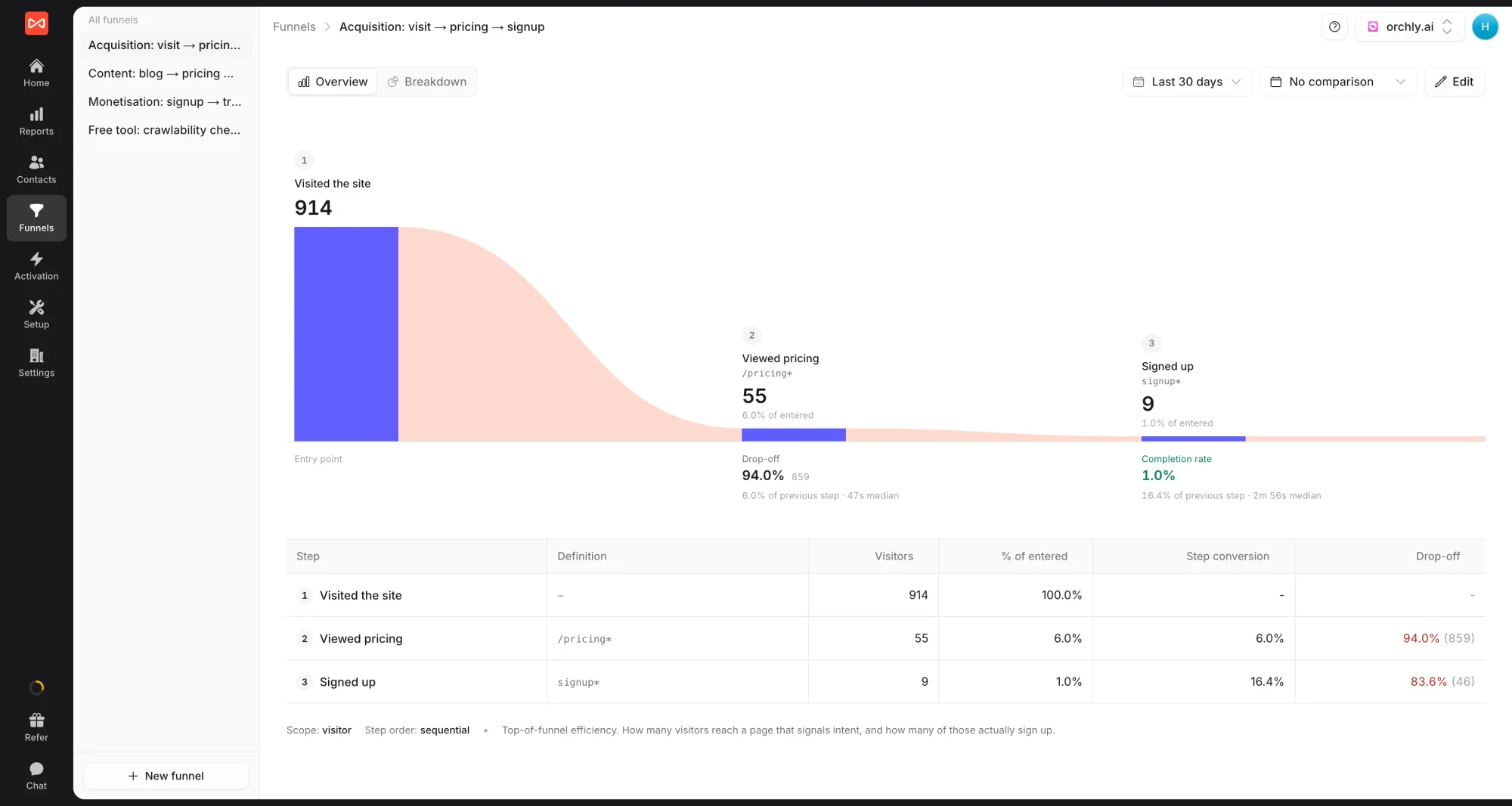
Funnel reports
Build a funnel in app.sourceloop.ai/funnels ending in “Gravity Forms submission”. Slice by source or landing page to find your best-converting paths.
For teams running paid acquisition, push Gravity Forms submissions to Google Ads and Meta as offline conversions so the bidding algorithms learn from real form completions. The conversion sync guide walks through the setup.
Frequently asked questions
-
Does this work with Gravity Forms' Logic, conditional fields, and multi-page forms?
Yes. The submission is the only event SourceLoop cares about, the complexity of the form itself doesn't change anything. Logic Jumps, multi-page flows, and conditional fields all work normally.
-
I use Gravity Forms add-ons like Stripe, PayPal, or Mailchimp. Will they still fire?
Yes. Your existing Gravity Forms add-ons continue to handle their connected workflows. SourceLoop runs alongside without touching them, just adding attribution data on top.
-
My WordPress site uses a caching layer (Cloudflare, NGINX, etc.). Will tracking still work?
Yes, as long as the SourceLoop snippet loads in the page `<head>` before the form. Page-level caching of HTML doesn't affect the tracker because the script loads dynamically per session.
-
Can I track Gravity Forms submitted via AJAX (Enable AJAX option)?
Yes. Whether the form submits via standard POST or AJAX, the submission event is captured the same way.
-
Does this work with Gravity Forms embedded inside an Elementor or Divi page?
Yes. The page builder is irrelevant, as long as your WordPress site has the SourceLoop tracking script in the global `<head>`, any embedded Gravity Form gets tracked.

 Paid Social


