
How to track lead source in Youform
Capture the channel, campaign, and full visitor journey behind every Youform submission, no API keys, no custom code.


On this page
- What SourceLoop captures from Youform
- Before you start
- Step 1: Install the SourceLoop tracking script
- Step 2: Add a hidden field to your Youform
- Step 3: Embed your form on your website
- Step 4: Configure the webhook
- Where to see Youform submissions in SourceLoop
- Contacts
- Traffic and Revenue report
- Funnel reports
Youform is the minimal, design-led form builder that’s gaining traction with indie founders, designers, and small teams who want something cleaner than the legacy form tools. Like every form tool, it tells you when a submission happens, not what brought the visitor in. This guide adds that context to every Youform submission.
Four steps, roughly ten minutes start to finish.
What SourceLoop captures from Youform
Each Youform submission lands in SourceLoop with:
- Acquisition channel plus the full UTM parameter set from the visitor’s first session
- Browsing path ahead of the submission, every page in order
- Total session time on your site before the form fill
- Visit recurrence: how many distinct sessions before they converted
- Email and name fields from the Youform submission
- Original landing page and the referring URL
- Source of the closing session, the one that ended in the submit
- Device, country, and browser
Before you start
You’ll need:
- A SourceLoop workspace (free trial)
- Edit access to the website where the form will be embedded
- A Youform account with at least one form built and webhook integrations available on your plan
Step 1: Install the SourceLoop tracking script
Sign in to SourceLoop, head to Setup -> Tracking code in the left sidebar, and copy the snippet shown.
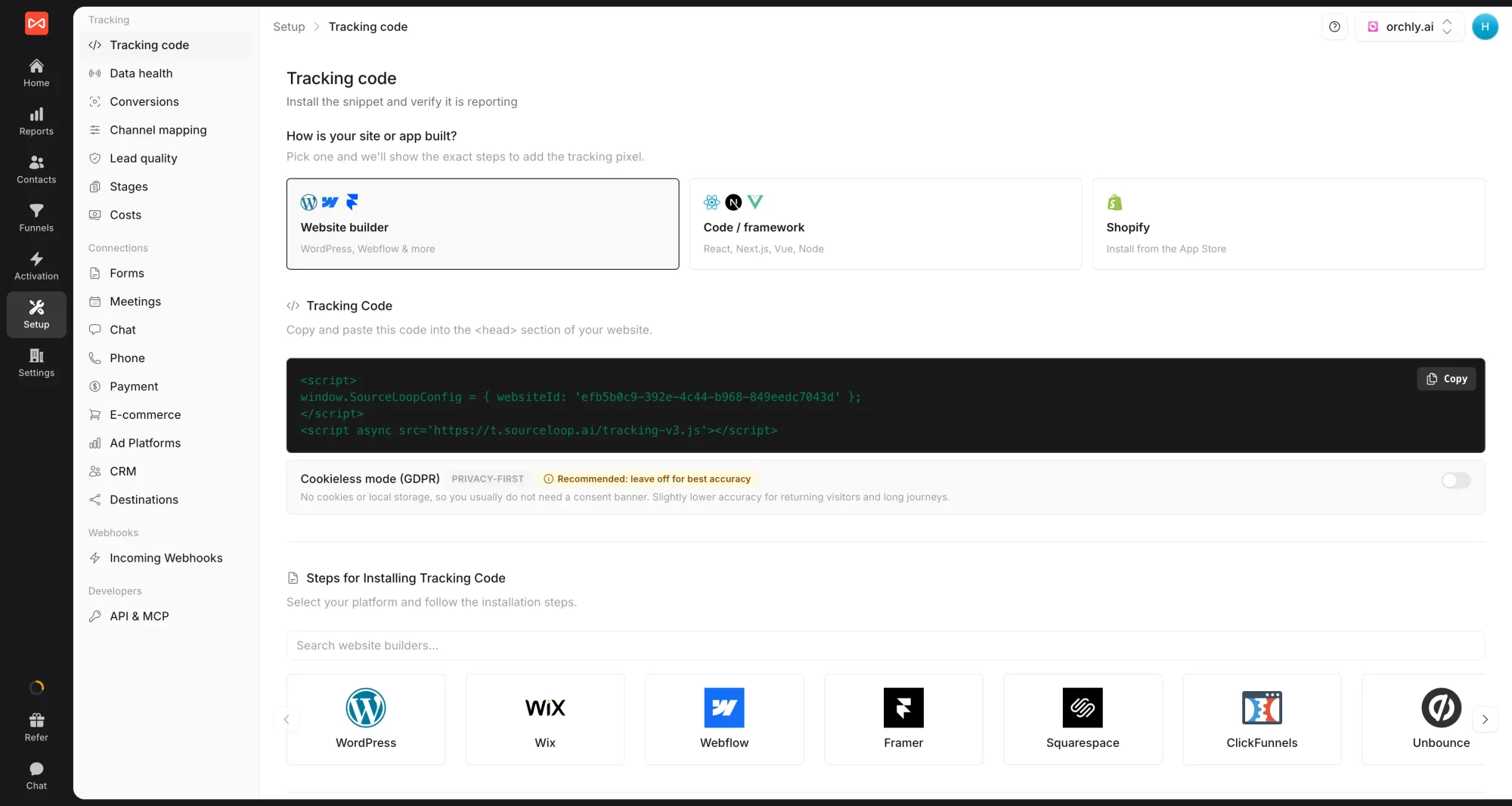
Paste the snippet inside the <head> of every page on your site. Especially the page where you’ll embed Youform.
Step 2: Add a hidden field to your Youform
Youform supports hidden fields that populate from URL parameters. Add one named sl_aid.
- Open your form inside Youform.
- Go to the form’s Settings.
- Navigate to the Hidden Fields & Variables tab.
- Add a new hidden field with the name:
sl_aid- Click Save.
That’s the only hidden field required. SourceLoop matches submissions to the visitor’s marketing journey on its side using this single identifier.
Step 3: Embed your form on your website
The form needs to live on a page where the SourceLoop tracker is loaded.
- From your Youform Share page, make sure you’ve selected:
- Embed Type: Inline Embed
- Type: JS Embed
- Copy the embed code provided by Youform.
- Paste it into your website where you want the form to appear.
Step 4: Configure the webhook
The webhook delivers each Youform submission to SourceLoop, where it gets matched to the visitor’s journey and saved with full attribution.
- In SourceLoop, open Setup -> Forms, click the Youform card, and copy Your Youform webhook URL from the drawer.
- In Youform, open your form settings and add a webhook integration. Paste the SourceLoop URL.
- Save.
Submit a test response on your embedded form to confirm the submission arrives in SourceLoop with channel, source, and landing page populated.
Where to see Youform submissions in SourceLoop
Three SourceLoop views show your Youform data from different angles:
Contacts
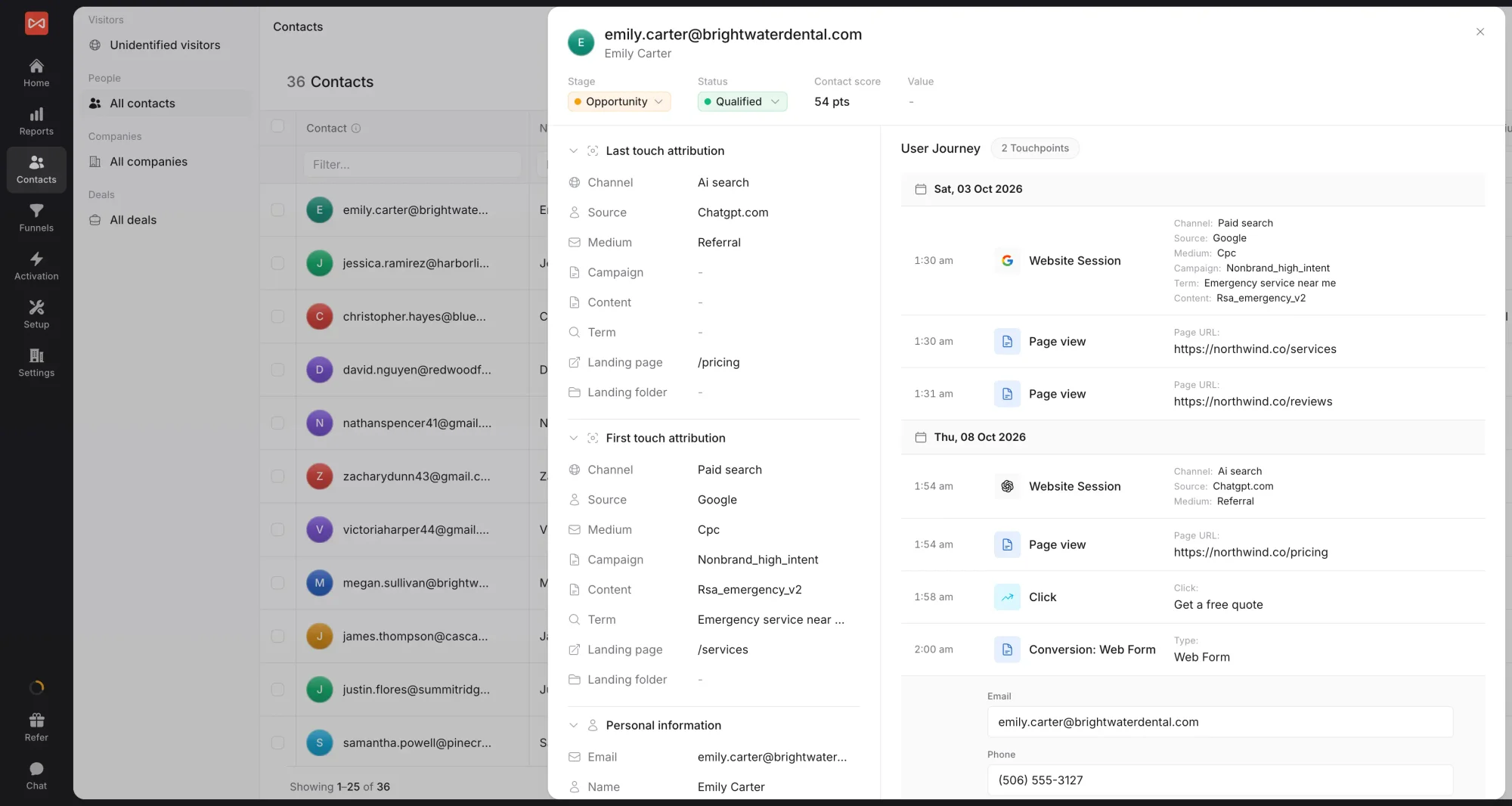
Every Youform submission is a contact row at app.sourceloop.ai/contacts. Expand any row to see the visitor’s full pre-submission timeline, where they came from, what they browsed, and how long they took before submitting.
Traffic and Revenue report
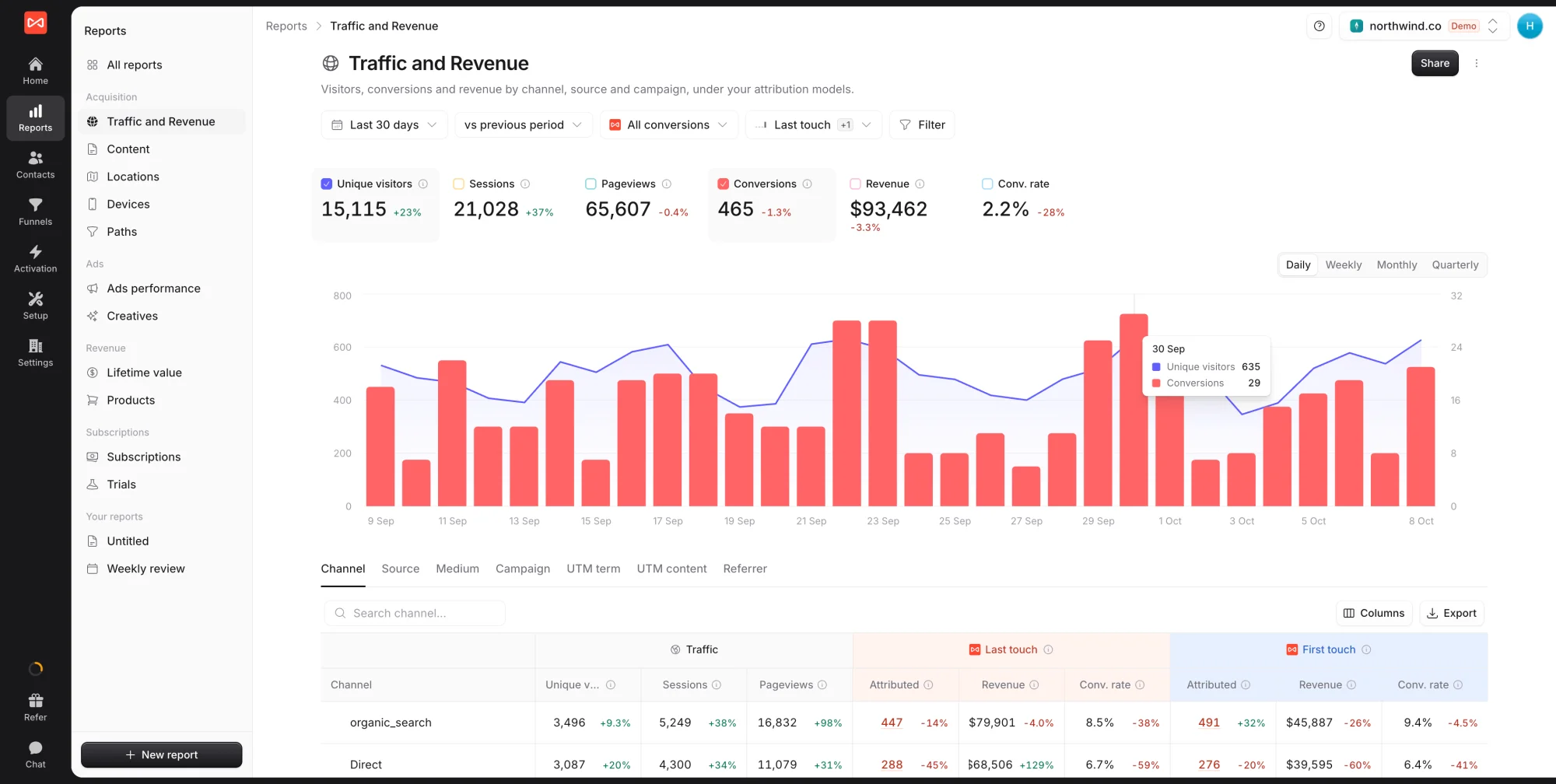
app.sourceloop.ai/reports/traffic rolls up your Youform submissions by source, medium, and campaign. Useful for spotting which acquisition efforts produce real leads.
Funnel reports
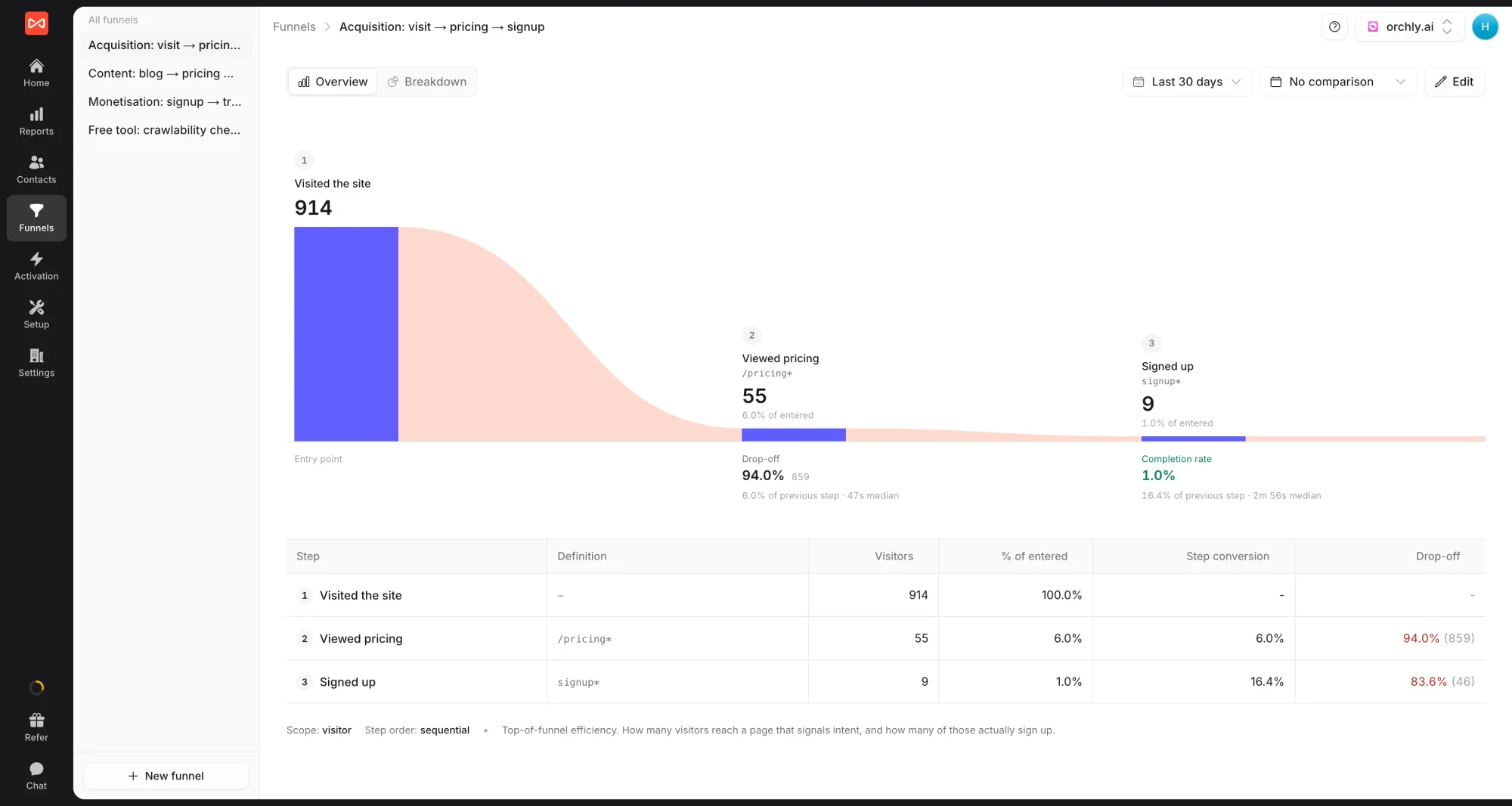
Build a funnel in app.sourceloop.ai/funnels ending in “Youform submission”. Slice it by source, campaign, or landing page to find the paths that turn visitors into completed forms.
If paid acquisition is in your mix, push the submissions to Google Ads and Meta as offline conversions so the bidding algorithms optimize for filled forms instead of just clicks. The conversion sync guide walks through that setup.
Frequently asked questions
-
Does this work on the Youform Free plan?
The hidden-field and embed parts are available on every plan, but the webhook step requires Youform's webhook integration, which may be limited on the free tier. Check Youform's plan comparison before starting if you're not sure.
-
Why just one hidden field instead of separate ones for UTM source, medium, campaign, etc.?
A single `sl_aid` identifier is all SourceLoop needs to look up the visitor's tracked journey on its side. You don't have to maintain seven hidden UTM fields, the attribution data is filled in server-side using that one value.
-
I have an older Youform setup that uses "Include Parent Page URL Parameter". Should I keep that on?
No, you can leave it off. The current SourceLoop integration doesn't rely on the parent-URL forwarding option, so that legacy step is no longer needed.
-
What if I share my Youform direct link instead of embedding?
Submissions made via the standalone Youform URL won't carry attribution data, because the visitor never visits a page that has the tracker. Always route campaigns through a landing page on your site that embeds the form.
-
Can the webhook deliver more form fields than just sl_aid?
Yes. Youform's webhook can include the rest of the form payload. SourceLoop only requires the `sl_aid` value to attribute the lead, but additional fields like email, name, and phone are useful to carry along for downstream tools.

 Paid Social


