
How to track lead source in Kali Forms
Attach proper lead-source attribution to every Kali Forms submission so each entry tells you where the visitor came from, not just what they typed.


On this page
Kali Forms is the WordPress form plugin that’s punched well above its weight, polished drag-and-drop builder, generous free tier, and an AppSumo lifetime deal a lot of agencies still rely on. The marketing-attribution piece is what it doesn’t cover. SourceLoop bolts that on, completely outside Kali Forms’ own settings.
Three steps, under ten minutes, attribution active on every form afterwards.
What SourceLoop captures from Kali Forms
Each Kali Forms submission lands in SourceLoop with this context:
- Acquisition source (organic, paid, social, referral, direct)
- UTM parameter values parsed from the landing URL
- Browsing path captured in order before submission
- Time on site ahead of the form fill
- Repeat-visit count before they converted
- Email + name read from your Kali Forms fields
- First-touch landing page of the visitor’s history
- Source attributed to the converting session
- Device, country, browser
Before you start
You’ll need:
- A SourceLoop workspace (free trial)
- WordPress admin access (or another way to add markup to
<head>) - A Kali Forms form embedded on a published WordPress page
Step 1: Add SourceLoop’s snippet to your WordPress site
Inside SourceLoop, open Setup -> Tracking code in the left sidebar and copy the snippet.
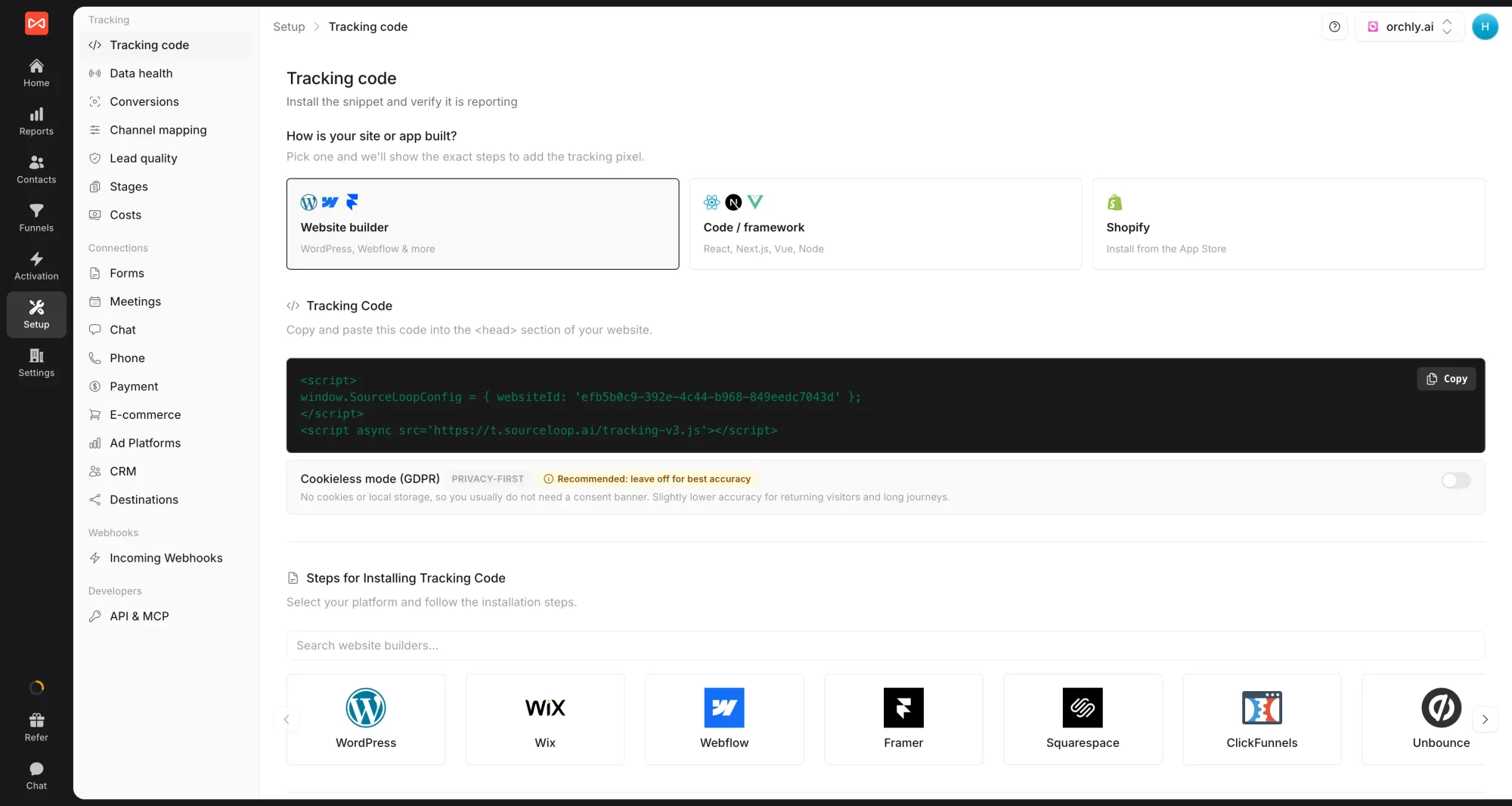
Place it in the <head> of your WordPress site. Choose any one of:
- A header-injection plugin (Insert Headers and Footers, WPCode)
- Your active theme’s
header.php, just before</head> - A “Custom Code” panel inside Yoast, Rank Math, or SEOPress
- Google Tag Manager firing on All Pages
The snippet must run on every page where a Kali Form might appear.
Step 2: Confirm your form is on a tracked page
No per-form switch to flip inside Kali Forms. Once the snippet loads site-wide, every Kali Form on every published page is attributable automatically.
Worth checking:
- The form is on a published page or post (not a draft)
- The form collects an email address, SourceLoop uses email as the lead ID
- Your caching/optimisation plugin isn’t deferring SourceLoop past the form’s submit
Step 3: Send a test submission
Open your Kali Form’s page in an incognito tab with ?utm_source=test&utm_medium=verify&utm_campaign=kali-check glued to the URL. Submit a test entry using an email you control.
Within seconds, the lead should land at the top of Contacts in SourceLoop with the three test UTM values attached to the record.
Where to see Kali Forms submissions in SourceLoop
Contacts
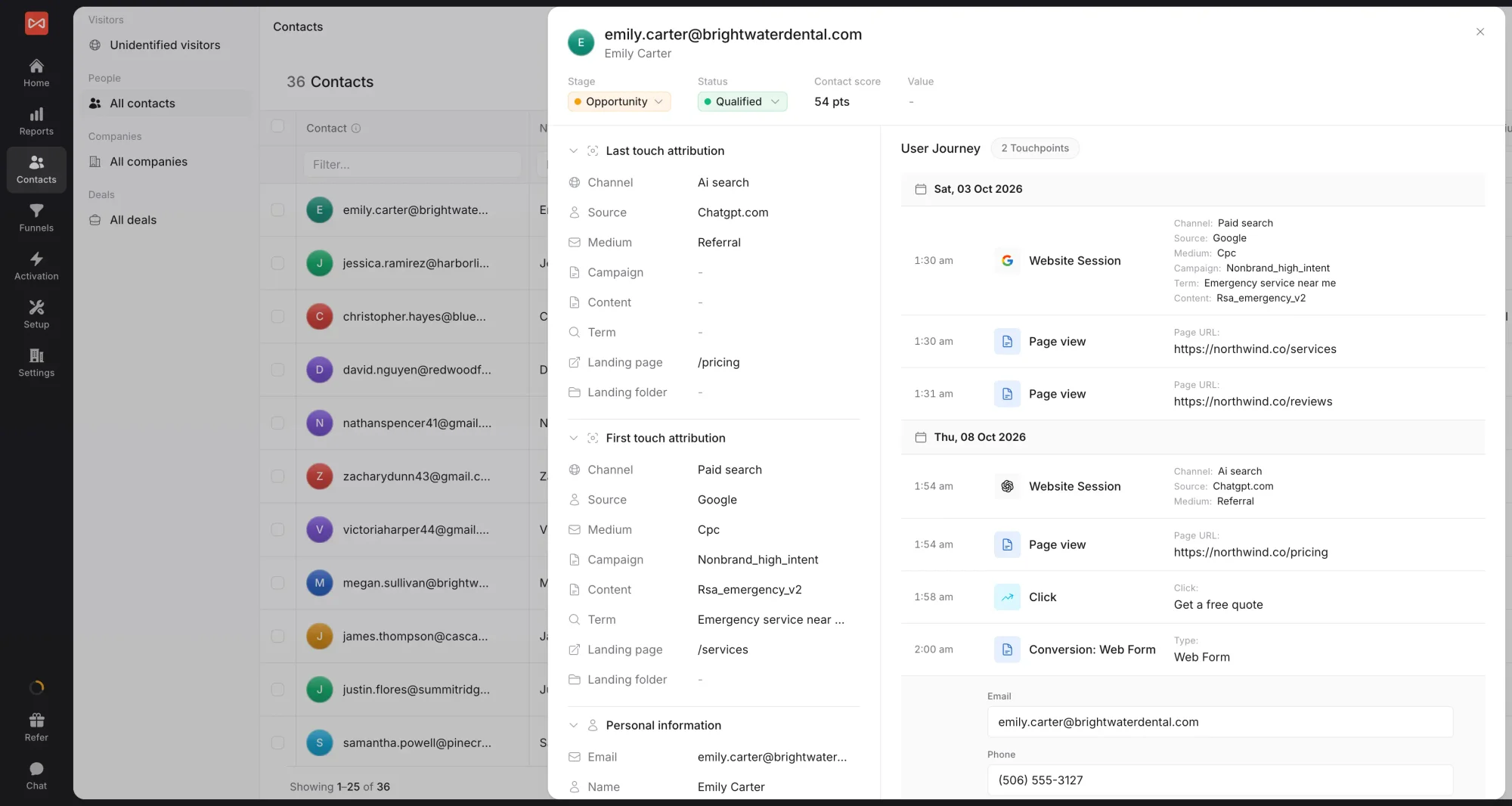
Every Kali Forms submission becomes a contact row at app.sourceloop.ai/contacts. Open a contact to see the full pre-submission journey, every page they visited, every campaign that touched them.
Traffic and Revenue report
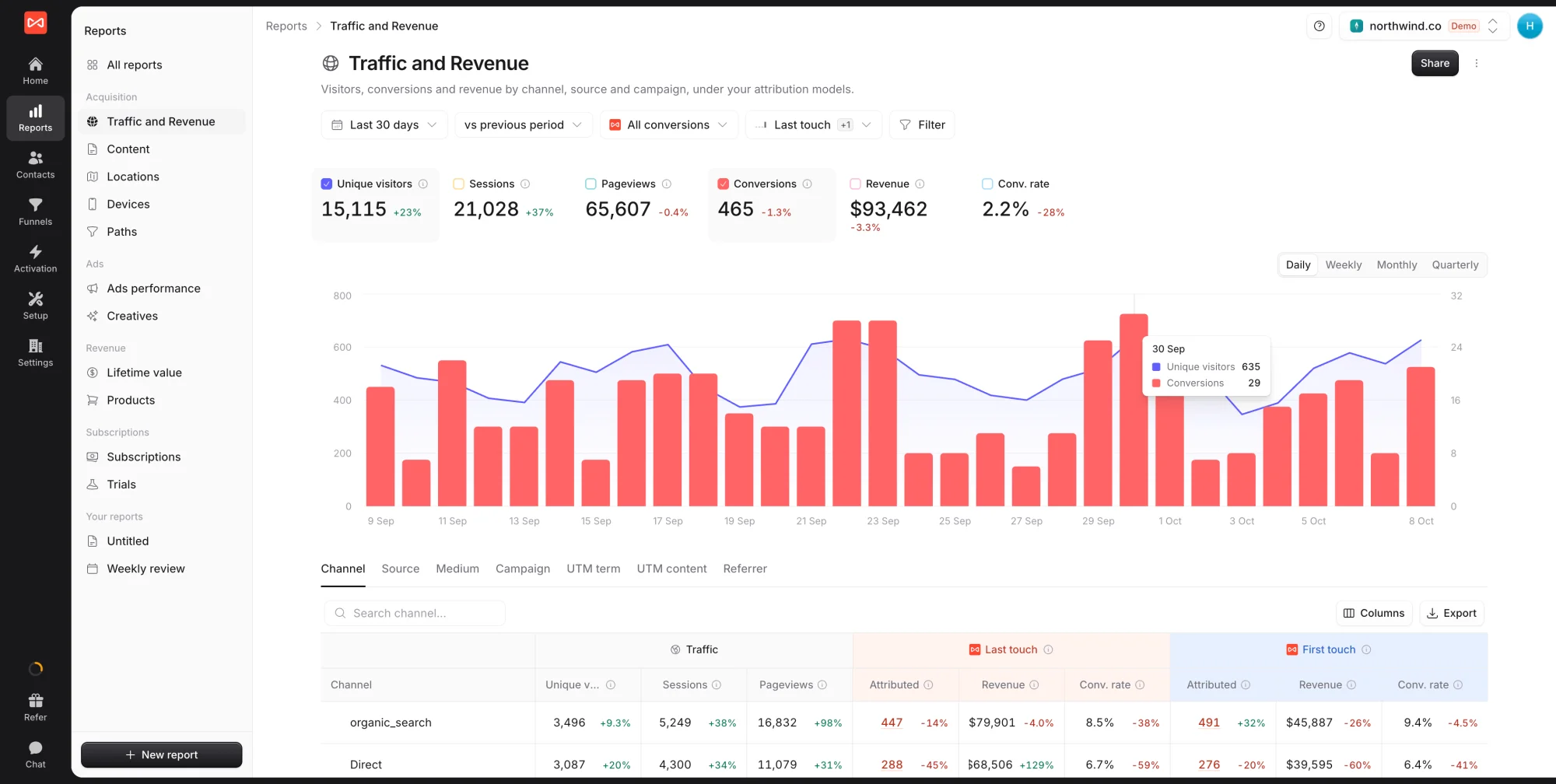
For the channel rollup, app.sourceloop.ai/reports/traffic groups Kali Forms submissions by source, medium, and campaign so you can compare what’s pulling weight.
Funnel reports
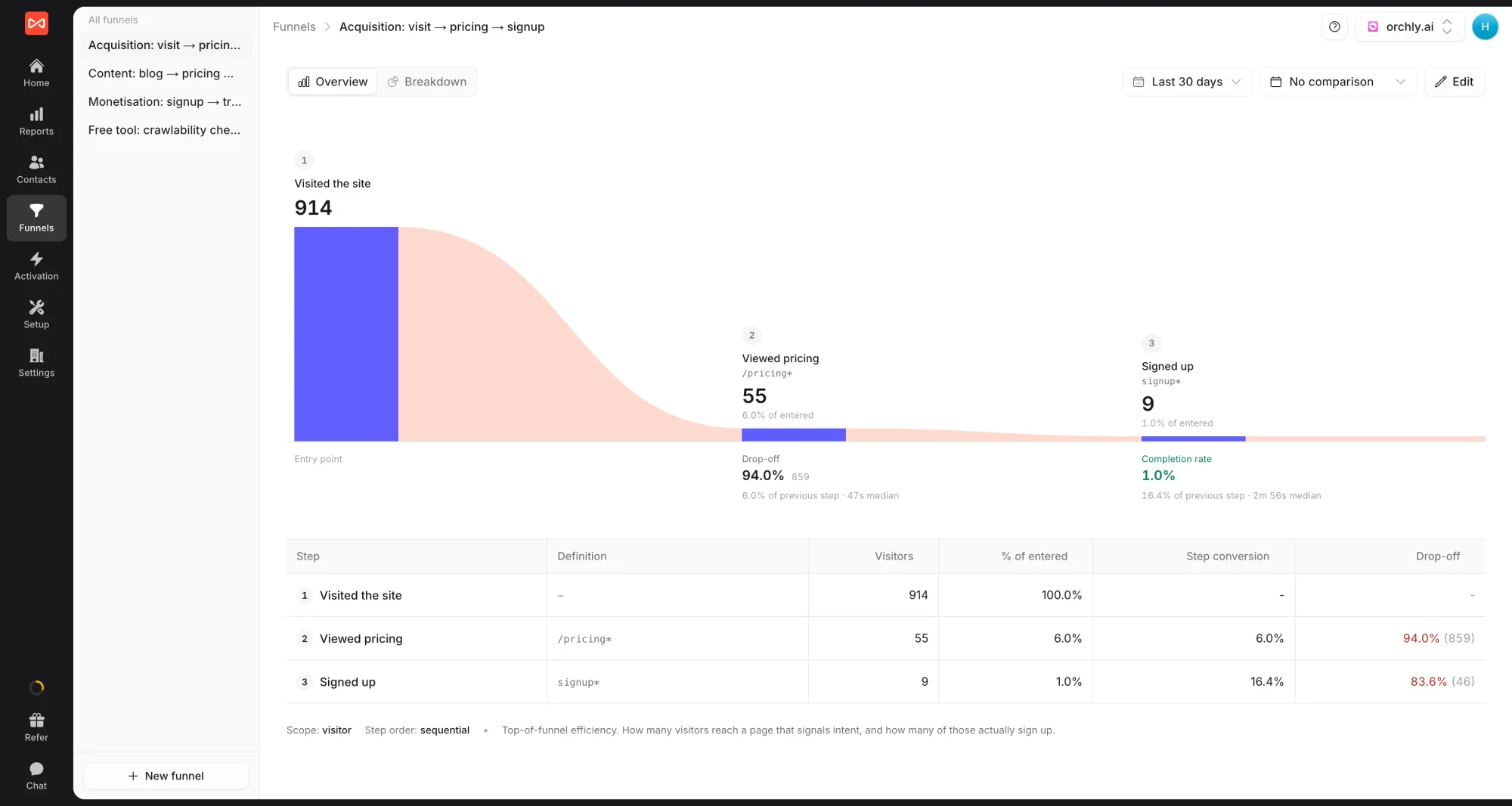
Build a funnel at app.sourceloop.ai/funnels ending in “Kali Forms submission”. Slice by source, content, or device to find the routes that actually convert.
If paid acquisition is in the mix, forward Kali Forms submissions to Google Ads and Meta as offline conversions so the bidding algorithms train on real lead generation. The conversion sync guide walks through it.
Frequently asked questions
-
Does this work with the free Kali Forms plugin?
Yes. SourceLoop runs in the browser and works the same whether you're on Kali Forms' free version or any of the paid tiers.
-
I picked up Kali Forms through an AppSumo lifetime deal. Does that matter?
Not at all. Tracking is browser-side and entirely outside Kali Forms' licensing model.
-
Are Kali Forms' calculation, conditional logic, and multi-step features supported?
Yes. All in-form behavior runs inside Kali Forms. SourceLoop only attaches marketing context to the final submission, so any combination of advanced features works the same.
-
My Kali Forms forms connect to Mailchimp, PayPal, and Stripe. Will those integrations keep firing?
Yes. Kali Forms continues to push submissions and payments through your configured integrations. SourceLoop records attribution in parallel on its own side, never touching the outbound flow.
-
Can I track submissions from Kali Forms inside a popup builder (e.g., Elementor Popups)?
Yes. The popup is just a different placement on the same page. As long as the page hosting the popup loads the SourceLoop snippet in `<head>`, submissions get attributed.

 Paid Social


