
How to track lead source in Formsite
Add real marketing attribution to every Formsite submission so each lead is paired with the source, campaign, and journey behind it.


On this page
Formsite has been around almost as long as web forms themselves, a reliable workhorse used for everything from event registrations to surveys to lead capture. The one capability it hasn’t picked up over its long life is marketing attribution, you see what was submitted but not how the submitter found you. SourceLoop adds that final piece.
Three steps, under ten minutes, no Formsite-side configuration needed.
What SourceLoop captures from Formsite
For every Formsite submission, SourceLoop attaches:
- Visitor’s marketing source (organic, paid, social, referral, direct)
- UTM parameters parsed from the landing URL
- Page sequence the visitor browsed before submitting
- Time on site across all pre-submission sessions
- Number of return visits before the conversion
- Email + name from the Formsite fields
- First-touch landing page of the visitor’s history
- Source of the converting session specifically
- Device, country, browser
Before you start
You’ll need:
- A SourceLoop workspace (free trial)
- Edit access to the page where your Formsite form is embedded
- A Formsite account with at least one form configured for the script embed
Step 1: Install the SourceLoop snippet on your site
Inside SourceLoop, navigate to Setup -> Tracking code in the sidebar and copy the snippet.
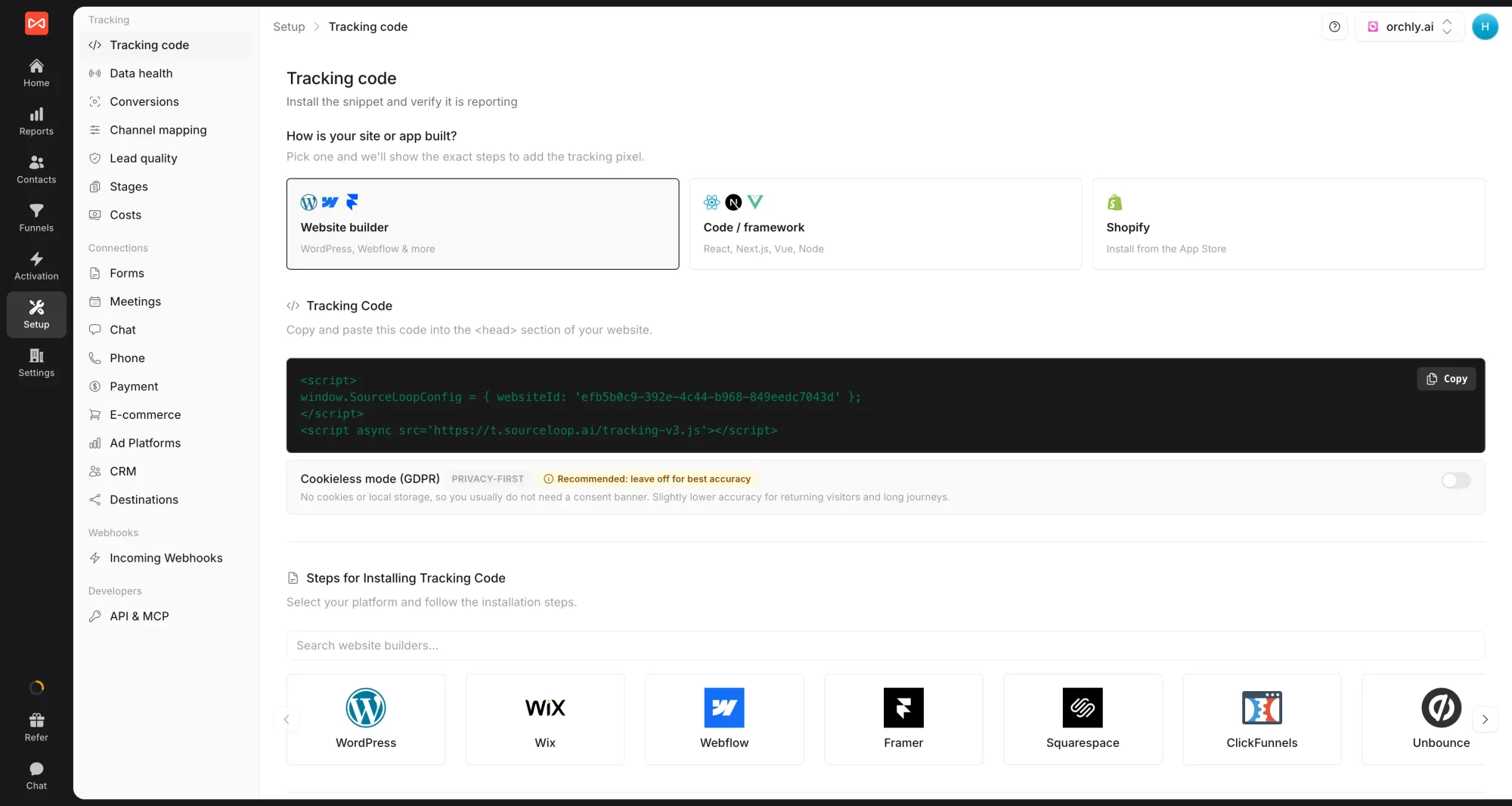
Add it to the <head> of your site (or the pages that host your Formsite embed). WordPress users: header injection plugin or header.php. Static sites: your global layout. Webflow / Framer: Custom Code in site settings. Tag manager: an All Pages tag. The script just needs to run on every page that includes a Formsite form.
Step 2: Embed your Formsite form on a tracked page
In Formsite, open your form and pull up the Form Code -> JavaScript Embed. Copy the snippet and paste it into your page where the form should appear. The page also needs the SourceLoop snippet from step 1.
Step 3: Send a test submission
Visit your form’s page in an incognito window with ?utm_source=test&utm_medium=verify&utm_campaign=formsite-check glued to the URL. Submit a test entry using an email you can check.
Within a few seconds, the submission should land at the top of Contacts in SourceLoop, with the three test UTMs attached to the record.
Where to see Formsite submissions in SourceLoop
Contacts
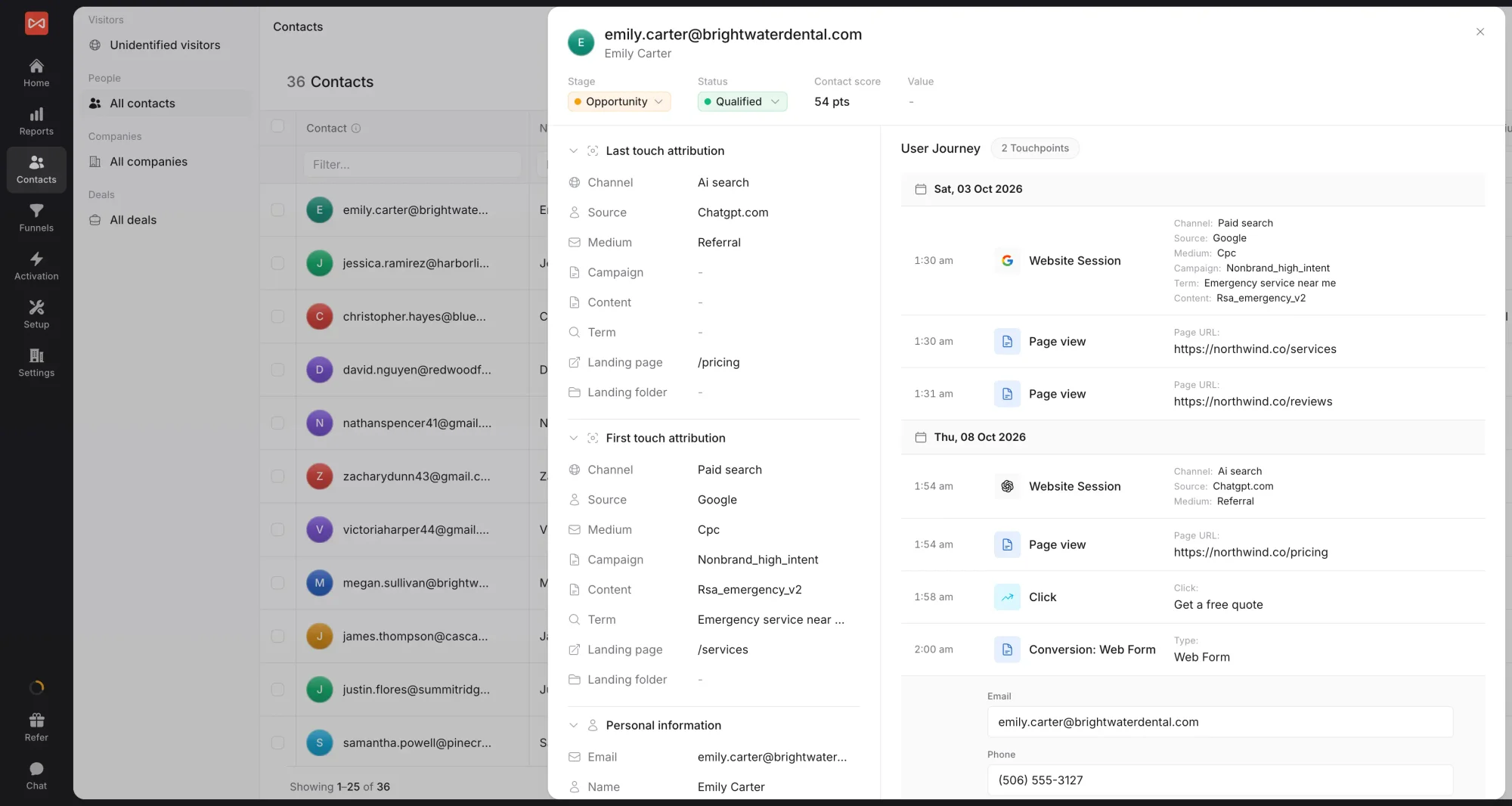
Each submission becomes a contact row at app.sourceloop.ai/contacts. Click into a contact to see their full pre-submission browsing path, every page, every session, every campaign that touched them.
Traffic and Revenue report
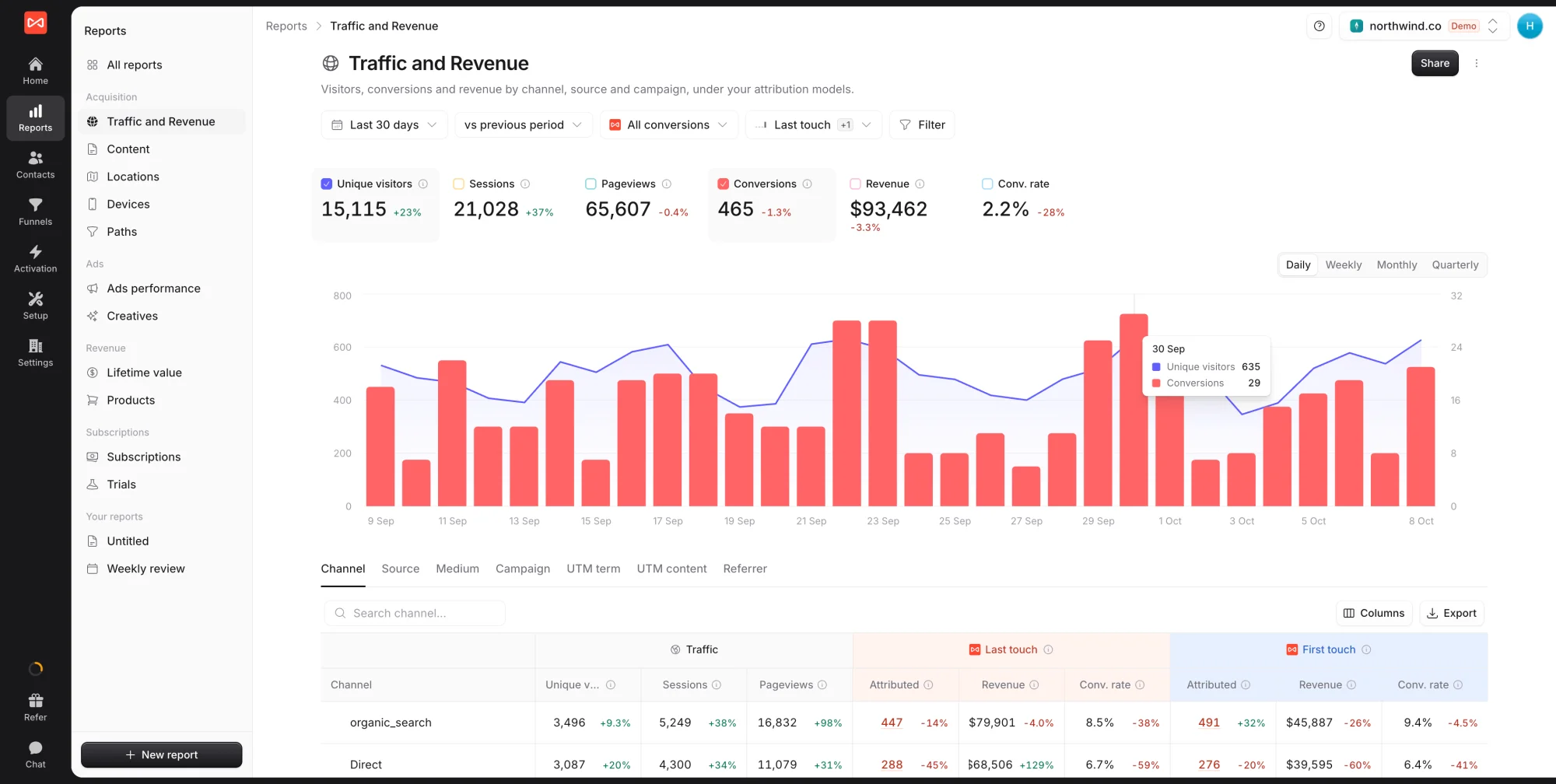
For the rollup, app.sourceloop.ai/reports/traffic groups Formsite submissions by source, medium, and campaign. Useful for comparing which channels actually pull leads vs. which only pull pageviews.
Funnel reports
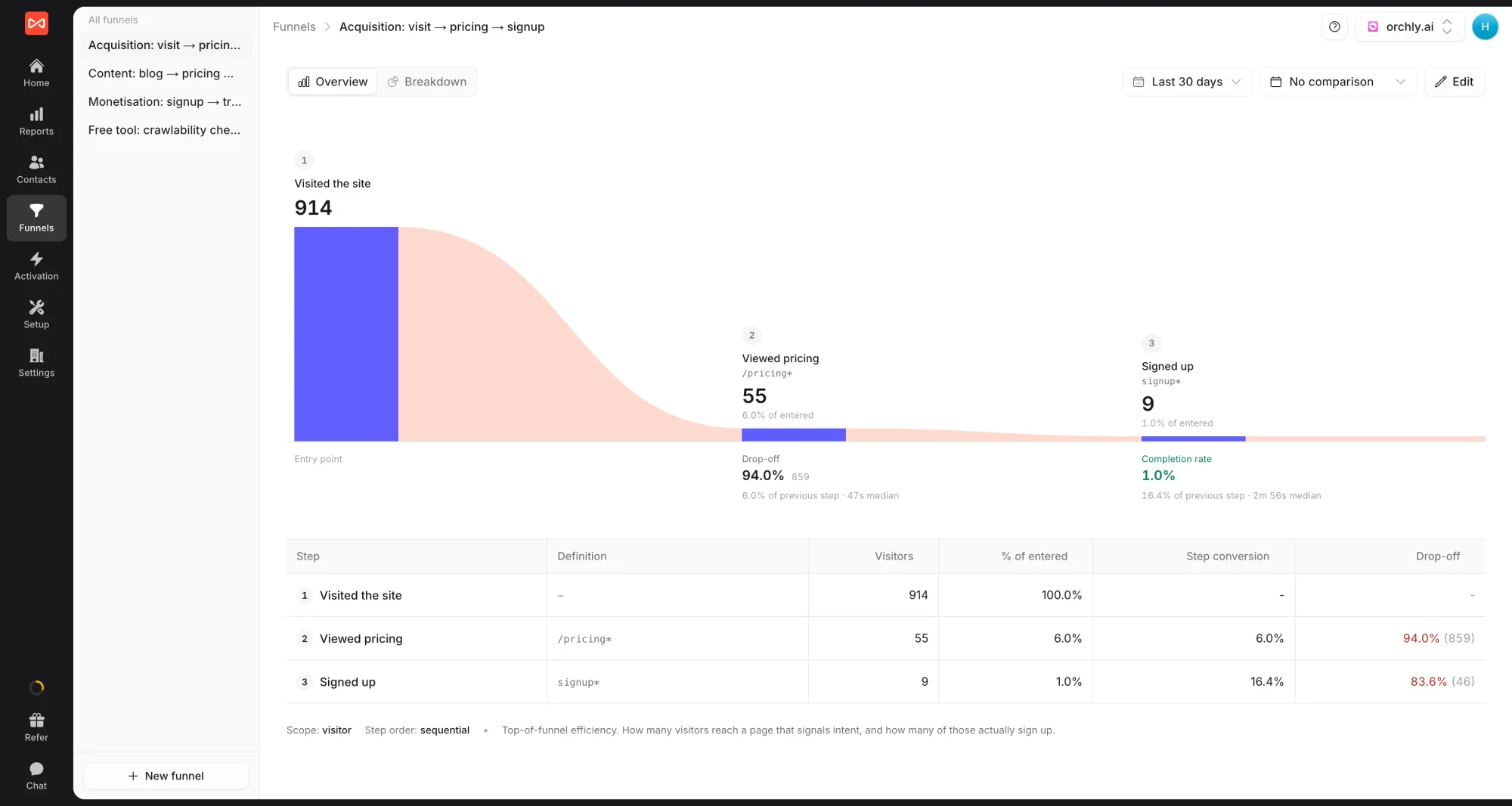
In app.sourceloop.ai/funnels, build a funnel ending in “Formsite submission”. Slice by source, content, or device to discover the highest-converting paths from first visit to submitted form.
If paid acquisition is part of your strategy, mirror Formsite submissions back to Google Ads and Meta as offline conversions so the ad platforms optimise toward real lead generation. The conversion sync guide covers the setup.
Frequently asked questions
-
Formsite is one of the oldest SaaS form tools. Does its embed work the same as newer tools?
Yes. Formsite's modern embed code is a standard JavaScript snippet, and SourceLoop's tracking captures submissions from it the same way as any newer form tool.
-
I use Formsite for HIPAA-regulated workflows. Does adding SourceLoop affect compliance?
No. Formsite's compliance posture covers the submitted form data and its storage. SourceLoop captures visitor session metadata on your marketing site for attribution purposes; it doesn't sit in the form-data path.
-
Are submissions from Formsite's hosted form URL trackable?
No. The Formsite-hosted URL serves the form on a Formsite domain, so visitors never load your site and SourceLoop can't see the source. Embed the form on your own page and direct campaigns there.
-
Will Formsite's email notifications, Zapier hooks, and integrations keep firing?
Yes. SourceLoop runs in parallel, capturing attribution on its end. Formsite continues to deliver submissions to every connected destination exactly as configured.
-
My Formsite forms have multi-page navigation. Are all completed submissions captured?
Yes. Only completed submissions trigger capture. The number of pages or sections inside the form doesn't change anything.

 Paid Social


