
How to track lead source in Webflow Forms
Tie every Webflow form submission back to the campaign, content, or channel that actually drove it, with the visitor's pre-submission journey attached.


On this page
Webflow is the visual-development platform of choice for design-led teams, freelancers, and agencies who want the freedom of custom design without writing layout code. The blind spot in most Webflow setups: form submissions arrive in your inbox or CRM with no marketing context attached. This guide closes that gap.
Three steps, about five minutes, no Webflow API or custom code required.
What SourceLoop captures from Webflow Forms
Every Webflow form submission lands in SourceLoop alongside:
- Acquisition channel plus the full UTM parameter set from the visitor’s first session
- Browsing trail ahead of the form fill, every page in order
- Total time on site before they submitted
- Visit count before the conversion happened
- Email and name captured from the Webflow form fields
- Original landing page and the URL that referred them
- Source of the closing session (the one that ended in the submit)
- Device, country, and browser
Before you start
You’ll need:
- A SourceLoop workspace (free trial)
- Edit access to your Webflow project’s Custom Code settings (or your custom domain’s HTML)
- At least one Webflow form set up on a page
Step 1: Install the SourceLoop tracking script
Sign in to SourceLoop, open Setup -> Tracking code in the left sidebar, and copy the snippet shown.
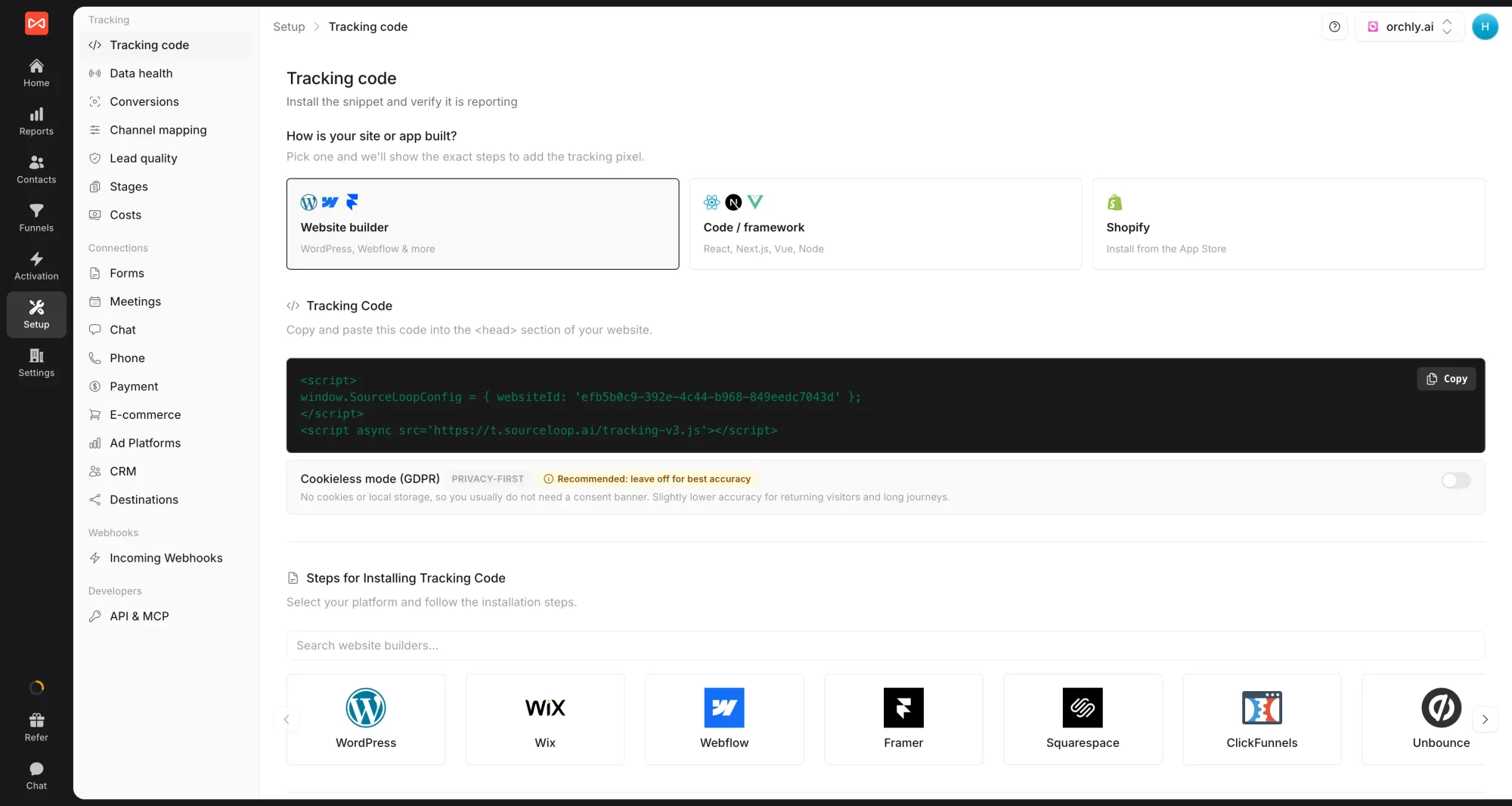
In Webflow, head to Project Settings -> Custom Code -> Head Code and paste the snippet there. Webflow injects it into every page on the site automatically. Publish your site to push the change live.
Step 2: Confirm your form is on a published page
Once the SourceLoop tracking script is live on your Webflow site, every Webflow form on every page is ready to be tracked. No per-form configuration needed.
A few things worth checking:
- The form is on a published Webflow page (drafts won’t show the snippet)
- The form collects an email (SourceLoop uses email to create the lead record)
- Your Form Settings -> Form Submission action is configured as you normally would (success message, redirect, etc.). SourceLoop runs alongside, doesn’t replace it
Step 3: Verify it’s working
Open your form page in an incognito window, add ?utm_source=test&utm_medium=verify&utm_campaign=webflow-check to the URL, and submit a test entry using a real email you control.
Within seconds, the submission should appear on Contacts in SourceLoop with the test UTM values populated.
Where to see Webflow submissions in SourceLoop
Contacts
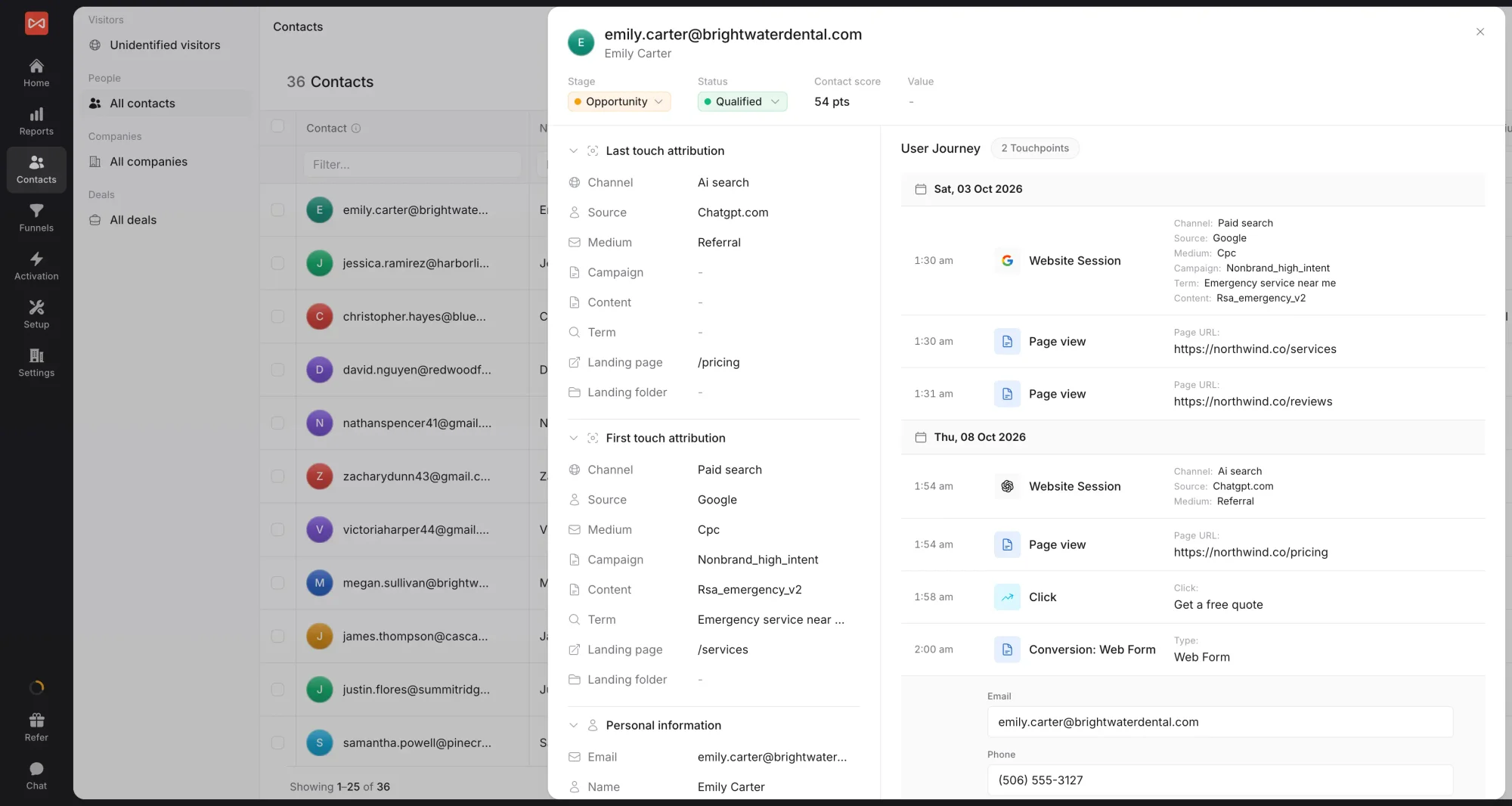
Each Webflow form submission becomes a row at app.sourceloop.ai/contacts. Expand a row to reveal the visitor’s complete pre-submission journey, the campaign that brought them in, the pages they browsed, and how many sessions they took before submitting.
Traffic and Revenue report
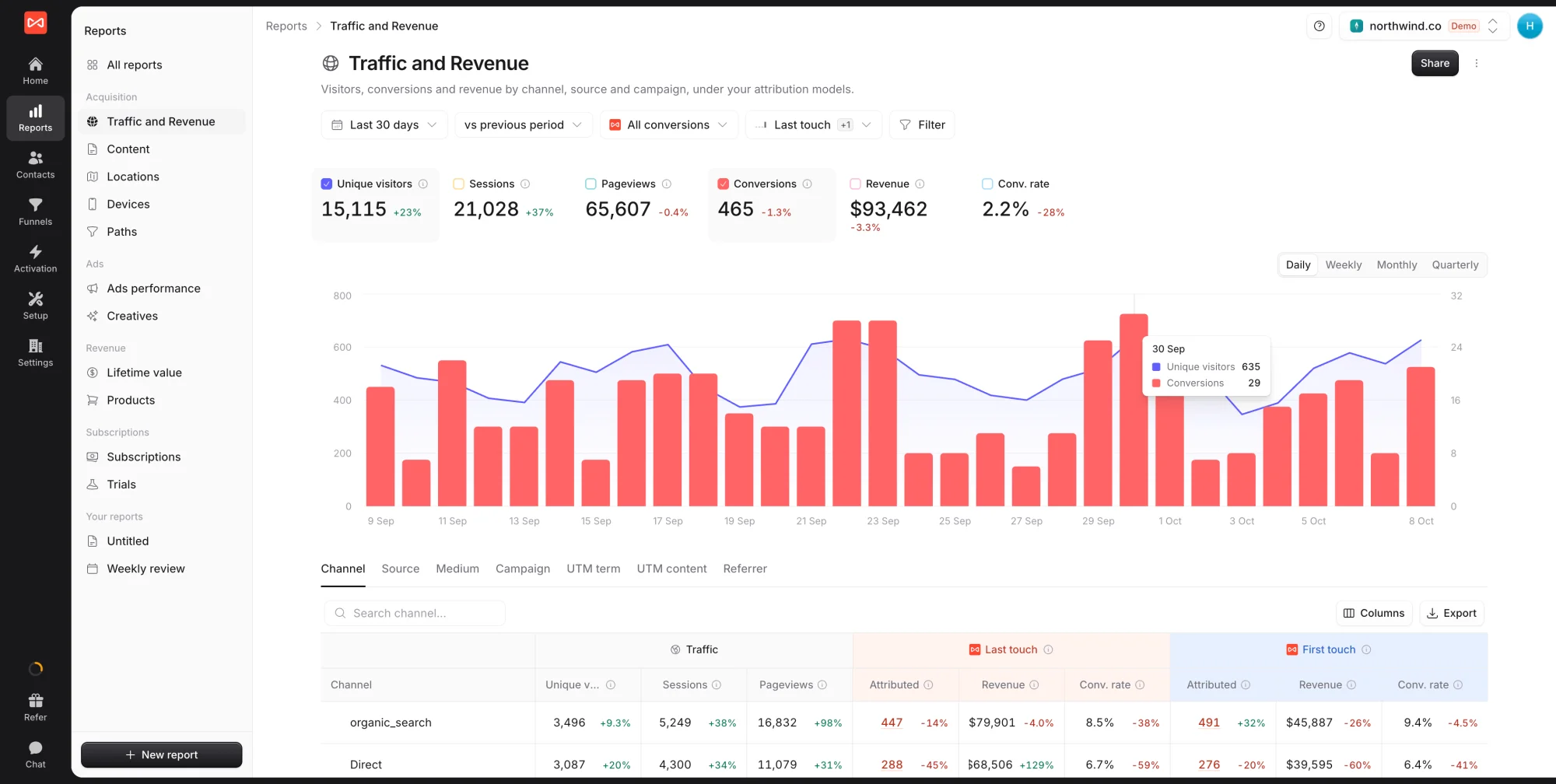
app.sourceloop.ai/reports/traffic rolls up your Webflow submissions by source, medium, and campaign. Useful when you need to compare paid acquisition to organic and content channels at a glance.
Funnel reports
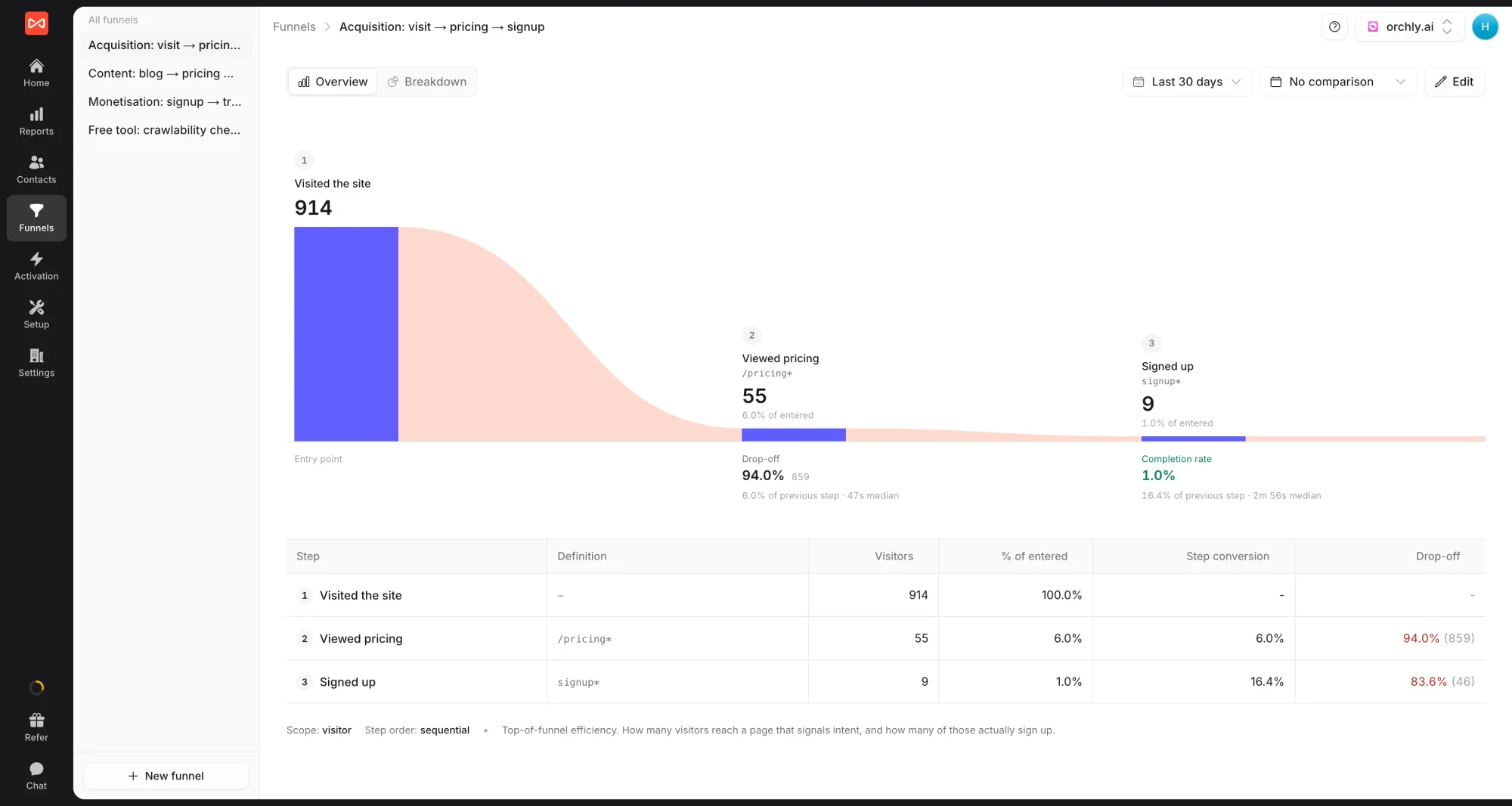
Build a funnel in app.sourceloop.ai/funnels ending in “Webflow submission”. Slice by source, campaign, or landing page to find your highest-converting acquisition paths.
If paid acquisition is part of the picture, forward your Webflow submissions to Google Ads and Meta as offline conversions so the bidding algorithms optimize for real form completions instead of clicks. The conversion sync guide walks through that wiring.
Frequently asked questions
-
Does this work for Webflow CMS forms and Logic-Jump forms too?
Yes. Whether it's a standard form, a CMS-bound form, or a multi-step Logic form, the attribution flow is the same. Each submission on a SourceLoop-tracked page is captured automatically.
-
Will SourceLoop interfere with Webflow's built-in form submission flow?
No. Webflow's confirmation message, redirect, and built-in spam filtering all continue to work. SourceLoop runs separately and attaches attribution data without touching the form's native behavior.
-
Can I use this with Webflow's Mailchimp, HubSpot, or Zapier integrations?
Yes. Your existing integrations continue to deliver submissions to their connected destinations. SourceLoop adds the attribution layer in parallel without conflicting.
-
I host my Webflow form on a non-Webflow domain (custom domain, subdomain, etc). Does that work?
Yes, as long as the SourceLoop tracking script is installed on whatever domain hosts the form. Webflow's domain settings don't affect SourceLoop's ability to capture submissions.
-
What about Webflow forms shown in popups or modals?
Popups and modals work the same way for attribution. As long as the parent page has the SourceLoop snippet, any form inside a popup will get captured on submit.

 Paid Social


