
How to track lead source in Fluent Forms
Stop guessing which campaign drove your Fluent Forms entries. Stamp every submission with its true source, UTMs, and the visitor's path on the way in.


On this page
- What SourceLoop captures from Fluent Forms
- Before you start
- Step 1: Drop the SourceLoop snippet into your site
- Step 2: Make sure the form is embedded on a tracked page
- Step 3: Send a test submission
- Where to see Fluent Forms submissions in SourceLoop
- Contacts
- Traffic and Revenue report
- Funnel reports
Fluent Forms is the WordPress form plugin built around speed and developer ergonomics, lightweight, fast in the editor, and packed with integrations once you scale up to Pro. What it can’t tell you is the same blind spot every form has: which marketing channel actually delivered each lead. This guide closes the loop.
Three quick steps, around five minutes, and zero Fluent Forms configuration needed.
What SourceLoop captures from Fluent Forms
After setup, here’s what’s attached to every Fluent Forms entry inside SourceLoop:
- First-touch source of how the visitor originally found you
- UTM parameters for source, medium, campaign, content, term
- Sequence of pages the visitor browsed before submitting
- Time elapsed on your site prior to the submission
- Repeat visits that preceded this conversion
- Email + name read straight from your Fluent Forms fields
- Landing page that opened the journey
- Source of the converting session (the one that finally produced the form fill)
- Device, country, and browser of the lead
Before you start
You’ll need:
- A SourceLoop account (free trial)
- WordPress admin rights, or another way to inject markup into
<head> - A Fluent Forms form (Lite or Pro) embedded on a live page
Step 1: Drop the SourceLoop snippet into your site
Inside SourceLoop, go to Setup -> Tracking code in the left sidebar and grab the snippet.
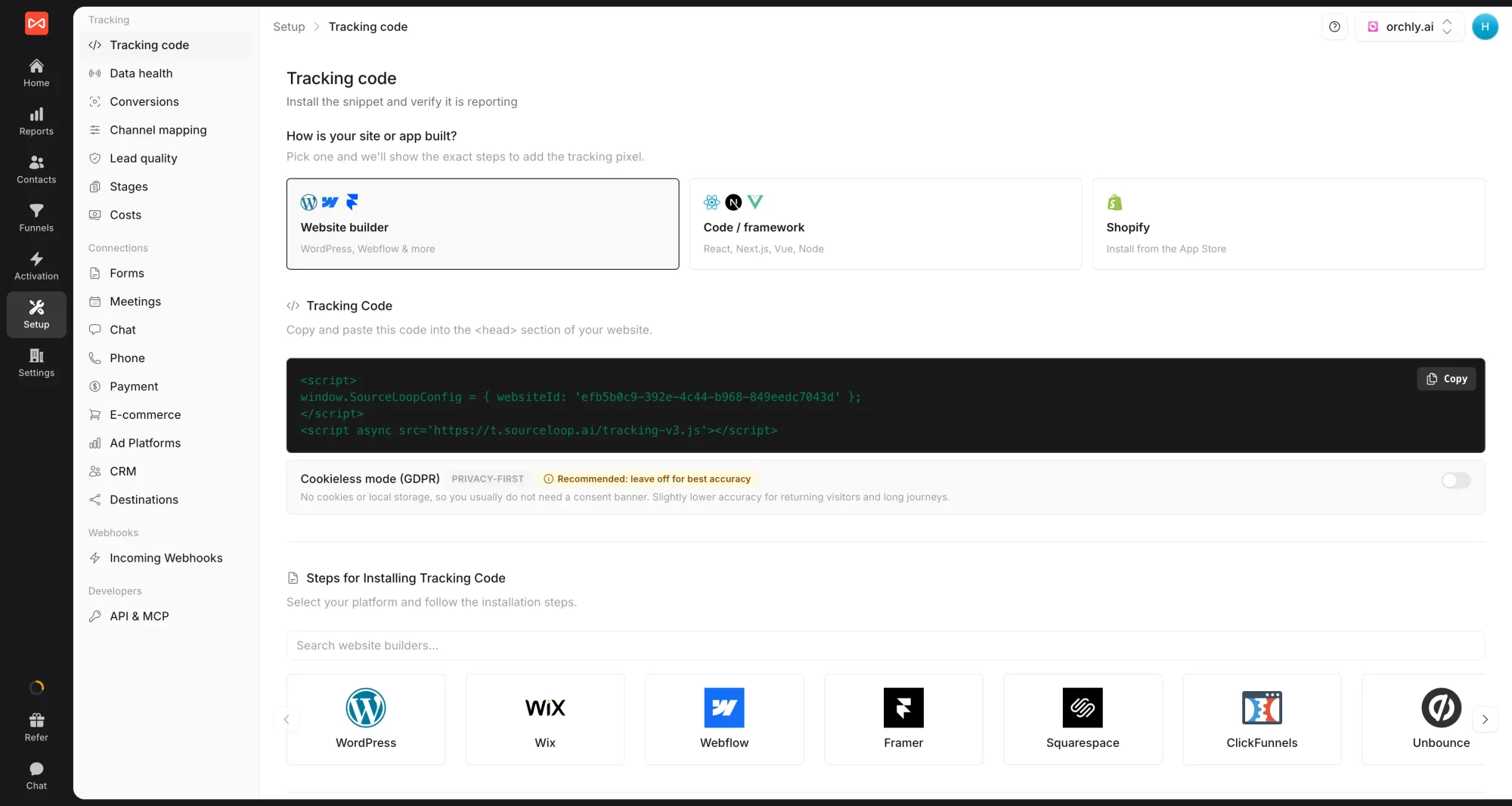
On WordPress, the cleanest options are:
- A dedicated header plugin (e.g., “Insert Headers and Footers”, “WPCode”)
- Your active theme’s
header.phpimmediately before</head> - A “Custom Code” / “Header Scripts” panel inside an SEO plugin
- Google Tag Manager firing on All Pages
The script needs to load site-wide, definitely on every page where a Fluent Forms form lives.
Step 2: Make sure the form is embedded on a tracked page
There’s nothing to configure inside Fluent Forms itself. Once the snippet is live across your site, every Fluent Forms entry becomes attributable automatically.
Verify the basics:
- The form is on a published page or post (drafts won’t carry the snippet for anonymous visitors)
- The form collects an email, SourceLoop uses email as the lead identifier
- Defer/async rules in your performance plugin aren’t shoving SourceLoop below the form
Step 3: Send a test submission
Open the form’s page in an incognito window with ?utm_source=test&utm_medium=verify&utm_campaign=fluent-check glued to the URL. Submit a real entry using an inbox you can access.
Inside a few seconds, that submission should appear on Contacts in SourceLoop with the test UTM values visible on the record.
Where to see Fluent Forms submissions in SourceLoop
Contacts
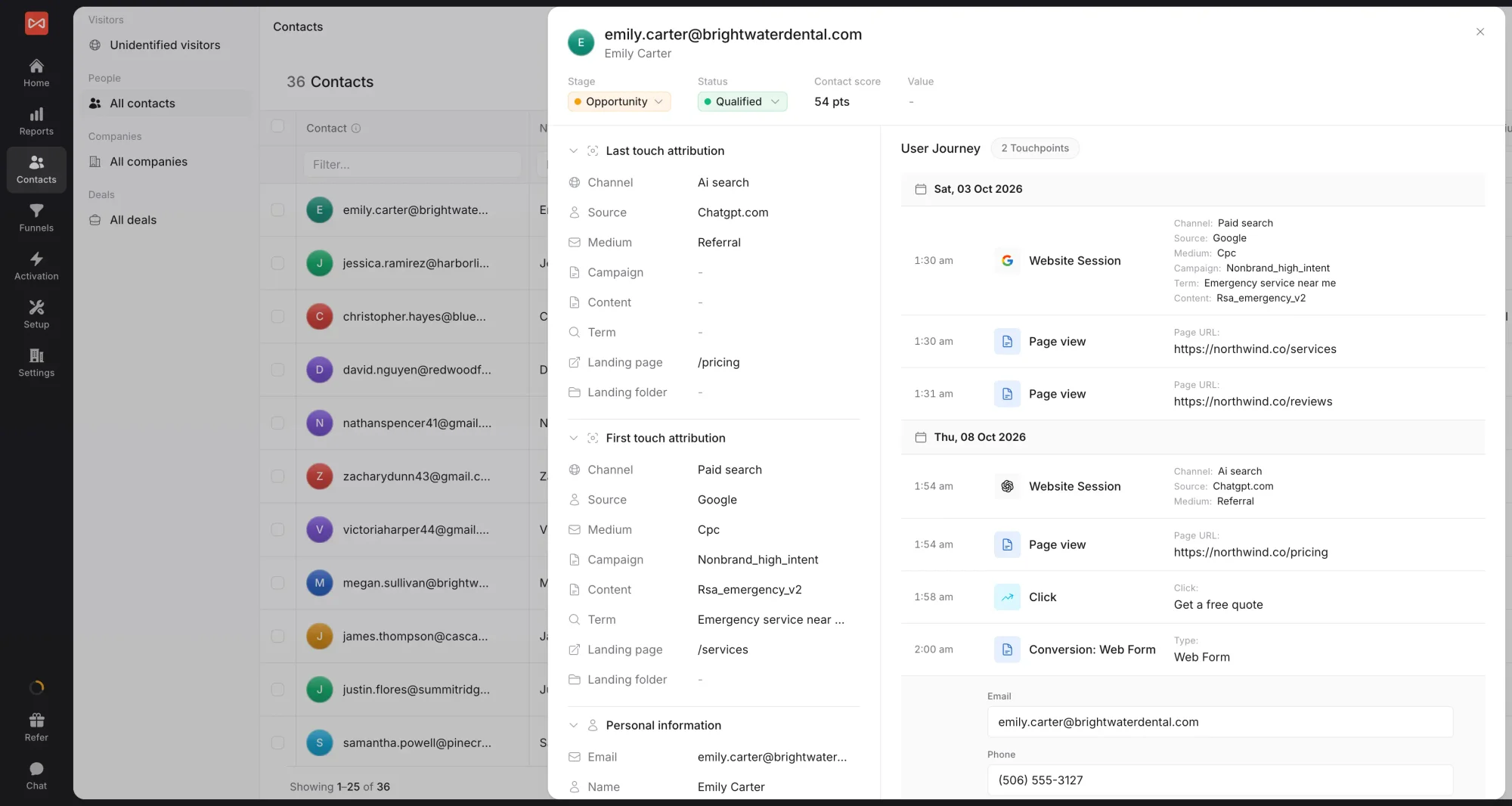
The single source of truth for every lead: app.sourceloop.ai/contacts. Each Fluent Forms entry becomes a row; expand it for the lead’s entire pre-submission journey, ordered by timestamp.
Traffic and Revenue report
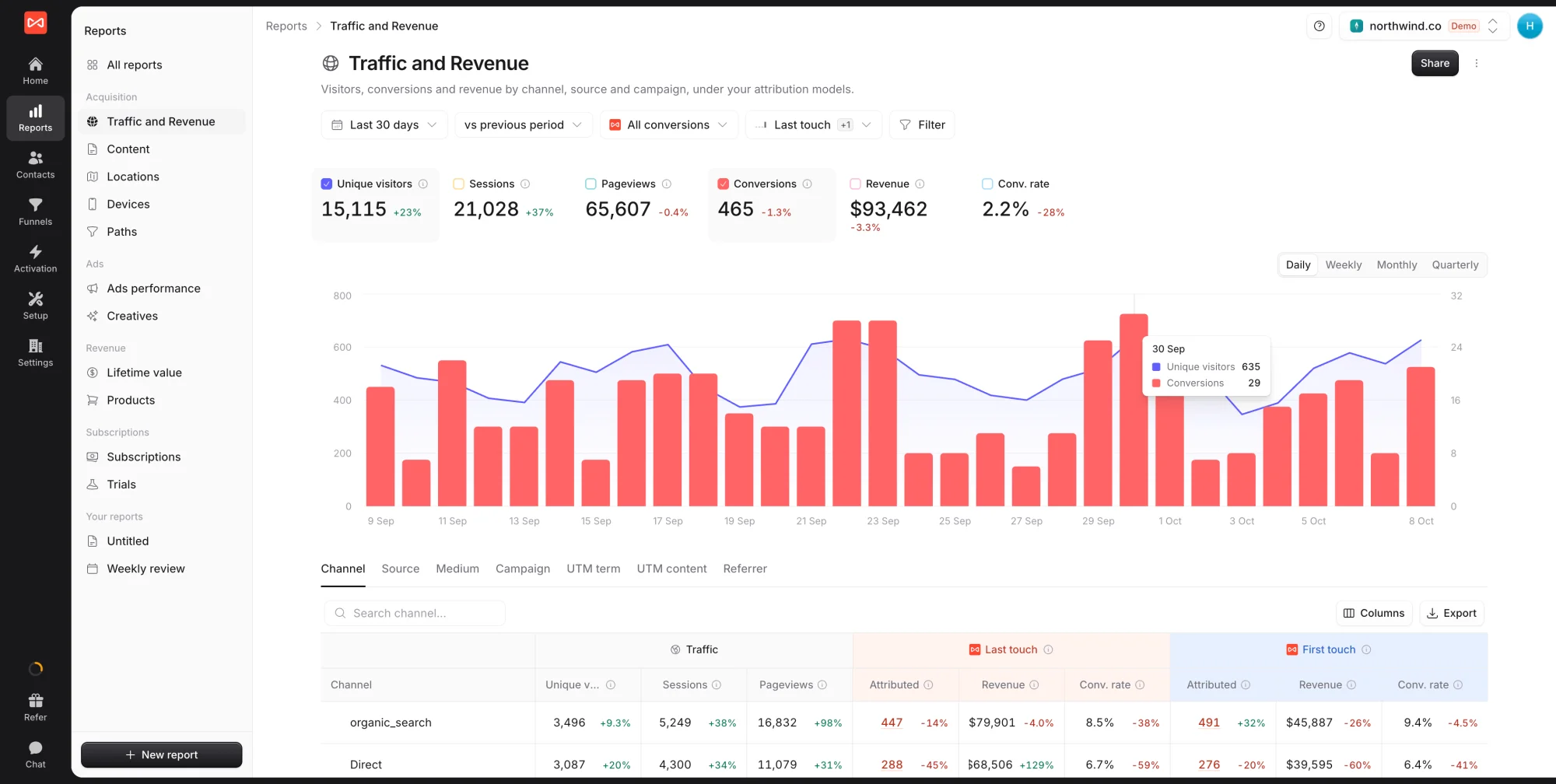
Open app.sourceloop.ai/reports/traffic for a campaign-level read. Fluent Forms submissions get sliced by source, medium, and campaign so you can see which efforts are pulling their weight at a glance.
Funnel reports
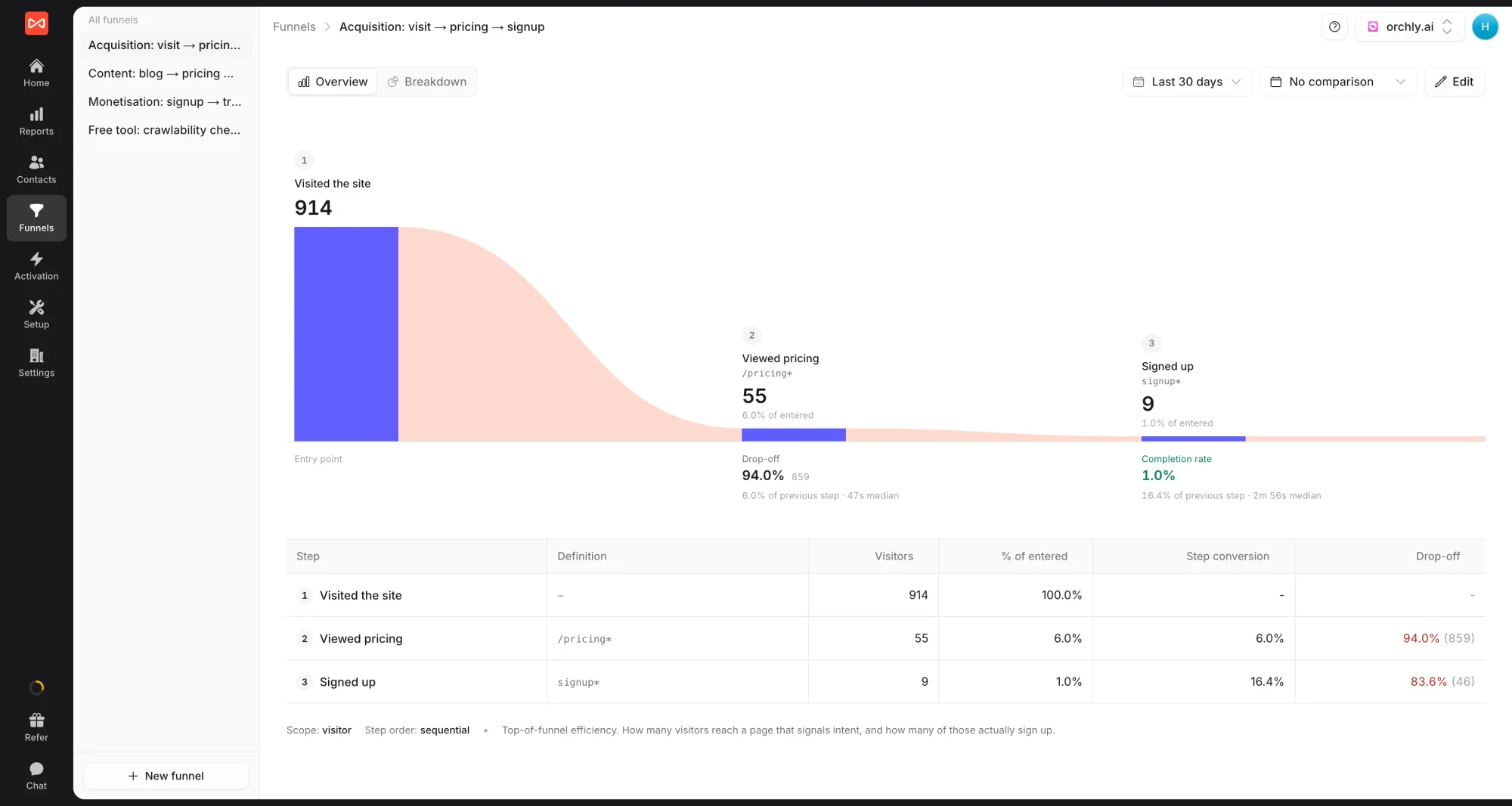
Want to know which path turns the most visitors into form fills? Build a funnel in app.sourceloop.ai/funnels with “Fluent Forms submission” as the final step, then slice by source, content, or device.
If you spend on Google Ads, Meta, or LinkedIn, forward Fluent Forms submissions back as offline conversions so the platforms can optimise toward lead generation instead of clicks. The The conversion sync guide covers the wiring.
Frequently asked questions
-
Does SourceLoop work with Fluent Forms Lite (the free version)?
Yes. Tracking is wired up entirely in the browser, with zero reliance on Fluent Forms' database or Pro-only modules, so Lite users are fully supported.
-
I use Fluent Forms' Conversational Form layout. Does that still get attributed?
Yes. Whichever layout you ship, classic, step-based, or conversational, the final submission carries the attribution data attached to that session.
-
Will my existing Fluent Forms integrations (FluentCRM, Mailchimp, ActiveCampaign, Slack) still fire?
Yes. SourceLoop doesn't replace or proxy any of your existing destinations. Fluent Forms keeps sending data to your CRM, ESP, or Slack channel as configured; SourceLoop just enriches the lead record on its side.
-
Fluent Forms supports conditional fields and calculation logic. Do those interfere with tracking?
No. Conditional logic, calculations, and field-level rules all run inside Fluent Forms itself. SourceLoop only watches for the submission event, which fires once the visitor reaches the end.
-
I'm running Fluent Forms on a WooCommerce checkout or login flow. Will SourceLoop attribute those too?
Yes, as long as the page hosting the form has the SourceLoop snippet loaded in its `<head>`. The form's location (homepage, contact, checkout, gated content) is irrelevant.

 Paid Social


